
Author: Anna Torbecke, May, 2025
1 Introduction
Human behavior is a major contributor to environmental problems.1 One of these environmental issues is the increasing concentration of greenhouse gases in the Earth’s atmosphere, which is affecting the climate and causing visible changes such as forest fires and droughts around the world.2 As a result, the environment is a concern for today’s society, with 78% of citizens in the European Union (EU) agreeing that environmental issues have a direct impact on their daily lives and health.3 In addition, 38% of the EU citizens feel particularly vulnerable to extreme weather events, including droughts.4 Consequently, sustainability is a growing concern in the modern society as it seeks to deal effectively with environmental problems and resulting conflicts.2,5 Therefore, companies are inevitably incorporating sustainability into their agenda as well.6
Sustainability integrates social, environmental, and economic dimensions.7 The challenges of sustainability within these dimensions cannot be met without long-term changes in individual behavior.8,9 Thus, increasing the sustainable behavior of individuals is crucial.10 In particular, sustainable consumption behavior, which aims to address environmental issues and reduce the environmental impact of consumption, gained increasing interest in recent years and is influenced by values as an internal motivator and social norms as an external factor.7 Therefore, the substantial impact of human behavior, with social norms and values as important antecedents, on environmental problems and the variation in efforts to behave in a pro-environmental manner is a concern that must be addressed.11 Incorporating sustainability within firms requires creating long-term value by adopting a business approach that balances the three dimensions of sustainability equally.6 In this context, the corporate culture, including social norms and values, has a significant impact on the behavior of companies and managers and, hence, also shapes the adoption of sustainability.6
In the context of sustainable behavior, psychological and sociopsychological factors are highly relevant.12,13Psychological factors include values, which influence individuals’ decisions by exerting internal motivation.7 Values are typically deeply rooted in individuals’ personalities and provide a fundamental basis for behavior.14 They exert a stronger influence on individual behavior than external forces and have emerged as a focal point in environmental research.15,16 Thus, individual and collective decisions are influenced by values: As values shift toward sustainability, the subsequent decisions are more protective of the environment.17 When it comes to environmental issues, changing values is one way to achieve sustainable behavior.17 Personal values are closely related to personal and social norms.18
Sociopsychological factors include social norms and represent primarily external factors influencing behavior when not internalized by the individual.7,12,19 Social norms are attracting the attention of scholars in a variety of fields because they are influencing a wide range of behaviors.20 Humans are social individuals, so among other factors, their behavior is influenced by social norms.2 Individuals engage with and through social norms with each other, using feelings of approval and guilt.21 In the context of environmental issues, individuals have limited control over public policy and their individual actions have no impact on the large-scale structural problem of climate change, thereby social norms can play a critical role in reinforcing and amplifying behavior.21 Furthermore, shifts in social norms and changes in behavior can be required, as unsustainable norms pose a challenge when attempting to create appropriate individual behavior on environmental issues.22,23 In this regard, social norm interventions can be effective to achieve behavior change or encourage individuals to adopt a behavior by emphasizing the prevalence of existing sustainable norms.2,20
Social norms differ from values in that they include the aspect of conforming to the normative expectations of others.24Although they are separate concepts, both are intertwined and relevant to sustainable choices of individuals and groups.7 Both influence behavior through values, which influence internalized norms, and perceived social norms, which influence compliance.25 However, the value placed on sustainability does not translate into practice in every context, depends on cultural differences, and thus remains a concern.6 For example, social norms, rather than supporting sustainable behavior, can also increase unsustainable behavior among individuals such as frequently flying or driving alone.2,23 The substantial influence of social norms and values on behavior at the individual and corporate levels provides the motivation and need for the academic study of the two concepts in relation to sustainability.
Hence, this thesis aims to provide a structured overview of the current state of research on the concepts of social norms and values in relation to sustainability, and to translate this research into practice to promote the transformation towards sustainability. To provide a comprehensive examination of both concepts in relation to sustainability, various aspects are analyzed separately. Despite the rich body of research in both areas and their high practical relevance, conceptual vagueness and lack of clarity persist.7,13,20 Both concepts lack universally accepted definitions as they are studied by diverse disciplines.2,17 Moreover, the lack of clarity also stems from the fact that there is no universally accepted measure for either concept, making it difficult to compare the results across studies.2,26 Furthermore, the influence of social norms and values on behavior is often underestimated by individuals themselves and by the research community.20,27 This is particularly critical in the context of sustainability, as social norms and values can significantly impact behavior.20 Also, the relationship between social norms and values is complex.11 For instance, in some contexts and situations, the expression of values can be considered less important and individuals may rely stronger on external norms when making behavioral decisions.11 These considerations highlight the relevance of giving a structured overview of the current state of research on social norms and values for both academia and practice. A deeper understanding provided by this work contributes to the development of targeted measures and strategies to promote sustainable behavior on a broader scale.
The structure of this thesis consists of methodology, literature review, practical implementation, and conclusion: First, the methodology – a literature review – is presented. Then, the key terminology and historical background of both fundamental concepts are explored. With the focus on social norms in the context of sustainability, measurement methods and drivers are explored, followed by an analysis of the behavioral outcomes and the moderators of the behavioral outcomes. Subsequently, the focus shifts to values, following the same structure as for social norms. The investigation concludes with a summary of the key findings, and the identification of future research areas.
The practical implementation part begins with an exploration of effective approaches to promoting behavioral change toward sustainability. First, it provides insights into the design of interventions and policy strategies. It then examines alternative mechanisms for fostering behavioral change, while also considering relevant actors. Five best-practice examples provide information and frameworks on how the approaches can be applied in practice. To offer a comprehensive perspective, both internal and external drivers and barriers of the approaches are analyzed. The conclusion summarizes the key findings of both parts.
2 Literature Review of Social Norms and Values
The aim of this chapter is to provide an overview of the current research on social norms and values related to sustainability. First, the key terminology in social norms and values related to sustainability and the historical context are examined. This is followed by a review of key research areas in social norms that encompass the measurement, emergence, and diffusion of sustainable social norms, their behavioral influence on sustainable decision making, their role in collective action, and moderators of the relationship between social norms and sustainability. The central research domains of values in relation to sustainability are then reviewed, consisting of fundamental theories leading to measurement methods, the formation of sustainable values, the behavioral impact of sustainable values on sustainable actions and altruism, and moderators influencing the strength of the relationship between values and sustainability. To incorporate the central research areas of both social norms and values, the literature review focuses on the measures, drivers, outcomes and moderators of sustainability for both concepts. Finally, a summary of the current research insights is provided, and future research needs identified in the literature are explored.
2.1 Key Terminology
It is important to establish a unified understanding of the core concepts of social norms and values in relation to sustainability. In literature, there are no universal definitions for the concepts.2,17 Therefore, this chapter focuses first on the terminology of social norms before providing insight into the concept of values.
The definition of social norms varies considerably across the literature.2 According to Legros and Cislaghi (2020), authors agree that social norms are social and shared by some members of a group, relate to behaviors and inform decision making, and are capable of affecting the health and well-being of groups.31 For this thesis, the concept of social norms is defined as prevailing informational rules and standards understood and shared by all group members, shaped by expectations about what others in a relevant reference group do or think one should do, that guide interdependent patterns of behavior and expectations through the application of external forces.2,20,31-33 A reference group consists of relevant other individuals whose behavior, approval, or disapproval is important in maintaining the norm.31 Different social norms are tied to distinct reference groups.31 Social norms are considered self-enforcing, leading individuals to act in accordance with their beliefs about what others do or approve of doing, and they are also enforced by rewards for those who follow and sanctions for those who do not.2,22 Social norms can be viewed as the “[…] foundation of culture, of language, of social interaction, […]”34 (p. 147) and various other mechanisms.34 Unlike laws and regulations, social norms are inherently implicit, but as an element of culture, they can be formalized into laws when society chooses to institutionalize these cultural elements.6,20
Descriptive norms are understood as: “Behaviors that are commonly performed in a population and that are conditional on the empirical expectations about other people’s behaviors of beliefs”2 (p. 52), but they may differ from the actual behavior of individuals.2,20 Injunctive norms are understood as: “Common rules of behavior about what should be done in a population that are conditional on normative expectations about others’ beliefs of what should be done”2 (p. 52), reflecting how most people believe one should behave.2,20 A distinction can be made between personal injunctive norms, which describe what one approves of doing and are referred to as personal norms, and non-personal injunctive norms, which are consistent with injunctive norms.20 Personal norms refer to self-imposed rules regulated through internal sanctions or rewards, such as feelings of guilt or pleasure, that are followed regardless of external social approval and reflect an individual’s self-expectations.22,35,36 Personal norms can be internalized to the extent that they are partially or fully integrated into the individual’s self-concept and, therefore, do not require enforcement through guilt or pleasure.19 To distinguish between these two forms of personal norms, the terms introjected and integrated personal norms are used, with the former representing personal norms that are enforced through anticipated guilt or pride, and the latter representing personal norms that do not require enforcement through guilt or pride, but rather reflect on how the norm and the outcomes of compliance relate to one’s own values and goals.19 In addition to these categories, dynamic or trending norms have recently been added as a category that influences and guides the behavior of a population by highlighting a change in society.32
The difference between actual and perceived social norms refers to a verified norm about widespread regularities in a group’s beliefs or behaviors and a norm that is unverified but believed to be an actual descriptive or injunctive norm.20,35 Normative expectations of injunctive norms are perceived injunctive norms, and empirical expectations of descriptive norms are perceived descriptive norms, both of which may differ from the actual frequency of others’ behavior.2 A subjective norm refers to subjective assumptions, perceptions, or expectations about a social norm.35Subjective perceptions are derived not from surveys but from unique and local experiences, and therefore, the resulting perceptions rarely match actual rates of behavior.37
Values are the second concept that needs to be explained for the purpose of this thesis. A broader explanation divides values into three different understandings, seeing them either 1) as a thing’s worth or usefulness, or 2) as opinions about the worth or value of a thing or person, or 3) as moral principles, either individually or socially shared, reflecting generally accepted or personally held judgments about what is valuable in life.17,38 In the social sciences, values are defined as “[…] (a) concepts or beliefs, (b) about desirable end states or behaviors, (c) that transcend specific situations, (d) guide selection or evaluation of behavior and events, and (e) are ordered by relative importance”39 (p. 551), and in economics, values are more general ideas of the kinds of situations desired by individuals, are used to assess what society as a whole finds important, to guide collective decision making, and to provide a basis for resolving conflicts when preferences as specific evaluations of possible outcomes of a decision are in disagreement.17 According to Schwartz (2003), values are beliefs, refer to desirable goals, transcend specific situations and contexts, serve as standards, are ordered by importance, and guide actions by the relative importance of the set of relevant values.40Values are considered to be relatively stable over time.17 They are an integral part of human identities and reflect what individuals consider important and desirable.41 In addition, they are an important factor of culture, where each culture is thought to have its own value system.42 The importance attached to specific values can differ between groups.40
A distinction can be made between transcendental and contextual, social, economic, and environmental, and intrinsic and instrumental values. Transcendental values refer to broad conceptions of what is important in one’s life, representing overarching life goals and principles that guide contextual values.43 Contextual values are attached to a context-specific object of value, representing specific opinions about its importance.43 Social values are concerned with the individual and collective well-being of people, and are therefore altruistic and other-oriented.44 Economic values tend to be rather self-oriented, focusing on individual benefit, whereas environmental values emphasize the preservation of the earth’s natural systems that are essential for sustaining life.44 The debate over whether the environment and non-human species possess intrinsic value or instrumental value, meaning that they are considered valuable solely because they serve human purposes, is a key feature of environmental ethics.17
2.2 Historical Background
Because social norms and values exist in different contexts, they have been studied in a wide range of literature, both with and without a focus on sustainability. There are different definitions, understandings, and theories of social norms and values in, for instance, psychology, economics, and sociology.17,45 Economics studies social norms in terms of objective patterns of behavior within a social context, while psychology equates norms with subjective constructs rooted in beliefs and perceptions.35 Syed and colleagues (2024) provide a comprehensive overview of theories and models that should be taken into consideration when examining sustainable consumption behavior.7 In order to explore the relationship of the concepts to sustainability and to establish a foundation for examining the central research areas, a relevant subset of theories arising from the introduction of the concepts and influencing their historical development as well as current research streams must be briefly examined. For the purpose of this thesis, an examination of relevant theories is more appropriate than a detailed look at the historical development of the concepts.
The first relevant theory is the Norm Activation Theory of altruism (1977) by Schwartz, which is concerned with behavior aimed at helping others beyond an individual’s own self-interest.36 Thus, it refers to the circumstances under which social norms give rise to altruistic behavior.17,36 It posits that pro-environmental behavior arises from personal norms activated when individuals perceive environmental conditions as a threat to other people, species, or the biosphere, referred to as awareness of consequences (AC), and believe that their actions can mitigate the consequences, referred to as ascription of responsibility (AR) to the self.46 The theory forms the foundation for the Value-Belief-Norm (VBN) theory explained below.17 It has been successfully applied to pro-environmental behavior.46 Schwartz introduced the Norm Activation Model (NAM) (1977) to further understand how internalized (personal) norms influence pro-social behavior.25,36 It states that, an individual will behave according to a norm when the norm is acknowledged, and the conditions of AC and AR beliefs are met.25,47
Directly related to the environment is the New Ecological Paradigm (NEP) (1978) by Dunlap and colleagues.48 It states that the emergence of the environmental movement is closely associated with the increasing adoption of a new ecological paradigm or worldview.46,48 Thus, it recognizes that human actions have significant negative impacts on the fragile balance of the biosphere.46,48
Ajzen’s Theory of Planned Behavior (TPB) (1985) states that an individual’s intention, together with perceived behavioral control, serves as a motivational factor that influences the likelihood of performing a behavior.49 The theory examines three factors that influence the intention to engage in a behavior: 1) perceived behavioral control, which refers to an individual’s perception of their ability to perform the behavior, reflecting past experiences, obstacles, and anticipated difficulties, 2) attitudes toward the behavior, which refer to the degree of positive or negative evaluation or appraisal of performing the behavior, and 3) subjective norms, which refer to the perceived social pressure to perform or refrain from performing a behavior.49 The greater the three key factors, the stronger the individual’s intention to perform the behavior, although the importance of the factors varies by behavior and context.49 In addition, perceived behavioral control, combined with behavioral intention, can serve as a direct predictor of behavioral performance.49
The Focus Theory of Normative Conduct (1990) by Cialdini and colleagues distinguishes between two types of norms that differ in their influence on behavior: descriptive and injunctive norms.50 It states that norms only directly influence behavior when they are focal in attention and salient in consciousness during the decision-making process.50The salience of norms is examined in the Model of Social Norm Activation (2006), which states that norm activation requires three conditions: the beliefs that the norm exists and is relevant to the situation, that a significant proportion of people in similar situations comply with the norm, and that a sufficiently large subset of individuals in similar situations expects conformance to the norm.24,51 It is useful in business ethics research.51
Setting the focus on values, Schwartz’s Theory of Basic Human Values (1992) identifies ten basic values characterized by different motivational goals: power, achievement, hedonism, stimulation, self-direction, universalism, benevolence, tradition, conformity, and security.17,40 These values are arranged along two dimensions: One dimension contrasts self-enhancement, which refers to an individual’s self-interest and personal goals, with self-transcendence, which emphasizes the concern for the welfare and interests of others.17,40 The second dimension contrasts openness to change, which highlights the readiness for change, interdependence and freedom, with conservation or traditionalism, which emphasizes self-restraint, preservation of traditional practices, and maintenance of stability.40 The ten values are interrelated, forming a dynamic and interdependent circular structure in which adjacent values are compatible, while opposing values pursue conflicting goals and are less likely to be activated simultaneously.52 Individuals may weigh the importance of the ten basic values differently, but the values remain structured within the same framework of motivational oppositions and compatibilities.40
Stern and Dietz’s Value-Basis Theory (1994) extends the work of Schwartz to environmental attitudes and behaviors.10,53 They establish three bases for environmental concern: 1) egoistic values, which capture individuals who protect aspects of the environment that personally affect them and resist protection when personal costs are assumed to be high, 2) social-altruistic values, which refer to the concern extended from the individual and their family to the broader community, and 3) biospheric values, which focus on the well-being of other species or the health of ecosystems, beyond their benefits to humans, also understood as intrinsic value.17,53 Individuals form their behavioral attitudes based on their anticipation of how objects, such as environmental conditions, will affect specific groups.10,53Values emerge as the key determinants that influence expectations and play a critical role in influencing environmentally protective behaviors.10
The VBN theory (1999) by Stern and colleagues examines how individual values, beliefs, and norms influence support for environmental movements taking into account Schwartz’s model of human values and the NEP.46,54 According to the theory, people support environmental movements when they perceive environmental threats, believe that their actions can reduce the threats, and feel a moral obligation to act in the form of personal norms.46 Thus, a causal chain is assumed in which values shape environmental beliefs into more focused beliefs about human-environment relationships, referring to the NEP, which influence AC and AR beliefs, and finally activate personal norms that lead to pro-movement actions; the process can be summarized as follows: “[…] values (especially altruistic values), NEP, AC beliefs (not measured in this study), AR beliefs, and personal norms for proenvironmental action”46 (p. 85).46 In addition, context shapes the type of support.46
2.3 Central Research Areas on Social Norms
The concept of social norms in relation to sustainability has several central research areas. They are examined in the following four chapters and include: the measures, emergence, and diffusion of sustainable social norms, the behavioral influence of sustainable social norms in decision making, the role of sustainable social norms in collective action and organizational adoption of sustainability, and moderators influencing the relationship between social norms and sustainability. Next, this chapter gives a more detailed overview of social norms by providing different constructs. Then, this chapter gives a comprehensive overview of the central research areas by focusing on measures, drivers, outcomes, and moderators of sustainable social norms.
Regarding the constructs of social norms, Legros and Cislaghi (2020) identify two primary constructs shown in Figure 1: the individual construct, which views social norms as a psychological state within individuals, such as beliefs, feelings or emotions, the interpretation of collective rules, or a type of motivation; and the collective construct, which views social norms as conditions or features of social groups, such as behavioral regularities, collective or group beliefs, sanctions, rules, standards or guides, a social phenomenon of a group, or an equilibrium.31 Various reviews in the social norms literature either consider the constructs independently or attempt to integrate the two: The individual construct is useful for studying the psychological mechanisms underlying normative phenomena, while the collective construct is helpful for investigating how norms operate and diffuse over time at the population level.31 Cross-disciplinary work should incorporate both constructs, as will be strived to in this thesis.31
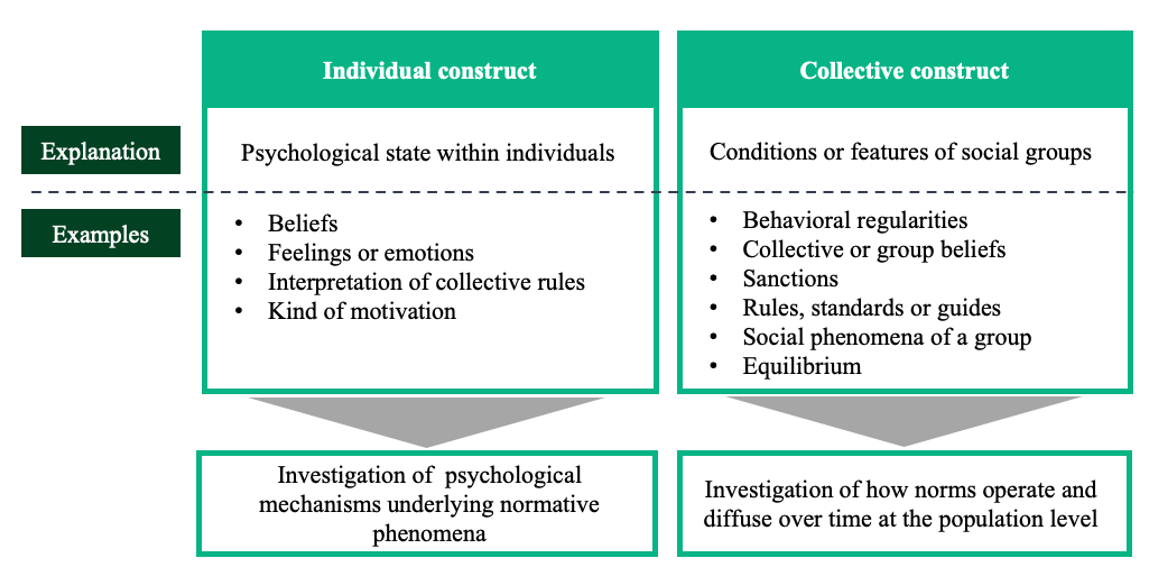
Figure 1: Constructs of Social Norms, Own illustration, based on Legros and Cislaghi (2020).31
2.3.1 Measures
Constantino and colleagues (2022) synthesize the literature on social norm influence and measurement, focusing on social norms for climate action that correspond to sustainable social norms.2 They identify key methodological steps that guide the identification and measurement of a sustainable norm.2 In this thesis, the steps are examined by first identifying the social interdependence of the behavior and the relevant reference group, then measuring existing descriptive and injunctive norms, and finally measuring expectations or perceptions of social norms.2 The steps are visualized in Figure 2. Each of these steps can be addressed through a variety of means, including surveys, questionnaires, observations, and experiments.2
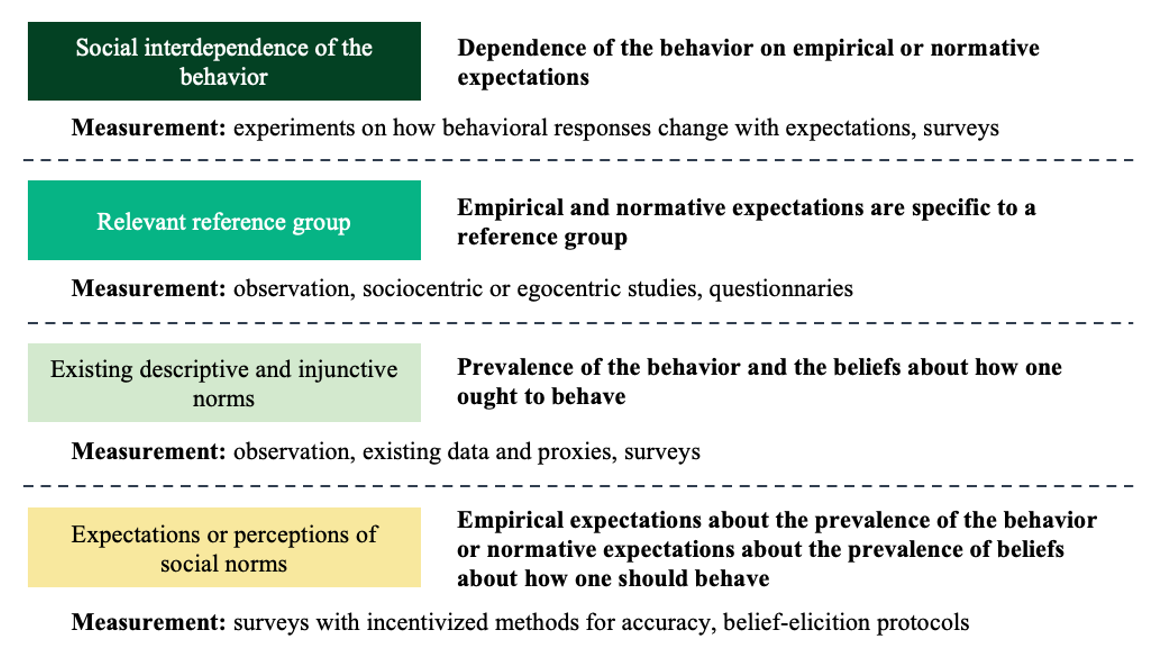
Figure 2: Measurement of Sustainable Social Norms, Own illustration, based on Constantino and colleagues (2022).2
When measuring sustainable social norms, it is necessary to determine whether the behavior represents a social norm by being socially interdependent.2 To assess social interdependence, empirical or normative expectations are measured to determine whether the motivation to engage in a behavior depends on an individual’s belief about what is typically done or should be done.2 Thus, it is necessary to determine whether the expectations have a causal influence on behavior.55 The social interdependence of a behavior can be measured through surveys or experiments: Experiments allow to manipulate empirical or normative expectations and examine whether and in what ways the behavior changes with the expectations.2,55 For instance, studying participants’ behavior with and without the influence of a descriptive or injunctive social norm intervention allows to investigate whether the behavior changes as a result of the norm intervention.2 If the behavior changes depending on the empirical or normative expectations, it is socially interdependent and indicative of a social norm, if no change occurs, the behavior does not qualify as a social norm.2
In addition to examining social interdependence, it is essential to identify the context- and behavior-specific reference groups, since empirical and normative expectations are inherently tied to a specific reference group that is salient for the behavior.2 Since social norms and sustainable norms tend to vary by group, they must be measured separately for each reference group.2 In some cases, the reference group is easily observable, in other cases research is required.2 This can be done through questionnaires, sociocentric studies that map connections by surveying all members of a network, or egocentric studies that collect information on individual’s social ties by focusing on a sample of individuals within the population.2,56-58
In the case of measuring existing descriptive norms, some behaviors are easily observable, or captured by existing data, such as the number of solar panels in a community.2 However, less observable behaviors need to be measured though proxies, which may include surveys or focus group discussions.2 These allow researchers to observe interactions and participants’ reactions, helping to identify variations in the presence and strength of sustainable social norms.2Injunctive norms cannot be measured by observation because they involve personal normative beliefs or expectations about whether the behavior should be performed or is endorsed.2 To measure injunctive norms, these personal normative beliefs must be elicited through surveys that ask individuals about the prevalence of the belief that one should engage in the behavior.2
Perceptions of descriptive norms cannot be observed, and must be measured through surveys that explore individuals’empirical expectations about the behavior of others.2 They are based on unique and local experiences of individuals.37Depending on the topic, individuals may not be sufficiently motivated to answer questions accurately, but can be incentivized through rewards.2,59 One way to assess expectations is to begin by assessing personal normative beliefs in a sample of the population with using a bonus payment based on the degree of alignment between participants’responses and normative beliefs previously gathered in the study.2 Another approach to measurement is through belief-elicitation protocols, which can be useful to measure expectations regarding the prevalence of behavior.2 Both approaches can be used to determine whether the majority believes there is a prevailing norm in a given situation, to compare the actual behavior and empirical expectations, and to investigate whether the perceptions are accurate.60Perceived injunctive norms are measured using surveys to assess how common it is to believe that others think one should perform the behavior, which can also be incentivized with rewards for accuracy.2,60
Since personal norms are strongly related to the concept of social norms, Dalvi-Esfahani, Ramayah, and Rahman (2017) propose a measurement method in which participants are provided with different statements and answer to what extent they agree or disagree with these statements using a five-point Likert scale.61
2.3.2 Drivers
Research on social norms has identified various mechanisms and stages involved in their emergence, learning, and diffusion in society. According to Legros and Cislaghi (2020), the emergence stage in the life cycle of a norm consists of various substages, as shown in Figure 3.31 This thesis focuses on three key processes: norm creation, norm learning, and norm diffusion. To provide a comprehensive overview, the learning stage is divided into pre-learning, reinforcement learning, and internalization stages, according to Zhang and colleagues (2023).62 Although, according to Schneider and van der Linden (2023), there is not enough research to examine the longevity of social norms or the extent to which individuals internalize social norms, this chapter provides valuable insights into the creation, learning, and diffusion of social norms as they overlap with sustainable social norms.32 Understanding these processes provides valuable insights into the drivers of sustainable social norms.

Figure 3: Stages in the Emergence of a Norm, Own illustration, based on Legros and Cislaghi (2020).31
Theories of norm creation differ in the specific ways in which social norms emerge.31 They suggest that either behavior change precedes norm change, norm change drives behavior, or the two influence each other mutually, which means as a behavior becomes more regular in a population individuals come to perceive it as a norm, which reinforces compliance.31 When behavior change precedes norm change, changing the prevalence of a behavior and repeated interactions in smaller homogeneous groups lead individuals to adopt behaviors that eventually shape norms.22,35Conversely, when norm change drives behavior, new behaviors can arise from changes in group norms, which can occur relative abruptly.63 Finally, the mutual influence is evident in social activism and movements where social norms emerge, spread, and effect policy change.2 One feature of social norm emergence is its unpredictability: Communities with similar socioeconomic characteristics exposed to the same influences may develop different norms if they do not interact with each other.45 Additionally, the constantly changing and dynamic environments in which people live, can lead to norm change or the emergence of sustainable social norms.64
Zhang and colleagues (2023) study the learning of social norms and introduce an integrated model of social norm learning that consists of a pre-learning stage focused on gathering information or cues during interaction, a reinforcement learning stage focused on social feedback and making adjustments, and a norm internalization stage.62Regarding the first stage, individuals need to gather normative information by paying attention to cues from situational sources such as the place, the event, or the group and social sources, such as education or signs.62 According to Tankard and Paluck (2016), this can be achieved through three main sources: observing the behavior of others, receiving information about a group, and the signals sent by institutions.37
Regarding the first source, the actions of others provide important information about what is considered good and effective in a social group.23 Both descriptive and injunctive norms are socially interdependent behaviors and, in some contexts, can be transmitted by observing the behavior of close social networks such as family, friends, or partners.2,65Specific individuals, known as “social referents”, have a stronger influence on norm perception, because their behavior is more salient, due to their personal connection to the perceiver and the number of connections in the group.37Learning social norms through observation requires social cognition, including the ability to share and understand others’ mental states and behaviors.31,62 With regard to the second source, perceptions of norms are shaped by information about a reference group, which can be provided by sources such as social media statistics, marketing, or warning signs.37 Finally, institutions such as governments or schools can signal desirable behaviors and provide information.37 Policies incentivizing or regulating behavior, changes in the physical environment, or educational campaigns can lead to the uptake of social norms by providing information.2 In addition, legal reforms can sometimes shift society’s beliefs about what is approved.31 However, since individuals select the sources of normative information, the resulting perceptions of norms often diverge from the actual prevalence of the behavior.37
After gathering information in the pre-learning stage, the three interacting components of the reinforcement learning stage are assessed, consisting of social norm prediction, social feedback, and adjustment; for the purpose of this work, context-based-processing is added as an additional component of the learning process.62 The first stage consists of forming the initial representation of the social norm using the information gathered in the pre-learning stage.62 The second stage of social feedback during interactions, such as emotional and physical actions, provides learners with cues about appropriate behavior, where the type of the social feedback is shaped by cultural influences.62 Individuals imitate others and receive direct corrections from peers that guide the expected behavior, leading to the learning of social norms.62,66 In addition, individuals can observe social feedback on the behavior of others.62 Consequently, cooperation is essential in the learning of social norms.35 However, the adoption of a new norm may require multiple sources of social reinforcement to be established.2 Finally, after receiving social feedback, individuals adjust and update their perceptions of the social norm.62 However, a high prediction error may lead to cognitive conflicts among individuals regarding their predictions and hinder the acquisition of new social norms.62 Context-based processing is required because the recognition of social norms in interaction during the learning process depends on the specific circumstances and social contexts.62 Social norms are contingent on the context, the social group, and historical equilibria, resulting in multiple potential norms in a society, further emphasizing the need for context-based processing.45 For instance, moving to a new city may exert cultural differences and require individuals to learn social norms in a new culture and context to respond to norm changes and accelerate faster.62
The internalization of norms, as the final stage of learning norms, results in individuals conforming to the internalized norm even when others around them do not.62 Norms can be internalized as values, as a representation of the prevalence of a behavior among others, or as a default option when exposed to uncertain situations.62,67 They can serve as markers of a group, play a role in distinguishing ingroup members, and promote cooperation within the group.35Internalization is considered to be a slow process that requires intensive, sustained socialization experiences.35 To distinguish the degree to which norms have been internalized, Thøgersen’s extended taxonomy of social norms is used, where the least internalized norms are considered to be external descriptive norms, followed by subjective injunctive norms, introjected norms, and integrated norms: The last two are categorized as personal norms.19 Thus, personal norms are internalized social norms.19 However, personal norms are also influenced by individual values.68
The diffusion of social norms through various social networks, which refer to the web of interpersonal connections within a society, is concerned with tipping points.2 Social tipping refers to the process by which a critical mass of people adopt a new behavior, leading to the spread of the norm change through social networks.63 Norms can spread between groups and eventually influence the behavior of groups on a large scale.63 The process is accelerated when the behavior is easily observable and social sanctioning increases the number of followers, creating tipping points where the social sanctioning of violators increases further, spreading the social norm to a new group.63 Thus, practices that others discover to have value spread through the tendency for imitation and coordination.35 However, when the behavior is difficult to observe, tipping points are unlikely to be reached.63
2.3.3 Outcomes
Once emerged, learned, and diffused, social norms influence a wide range of environmental behaviors, especially in contexts where limited knowledge or concerns about acting alone can impede actions.23 Thus, social norms represent a powerful driver of behavior, with sustainable social norms associated with increased sustainable behavior.15,68,69However, many unsustainable behaviors are the norm, such as flying or driving alone, implying that these behaviors are effective in achieving goals, and individuals may be judged negatively if they do not comply.23 This chapter first explores the cognitive and motivational processes that drive adherence to sustainable social norms at both the individual and the collective levels. It then examines the business context with respect to the influence of sustainable social norms on sustainability adoption and the role of leaders.
The literature generally agrees that social norms influence behavior primarily through the implications of expected material and psychological payoffs, with context shaping the impact of norms on decision making.20 Individuals comply with social norms when they expect others to do the same, but the precise mechanisms or motivations that create a positive feedback loop vary across contexts.45 Table 1 provides an overview of theories, selected processes, and motivations that influence compliance with social norms. While a comprehensive discussion of theories and mechanisms is beyond the scope of this thesis, key aspects relevant to the relationship between social norms and sustainable behavior are analyzed in more detail.
Table 1: Theories, Processes, and Motivators of Norm Compliance, Own illustration.
| Author(s) | Variables of Compliance |
| Legros and Cislaghi (2020) | Norms influence behavior by offering value-neutral information and by generating external or internal obligations.31 |
| Sugden (2000) | Individuals comply with norms to avoid resentment from others and to maximize their payoffs while reducing the behavior’s negative impact on others’ payoffs (Theory of Normative Expectations).70 |
| Constantino and colleagues (2022) | Individuals conform to social norms to maintain social relationships, to achieve mutual benefits in coordination, and because of behavioral constraints.2 |
| Nyborg, Howarth, and Brekke (2006) | Individuals’ consumption behaviors in environmental decisions are driven by self-image concerns, which are influenced by individuals’ beliefs about positive external effects and perceived responsibility to behave prosocially based on descriptive norms.71 |
| Bicchieri (2006) | Conformity occurs when individuals hold a perceived descriptive norm and a perceived injunctive norm that are sufficient to convince them to conform.24 |
| Morris and colleagues (2015) | Internalization, social identity, rational choice, social autopilot, and social radar theory are variables of norm conformity.35 |
| Lapinski and Rimal (2005) | The ways of communication, injunctive norms, group identity, and ego involvement are factors that influence the relationship between descriptive norms and behavior.72 |
| Tajfel and Turner (1979) | The human desire to belong to a community drives compliance with social norms as a means of expressing group membership (Social Identity Theory).73 |
| Thøgersen (2006) | Two types of personal norms, integrated and introjected norms, predict sustainable behavior.19 |
| Sparkman and Walton (2017) | If static norms are undesirable, dynamic norms can lead people to behave in desirable ways.74 |
To explore the outcomes at the individual and the collective levels, Legros’ and Cislaghi’s (2020) distinction between norms conveying information, and being external, or internal obligations will be used in the following.31 Examining the dimension of social norms conveying information about shared behaviors considered as wise choices, social norms can regulate individuals’ behavior, provide guidelines for navigating social interactions, and align individuals with group expectations.2,35 In the context of sustainability, social norms can help individuals understanding how to take effective action against climate change, thereby functioning as reliable sources of motivation.23 Because social norms signal which behavior is an effective way to deal with climate change, individuals can learn from the norms without understanding the complex systems.23 Thus, individuals often draw on the actions of others to infer what constitutes appropriate behavior.2
Internal obligations refer to the internalization of sustainable social norms: Thøgersen’s theory suggests that both integrated and introjected norms predict sustainable behavior, and that the internalization and integration of sustainability motivation increase the adherence to sustainable norms.19,31 However, it also states that individuals can apply different norms for different sustainable behaviors.19 Nevertheless, internalized social norms serve as intrinsic motivators influencing an individual’s behavior.23,31 Before a norm becomes integrated, conformity depends on anticipated guilt or pride, but as it becomes integrated, the influence of observability and normative expectations on conformity decisions diminishes as individuals conform to express their values.19,35 Helferich, Thøgerson, and Bergquist (2023) analyzed the predictive strength of injunctive, descriptive, and personal norms and found that internalized (personal) norms are the most robust predictor of pro-environmental behavior.75 Moreover, personal norms mediate most of the effects of descriptive and injunctive norms, but both types of social norms do have an effect when controlling for personal norms.75 However, they were unable to differentiate by Thøgerson’s typology.75 Thus, personal norms may be more predictive of sustainable behavior than injunctive or descriptive social norms, which are important in an indirect way.19,75 In addition, individuals with strong personal norms tend to be less influenced by contrasting social norms.32 Silvi and Padilla (2021) emphasize that mostly internalized environmental norms influence pro-environmental behavior, but also external forces such as policies influence conformance.25
External obligations consist of, for instance, peer pressure, and the expectation of rewards or punishments such as social approval or disapproval.31 The Social Identity Theory emphasizes the desire to belong to a community as a key component of social norms driving behavior, suggesting that norm adherence expresses group membership.23,35,73Individuals categorize themselves and others into groups, shifting their thinking and identifying with the typical traits, behaviors, and attitudes of the group, rather than focusing on unique personal qualities.35,73 Group norms are flexible perceptions that can shift rapidly but form group identity.34,35 Therefore, behavior is supposed to be easily abandoned with a change in an individual’s self-categorization.35 Sparkman, Howe, and Walton (2020) confirm that individuals’ motivation to belong to social communities and conform to social norms is a basic social orientation that is essential for individuals’ sustainable behavior with respect to climate change.23 Thus, norm messages that promote sustainable behavior by referring to people with whom the individual identifies improve the outcomes.2,76 White and colleagues (2009) find strong evidence for group-specific norms that refer to social identity and weak support for perceived descriptive and personal norms influencing behavior, in contrast to the evidence for internal obligations mentioned above.77 Thus, social influence can encourage sustainable consumption when it helps to signal identity or group membership, even if it is associated with costs to the individual.78
External obligations can be linked to the observability of and by others, as the visibility of sustainable behavior is important for targeting the sustainable behavior of others in the context of social norms.5 In many cases, individuals conform to social norms that are not integrated only if specific conditions including the observability of behavior and the presence of normative expectations hold.20 For instance, Lapinski and Rimal (2005) find that social norms have little influence on behavior when it is not observable.72 If the behavior is visible, individuals may feel accountable and face greater risks by not complying.2 As a result, their behavior is more sustainable.2 On the other hand, Melnyk, Carrillat, and Melnyk (2022) find evidence that social norms have the same influence on private as on public behavior.69 In detail, the gender of the targets can affect the influence of observability on norm compliance.79 When examining food choices after communicating a social norm message, the visibility of choices particularly influences women to choose vegan or vegetarian alternatives, whereas men are more likely to choose meat regardless of whether they are observed and violate the norm.79 However, without a social norm message, visibility does not have a significant effect on food choices for either gender.79
Considering the impact of social norms on sustainable behavior, the difference in the influence of descriptive and injunctive norms must be accounted for which is outlined in the Focus Theory of Normative Conduct.50 Descriptive social norms motivate individuals to act through social information, while injunctive norms drive action through social evaluation.27 There is no consistent result as to whether injunctive or descriptive norms have a stronger influence on sustainable behavior: Some scholars examine that both descriptive and injunctive norms have a significant effect on pro-environmental behavior or no type of norm is more effective, which can also depend on the context.65,80 In contrast, other scholars suggest that descriptive norms in particular have an impact on pro-environmental behavior.20,69This perceived dominance of descriptive norms in influencing behavior can be due to the fact that researchers have focused more on descriptive than on injunctive norms, citing a need to study injunctive norms more intensively.81However, Rhodes, Shulman, and McClaran (2020) found that injunctive norms are more influential than descriptive norms.82 Still, the norm influence on behavior is stronger when both descriptive and injunctive norms are consistent.2In this regard, a country level pro-environmental norm influences pro-environmental behavior by positively influencing both injunctive and descriptive norms of relevant others.65 When only one norm is given, individuals do not distinguish between descriptive and injunctive norms because, in the absence of other information, they assume that behavior and the beliefs supporting it are correlated.59 In addition, when descriptive and injunctive norms are in conflict, people conform to the norm that is more salient or convenient, which depends on the context.2 However, Bicchieri and Xiao (2009) examined that when descriptive and injunctive norms are in conflict, descriptive norms significantly predict behavior without finding an explanation for this result.59
To examine the behavioral effects of sustainable dynamic norms, Sparkman and Walton (2017) use five experiments on sustainable behaviors, such as meat consumption and water use, and find that exposure to dynamic descriptive norms can inspire behavioral change and lead to increased sustainable behavior among individuals, even if a contrary static norm already exists.74 They also find that if the static norm is desirable, a dynamic norm can strengthen it further.74Malta, Hoeks, and Graça (2023) examine that the use of dynamic norms increases conformity and has a positive effect on the support for sustainable policies.83 However, the behavioral influence of dynamic norms can depend on the behavior that is endorsed or engaged in before the norm message is communicated.83
There may be a gap between the collectively beneficial level and the preferred self-interest level.2 Social norms are useful in helping groups overcome collective action problems, and therefore sustainable norms influence a range of environmentally friendly behaviors that would suffer from concerns about acting alone when collective action is needed, such as adopting sustainable technologies.23,84,85 So, communities frequently organize and self-regulate to reach the collectively beneficial outcomes.2 Since sustainable behavior often requires collective action to realize the benefits, according to White, Habib, and Hardisty (2019) a descriptive message about the behavior of others combined with collective efficiency will increase the likelihood to engage in sustainable behavior.78 Thus, social norms can be more effective when the behavior benefits other individuals.69
Setting the focus more specifically on the business context by examining the influence of social norms on the sustainability adoption in institutions, Caprar and Neville (2012) propose a model that takes into account the double effect of culture.6 They suggest that culture influences both the spread of sustainability-relevant institutions and the conformity to pressures of the institutions, thus combining the findings of cultural and institutional perspectives on sustainability adoption.6 They suppose that institutions are seen as the formal guiding elements, such as laws, and culture is seen as the informal one, including values and norms, which appear to be an important factor influencing the adoption of sustainability, acting via multiple mechanisms.6
An increased number of norms compatible with sustainability principles will increase the likelihood of sustainability adoption, but institutional pressures promoting sustainability may also carry cultural preferences that are inconsistent with the local culture.6 Thus, variations in sustainability adoption can be subscribed to cultural differences.86 Certain principles of sustainability are more compatible with certain cultures.6 The pre-existing culture of a group of people or organization, which includes social norms, facilitates or hinders the adoption of institutional pressures for sustainability.6 There are also significant differences between developed and emerging countries in the adoption of sustainable practices.6 Thus, the national system, which reflects national characteristics in the adoption of sustainability, is important.6 Therefore, increasing the amount of sustainability-relevant institutions to increase sustainability adoption may be an inefficient approach that ignores the cultural perspective.6
Ciocirlan and colleagues (2020) discover that personal norms predict sustainable behavior in the business context.87For instance, personal norms are expected to directly influence managers’ adoption of sustainable practices.61 In addition, individuals seen as leaders, which could be managers, but also other individuals who are suitable for leadership, have the power to shape group norms and behavior, if they are seen as social referents and represent sources of normative information.37 Social referents are mentioned above and can be associated with the role of leaders in various situations, as they are psychologically salient and therefore more influential on others’ norm perception.37Different scholars examine the importance these leaders can play in changing behavior, among other things in the workplace, by exerting social influence and persuasion through emotions, personal connections, or ease of personal identification.31,37 Leaders can influence a norm regardless of where it is in the life cycle, from diffusion to abandonment.31
2.3.4 Moderators
The moderators that amplify, weaken, or change the strength of social norms influencing sustainable behavior are highlighted in this chapter. First, individual factors are examined, before setting the focus on cultural factors. An overview of the factors is visualized in Figure 4.

Figure 4: Moderators of Sustainable Social Norms, Own illustration.
The degree to which social norms influence sustainable behavior at the individual level is moderated by several situational or individual factors, including the characteristics of the individual, the specific norm, the reference group, the social and physical context in which the behavior occurs, or the activated self-construal of the individual, which is the focus of this thesis.2,20 Self-construal theory suggests that an individual’s self comprises two dimensions in terms of one’s relationship with others: the independent (individual) self, which is concerned with one’s own goals and attributes rather than the thoughts or feelings of others, and the interdependent (collective) self, which is associated with a sense that the self and others are intertwined.88 Both types can coexist within individuals, with one dimension likely to be more dominant.88 The level of the self-construal can be manipulated, for example, through text variations using appropriate pronouns that lead individuals to focus on the emphasized level of the self.89,90 Saracevic and Schlegelmilch (2021) state that the moderating role of the self-construal remains unclear since scholars disagree about whether norm compliance depends on the activated level of the self-construal.81 The unresolved moderating role of self-construal on the impact of social norms on sustainable behavior is investigated below.
Descriptive norms are supposed to influence sustainable behavior when both levels of the self are activated.90 However, Saracevic, Schlegelmilch, and Wu (2022) find no significant relationship between descriptive norms and the self-construal.89 Incorporating injunctive norms, White and Simpson (2013) highlight that different appeals are more effective depending on the self-construal: when the interdependent level is activated, injunctive and descriptive appeals are more effective than benefit appeals in encouraging sustainable behavior, and when the independent self-construal is activated, self-benefit and descriptive appeals are effective.90 In addition, by providing valuable information about appropriate action, they find that descriptive appeals are particularly effective when the context is ambiguous and the individual self-construal is activated.90
White, Habib, and Hardisty (2019) do not concentrate on one specific norm concept, but find that when the self-construal is interdependent, sustainable behavior increases.78 An independent self-construal leads to personal attitudes having an important influence on pro-environmental behavior, whereas in the interdependent self-construal, social norms are a greater predictor, indicating a moderating role of the self-construal.91 Although scholars find a moderating role of the self-construal on the effectiveness of social norms and sustainable behavior, some scholars only focus only on descriptive norms or distinguish between personal and social norms, so there is no comprehensive review of the moderating effect of self-construal and culture on all factors of the relationship between norms and sustainability.81
Yang and colleagues (2024) note that the moderating role of the self-construal is rooted in cultural considerations, as the interdependent and independent self-construals apply to individualistic and collectivistic cultures.10 In a collectivistic culture, individuals perceive themselves as part of the collective and are more inclined to conform to group norms, whereas in individualistic cultures, individuals prioritize the interests of themselves and their immediate families.5,82 Individuals in collectivistic cultures show norm compliance regarding sustainability, whereas the influence of descriptive and injunctive norms on the sustainable behavior of individuals from individualistic cultures differs.89,92Bergquist, Nilsson, and Schultz (2019) argue in the opposite direction that social norms are more influential in individualistic than collectivistic cultures.93 Other scholars find no significant moderating effect of collectivistic or individualistic cultures on the predictive strength of descriptive or injunctive norms on pro-environmental behavior.75Saracevic, Schlegelmilch, and Wu (2022) examine the relationship between collectivistic and individual cultures and the interdependent and independent self-construal, and make recommendations about which normative messages should be communicated based on the culture and the self-construal.89
With regard to cultural factors, the tightness or looseness of cultures affects the strength of social norms and the tolerance and sanctioning of deviance from the norm differently.6,94 It depends on the background conditions that shape the rules, sanctions, and institutions of societies and influences the role that social norms play in the lives of individuals.35 Tighter cultures emerge through, for example, population density, scarcity of natural resources, wars, or exposure to disease, and therefore face more historical and current risks that increase the need for strong norms.2,35,94People living in tighter cultures have a stronger goal of avoiding mistakes and are characterized by more sanctioning of the self and others.35 Thus, tight cultures are typically characterized by stronger norms, less tolerance for deviation, and more stringent norms regarding monitoring and compliance than loose cultures.2,94 Therefore, the difference refers to the cultural tendency either toward adherence to social norms, as observed in tight cultures, or toward greater tolerance for deviance and norm violation, as observed in loose cultures.6,94 In loose cultures, social influence is seen as a less powerful factor in influencing individual behaviors than in tight cultures.23,94 In tight cultures, institutions can be built on existing cultural norms, whereas in loose cultures, a focus on economic benefits or other alternative mechanisms may be more efficient due to the low sanctioning in respect to compliance with norms.6 Overall, the evidence shows a moderating role of the tightness-looseness of cultures.6 Thus, the influence of social norms can be contingent on the cultural background.95
2.4 Central Research Areas on Values
Key research areas in the concept of values in relation to sustainability are explored in the following. These encompass fundamental theories and models that lead to measurement methods, the formation of sustainable values, the behavioral impact of sustainable values on sustainable actions and altruism, and factors that strengthen or weaken the relationship between values and sustainability. First, the concept of values is outlined by examining different constructs, followed by an investigation of the measures of values and sustainable values. Then, the drivers and outcomes of sustainable values are examined, and finally, the moderators are analyzed.
To explore the concept of sustainable values, it is first necessary to introduce different constructs. There are various understandings of social values that cannot be integrated into a single framework, and highlighting them would exceed the scope of this thesis.43 However, Sivapalan and colleagues (2021) propose two distinct value systems that offer insights into green consumer behavior: personal and consumption values.96 Personal values are based on the aforementioned value bases theory and include altruistic, biospheric, and egoistic values, while consumption values associated with green consumption incorporate emotional, social, epistemic, ecological, functional, economic, conditional, and aesthetic values.53,96 The consumption values are not independent of personal values, but rather personal values influence the strength of consumption values.96 The two constructs are visualized in Figure 5.

Figure 5: Constructs of Values, Own illustration, based on Sivapalan and colleagues (2021).96
In addition to the constructs of personal and consumption values, Kenter and colleagues (2019) distinguish between an independent construct of values, referred to as individual values, and an aggregated construct of individual values, referred to as social values, and investigate the relationships between them.43 In particular, the aggregation of individual values from social values is examined, where they propose five ways of the relation between social and individual values: individual and social values are distinct but may overlap, social values are a subset of individual values, social values predict individual values or vice versa, or a dynamic view, where values move from the social to the individual level and vice versa.43
2.4.1 Measures
There is no universal scale for measuring values, or specifically sustainable values: some scholars measure them with sets of attitude questions in specific domains, while others use scales examined below.26 Dietz, Fitzgerald, and Shwom (2005) note that the measurement method of values used in a study provides the working definition of values in that study, increasing the need to explore different measurement methods.17 To provide an overview of possible ways to measure values, this chapter focuses on different scales, their potential disadvantages, and alternative tools to measure values. Some of the scales and tools do not directly measure sustainable values, but the results can be related to sustainability.
In terms of measuring cultural values, Hofstede’s Cultural Dimensions Theory of Values originally consisted of four dimensions: power distance, individualism/collectivism, masculinity/femininity, and uncertainty avoidance, but was expanded to include a fifth and sixth dimension: short/long-term orientation, which captures the difference between values associated with past and present orientation and those associated with future orientation, and indulgence versus restraint.97,98 The theory was developed using data collected through questionnaires from International Business Machines Corporation (IBM) employees in more than 50 countries and examines cultural differences in organizations.98 Using the theory, the Values Survey Module measures all six dimensions in one questionnaire.99However, the scale is not appropriate to measure individual values and link them to behavior.40 The Global Leadership and Organizational Behavior Effectiveness Research Program (GLOBE) builds on Hofstede’s dimensions and adds new dimensions of future orientation, human orientation, performance orientation, and assertiveness; it distinguished between in-group and institutional collectivism, and it redefines masculinity-femininity as gender equality.6,100 The GLOBE study measures nine core dimensions of cultures, separated into values and practices through questionnaires.6,100 Compared to Hofstede, the GLOBE study focuses more on business practices in its questions, such as risk-taking in business decisions when examining uncertainty.100 To obtain access to the questionnaires invented by GLOBE, the GLOBE project needs to be contacted directly.101
To study individual value differences, S. H. Schwartz suggests the Schwartz Value Survey (SVS) and the Portrait Value Survey (PVQ), which build on his Theory of Basic Human Values defined above.26,40 The SVS consists of 56 survey items that participants are asked to rate on a nine-point scale that indicates how important a stated value is as a guiding principle in an individual’s life.17,40 These items are assigned to the ten value orientations mentioned in Schwartz’Theory.40 However, individuals with little or no education might have difficulty answering the questions.40 Resulting from values connected to the environment, the Environmental-SVS is an adapted and shortened version of the SVS, where participants are asked to indicate on a nine-point scale, how important 16 different values are as a guiding principle in their lives.102
The PVQ consists of 20, 29, or 40 verbal portraits of different individuals describing this person’s goals, aspirations, or wishes and asks respondents to indicate how similar they are to that person, with responses ranging from very much like me to not like me at all.40 The result of the PVQ is the implicit relevance of the value through the comparison of the self with the image, so that the respondent’s values are derived from the values of the individuals they describe as themselves.40 This survey is more concrete and contextualized than the SVS by providing descriptions of people rather than abstract value terms, therefore no self-conscious reports of values take place and it can be used for all segments of the population.26,40 The PVQ is used in telephone interviews, face-to-face interviews, internet surveys, or written questionnaires.40 By providing two measurement methods for his theory, Schwartz shows that the support for his theory is not dependent on the measurement instrument.26 However, the surveys do not directly focus on altruism as a central feature when linking values to environmentalism.17 Therefore, Dietz, Fitzgerald, and Shwom (2005) collect various scales supplementing the original Schwartz’ items or using alternative sets of items.17 For instance, one supplementation adds two additional items to capture the distinction between humanistic and biospheric altruism and invents a short scale of 15 items.103
De Groot and Steg (2008) use the value categorization into egoistic, altruistic, and biospheric dimensions of the Value-Bases Theory, thereby distinguishing values that concern the environment as biospheric values and other self-transcendent values as altruistic values, to measure environmental values.104 They also present an adapted value instrument to empirically distinguish the three value orientations.104 In addition, they examine the relationship of the value orientations to behavioral intentions regarding pro-environmental actions, and invent and evaluate among samples a short rating scale to measure the three value orientations.104
Inglehart’s theory of materialistic and post-materialistic values suggests that individuals set their focus on the most important unsatisfied needs at a time, which change with the process of industrialization.17,105,106 In industrializing countries, individuals are assumed to hold materialistic values, which prioritize economic and physical security, whereas individuals in postindustrial countries hold post-materialistic values toward quality of life, which refer to the needs for belonging, esteem, and self-realization.17,105 The corresponding values survey asks participants to rank their preferences among a contrasting set of possible goals for their country that reflect a materialistic or a post-materialistic orientation to national priorities and checks for changing values.17,107 The higher a country scores on post-materialism, the greater is the concern of its members for the environment.108 The survey is considered the easiest measure to implement since, depending on the scale, only four or twelve questions have to be incorporated into the study, depending on the scale.17,40 However, the items on this scale are sensitive to prevailing economic conditions; the scale measures values only indirectly by asking about preferences among goals for one’s country rather than personal goals, and it measures only a single value diemension.40
The NEP is a social-psychological measure of environmentalism which measures broad beliefs about the biosphere and the effects of humans on it in relation to the relative general awareness of environmental conditions.46,48 Participants are asked to rate the extent to which they agree with 15 items referring to the relationship between humans and the environment.48 For the rating a scale from one, indicating total disagreement, to five, indicating total agreement is used.48
Regarding the critique, one difficulty with value surveys is that they are likely to capture values as well as marginal preferences, but in unknown proportions: There is a negative correlation between values and practices reported by GLOBE, which implies that the more a goal is satisfied, the less individuals express a desire for its further realization.109 This is only solvable by designing questions inducing participants to answer with their general inclinations rather than talking about changes in their current situation, focusing on desired states as opposed to desired changes.109 When asking respondents to rank values as guiding principles in their lives independently of specific contexts, these values will remain stable over time, but if values should be ranked when specific issues arise, then there may be discrepancies between the previously stated values and the concrete values in the situation.110 Furthermore, according to Nazirova and Borbala (2024), most of these surveys have been unsuccessful and have not produced reliable results since many value items ignore values transcend features distinguishing them from concepts such as norms.26 In addition, some scales are too abstract to be used with less educated groups, and they concentrate on specific areas of life.26 Finally, Schaefer, Williams, and Blundel (2020) state that individuals activate sets of values in situations because the behavior depends on a combination of values rather than single values, which increases the importance of considering configurations of value domains when focusing on environmental engagement.52
It is also possible to measure values through regressions or experiments, such as the dictatorgame.17 Experiments can be powerful by measuring the actual behavior of participants, whereas surveys are prone to measurement error because of a discrepancy between the statements of individuals and their actual behavior.17 However, measuring values through experiments has not been connected to environmentalism and has less external validity and generalizability.17 In some cases, under strong conditions, prices are influenced only by supply and demand, and thus, prices may reflect values allowing their measurement.17
2.4.2 Drivers
The focus of this chapter on the drivers of sustainable values is set on their formation by changing existing values toward sustainability. Values are assumed to be established early in life, thus examining the initial formation of values would exceed the scope of this thesis.87 According to Yang and colleagues (2024), the formation of values depends on three factors consisting of individual attributes, social structures, and cultural influences.10 This chapter first investigates the stability of values before examining the three factors related to the formation and change of values toward sustainability as seen in Figure 6. Most of the drivers examined in this chapter are related to values in general but can be applied to the domain of sustainable values.
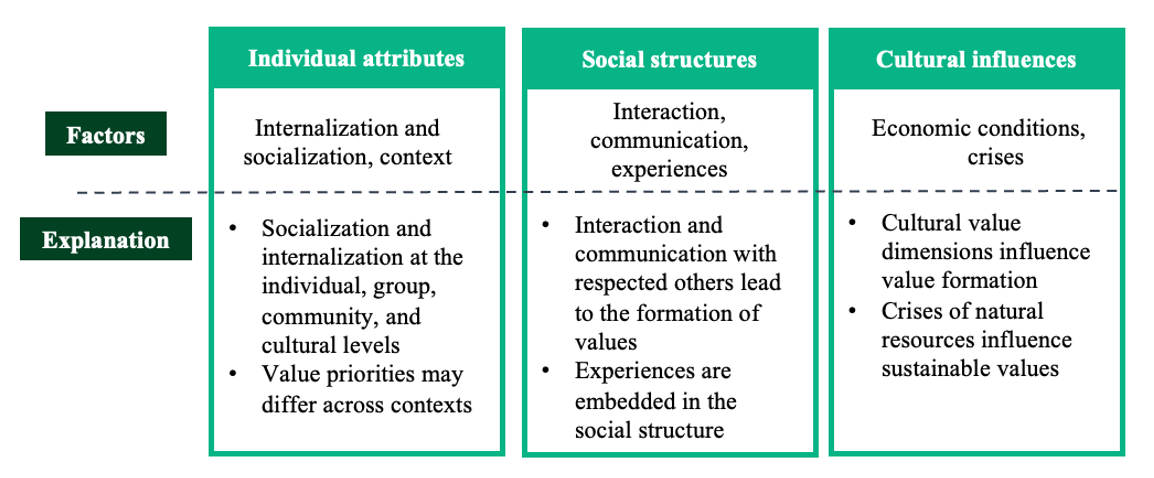
Figure 6: Drivers of Values and Sustainable Values, Own illustration.
The VBN theory views values as deeply rooted and established early in life.87 Thus, values are seen as relatively stable over time.17 Schuster, Pinkowski, and Fischer (2019) examine the stability and change of values in adulthood: They suggest a moderate to high rank-order stability of values, even with life-changing transitions as seen in Table 2, but at the same time examine small changes, with aging as a possible theoretical explanation for the changes.111 Kendal and Raymond (2018) examine changes in the context of the individual and find that values can change through immigration and emigration from a group over time, through environmental shocks, social-cultural changes, and within the individual through maturation.112 Some researchers suggest major changes in values in early adolescence and also in adolescence without any crises, since values are developed in this period as identity forms.113,114 Thus, values may emerge because of a developmental process that is completed by adulthood but life experiences, transitions, the influence of others, or maturation affect them to some extent.111 However, the influence of life transitions on values is inconclusive.111 Although, some scholars and theories assume that individuals have a stable value system, others suggest a fluctuating system in which individuals do not apply the general abstract value priorities to specific issues, but rather modulate and re-evaluate the importance assigned to values.110 Thus, the emphasis placed on values can be shaped and reshaped over the course of an individual’s life.17
Table 2: Impact of Life Transitions on Values, Own illustration, based on Schuster, Pinkowski, and Fischer (2019).111
| Transition | Change in Values |
| Educational Transitions | No consistent pattern of mean-level value change.111 |
| Migration (immigration and emigration) | No proven way of processes or direction of value change.111,112 |
| Parenthood | Small but significant shift toward conservation values among mothers.111 |
| War Zones | Stable values, where small changes are not systematic or predictable.111 |
| Maturation | Changes in values during early adolescence and adolescence.112,114 |
After examining the stability of values, individual attributes are investigated as a driver of sustainable values. These focus on the socialization, internalization, and the context of sustainable values. Individuals develop value priorities that simultaneously address their basic needs, the opportunities and barriers, and the perceptions of what is legitimate or forbidden in their environment.40
Values are acquired and transferred through socialization and internalization processes.43 Kenter and colleagues (2019) propose a figure that visualizes the difference between the socialization and internalization of values, reflecting the individual, group, community, and cultural levels, and also examine the transfer of values between social levels: The internalization process begins with the individual holding certain values and interacting with the group level through feedback that strengthens or weakens the relationships of values, which then interacts with the community and cultural levels, leading to the internalization of specific values.43 Internalization at the personal level is achieved by individuals observing interpersonal dynamics and adjusting their value orientations to align with the social values of the group.43,115 The internalization process depends on personal reflection and intra-individual deliberation.43 The socialization process happens in the opposite direction and leads to the transfer of values from the cultural to the individual level.43 The values that emerge from socialization are supposed to be solidified through social learning and social norms.43,116 Social learning in sustainability science functions as a link between the individual and the collective, and influences the understanding and change of social values, with individuals with a lower understanding of social values being more likely to change their values after deliberation.117
In terms of the context, there is a difference between believing that values exist as discrete entities that are pre-formed and held by individuals, and believing that they are only coming into existence when manifested or in deliberation.118,119 The weight given to different values may depend on the role individuals are in when making the decision: Dietz, Fitzgerald, and Shwom (2005) differentiate between selling a car to a close relative or to a stranger and note that this can also be applied to contextual cues influencing the protection of the environment.17 Thus, in contrast to the suggestion that important values in a value system are activated when an issue is raised, individuals reconstruct their value priorities within a specific context.110 Therefore, the drivers of sustainable values should also take the context into account.17
Regarding social structures, interaction, communication, and experiences are explored as drivers of values and sustainable values. The emphasis individuals place on values, which leads to a sense of identity, is developed through interaction with others whose views are respected.17 Ravenscroft (2019) points out that by meeting collectively individuals form and express a bespoke set of values with respect to issues, which become shared.118 Thus, a community develops a commonality in its values through frequent interaction, but never achieves perfect agreement.17Communication with others who are respected, as one part of interaction, shapes and reshapes the emphasis placed on specific values.17
Values can emerge and be learned through experiences.22 The common experiences that individuals have are embedded in the social structure, such as education, age, and gender, but major societal changes, such as changes in political conditions, can also have an influence on the emphasis placed on certain values.40 For example, the influence of religion on values for sustainability by focusing on the relevance to the management of the commons may be positive, but in some cases, such as a potential incompatibility or conflict in social values, it can also conflict with sustainability goals.43,119,120 Individuals have unique experiences, such as immigration, illness, or the relationships with their parents, that affect their value priorities.40 Life experiences, behaviors, or the influence of and experiences with other people can influence value formation and change.22,111 Kinzig and colleagues (2013) mention recycling as an example of learning sustainable values from experience: It was initially driven by external pressure, but evolved into a second nature to many individuals, resulting in increased recycling even with reduced enforcement.22 However, individuals do not seem to transition their values to changes in the social context, but rather select settings fitting their values.111 Thus, most people maintain their value structures over time, while only some change the value structure.111
Cultural influences examine the cultural factors of economic conditions and crises that lead to the formation of sustainable values and promote pro-environmental behavior.10 Individuals vary in their personal value priorities because the cultural value dimensions, which represent society’s guiding principles, lead to the formation of their values.10,108 Cultural dimensions reflect the collectively shared ideals that characterize individuals within a society.108Yang and colleagues (2024) state that values can change depending on the cultural context in which individuals live, and individualistic and collectivistic cultures have different influences on the emphasis placed on values.10 Forexample, economic growth can lead to a shift in values towards more individualistic values, while an economic decline can lead to a shift towards more collectivistic values, which can be connected to sustainability.35 In addition, crises such as natural hazards are one of the most rapid triggers for radical changes in principles and life goals, which are also likely to affect values.43 Particularly with regard to sustainable values, crises of natural resources or climate change are important drivers for forming and connecting shared values of nature with a focus on thinking and acting together toward the values.43 Differences in the cultural dimension are primarily observed at the societal level rather than the individual level, as they reflect the collectively shared ideals of the members of a society.108
2.4.3 Outcomes
The outcomes of sustainable values on behavior can shape, justify, and explain various behaviors by being deeply rooted motives in different cultural contexts.8,26 Values influence decisions leading to individual and, consequently, group behavior related to sustainability.17 To provide a comprehensive overview of the outcomes, the individual and the collective levels will be explored first, and then the business context is investigated, also relying on the measures and theories mentioned above. Nazirova and Borbala (2024) suggest taking into account the factors listed in Figure 7 when exploring the interrelationship between values and behavior.26 Since a detailed exploration of each factor is beyond the scope of this thesis, the focus is set on value-driven decision-making, incorporating the context and value-expressive functions to highlight sustainable values.

Figure 7: Factors influencing the Relationship between Values and Behavior, Own illustration, based on Nazirova and Borbala (2024).26
At the individual level, the pathways through which values are transformed into sustainable behavior and the impact of self-identity are examined. Values influence individual decisions and play a key role in shaping individual and group behavior, including in relation to the environment; the more central a value is to individuals, the more likely they are to engage in promoting the attainment of that value.17,40 The translation of sustainable values into individual action depends on how personal factors and situational contexts facilitate or inhibit individuals’ expression of their values.10When they inhibit expression, the impact of values on sustainable behavior is weakened.121 In addition, values are activated primarily through a reflective process of self-examination rather than through immediate judgments by individuals.17 Since environmental decisions often require individuals to make decisions about issues they haven’t thought much about before, whether those decisions reflect their values depends on the context and whether individuals have time to consider their values: quick decisions can reduce the influence of values or distort the weight given to certain values.17 Values can also have a weaker influence on behavior when they are considered to be irrelevant as a guiding principle for an individual’s life in certain situations.121 In addition, individuals may behave inconsistently with their values by doing what is accepted by the surrounding environment: Therefore, context, time, and place must be considered when examining the value-behavior relationship.26
Self-identity shapes the extent to which individual values are expressed and refers to the factor of value-expressive functions in Figure 7.10 Values constitute an integral part of human identity, and value-congruent behavior is particularly evident when individuals perceive certain values as important.5 Accordingly, individuals with strong environmental values are likely to engage in proactive efforts to reduce a company’s environmental impact or adopt precautionary measures.44 Furthermore, it is suggested that individuals with a greener self-image have higher levels of life satisfaction.122 Sivapalan and colleagues (2021) examine that altruistic and biospheric consumers focus on pro-environmental oriented consumption values, whereas egoistic consumers focus on self-centered consumption values.96The value-basis theory examines that individuals might hold multiple values at the same time.10,53 Therefore, individuals are capable of pursuing multiple objectives simultaneously, and values are not mutually exclusive, but economic, social, and environmental values can coexist, with the possibility of relatively balanced values across the three domains, indicating an enduring belief that the three goals are mutually desirable and interrelated.44 In addition, to see themselves as being consistent, individuals adhere to their values or past behavior, including with respect to sustainability.78,123 Behavioral consistency is moderated by majority or minority support for environmental values: minority support leads to behavioral consistency, where past behavior positively predicts sustainable actions, while majority support leads to inconsistency.124
The outcomes related to sustainability at the collective level focus on altruism. Kenter and colleagues (2019) state that all values related to sustainability have a social dimension because collective action is needed to address the path to sustainability.43 An altruist’s personal well-being increases in certain aspects when the well-being of others increases.125 Altruists anticipate negative consequences of environmental degradation that lead to worse living conditions for others, and therefore individuals with altruistic values tend to engage in environmentally friendly behavior.10,126 Values are thus also invoked in the expressions of hope or concern about the human impacts on society, where changes in values are expected to lead to shifts in behavior.17 However, decisions are influenced by multiple factors, and behavior is not always the result of thoughtful decisions.17
In the context of altruism, the three value bases for environmental concern that influence pro-environmental behavior according to the value-bases theory are relevant.17,53 A significant positive effect of altruistic and biospheric values on pro-environmental behavior is shown.10,11 In addition, a significant positive relationship between collectivistic culture and both altruistic and biospheric values, which also mediate the relationship between collectivistic cultures and pro-environmental behavior is examined.10 Thus, pro-environmental behavior is often driven by altruistic motives and results from a balance between personal and collective interests.10 In the business context, altruism can lead to an enhanced reputation, which can lead to benefits such as cost reduction or assurance of sustained collaboration with partners.10
When exploring the outcomes regarding the business context, the relationship to the theories and measurement methods is integrated. The business context focuses on cultural values being compatible with sustainability adoption, sustainable consumer behavior, the influence of values on corporate social responsibility (CSR), and the values of managers, as shown in Table 3.
Table 3: Impact of Sustainable Values in Companies, Own illustration.
| Author(s) | Influence in Companies |
| Haxhi and van Ees (2010) | Individualistic cultures exhibit a greater propensity to establish codes of good governance (CGG): Culture can serve as an indicator of a country’s regulatory means related to good governance.127 |
| Marcus, MacDonald, and Sulsky (2015) | The stronger the social or environmental values of individuals, the more likely they are to take proactive initiatives reducing the company’s environmental impact, or to take precautionary measures when the environmental impact of an action is uncertain; individuals with strong economic values engage in corporate actions that undermine long-term sustainability.44 |
| Ciocirlan and colleagues (2020) | The core VBN model holds in the workplace.87 |
| Prömpeler and colleagues (2023) | The relationship between chief executive officer (CEO) biospheric values and sustainability is strengthened by egoistic values of CEOs.102 |
| Fordham and Robinson (2019) | CSR is driven by values influencing the sustainability performance of companies.128 |
| Schaefer, Williams, and Blundel (2020) | A combination of achievement and benevolence values significantly impacts environmental engagement of managers.52 |
Sustainability adoption may be more compatible with specific cultural values, as some of Hofstede’s cultural characteristics may facilitate specific sources of institutional pressures or stimulate institutional actors in the process of institutionalization to sustainability.6 Investigating Hofstede’s dimensions further, individuals with a higher collectivism, as opposed to individualism are expected to place greater emphasis on sharing with the group and a greater willingness to sacrifice personal interests to achieve group goals.5 Therefore, some studies find a positive relationship between collectivism and environmentally friendly behavior.5,10 For instance, collectivism has a statistically significant negative influence on materialism, which has a negative effect on consumers’ evaluation of green practices.5 Accordingly, business managers from India and Korea as less individualistic countries see unsustainable behavior as more unethical than Americans, which belong to an individualistic country.42 Other researchers suggest that in addition to collectivism, long-term orientation, femininity, and uncertainty avoidance seem to be central pro-environmental values.15 In contrast, reviewing different studies, Caprar and Neville (2012) find that certain values seem to be associated with sustainability adoption, such as power distance, but individualism/collectivism have mixed results, and uncertainty avoidance does not have an influence on sustainability.6Inglehart’s post-materialism dimension shows that county-level post-materialistic values precede pro-environmental behavior through the shaping of environmental concerns, increasing the relevance of the cultural context in explaining individual sustainable behavior.108 Related to Inglehart, pro-environmental values increase in importance as individuals develop an understanding of their interconnectedness with the ecosystem.92
As noted above, the GLOBE study found a negative correlation between cultural values and practices for seven out of nine dimensions, so between what should be and what is, which some scholars suggest is evidence that actual adoption lags behind declarative commitment to sustainability.6,109 However, Maseland and van Hoorn (2009) attribute the correlation to the survey measuring values as well as marginal preferences.109 Regardless of the measurement difficulties, if a society is characterized by low power distance and in-group collectivism, high institutional collectivism, future orientation, and uncertainty avoidance, the perceived strength of auditing and reporting standards on the perceived ethical behavior of firms will be higher.129 Such societies benefit most from standards, whereas other types of societies are likely to need enforcement mechanisms to counteract the effects of their cultural values that reduce the effectiveness of standards.129 However, there is no moderating effect of the human and performance orientation or assertiveness dimensions on the relationship between the strength of auditing and reporting standards and the ethical behavior of firms.129 The relationship between stronger auditing and reporting standards and higher ethical behavior of firms is moderated by cultural values.129
Ciocirlan and colleagues (2020) state that the core VBN model holds in the workplace, such that biospheric and altruistic values influence employees’ ecological beliefs whereas egoistic values do not.87 They state that the variables within the VBN model can be utilized to explain employees’ conserving behavior: Employees’ biospheric and altruistic values influence ecological beliefs, which affect the AC of environmental issues in relation to their jobs, teams, and organizations.87 Therefore, high biospheric values appear to be the strongest predictor of an individual’s ecological worldview regarding sustainable consumption, and individuals with low egoistic values purchase more environmentally sustainable products.54 In addition, the predictive power of egoistic value orientation is lower than that of biospheric values.54 However, Prömpeler and colleagues (2023) highlight the importance of CEO and director values in promoting sustainable practices and find that the relationship between CEO biospheric values and environmental sustainability is significantly strengthened by CEO egoistic values, contrary to expectations.102 CEOs act in the best interest of the firm, thus warrant a strong focus on environmental sustainability.102
Schaefer, Williams, and Blundel (2020) examine the values of small and medium sized business managers connected to their personal and organizational-level engagement with environmental issues: By identifying four ideal types of managers using the SVS and describing how values shape the construction of environmental engagement, they demonstrate that values play an important role in corporate environmental engagement.52 In contrast to Schwartz, they investigate that managers draw on eight of ten value domains simultaneously, even though they are on opposite dimensions.52 Overall, self-transcending values are positively related to environmental and social engagement regarding the business context, while self-enhancing values are negatively related to it.52,130 Dalvi-Esfahani, Ramayah, and Rahman (2017) also find that strong self-transcendence values strengthen managers’ AC and personal norms on the intention to adopt green practices, whereas self-enhancing values do not significantly contribute to sustainable decision making.61 Moreover, they suppose that the severity of environmental issues and the AR for the problems can activate a moral obligation among managers to act pro-environmentally, but the severity of environmental problems may not have reached a sufficient level to activate managers’ self-interest to take responsibility and implement sustainable actions.61
Fordham and Robinson (2019) address the influence of social values on CSR and provide evidence that the sustainable behavior of institutions is challenged when individuals in the workplace embed their values in CSR.128 They state that CSR is value-driven and aim to investigate the social values that drive CSR practices, including the formation and impact of values at the individual, group, community, and the broader societal level.128 Both transcendental and contextual values are found within CSR, and all four value providers (individual, group, community, and society) are important in linking CSR to sustainability, where the transfer of values between levels and contexts is also important for new practices.128 Hemingway and Maclagan (2004) focus on the personal values of managers as a factor explaining the formulation, adoption, and implementation of CSR policies in organizations: the values may find expression in the opportunity to exercise discretion, and therefore CSR represents the personal values of managers who exercise influence by initiating or changing specific projects to address their moral concerns.131 In addition, managers committed to social responsibility can inspire employees to make a difference.131
2.4.4 Moderators
There is an inconsistency in the relationship between environmental values and pro-environmental behavior, which can be due to omitted moderating variables.132 The relationship between values and sustainable behavior depends on beliefs about the behavior, and thus on various factors that change beliefs.132 To examine the moderators that strengthen, weaken, or change the relationship between sustainable values and the identified outcomes, the cultural context, social context and structural determinants are examined.
Because cultural considerations of individualistic and collectivistic cultures have been explored in the moderators on social norms, this chapter will only briefly examine them. They refer to Hofstede’s dimension of individualism versus collectivism, exploring whether the society focuses on the individual or the group.98 Individuals with a higher collectivism are supposed to place more emphasis on sharing with the group and sacrificing individual interests to achieve group goals and interests.5 Thus, collectivism may increase the adoption of sustainable practices by reducing consumption values.5 Therefore, cultural values can moderate the relationship between environmental values and individual behavior.15
The interactions of individuals with others and the social context in which the behavior occurs are consequential.17 For instance, localized interpersonal contexts, such as social norms or neighborhood ties, influence the transformation of values into behavior.11 When making decisions, individuals are influenced by a variety of factors, where the effect of sustainable values can be swamped by other factors.17 In this work, the focus is set on the socioeconomic status (SES) and collective efficacy. Regarding the SES, Yang and colleagues (2024) find that individuals with a high SES place a greater emphasis on the ethical aspects of business collaboration, while individuals with a lower SES tend to focus on personal interests and needs.10 For higher SES individuals, personal belief in climate change matter more, while perceived social norms are a more important predictor of pro-environmental behavior for individuals with a lower SES.133 Regarding the individual, there is a positive moderating effect of the SES on the relationship between biospheric or altruistic values and pro-environmental behavior.10 The relationship between environmental values and sustainable behavior is also moderated by collective efficacy.134 Collective efficacy refers to an individual’s perception of their collective group’s ability to successfully engage in sustainable behavior: Individuals who do not believe in the collective efficacy of their group are less likely to behave pro-environmentally.134,135 Thus, individuals holding low environmental values require strong levels of collective efficacy to engage in pro-environmentally.134 On the other hand, individuals who perceive strong collective efficacy are more likely to engage in pro-environmental behavior.134
Structural determinants refer to factors that are beyond an individual’s control but influence sustainable decisions. For example, when making decisions such as buying a house, which may be based on various factors such as neighborhood character or school quality, once the decisions is made, it influences all subsequent decisions such as commuting, thus affects sustainability.17 Furthermore, individuals have little control over the amount of public support being available in their community, but it still has an effect on sustainable behavior regardless of the underlying values.17 The focus is set on green human resource management (HRM) and environmental information as moderating factors.
With regard to the business context, green HRM is identified as a moderator between employees’ environmental values and their green creativity, which can be related to green behavior.8,14 Thus, high levels of green HRM can strengthen the relationship between environmental values and work meaningfulness which influences green creativity and motivates to engage in sustainable behavior.14 Similarly, work meaningfulness also has an impact on the relationship between employees’ environmental values and green creativity.14 In addition, exposure to environmental information such as information about environmental problems or about the course of actions effective at dealing with those problems, can be a moderator of environmental values and pro-environmental consumption.132 Environmental information can change individuals’ perceived costs and benefits and thus influence the relation between values and sustainable behavior.132 The effectiveness of environmental information in promoting sustainable behavior depends on the values the individual initially holds: Contrary to expectations, it has no effect if the individual already holds environmental values.132 Communicating information by interacting with individuals about others’ actions to deal with environmental problems can demotivate biospheric-altruistic individuals to act sustainably, but promote the behavior of individuals who place importance on money and possession.132 Thus, the moderating effect of information depends on the context and individual differences, increasing the need to design the communication accordingly.132
2.5 Summary and Future Research Needs
The purpose of this chapter is to summarize the findings of the literature review regarding the measures, drivers, outcomes, and moderators for both concepts. It also examines future research needs identified in the literature. As highlighting each research gap is beyond the scope of this study, a subset of these gaps will be explored.
This chapter first provides an overview of the key terminology and mentions the lack of a unified definition for both concepts, before focusing on key theories such as the TPB and the VBN theory that have influenced the historical development of both concepts. Exploring the comparative adequacy of different theories in explaining empirical results remains an object for future research.20 Examining measurement methods of social norms leads to the process of assessing the interdependence of the behavior, the relevant reference group, existing descriptive and injunctive norms, and expectations or perceptions of social norms. The drivers of sustainable social norms distinguish into norm creation, norm learning, and norm diffusion stages. The individual level norm learning stage is divided into three substages consisting of pre-learning focused on gathering information, reinforcement learning involving feedback on behavior, and the internalization of norms. Future research is needed to explore the development of descriptive and injunctive norms, the interactions between them during the process, and their relative influence on the evolution of behavior.20 In addition, the process of social norms becoming internalized norms in a model is an avenue for future research.20
The substantial influence of norms on the behavior of individuals as well as firms and the varying influence of different norm constructs is examined in the outcomes. When social norms are internalized, they represent internal obligations and conformity occurs to express values, whereas external obligations of social norms are related to the Social Identity Theory and the visibility of actions. The double effect of culture and the effect of leaders are explored in the business context. A research gap exists regarding which contexts are faster in adopting institutional pressures for sustainability, and why only some organizations implement sustainability in their activity under the same institutional pressures.6Furthermore, the time frame in which changes in perceived norms lead to changes in behavior remains unclear.32 A comprehensive overview of how behavioral attributes influence the effect of dynamic norm messages also represents a gap in research.136 The moderators of sustainable social norms examine that descriptive norms are influential when the interdependent and independent self-construals are activated, but the influence of injunctive norms depends on the interdependent self-construal. In addition, individualistic versus collectivistic and tight versus loose cultures moderate the influence of social norms at the cultural level. There is a need for a deeper investigation of individualistic and collectivistic cultures influencing the relationship between social norms and sustainable behavior in order to resolve the differences.89 In addition, there is a need to identify contexts that give rise to robust behavioral regularities.20
The chapter on values examines theories leading to different measurement methods and scales, such as the SVS, PVQ, Inglehart’s value survey, and the NEP. In addition, the critique offers insights into potential improvements in the measurement methods. The drivers of values focus on internalization and socialization processes, as well as the context influencing value priorities, while also considering interaction, communication, and experiences of individuals, and the influence of economic conditions and crises on value formation and change. Future research is needed to explore the shifts in values as they move across the individual, group, community, and cultural levels to explore sustainability transitions, as scaling up and down between the levels leads to changes in the conditions of society.43 The stability of values remains an objective for future research, as the influence of life transitions on values is inconclusive.111
The outcomes at the individual level focus on the pathways through which sustainable values translate into behavior and self-identity. The collective outcomes examine the significant influence of altruism on sustainability, and the business context outcomes explore the values, particularly self-transcendent values, that are compatible with sustainability adoption, value-driven CSR, and the impact of managers’ values on sustainable corporate behavior. Sustainable behavior needs to be measured in the future, as there is a lack of data on the actual behavior when assessing, for instance, intentions to act sustainably.5,17 Furthermore, the behavioral outcomes of a population cannot be generalized, increasing the need for future research on various representative samples of the population that vary in their value structure and thus in their behavioral outcomes.44 The moderators examine individualistic and collectivistic cultures, the SES influencing biospheric and altruistic values, and perceived collective efficacy. Higher levels of green HRM strengthen sustainable behavior and the influence of environmental communication depends on individual characteristics. However, the specific ways in which the sociocultural context affects the extent to which values influence sustainable decision making remains an area for future research.121 Furthermore, future research in various cultural contexts is needed to explore the underlying mechanisms impacting sustainable behavior and its generalizability across contexts.5
3 Practical Implementation
This chapter aims to integrate the insights regarding both concepts in order to develop effective methods for practitioners. This is important because behavior change does not usually occur spontaneously but must be initiated by the self or others.137 Although targeting social norms is only one of many ways to achieve social change, such as voting, protesting, and resisting, it can be effective, as will be shown below.21 This chapter begins by considering different approaches to achieving behavioral change toward sustainability. It first examines the operationalization of interventions and policy strategies. Then, it explores alternative mechanisms, while also considering relevant actors. To provide a comprehensive overview of social norms and values in the context of sustainability, best-practice examples, such as frameworks for establishing the approaches in companies are analyzed. Finally, this chapter addresses the internal and external drivers and barriers to the practical implementation.
3.1 Approaches for Behavioral Change
An organization seeking to enhance its sustainability performance is responsible, among other things, for the sustainability of the choices it enables its customers.138 Therefore, this chapter aims to examine different approaches used to achieve a shift of behavior toward sustainability by intervening in social norms and values. It provides practitioners with information on how to design effective interventions and policy strategies, as well as information on alternative mechanisms that can be adapted to the specific context and relevant actors. Change towards sustainability is most likely to be reached when different complementary instruments and approaches such as interventions, bottom-up social change, individual actions, and climate legislation are implemented and combined.1,2
Because interventions are context specific, a generalization across contexts is difficult.2,139 Therefore, before intervening, practitioners can use a behavioral “diagnosis” to analyze the specific problem.37,140 It identifies the factors that prevent individuals from engaging in desired, sustainable behaviors and allows to adapt effective interventions and tools to the specific context.37,140
3.1.1 Operationalizing Interventions
Since behavior is often at the root of environmental problems, behavioral interventions potentially represent a cost-effective method to address and alter critical actions.1 Policymakers can use interventions because they are less technocratic, less economically and politically costly, emerge from the bottom up leaving the decisions in the hands of individuals, and can scale by triggering tipping points.2 Social norm interventions outperform other behavioral change interventions, such as educational incentives, by reaching many individuals simultaneously.37 The design of interventions related to social norms can take many forms, as shown in Table 4.37 In the case of value interventions related to sustainability, assessing the behavioral implications of different value types is necessary to design effective interventions.44,92 Altering individuals values can be a difficult task and take a long time.54 Mostly there is a temporary change in values due to interventions, while long-term value changes occasionally occur.141 Horcea-Milcu (2022) examines two pathways using values for a change toward sustainability and explore four leverage points related to values.13 Thus, values are not pre-formed and may require ways of deliberation or intervention to be formed, activated, or changed.119
Table 4: Overview of potential Interventions, Own illustration.
| Author(s) | Possible Intervention |
| Constantino and colleagues (2022) | If the perceived social norm is unsustainable, social norm interventions can be applied in five ways:”[…] (a) turn attention to sustainable practices and away from unsustainable ones, or highlight normative values that are at odds with the unsustainable practice; (b) emphasize the prevalence of a sustainable norm among a segment of the population […]; (c) turn attention to growing trends toward the sustainable norm over time […]; (d) correct misperceptions about the prevalence of the unsustainable behavior in question (i.e., when there is pluralistic ignorance); or (e) identify an “information broker” when a behavior is polarized”2 (p. 82). |
| Legros and Cislaghi (2020) | Mechanisms that influence social norms are structural changes, the correction of misperceptions, role models, legal reforms, and power dynamics.31 |
| Thomas and Sharp (2013) | Social group feedback conveys messages about behavior that is widely accepted and considered the norm and is used to encourage people to adopt the behavior; it can be applied to sustainable behavior.41 |
| Nisa, Varum, and Botelho (2017) | Two interventions with significant positive effects: descriptive social norms that communicate a high prevalence of sustainable behavior and nudges; however, the effect of descriptive social norms is too weak to be considered a game changer.142 |
| Salmivaara and Lankoski (2021) | Norm-activation message signs can have an effect on norm activation, but it is too weak to be statistically significant: Social norm activation must compete with alternative motivational drivers that may be more decisive.138 Steering consumers through the activation of injunctive norm messages is not as straightforward and does not automatically guarantee strong results.138 |
| Niu and colleagues (2023) | Descriptive norm interventions are highly effective in promoting the purchase of sustainable products at different personal costs.143 |
| Sparkman, Howe, and Walton (2020) | The use of dynamic norms or highlighting an opportunity to work together toward a common goal is often present in the context of climate change, but rarely addressed in interventions.23 |
| Huber, Anderson, and Bernauer (2018) | With voluntary carbon offsetting, social norm interventions have little effect if the behavior is not yet widespread, but the combination with government policy as an institutional norm signal leads to higher offsetting payments.144 |
| Rhodes, Shulman, and McClaran (2020) | Injunctive norms are more effective at changing/manipulating behavior than descriptive norms.82 The success of interventions depends on the audience (age) and situated interventions should be preferred.82 |
Yamin and colleagues (2019) conduct a comprehensive review of studies that have applied behavior change interventions, highlighting two dimensions in the design process: situated versus remote interventions, and group summary information versus exposure to behaviors and opinions.145 Accordingly, this chapter first aims to examine the contextual factors that influence interventions. It then shifts the focus to the message content.
Regarding the context, interventions can be categorized as either situated or remote.145 Situated interventions are delivered directly at the place where the behavior occurs, whereas remote interventions are applied in a context different from the one in which the behavior occurs.145,146 Situated interventions are likely to have a different impact than remote interventions because behavior is often dependent on the immediate situation, so contextual factors such as the physical environment, the information available, or the interactions occurring have some influence on behavior.145By modifying these factors, interventions can encourage behavioral change.145 Remote interventions, on the other hand, can be applied by delivering normative informational messages to targets in a different context.145 These normative messages must compete with a number of other strong motives in a complex environment.138
In terms of the message content, Nolan (2021) states that social norm interventions that promote pro-climate behavior are used to provide individuals “with information about beliefs and behaviors that are common and/or approved as a way to correct misperceptions and motivate changes in behavior”147 (p. 120).147 Practitioners can target different sources of normative information, fit the norms to the right reference group, and, if a norm is unfavorable, emphasize its dispersion or direction of change; those approaches will be examined below.37 Furthermore, if the dispersion draws attention to extreme behaviors in a community, representing the central tendency may lead individuals to believe that extreme behaviors are counternormative.37
Some sources of normative information, such as role models, popular or social media, are more effective in certain contexts than in others.37 Social behavior may require an individual role model to communicate a new norm, rather than targeting only group summary information.37 For instance, communicating an intervention by reading a sign about reusable takeaway boxes as an implicit source in the built environment is expected to be less effective than observing a role model buying them.148 Accordingly, Abrahamse and Steg (2013) find that modeling is more effective than social feedback methods that compare people against the averages or sharing summary information about norms.149 However, role models, such as researchers advocating for climate policies, should themselves have a low carbon footprint to enhance credibility and lead the way to drive policy support.150 Popular media such as radio and television with embedded messages is another source affecting behavior change.151 However, when using popular media, it is more challenging to deliver situated interventions, and thus interventions can have less contextual specificity or precision in terms of targeting, message tailoring, and timing.2 In addition, using social media to shift social norms provides various strategies for communicating normative messages.152 Lutkenhaus, McLaron, and Walker (2023) provide a framework for using social media that includes numerous strategies categorized along visibility and individual versus community level approaches.152
Norm-based interventions can influence individual behavior either directly or indirectly through their effect on the behavior of the reference group.153 Thus, rather than attempting to shift community norms, it can be more effective to develop targeted messages for subgroups within the community that possess strong local identities.37 Therefore, interventions designed to fit the average person often fail to address the unique priorities and worldviews of different groups.2
If the subjective perception guiding behavior is unsustainable, it can be targeted to change the behavior toward sustainability.37 Schneider and van der Linden (2023) note that correcting misperceptions of a norm can be more effective than trying to change the underlying beliefs.32 Communicating information by exposing individuals to others’ behaviors can be effective.62 In addition, consumers should be able to publicly express their environmental concerns and demonstrate their commitment to sustainable consumption, so that it becomes a shared public responsibility, consumers identify with the shared system, and are motivated to participate.5 However, correcting the misperceptions needs to be integrated with other mechanisms that account, for instance, for changing internalized norms.31 Dynamic norm messaging may be promising for scaling desirable behavior as the norm begins to change.136 In addition to providing information about the actual prevalence of a behavior, interventions also communicate whether a behavior is desirable and typical.153,154 In contrast, Miller and Prentice (2016) state that interventions to reduce environmental harm do not focus primarily on correcting misperceptions, but rather on the output of behaviors, thereby aim to influence high users to use less.153 They can be influenced and made uncomfortable with their behavior by receiving information that their peers consume less energy and they are not doing their part of the collective action, while low users must be encouraged to remain at low levels of use.153
Constantino and colleagues (2022) distinguish between social norm and social tipping interventions (SOTIs) in climate action, with the former tending to focus on promoting existing sustainable norms over unsustainable ones by representing certain patterns of behavior visible.2 The latter explores a process of how social norms can be seeded when the existing norms are unsustainable, which requires an initial incentive for sustainable behavior, such as social information or subsidies, in a subset of the population that could then trigger a tipping point and establish the behavior as a social norm.2,155 The tipping point depends on a critical size, clustering, and the way of spreading.2 Efferson, Vogt, and Fehr (2020) focus on how to strategically seed social reinforcement within individuals’ networks to trigger a critical mass of societal change.156 Whether and how a norm changes depends, among other things, on how the social network is structured, which members of a society are targeted by an intervention, and the tendency to adhere to social norms.2
3.1.2 Policy Strategies
Kinzig and colleagues (2013) categorize four different types of policy strategies regarding social norms: active norm management, choice architecture, financial interventions, and regulatory measures.22 The first one aims to change norms, while the others attempt to alter social norms by encouraging individuals to change their behavior in the short-term, potentially changing social norms in the long-term.22 As active norm management is discussed in the previous chapter, this chapter will explore strategies related to the choice architecture, financial interventions, and regulatory measures as outlined in Figure 8. Since the sole implementation of regulatory measures cannot lead to adequate green consumption, a combination of subsidies and penalties is required, increasing the need to investigate different policy strategies.157 Policy design should take into account the context and the integration of ethical appeals.7 In addition, policies must be tailored to different value structures of individuals.92 Furthermore, when implementing norm interventions in policy, it is necessary to determine when targeting norm perceptions is most appropriate in real-world settings.37
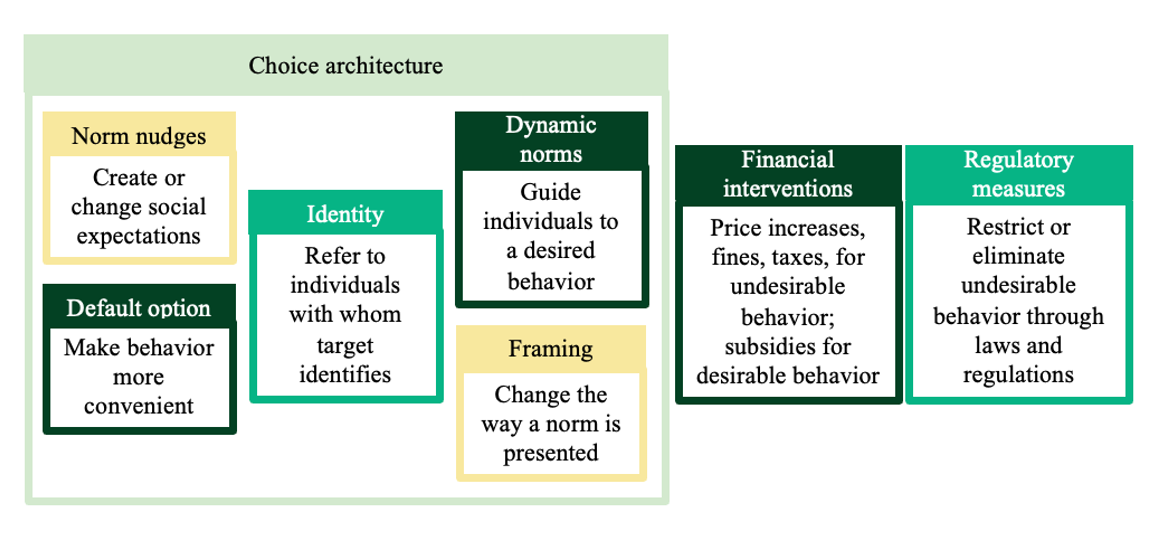
Figure 8: Policy Strategies, Own illustration.
Beckenbach (2016) refers to policy tools that incorporate behavioral factors, such as cognitive biases, as behavioral environmental policy, which includes nudges.158 Nudges are defined as “any aspect of the choice architecture that alters people’s behavior in a predictable way without forbidding any options or significantly changing their economic incentives”159 (p. 6). The choice architecture includes the informational or physical structure of the environment that influences the ways of decision.159 Nudges, as small, unnoticeable changes in the choice architecture that influence individuals’ behavior by guiding them to make automatic choices promoting behavior which is beneficial to society and the individual in the long-term, do not directly aim to change the value system of individuals.160 Thus, nudging individuals means deliberately intervening in the choice architecture without changing economic incentives or the available options themselves.161
Nudges encompass a variety of interventions.159,162 For instance, interventions can make use of norm nudges.18 Norm nudges aim to increase desirable behavior that is based on social norms by creating or changing the social expectations that drive compliance to norms.163 Accordingly, norm activation can be achieved by manipulating situational cues that increase the salience of the norm, reinforce beliefs that others conform, and encourage beliefs that others expect conformity.24,51,138 Bergquist, Nilsson, and Schultz (2019) examined that the influence of social norms on pro-environmental behavior is higher when communicated through cues in the environment.93 Thus, making behaviors and social norms more visible can be harnessed, for instance, through public buildings that display their resource use.22Castro-Santa, Drews, and van den Bergh (2023) address the nudging of low-carbon consumption by presenting an imitation on Facebook that includes green and non-green advertising and weak and strong social norms, where social norms are effective but less so than advertising.164
Another way to use nudges is to make behavior more convenient, which can lead individuals to internalize norms that sustain the behavior.22 Removing barriers that make sustainable actions more accessible or the most salient option is possible, for instance, by setting a default option.142,165 Setting a default option can also indicate a social norm.1,160The individual’s freedom of choice is not restricted, but the way in which decisions are made is changed, for example through opt-out systems, in order to increase the number of individuals engaging in desirable behavior.22,160 However, since poorer households are more likely to stick with the default option, they may end up with more expensive green products than they initially seek, while richer households would be willing to pay more for the green product than the default, still increasing the welfare of society as a whole.166
Harnessing identity as a strategy is also considered a nudge.161 Interventions and policies aiming to promote sustainable behavior improve their outcomes when the norm message refers to people with whom the target identifies, as Dominicis and colleagues (2019) studied in the context of electricity conservation.2,167 Referring to a specific company or non-governmental organization (NGO) can make communications about social norms more influential if they are perceived to be close to the target.69 Moreover, in the context of climate change, a highly polarized issue, the degree to which the messenger shares a social identity with the target is particularly crucial, as messages from perceived out-groups could backfire.168
Framing as a nudge does not only apply to policies.160 It refers to the way a norm is presented and has an impact on conformity.2 It can be used to encourage sustainable choices by expressing a message in a particular way.169 For instance, prescriptive social norms emphasize the appropriateness of desirable behavior, whereas proscriptive social norms emphasize the inappropriateness of undesirable behavior.20 In the pro-environmental domain, proscriptive norms are more influential.170,171 In addition, the use of a high versus low turnout script that presents the behavior as either frequent or not can be considered framing.172 For preferred behavior, the high turnout script increases participation by implying that many people are doing the desired thing, whereas the low turnout script implies that only some people are participating in the desired behavior.172 Sustainable behavior should be communicated by emphasizing that many others engage in it.32 Norms can also be framed as invitations to work together rather than as obligations, which motivates without social pressure and is therefore a powerful source of motivation and conformity even in private behavior.23,173 In addition, using a reduction instead of an elimination appeal in meat consumption is more effective, but also depends on the specific group targeted.174 Finally, negatively framed messages can increase the possibility that individuals will focus on the normative message and norm-based behavior is likely when a norm is in the focus of attention.50
Dynamic norms can be regarded as nudges guiding individuals toward a desired behavior when present.175 Dynamic norms and working together appeals are used to accelerate the adoption of new technologies, redesign the structure of incentives for sustainable behavior, and focus public campaigns on how behavior change connects people.23 In detail, communicating majority dynamic norms has a stronger influence on sustainable behavior than using minority dynamic norms.176 Loschelder and colleagues (2019) confirm that a dynamic norm intervention is effective and efficient in promoting the uptake of reusable mugs as a sustainable behavior, which is considered a nudge.177
Nudging reduces the influence of reactance because it does not restrict choices.164 However, green and norm nudges are highly context-dependent.18,161 In addition, nudging has several ethical concerns such as being manipulative.161Changes in the choice architecture are often not consciously perceived.142 Therefore, transparency is a key feature in designing green nudges, so individuals know and can identify the types of interventions used.159,161,178 Nudges can be seen as complements to, rather than substitutes for information or incentive focused regulations.161
Financial or economic interventions include price increases, fines, or taxes for undesirable behaviors and subsidies for desirable behaviors.22 Economic incentives apply to all individuals belonging to the jurisdiction that share the potential burdens of sustainable behavior and increase the possible measurable positive outcomes.22 However, in addition to providing new economic incentives, the already existing economic incentives need to be analyzed.25 In detail, taxes influence norms by conveying what society values and by prioritizing or restricting certain behaviors.22 A temporary tax at the effective level can be lifted once the adoption rate reaches a threshold without reducing the market share of the product because the purchase can be sustained by norms.71 However, a tax can also be seen as a signal that shifts the responsibility from the individual to the government and crowds out motivation.71 Furthermore, monetary incentives can crowd out social incentives to adhere to social norms.20,22
Subsidy policies are important to promote green consumption.157 The use of economic incentives proved to be effective in increasing recycling rates, particularly among highly motivated, financially constrained individuals.25 In addition, policymakers can use financial interventions such as taxes or subsidies to lower the threshold at which social tipping begins, as is seen in SOTIs.155 When implementing a combination of taxes and subsidies, since the use of a tax alone is less effective, the addition of social norms is particularly effective.179
Regulatory measures aim to restrict or eliminate undesirable individual choices.22 Laws and regulations can signal desirable or undesirable behavior to individuals.22 In addition, laws can influence social norms.180 They can change the perceptions of what is considered acceptable behavior with respect to a social norm and shape society’s expectations of companies, including with respect to standards.181 On the other hand, laws applied to guide and motivate sustainable choices by regulating individual behavior can face resistance.23
3.1.3 Alternative Mechanisms
The literature examines several other mechanisms and measures for shifting values and social norms toward sustainability. A detailed exploration of all mechanisms is beyond the scope of this thesis. Therefore, the focus is set on value change frameworks, education, and three additional support mechanisms.
Russo and colleagues (2022) explore five value change frameworks: Value Change Model, Values as Truisms, Terror Management Theory and Existential Threats, Attachment Theory, Beliefs about Human Values, Actualization of Values, and the Dynamic Value System.110 Across all the experiments examined, they find that a significant change in the importance of values with an average effect size ranging from small to medium is reported.110 Therefore, they challenge the assumed stability of values.40,110 The Value Change Model and the Values as Truisms hypothesis are explored in more detail for the purpose of this thesis.
Bardi and Goodwin (2011) consider two pathways to value change in their Value Change Model: the automatic and the effortful route.141 Value change can begin automatically, for example, through environmental cues, but the process must be continued through awareness and repeated stimulation at the cognitive level, leading to and sustaining the value change over time.141 In addition, they identify five facilitators of value change: priming, consistency maintenance, identification, adaptation, and direct persuasion.141
This thesis focuses on priming as a key factor in increasing the accessibility of values and producing a value-consistent behavioral response.182 Priming is also considered a nudge, but for the purpose of this work is examined in the context of the Value Change Model.165 A distinction is made between temporary change due to priming, which results from an environmental cue or event that activates certain values in the individual, and long-term change, in which an automatic initial change requires primes that lead to the use of the same alternative schema repeatedly, until the alternative schema is established and influences behavior.141 Thus, long-term change tends to be facilitated by gradual and repeated occurrences of an event.141 In detail, explicit priming draws attention to items that align with the target’s values, whereas implicit priming highlights items that do not directly reflect the target’s values but are related to them.182Chuang, Xie, and Liu (2016) examined that priming individuals’ interdependent orientation can increase the likelihood of engaging in pro-environmental behavior.183
The Values as Truisms hypothesis states that individuals hold values with little cognitive support and rarely question them; therefore, having them write down reasons for a list of values can lead to changes in values within individuals who lack cognitive support.111,184 Thus, to achieve a change in the importance attached to values self-report measures are important.185 Through self-reporting and reflecting, potentially guided by a third party, individuals become aware of their own values and behave accordingly, which can be related to value activation.185 Another effective way is to establish a connection between a value and an action that is not initially related to the value.153 Uren and colleagues (2018) investigate the tension between perceiving pro-environmental behavior as desirable but scoring poorly on pro-environmental behavior measures by exploring the meaning of the term sustainability with individuals who identify as pro-environmental.186 By conducting interviews, the study uncovers deeper socio-psychological processes influencing pro-environmental behavior, including being bound by cultural traditions and worldviews that sustain environmentally harmful practices, highlighting the influence of collective constructs in shaping pro-environmental behavior.186
In addition to value change frameworks, working with core groups of a population to change their attitudes and provide them with skills and knowledge to become change agents or role models within their communities can be implemented.187 The educational policies aimed at this outcome should be sensitive to cultural variables and predispositions to allow for adapted methods and avoid generalized approaches.188 Specific sustainable values can be made more salient through information campaigns that raise awareness of environmental problems.92 For instance, social actors can conduct campaigns that promote cultural values with internalized environmental values to effectively promote sustainability.10 Thus, education can be influenced to embrace more sustainable values.189 Furthermore, providing objects that support a behavior is not directly linked to social norms, but can still convey normative messages or increase norm salience and have an influence on norm perceptions.145 Removing psychological or environmental barriers when individuals are already motivated and there is no social stigmatization when they are acting on their intention is effective.37
Miller and Prentice (2016) state that the various mechanisms for conveying information to the targets can be categorized into three strategies: social norms marketing (SNM), personalized normative feedback (PNF), and focus group discussions (FGD).153 The three categories are outlined in Table 5. Approaches such as advertising campaigns, legal means, economic incentives, and deliberation can be used in addition to these strategies.22
Table 5: Practical Mechanisms achieving Behavioral Change, Own illustration, based on Miller and Prentice (2016).153
| Mechanism | Description |
| Social Norms Marketing (SNM) | One factual message showing the high prevalence of the desired behavior to all or a subset of members of a group, using T-shirts, posters, newspapers, door hangers, or email.153 Potential to deliver the information to a large group cheaply and efficiently, but subject to misinterpretation and suspicion.153 |
| Personalized Normative Feedback (PNF) | Providing individuals with discrepancies between their own behavior and that of their peers, so between their estimated norm and the actual norm via email or web-based, thereby correcting misperceptions.153 Labor intensive, but yields better results than SNM.153 |
| Focus Group Discussions (FGD) | Have groups discuss the misperceptions and their consequences.153Most labor- and skill-intensive, relying on skilled facilitators.153 The group of individuals is selected rather than a representative sample of the population.190 |
The SNM approach aims to correct misperceptions by providing information about the actual incidence of a behavior, for instance, through emails.153 Changing the presented summary information about the behaviors or opinions of the reference group is considered by some researchers to be the most straightforward manipulation of social norms, which relates to SNM.37 Individuals can be encouraged to engage in a desired behavior or reminded to engage in the future if they have already done so.37
Regarding PNF, numerous studies show that providing individuals with information about the energy-related behavior of their peers can reduce an individual’s energy consumption.153 When providing feedback to meat consumers, Alblas and colleagues (2022) find changes in meat consumption as a result of feedback, with high consumers reducing their consumption but low consumers increasing it.191 In addition, they did not find that a combined injunctive norm message decreasing the effect on low consumers.191
FGDs can be used to assess personal as well as structural barriers to sustainability, such as plastic packaging consumption, to provide a comprehensive overview of the barriers and to explore individuals’ awareness of a high incidence of unsustainable behaviors.192 An example of an FGD exploring the adoption of sustainable dietary behaviors and finding different perceptions of factors that constitute it is applied by Mollaei and colleagues (2023).193However, because FGDs are conducted with a limited number of participants, the results cannot be representative of the entire population of a country.192
3.1.4 Relevant Actors
This chapter explores relevant actors focusing on institutions, with an emphasis on governments, managers or corporations, and social activists. However, there are a number of parties that seek to influence values and social norms, these include “for instance, corporations, charitable organizations, neighborhood groups, organized religions, and public and private schools”22 (p. 165). It is suggested that society is moving toward sustainable development with an increasing SES, but to achieve the goal, guidance from the society and the government is required.10
Institutions, such as the mass media and governments, exert two ways which can change the perception of a norm: directly, when individuals make inferences about norms based on institutional signals, and indirectly, when individuals observe a shift in the prevalence of a behavior as a consequence of an institutional change.37 Institutions can provide normative information and change what is perceived as a social norm through decisions and guidance, provide default choices, change norms through innovation, and have an influence on policy support.32,37 Formal institutions can be important messengers of social norms when they are visible and perceived to be legitimate.37,194 For instance, the Supreme Court, as a prominent national institution in the United States of America, can orient individuals to certain norms because they assume that others are exposed to the same information.195,196 Thus, decisions of the Supreme Court can shift individuals’ perception of a norm without changing personal attributes.32
Governments as institutions represent important actors in social norm interventions because legal reforms have the power to change social norms by changing what people believe is valued and approved of in their society.31 As Schneider and van der Linden (2023) note, governments play a crucial role in the transition to low-carbon communities by adopting supportive government policies, but also regarding other sustainable actions by ensuring the availability of effective infrastructure, such as green technologies.32 Governments can introduce regulatory means to restrict or eliminate individual choices: Laws and regulations such as fines can signal that members of a community acknowledge an issue.22 Governments need to formulate policies to maintain the common good.22 In addition, government regulation is crucial to promote green consumption among individuals.157 Furthermore, governments can combine fiscal and behavioral interventions.179 However, undesirable social norms may persist or even increase despite governmental regulation.22
Managers and companies face increasing complexity in customer demands and a growing market competition, which pose new challenges to the management of organizations.142 Companies need to offer the right choices to allow individuals as consumers to act sustainably.92 In addition, the involvement of stakeholders within the company is a relevant step to ensure that an intervention does not inadvertently increase inequalities or results in unintended consequences, and is important for promoting social acceptance and efficiency.2
Social activism and social movements can represent another way of the emergence of new norms, spreading and effecting political change.2 Environmental movements are a central force influencing the way companies address climate change and may use different tactics or strategies to do so.197 For instance, the environmental movement has influenced sustainability reporting by establishing the norms for disclosure and the practices through which companies track and report their environmental impacts, and has impacted the adoption of green information systems.197 However, activists may be effective in directly influencing companies to adopt innovations, but are more powerful when they exert indirect influence.197
3.2 Best-Practice Examples
This chapter provides practitioners with five best-practice examples to assist with the practical implementation. Rather than reviewing best-practice examples from companies, it examines five practical frameworks, which are each linked to a previously explored approach or mechanism to provide practitioners with detailed information on the implementation. However, it is not possible to apply a single guideline to the design of effective approaches or interventions, as they are context-specific.198
The first framework relates to the design of effective interventions. Constantino and colleagues (2022) identify seven steps in the process of norm interventions and provide a guide to intervention design, posing questions that can be asked in a specific context or situation to identify potential constraints or challenges, and list steps that can begin to address these challenges.2 Before designing interventions to promote sustainability, it is important to identify the underlying network of values and norms, as well as the material or institutional constraints on behavior, which may promote certain norms and hinder change.2 The design guide presupposes the correct measurement of the behavior and associated expectations as well as the identification of relevant norms and the reference group.2 The guide is useful in the process of designing interventions, but it does not indicate whether or not an intervention should be used in a particular situation.2 It works in three sequential directions: First, it concentrates on the content of the norm message, then it focuses on the social context, and finally, it explores the message and the medium.2 By answering questions about the characteristics of the behavior and the context that have implications for the intervention design, the guide identifies and targets challenges to allow the design of effective interventions adapted to the context.2 In addition, it implies a measure of the strength of a norm intervention based on the answers to the questions.2
The presented framework can be combined or complemented with the guide regarding climate policy of Sparkman and Walton (2020) on how to choose the most effective social norm message regarding dynamic and static norms or working together normative appeals depending on the context of the intervention.23 Based on questions regarding the prevalence of the behavior, feelings of coercion, and the collective action problem, a recommendation is given regarding the use of dynamic norms with working together appeals or static norms.23
A framework for change agents, including policymakers or practitioners, regarding transformative social change toward sustainability is provided by Naito, Zhao, and Chan (2022).198 The transformative change guided by the framework assumes that human behavior and social structure interact and influence each other, and thus examines both.198 It distinguishes three actions that promote sustainability: private actions, social signaling actions related to pro-environmental values, and system-changing actions related to collective actions.198 The framework includes four processes: the behavioral intervention process, the structural intervention process, the behavioral diffusion process, and the structural transformation process.198 The first process aims to concretize the behavioral problem, target actors, and psychological barriers, before creating a behavioral intervention; the second refers to identifying the structural problem and target institutions, diagnosing the structural problem, before creating a structural intervention process to promote pro-environmental behavior.198 The behavioral diffusion process deals with the adoption of the promoted behavior across the population, and the structural transformation process relies on changes in, for instance, institutions and political will.198 The interactions between the four processes that lead to norm emergence, the shift of social meanings of action, and consequently pro-environmental social change can be explored in the framework.198 However, the framework does not aim to design interventions, as these depend on the specific context.198
Focusing more specifically on policy strategies used to promote sustainable social norms and values, Silvi and Padilli (2021) invent a roadmap for policymakers to incentivize pro-environmental behavior.25 They note that policy strategies can only be effective if the targets have a minimum level of intrinsic motivation.25 Thus, before implementing policy strategies, the intrinsic motivation should be assessed, as a low motivation implies policy strategies increasing motivation through, for instance, education.25 If the motivation is high, the prevalence of the behavior should be assessed to adapt effective strategies: A low prevalence indicates interventions that focus on facilitating the behavior, either financially through economic incentives, physically through the provision of required infrastructure, or socially through influencing social norms or values, for example, through the use of nudges.25 A high prevalence indicates policy strategies that further increase intrinsic motivation through campaigns or the implementation of the aforementioned strategies.25
Kraak and colleagues (2017) identify five choice architecture or nudge frameworks, models, and typologies that influence diet-related behaviors and adapt them to the restaurant sector, so that practitioners can gain insight into nudging in practice.199 They provide examples of how to change the choice architecture according to eight strategies to promote healthier foods.199 Thus, with regard to nudging in a restaurant to achieve an increase in the consumption of healthier foods, eight strategies can be used: place, profile, portion, price, promotion, healthy default choices, priming/prompting, and proximity.199 The strategies are categorized into changes in the characteristics of the restaurant environment and changes in the placement of the food, beverages, and meal products served and sold.199 However, they do not provide a guide that shows the effectiveness of different nudging strategies or how to combine them in different contexts, leaving the practitioner to choose by himself. In terms of the specific process of designing nudging interventions, Münscher, Vetter, and Scheuerle (2016) state that first a definition of the target behavior is required, then the approach to the behavioral context should be determined by examining whether nudges are applicable, before checking for challenges that prevent individuals from engaging in a behavior, and then linking the results of the check to nudge interventions.162 The process is visualized in Figure 9. However, they are also unable to provide a straightforward toolkit for policymaking, but suggest using strategies and determining which strategy could be applicable to the challenges.162
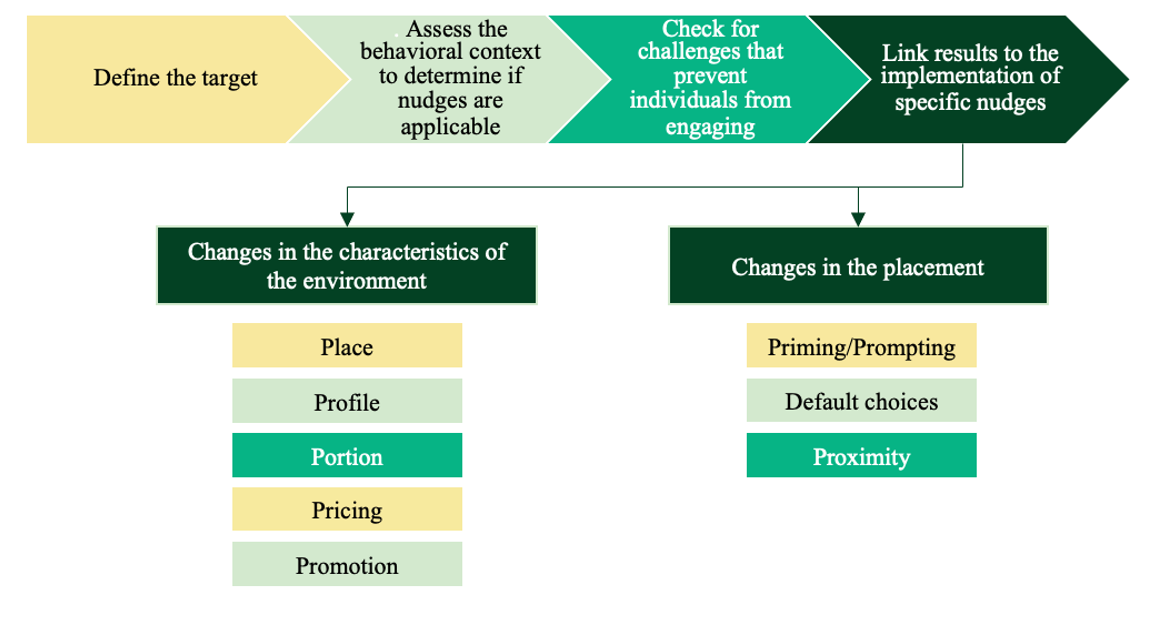
Figure 9: Process of designing Nudge Interventions, Own illustration, based on Münscher, Vetter, and Scheuerle (2016).162
Focusing on a specific alternative mechanism that can be implemented, five best practice recommendations for practitioners in conducting FGDs are mentioned by O.Nyumba and colleagues (2018).190 These include the skills of the moderator, such as providing a supportive and comfortable environment, good and active listening and observation skills, good communication skills, flexibility to adapt to the course of the discussion, ability to remain impartial, and a sense of humor.190 In addition, the results should be communicated using the provided guidelines of O.Nyumba and colleagues (2018), which ensure the appropriate reporting of key attributes and clarify the method of data obtainment, coding, and analysis.190 Finally, biases affecting individuals should be considered.190
3.3 Drivers and Barriers
Lacroix, Gifford, and Chen (2019) explore psychological barriers to pro-environmental behavior in individuals and invent a 22-item scale to measure barriers, which consist of change unnecessariness, conflicting goals and aspirations, interpersonal relations including social norms, lacking knowledge, and tokenism.200 Thus, instead of being a driver of sustainable behavior as examined in this thesis, social norms and values can also be a barrier. Therefore, this chapter examines drivers and barriers of the practical implementation related to sustainable social norms and values, which are shown in Table 6. External factors are outside the control of individuals, as opposed to internal factors.
Table 6: Internal and External Drivers and Barriers to the Practical Implementation, Own illustration.
| Internal factors | External factors | |
| Drivers | Importance of reference group69,136Communication strategies69Emotions201Individual and community characteristics20,176 | Company culture44Reach many individuals37Not publicly observable behavior37Context95 |
| Barriers | Reactance23,69Boomerang effect202Pluralistic ignorance2,31Negative spillover41,203Moral licensing204Habit154Individual and community characteristics20Crowding out due to financial incentives20,22Norm is not salient or not active in situations32 | Ethical concerns regarding nudges32,161Physical environment/context37,95Possible small effects82Complex causal interactions of multiple norms138Prevalence of one norm as a barrier to implementation of a new norm154Behavior change in one group reinforces status quo in another group to differentiate itself156 |
In terms of external drivers, individuals who are inclined to undermine a company’s social and environmental performance tend to also engage in behaviors that threaten its financial integrity.44 Therefore, a corporate culture that attracts individuals with strong economic values may increase the financial risk of the company, whereas fostering a culture that emphasized other-oriented social and environmental values can help mitigate financial risks while simultaneously offering sustainability benefits.44 Understanding employees values and aligning them with proposed actions through education or hiring could lead to significant improvements for the organization and society instead of leading to, for instance, increased costs in terms of reporting requirements and management layers.14,44 As managers have a significant influence on the direction of a company, attention should also be given to their personal values toward sustainability.61 Thus, organizations that seek to engage in sustainability are more likely to succeed if the values of their members are aligned with sustainable actions.44
For firms, “cost savings and an increase in reputation, brand value, and sales volume create a unique business case for the use of (dynamic) norms nudging”177 (p. 11). Individuals are more positive about behavioral interventions and subsidies than about taxes.179 In addition, the effect of social norms interventions in addressing climate change is expected to work over a long period of time, across different behaviors, and is effective when aimed at changing individual behavior while also supporting structural solutions.147 Furthermore, normative messages often have the advantage of reaching many individuals at once in contrast to, for instance, one-on-one education programs.37
Some behaviors are more amenable to change and can be used for interventions: the lower the perceived cost of action, as the effort required to move from the current behavior to a more climate-friendly one, the greater the effectiveness of the intervention.2 Behavior that is not publicly observable is particularly appropriate for a norm intervention, as the perception of the norm may be highly skewed because it cannot be observed and individuals have limited information about the behavior of others.37 In addition, norm interventions are highly appropriate if individuals need social motivation to engage in a behavior, and when aligning their actions with those of a reference group is important to them.37
Internal drivers incorporate, among other things, the use of relevant groups to the target and the right communication source.34 Melnyk, Carrillat, and Melnyk (2022) identify communication strategies that enhance the effectiveness of social norms such as the specific formulation of the norm as descriptive or injunctive.69 In particular, dynamic norm messages are more influential when using a reference group that refers to in-group members, but descriptive norm messages that indicate a low prevalence are more influential when using a reference group referring to an out-group, which can be linked to the Social Identity Theory.136 In addition, matching the sustainability message to targets political orientation is effective in promoting the specific pro-environmental behavior of the message, but may not result in spillover.205 Furthermore, the source of communication needs to be considered when implementing measures or interventions, as vested interests of the communicator can backfire.175 The influence on individual behavior can depend on the perceived distance to the reference person or group.95 To increase climate policy support, messages must be communicated through a trusted source.206 Accordingly, the credibility of the messenger is a key feature of interventions, which can be enhanced if the messenger engages in a behavior instead of providing verbal arguments for it.2
The preferences and attitudes of individuals have an influence on sustainable policies, with pro-environmental attitudes increasing green policies.122 Individuals with weaker personal norms for sustainable behavior are expected to be influenced stronger by social norms, as personal norms indicate the pre-existing attitudes toward the topic.176Accordingly, targets with weak intrinsic motivation are influenced stronger by norm messages.207 The extent to which a message influences individual behavior can also depend on the gender, as descriptive norms are less effective for men.95 Furthermore, interventions triggering emotions can be more effective than social norm interventions in promoting pro-environmental behavior.201
As social norm interventions are context specific regarding, for instance, the age of the target, the product type, or the medium, the context can be a driver or a barrier to the practical implementation.95 In terms of policy strategies, the impact of normative information appears to vary across mitigation contexts.206 A framework for when, why, and by whom individuals accept public policies, such as regulations, incentives, and nudges is provided by Grelle and Hofman (2024) and consists of, among other things, problem awareness and policy qualities such as transparency.208
Regarding external barriers, Cislaghi and Heise (2018) identified eight pitfalls of social norm interventions, such as sustained harmful practices, that should be taken into account to increase effectiveness.187 Social norms evolve through trial and error, experimentation, and adaptation, thereby construct social order through interactions rather than design.45The effectiveness of interventions is contingent upon, among other things, the specific behavior being targeted, individuals’ existing beliefs, the ways of communicating the norm, and complementary shifts in policy.2
A preexisting norm can be signaled by the physical environment: The broken windows theory suggests that vandalism induces the sense that disorder is normalized and accepted in a community leading to higher crime rates, but may have only a small effect in indicating that existing norm violations can lead to new norm violations.37,209,210 The norm violation can spread to unrelated norms in certain contexts.210 In addition, Cialdini and Jacobsen (2021) found evidence that conflicting signals within the social environment can undermine the effectiveness of norm-based messages.33,211
Norm manipulation is effective in influencing, among other things, perceived norms and behavior, but the effects may be small.82 Thus, the influence of descriptive social norms on support for climate policy may be weaker than anticipated.206 In addition, interventions require careful ethical consideration, contextual as well as cultural sensitivity and knowledge.2 If not approached carefully, promoting sustainability by changing social norms and values through interventions can yield limited positive effects or even result in unintended negative consequences.2,44 Furthermore, changing values raises ethical questions and should be a last resort when using values as leverage points.13
In terms of internal barriers, Brough and colleagues (2020) provide a framework of five differences in how sustainability initiatives fail including interventions that are only partially successful by producing a smaller effect than anticipated, having no net or positive effect, backfiring as a behavior that is opposite to the intended effect, declining effectiveness over time, and having a negative effect on nontargeted behaviors.212 Some mechanisms, such as eye cues, can fade out due to acclimatization but a text intervention that points to a prevailing norm is supposed to have a sustained effect.154 In addition, pluralistic ignorance refers to individuals who disagree with a norm but still comply because they incorrectly assume that others favor the behavior.2,31
The value-action gap or green gap refers to the discrepancy between expressed concern and actual behavior.13,15Environmental values are typically assessed through surveys, self-report behaviors, behavioral intentions, or measures expressing concern for the environment without directly observing behavior.17 The intentions-behavior gap refers to individuals who do not translate their intentions regarding sustainability into action.7
Moral licensing refers to the pattern that when individuals take action on an issue such as climate change and behave more sustainably, they feel that they have done enough and relax their standards.2,204 Engaging in pro-environmental behavior is seen as compensating for a unsustainable behavior.41 In addition, negative spillovers of sustainable behavior resulting from social norms are possible when a pro-environmental behavior is associated with financial savings that are spent on unsustainable behavior.41 Subsidies can lead to this schema because they can increase the resources individuals can spend on undesirable behaviors.22 Maki and colleagues (2019) analyze pro-environmental behavior spillover and find a varying direction and magnitude of spillovers depending on the type of intervention and behavior, highlighting the complex way in which spillovers operate.203
The boomerang effect refers to individuals being less likely to continue to engage in a desirable behavior after receiving descriptive norms that portray the behavior as less frequent or not relevant to the reference group because they do not want to deviate from the norm.202 Social comparison does not work as desired because individuals increase the undesired behavior that was intended to be reduced, but an injunctive message can mitigate the effect.161,202 In addition, normative information can backfire when portraying an undesirable behavior as common leads to a counterproductive norm.37,50 Providing individuals with negative information can also lead to backfiring.37Furthermore, normative interventions can backfire and result in lower conformity when people interpret the norm as belonging to an out-group with which they strongly disidentify.2,136 Malta, Hoeks, and Graça (2023) do not find backfiring when emphasizing minority dynamic norms.83 However, dynamic norms can backfire if targets assume that the norm messenger has different motives than originally communicated.175
Reactance is based on individuals that value their autonomy and freedom of choice.69 Reactance and related decreased compliance occur when interventions target a new behavior that is perceived as a threat to the individual’s freedom, while the encouragement of an existing behavior results in low reactance.69 In areas where people assume total freedom of choice, such as some environmental behaviors that feel very personal, messages about how one should behave lead to reactance by threatening the sense of freedom.23 If individuals do not expect freedom of choice in the first place, the level of reactance is supposed to be low.213 Reactance can be resolved by using working together appeals.23 It can also be mitigated if marketers refrain from specifying sanctions and rewards linked to social norms and instead emphasize benefits to others or consumer freedom.69
4 Conclusion
Sustainability is a key concept to tackle environmental issues such as climate change. Therefore, the antecedents of relevant behavior that has a significant impact on sustainability, consisting of social norms and values, are explored. This thesis aims to provide scholars and practitioners with a structured overview of the current state of research on the concepts in relation to sustainability, and information on the translation of this research into practice.
The results in chapter 3.5 show that this thesis provides an overview of the key terminology as one aspect of addressing the lack of clarity in the research field, as well as an exploration of the historical background. Examining the measures, drivers, outcomes, and moderators allows for integrative and comprehensive insights into both concepts in relation to sustainability. However, the lack of clarity persists as no dominant measurement method emerges for either concept. The drivers allow for a comprehensive understanding of the evolution of sustainable social norms and values as they influence the pathways of behavioral change. The substantial impact of both concepts on individual, collective, and organizational behavior is explored in the outcomes. Furthermore, the discussed moderators show the lack of generalization of the behavioral outcomes across contexts. By providing future research needs, researchers and practitioners are encouraged to make multilevel contributions to the field.
The practical implementation highlights approaches for behavioral change such as social norm interventions and policy strategies that allow practitioners to get an overview of different measures, strategies, and mechanisms, while also identifying relevant actors showing that various individuals and organizations have an interest in sustainable social norms and values. Exploring best-practice examples that can be used by practitioners to implement approaches and highlighting the challenge of providing general frameworks specifically displays the role of the context during the implementation. Addressing internal and external drivers and barriers offers relevant information for scholars and practitioners to increase the effectiveness of approaches.
References
1 Beretti, A., Figuièresa, C. & Grolleau, G. Behavioral innovations: The missing capital in sustainable development? Ecological Economics 89, 187–195 (2013).
2 Constantino, S. M. et al. Scaling Up Change: A Critical Review and Practical Guide to Harnessing Social Norms for Climate Action. Psychological Science in the Public Interest 23, 50-97 (2022).
3 Eurobarometer. Attitudes of Europeans towards the environment, Accessed on 12 March, 2025, <https://europa.eu/eurobarometer/surveys/detail/3173> (2024).
4 Eurobarometer. Disaster risk awareness and preparedness of the EU population, Accessed on 12 March, 2025, <https://europa.eu/eurobarometer/surveys/detail/3228> (2024).
5 Yin, J., Qian, L. & Singhapakdi, A. Sharing Sustainability: How Values and Ethics Matter in Consumers’ Adoption of Public Bicycle-Sharing Scheme. Journal of Business Ethics 149, 313-332 (2018).
6 Caprar, D. V. & Neville, B. A. ‘‘Norming’’ and ‘‘Conforming’’: Integrating Cultural and Institutional Explanations for Sustainability Adoption in Business. Journal of Business Ethics 110, 231-245 (2012).
7 Syed, S., Acquayea, A., Khalfan, M. M., Obuobisa-Darko, T. & Yamoah, F. A. Decoding sustainable consumption behavior: A systematic review of theories and models and provision of a guidance framework. Resources, Conservation & Recycling Advances 23, 200232 (2024).
8 Tang, G., Ren, S., Wang, M., Li, Y. & Zhang, S. Employee green behaviour: A review and recommendations for future research. International Journal of Management Reviews 25, 297-317 (2023).
9 Horlings, L. G. The inner dimension of sustainability: personal and cultural values. Current Opinion in Environmental Sustainability 14, 163-167 (2015).
10 Yang, Y., Yuan, Y., Liu, P., Wu, W. & Huo, C. Crucial to Me and my society: How collectivist culture influences individual pro-environmental behavior through environmental values. Journal of Cleaner Production 454, 142211 (2024).
11 Xu, L., Yang, H. & Ling, M. Interpersonal contextual influences on the relationship between values and pro-environmental behaviors. Sustainable Production and Consumption 32, 532-540 (2022).
12 Han, H. Theory of green purchase behavior (TGPB): A new theory for sustainable consumption of green hotel and green restaurant products. Business Strategy and the Environment 29, 2815-2828 (2020).
13 Horcea-Milcu, A.-I. Values as leverage points for sustainability transformation: two pathways for transformation research. Current Opinion in Environmental Sustainability 57, 101205 (2022).
14 Al-Hawari, M. A., Quratulain, S. & Melhem, S. B. How and when frontline employees’ environmental values influence their green creativity? Examining the role of perceived work meaningfulness and green HRM practices. Journal of Cleaner Production 310, 127598 (2021).
15 Chwialkowska, A., Bhatti, W. A. & Glowik, M. The influence of cultural values on pro-environmental behavior. Journal of Cleaner Production 268, 122305 (2020).
16 Ali, F., Ashfaq, M., Begum, S. & Ali, A. How “Green” thinking and altruism translate into purchasing intentions for electronics products: The intrinsic-extrinsic motivation mechanism. Sustainable Production and Consumption 24, 281-291 (2020).
17 Dietz, T., Fitzgerald, A. & Shwom, R. Environmental Values. Annual Review of Environment and Resources 30, 335-372 (2005).
18 Nowak, M., Alnyme, O. & Heldt, T. Testing the effectiveness of increased frequency of norm-nudges in encouraging sustainable tourist behaviour: a field experiment using actual and self-reported behavioural data. Journal of Sustainable Tourism 32, 1307-1331 (2024).
19 Thøgersen, J. Norms for environmentally responsible behaviour: An extended taxonomy. Journal of Environmental Psychology 26, 247-261 (2006).
20 Farrow, K., Grolleau, G. & Ibanez, L. Social Norms and Pro-environmental Behavior: A Review of the Evidence. Ecological Economics 140, 1-13 (2017).
21 Collins, S. Climate obligations and social norms. Politics, Philosophy & Economics 22, 103-125 (2023).
22 Kinzig, A. P. et al. Social Norms and Global Environmental Challenges: The Complex Interaction of Behaviors, Values, and Policy. BioScience 63, 164-175 (2013).
23 Sparkman, G., Howe, L. & Walton, G. How social norms are often a barrier to addressing climate change but can be part of the solution. Behavioural Public Policy 5, 528-555 (2020).
24 Bicchieri, C. The Grammar of Society: The Nature and Dynamics of Social Norms. (Cambridge University Press, 2006).
25 Silvi, M. & Padilla, E. Pro-environmental behavior: Social norms, intrinsic motivation and external conditions. Environmental Policy and Governance 31, 619-632 (2021).
26 Nazirova, Z. & Borbala, S. Values, Attitudes and the Behaviour Paradigm: A Systematic Literature Review. Journal of Human Values 30, 214-239 (2024).
27 Cialdini, R. B. Descriptive Social Norms as Underappreciated Sources of Social Control. Psychometrika 72, 263-268 (2007).
28 Wohlin, C., Kalinowski, M., Felizardo, K. R. & Mendes, E. Successful combination of database search and snowballing for identification of primary studies in systematic literature studies. Information and Software Technology 147, 106908 (2022).
29 Wohlin, C. in EASE ’14: Proceedings of the 18th International Conference on Evaluation and Assessment in Software Engineering. (ed Martin Shepperd) 1-10 (Association for Computing Machinery).
30 Mayring, P. Qualitative content analysis: theoretical foundation, basic procedures and software solution. (Beltz, 2014).
31 Legros, S. & Cislaghi, B. Mapping the Social-Norms Literature: An Overview of Reviews. Perspectives on Psychological Science 15, 62-80 (2020).
32 Schneider, C. R. & van der Linden, S. Social norms as a powerful lever for motivating pro-climate actions. One Earth 6, 346-351 (2023).
33 Cialdini, R. B. & Jacobson, R. P. Influences of social norms on climate change-related behaviors. Current Opinion in Behavioral Sciences 42, 1-8 (2021).
34 McDonald, R. I. & Crandall, C. S. Social norms and social influence. Current Opinion in Behavioral Sciences 3, 147-151 (2015).
35 Morris, M. W., Hong, Y.-y., Chiu, C.-y. & Liu, Z. Normology: Integrating insights about social norms to understand cultural dynamics. Organizational Behavior and Human Decision Processes 129, 1-13 (2015).
36 Schwartz, S. H. Normative influences on altruism. in Advances in experimental social psychology Vol. 10 (ed L. Berkowitz) 221-279 (Academic Press, 1977).
37 Tankard, M. E. & Paluck, E. L. Norm Perception as a Vehicle for Social Change. Social Issues and Policy Review 10, 181-211 (2016).
38 Brown, L. The New Shorter Oxford English Dictionary on Historical Principles. (Clarendon Press, 1993).
39 Schwartz, S. H. & Bilsky, W. Toward a universal psychological structure of human values. Journal of Personality and Social Psychology 53, 550-562 (1987).
40 Schwartz, S. H. A Proposal for Measuring Value Orientations across Nations. Questionnaire package of the european social survey 259, 261-319 (2003).
41 Thomas, C. & Sharp, V. Understanding the normalisation of recycling behaviour and its implications for other pro-environmental behaviours: A review of social norms and recycling. Resources, Conservation and Recycling79, 11-20 (2013).
42 Christie, P. M. J., Kwon, I.-W. G., Stoeberl, P. A. & Baumhart, R. A Cross-Cultural Comparison of Ethical Attitudes of Business Managers: India, Korea and the United States. Journal of Business Ethics 46, 263-287 (2003).
43 Kenter, J. O. et al. Loving the mess: navigating diversity and conflict in social values for sustainability. Sustainability Science 14, 1439-1461 (2019).
44 Marcus, J., MacDonald, H. A. & Sulsky, L. M. Do Personal Values Influence the Propensity for Sustainability Actions? A Policy-Capturing Study. Journal of Business Ethics 127, 459-478 (2015).
45 Young, H. P. The Evolution of Social Norms. Annual Review of Economics 7, 359-387 (2015).
46 Stern, P. C., Dietz, T., Abel, T., Guagnano, G. A. & Kalof, L. A Value-Belief-Norm Theory of Support for Social Movements: The Case of Environmentalism. Human Ecology Review 6, 81-97 (1999).
47 Schwartz, S. H. Awareness of Consequences and the Influence of Moral Norms on Interpersonal Behavior. Sociometry 31, 355-369 (1968).
48 Dunlap, R. E., Van Liere, K. D., Mertig, A. G. & Emmet Jones, R. New Trends in Measuring Environmental Attitudes: Measuring endorsement of the new ecological paradigm: A revised NEP scale. Journal of Social Issues 56, 425–442 (2000).
49 Ajzen, I. The Theory of Planned Behavior. Organizational Behavior And Human Decision Processes 50, 179-211 (1991).
50 Cialdini, R. B. et al. Managing social norms for persuasive impact. Social Influence 1, 3-15 (2006).
51 Blay, A. D., Gooden, E. S., Mellon, M. J. & Stevens, D. E. The Usefulness of Social Norm Theory in Empirical Business Ethics Research: A Review and Suggestions for Future Research. Journal of Business Ethics 152, 191-206 (2018).
52 Schaefer, A., Williams, S. & Blundel, R. Individual Values and SME Environmental Engagement. Business & Society 59, 642-675 (2020).
53 Stern, P. C. & Dietz, T. The Value Basis of Environmental Concern. Journal of Social Issues 50, 65-84 (1994).
54 Onel, N. Transforming consumption: The role of values, beliefs, and norms in promoting four types of sustainable behavior. Journal of Consumer Behaviour 23, 491–513 (2024).
55 Bicchieri, C. Norms in the Wild: How to Diagnose, Measure, and Change Social Norms. (Oxford University Press, 2016).
56 Valente, T. W. Social Networks and Health: Models, Methods, and Applications. (Oxford University Press, 2010).
57 Marin, A. & Hampton, K. N. Simplifying the personal network name generator: Alternatives to traditional multiple and single name generators. Field Methods 19, 163-193 (2007).
58 Marsden, P. V. Recent developments in network measurement. in Models and methods in social network analysis Vol. 8 (eds P.J. Carrington, J. Scott, & S. Wasserman) 8-30 (Cambridge University Press., 2005).
59 Bicchieri, C. & Xiao, E. Do the Right Thing: But Only if Others Do So. Journal of Behavioral Decision Making22, 191-208 (2009).
60 Krupka, E. L. & Weber, R. A. Identifying Social Norms Using Coordination Games: Why Does Dictator Game Sharing Vary? Journal of the European Economic Association 11, 495-524 (2013).
61 Dalvi-Esfahani, M., Ramayah, T. & Rahman, A. A. Moderating role of personal values on managers’ intention to adopt Green IS. Industrial Management & Data Systems 117, 582-604 (2017).
62 Zhang, W. et al. How we learn social norms: a three-stage model for social norm learning. Frontiers in Psychology 14, 1153809 (2023).
63 Nyborg, K. et al. Social norms as solutions. Science 354, 42-43 (2016).
64 Mortensen, C. R. et al. Trending Norms: A Lever for Encouraging Behaviors Performed by the Minority. Social Psychological and Personality Science 10, 201-210 (2019).
65 Culiberg, B. & Elgaaied-Gambier, L. Going green to fit in – understanding the impact of social norms on pro-environmental behaviour, a cross-cultural approach. International Journal of Consumer Studies 40, 179-185 (2016).
66 Najar, A., Bonnet, E., Bahrami, B. & Palminteri, S. The actions of others act as a pseudo-reward to drive imitation in the context of social reinforcement learning. PLoS Biol. 18, e3001028 (2020).
67 Bell, D. C. & Cox, M. L. Social Norms: Do We Love Norms Too Much? Journal of Family Theory & Review 7, 28-46 (2015).
68 Kim, S. H. & Seock, Y.-K. The roles of values and social norm on personal norms and pro-environmentally friendly apparel product purchasing behavior: The mediating role of personal norms. Journal of Retailing and Consumer Services 51, 83-90 (2019).
69 Melnyk, V., Carrillat, F. A. & Melnyk, V. The Influence of Social Norms on Consumer Behavior: A Meta-Analysis. Journal of Marketing 86, 98-120 (2022).
70 Sugden, R. The Motivating Power of Expectations. in Rationality, Rules, and Structure Vol. 28 Theory and Decision Library (eds J. Nida-Rümelin & W. Spohn) 103-129 (Springer, Dordrecht, 2000).
71 Nyborg, K., Howarth, R. B. & Brekke, K. A. Green consumers and public policy: On socially contingent moral motivation. Resource and Energy Economics 28, 351-366 (2006).
72 Lapinski, M. K. & Rimal, R. N. An Explication of Social Norms. Communication Theory 15, 127-147 (2005).
73 Tajfel, H. & Turner, J. An integrative theory of intergroup conflict. in Organizational Identity: A Reader (eds M.J. Hatch & M. Schultz) 56-65 (OUP Oxford, 1979).
74 Sparkman, G. & Walton, G. M. Dynamic Norms Promote Sustainable Behavior, Even if It Is Counternormative. Psychological Science 28, 1663 –1674 (2017).
75 Helferich, M., Thøgersen, J. & Bergquista, M. Direct and mediated impacts of social norms on pro-environmental behavior. Global Environmental Change 80, 102680 (2023).
76 Mertens, S. N. & Schultz, P. W. Referent group specificity: Optimizing normative feedback to increase residential recycling. Journal of Environmental Psychology 73, 101541 (2021).
77 White, K. M., Smith, J. R., Terry, D. J., Greenslade, J. H. & McKimmie, B. M. Social influence in the theory of planned behaviour: The role of descriptive, injunctive, and in-group norms. British Journal of Social Psychology 48, 135-158 (2009).
78 White, K., Habib, R. & Hardisty, D. J. How to SHIFT Consumer Behaviors to be More Sustainable: A Literature Review and Guiding Framework. Journal of Marketing 83, 22-49 (2019).
79 Dannenberg, A., Klatt, C. & Weingärtner, E. The effects of social norms and observability on food choice. Food Policy 125, 102621 (2024).
80 Bonan, J., Cattaneo, C., d’Adda, G. & Tavoni, M. The interaction of descriptive and injunctive social norms in promoting energy conservation. Nature Energy 5, 900-909 (2020).
81 Saracevic, S. & Schlegelmilch, B. B. The Impact of Social Norms on Pro-Environmental Behavior: A Systematic Literature Review of The Role of Culture and Self-Construal. Sustainability 13, 5156 (2021).
82 Rhodes, N., Shulman, H. C. & McClaran, N. Changing norms: a meta-analytic integration of research on social norms appeals. Human Communication Research 46, 161-191 (2020).
83 Malta, I., Hoeks, J. & Graça, J. Communicating Trends in Sustainability Transitions: Minority Beliefs and Dynamic Norms about Plant-Based Food Consumption. Environmental Communication 18, 339-350 (2023).
84 Bollinger, B. & Gillingham, K. Peer Effects in the Diffusion of Solar Photovoltaic Panels. Marketing Science31, 900-912 (2012).
85 Ostrom, E. Collective Action and the Evolution of Social Norms. Journal of Economic Perspectives 14, 137-158 (2000).
86 Miska, C., Szőcs, I. & Schiffinger, M. Culture’s effects on corporate sustainability practices: A multi-domain and multi-level view. Journal of World Business 53, 263-279 (2018).
87 Ciocirlan, C. E., Gregory-Smith, D., Manika, D. & Wells, V. Using Values, Beliefs, and Norms to Predict Conserving Behaviors in Organizations. European Management Review 17, 543-558 (2020).
88 Singelis, T. M. The measurement of independent and interdependent self-construals. Personality and Social Psychology Bulletin 20, 580-591 (1994).
89 Saracevic, S., Schlegelmilch, B. B. & Wu, T. How normative appeals influence pro-environmental behavior: The role of individualism and collectivism. Journal of Cleaner Production 344, 131086 (2022).
90 White, K. & Simpson, B. When Do (and Don’t) Normative Appeals Influence Sustainable Consumer Behaviors? Journal of Marketing 77, 78-95 (2013).
91 Eom, K., Kim, H. S., Sherman, D. K. & Ishii, K. Cultural Variability in the Link Between Environmental Concern and Support for Environmental Action. Psychological Science 27, 1331-1339 (2016).
92 Soyez, K. How national cultural values affect pro-environmental consumer behavior. International Marketing Review 29, 623-646 (2012).
93 Bergquist, M., Nilsson, A. & Schultz, W. P. A meta-analysis of field-experiments using social norms to promote pro-environmental behaviors. Global Environmental Change 59, 101941 (2019).
94 Gelfand, M. J. et al. Differences Between Tight and Loose Cultures: A 33-Nation Study. Science 332, 1100-1104 (2011).
95 Pristl, A.-C., Kilian, S. & Mann, A. When does a social norm catch the worm? Disentangling social normative influences on sustainable consumption behaviou. Journal of Consumer Behaviour 20, 635-654 (2020).
96 Sivapalan, A., von der Heidt, T., Scherrerb, P. & Sorwara, G. A consumer values-based approach to enhancing green consumption. Sustainable Production and Consumption 28, 699-715 (2021).
97 Hofstede, G., Hofstede, G. J. & Minkov, M. Cultures and Organizations: Software of the Mind. Revised and expanded 3rd Edition. (McGraw-Hill, 2010).
98 Hofstede, G. Culture’s Consequences: Comparing Values, Behaviors, Institutions and Organizations Across Nations. (SAGE Publications, 2001).
99 Geert Hofstede: VSM 2013, Accessed on 14 January, 2025, <https://geerthofstede.com/research-and-vsm/vsm-2013/> (n.d.).
100 House, R. J., Hanges, P. J., Javidan, M., Dorfman, P. W. & Gupta, V. Culture, Leadership, and Organizations: The GLOBE Study of 62 Societies. (SAGE Publications, 2004).
101 GLOBE 2020: County Co-Investigator (CCI) Handbook, Accessed on 14 January, 2025, <https://www.globeproject.com/about%3Fpage_id=cci.html#globe2020_cci> (n.d.).
102 Prömpeler, J., Veltrop, D. B., Stoker, J. I. & Rink, F. A. Striving for sustainable development at the top: Exploring the interplay of director and CEO values on environmental sustainability focus. Business Strategy and the Environment 32, 5068-5082 (2023).
103 Stern, P. C., Dietz, T., Kalof, L. & Guagnano, G. A. Values, beliefs and proenvironmental action: attitude formation toward emergent attitude objects. Journal of Applied Social Psychology 25, 1611-1636 (1995).
104 de Groot, J. I. M. & Steg, L. Value Orientations to Explain Beliefs Related to Environmental Significant Behavior:How to Measure Egoistic, Altruistic, and Biospheric Value Orientations. Environment and Behavior40, 330-354 (2008).
105 Inglehart, R. The Silent Revolution in Europe: Intergenerational Change in Post-Industrial Societies. American Political Science Review 65, 991-1017 (1971).
106 Inglehart, R. Modernization and postmodernization: Cultural, economic, and political change in 43 societies. (Princeton University Press, 1997).
107 Inglehart, R. The Silent Revolution: Changing Values and Political Styles Among Western Publics. (Princeton University Press, 1977).
108 Oreg, S. & Katz-Gerro, T. Predicting Proenvironmental Behavior Cross-Nationally: Values, the Theory of Planned Behavior, and Value-Belief-Norm Theory. Environment and Behavior 38, 462-483 (2006).
109 Maseland, R. & van Hoorn, A. Explaining the negative correlation between values and practices: A note on the Hofstede–GLOBE debate. Journal of International Business Studies 40, 527-532 (2009).
110 Russo, C., Danioni, F., Zagrean, I. & Barni, D. Changing Personal Values through Value-Manipulation Tasks: A Systematic Literature Review Based on Schwartz’s Theory of Basic Human Values. European Journal of Investigation in Health, Psychology and Education 12, 692-715 (2022).
111 Schuster, C., Pinkowski, L. & Fischer, D. Intra-Individual Value Change in Adulthood: A Systematic Literature Review of Longitudinal Studies Assessing Schwartz’s Value Orientations. Zeitschrift für Psychologie 227, 42-52 (2019).
112 Kendal, D. & Raymond, C. M. Understanding pathways to shifting people’s values over time in the context of social–ecological systems. Sustainability Science 14, 1333-1342 (2018).
113 Daniel, E. & Benish-Weisman, M. Value development during adolescence: Dimensions of change and stability. Journal of Personality 87, 620-632 (2019).
114 Vecchione, M. et al. Stability and change of basic personal values in early adolescence: A 2-year longitudinal study. Journal of Personality 88, 447-463 (2020).
115 Calcagni, F., Amorim Maia, A. T., Connolly, J. J. T. & Langemeyer, J. Digital co-construction of relational values: understanding the role of social media for sustainability. Sustainability Science 14, 1309–1321 (2019).
116 Irvine, K. N. et al. Ecosystem services and the idea of shared values. Ecosystem Services 21, 184-193 (2016).
117 Eriksson, M. et al. Social learning as a link between the individual and the collective: evaluating deliberation on social values. Sustainability Science 14, 1323-1332 (2019).
118 Ravenscroft, N. A new normative economics for the formation of shared social values. Sustainability Science14, 1297-1307 (2019).
119 Raymond, C. M., Kenter, J. O., van Riper, C. J., Rawluk, A. & Kendal, D. Editorial overview: theoretical traditions in social values for sustainability. Sustainability Science 14, 1173-1185 (2019).
120 Christie, I., Gunton, R. M. & Hejnowicz, A. P. Sustainability and the common good: Catholic Social Teaching and ‘Integral Ecology’ as contributions to a framework of social values for sustainability transitions. Sustainability Science 14, 1343-1354 (2019).
121 Chan, H.-W. When do values promote pro-environmental behaviors? Multilevelevidence on the self-expression hypothesis. Journal of Environmental Psychology 71, 101361 (2020).
122 Welsch, H. & Kühling, J. How Green Self Image is Related to Subjective Well-Being: Pro-Environmental Values as a Social Norm. Ecological Economics 149, 105-119 (2018).
123 Van der Werff, E., Steg, L. & Keizer, K. I Am What I Am, by Looking Past the Present: The Influence of Biospheric Values and Past Behavior on Environmental Self-Identity. Environment and Behavior 46, 626-657 (2014).
124 Lalot, F., Falomir-Pichastor, J. M. & Quiamzade, A. Compensation and consistency effects in proenvironmental behaviour: The moderating role of majority and minority support for proenvironmental values. Group Processes & Intergroup Relations 21, 403-421 (2018).
125 Nyborg, K. Social Norms and the Environment. Annual Review of Resource Economics 10, 405-423 (2018).
126 Kim, M.-S. & Stepchenkova, S. Altruistic values and environmental knowledge as triggers of pro-environmental behavior among tourists. Current Issues in Tourism 23, 1575–1580 (2019).
127 Haxhi, I. & van Ees, H. Explaining diversity in the worldwide diffusion of codes of good governance. Journal of International Business Studies 41, 710-726 (2010).
128 Fordham, A. E. & Robinson, G. M. Identifying the social values driving corporate social responsibility. Sustainability Science 14, 1409-1424 (2019).
129 Karaibrahimoglu, Y. Z. & Cangarli, B. G. Do Auditing and Reporting Standards Affect Firms’ Ethical Behaviours? The Moderating Role of National Culture. Journal of Business Ethics 139, 55-75 (2016).
130 Florea, L., Cheung, Y. H. & Herndon, N. C. For All Good Reasons: Role of Values in Organizational Sustainability. Journal of Business Ethics 114, 393-408 (2013).
131 Hemingway, C. A. & Maclagan, P. W. Managers’ personal values as drivers of corporate social responsibility. Journal of Business Ethics 50, 33-44 (2004).
132 Nguyen, H. V., Thanh Do, L. & Thu Le, M. T. From environmental values to pro-environmental consumption behaviors: the moderating role of environmental information. Current Psychology 43, 3607–3620 (2024).
133 Eom, K., Kim, H. S. & Sherman, D. K. Social class, control, and action: Socioeconomic status differences in antecedents of support for pro-environmental action. Journal of Experimental Social Psychology 77, 60-75 (2018).
134 Cuadrado, E., Macias-Zambrano, L. H., Carpio, A. J. & Tabernero, C. The moderating effect of collective efficacy on the relationship between environmental values and ecological behaviors. Environment, Development and Sustainability 24, 4175-4202 (2022).
135 Bandura, A. Self-Efficacy. in The Corsini Encyclopedia of Psychology Vol. 4 (eds Irving B. Weiner & W. Edward Craighead) 1-3 (John Wiley & Sons, 2010).
136 Chung, M. & Lapinski, M. K. The Effect of Dynamic Norms Messages and Group Identity on Pro-Environmental Behaviors. Communication Research 51, 439-462 (2023).
137 Duckworth, A. L. & Gross, J. J. Behavior change. Organizational Behavior and Human Decision Processes161, 39-49 (2020).
138 Salmivaara, L. & Lankoski, L. Promoting Sustainable Consumer Behaviour Through the Activation of Injunctive Social Norms: A Field Experiment in 19 Workplace Restaurants. Organization & Environment 34, 361-386 (2021).
139 Deaton, A. Instruments, randomization, and learning about development. Journal of Economic Literature 48, 424-455 (2010).
140 Datta, S. & Mullainathan, S. Behavioral Design: A New Approach to Development Policy. Review of Income and Wealth 60, 7-35 (2014).
141 Bardi, A. & Goodwin, R. The Dual Route to Value Change: Individual Processes and Cultural Moderators. Journal of Cross-Cultural Psychology 42, 271-287 (2011).
142 Nisa, C., Varum, C. & Botelho, A. Promoting Sustainable Hotel Guest Behavior: A Systematic Review and Meta-Analysis. Cornell Hospitality Quarterly 58, 354-363 (2017).
143 Niu, N., Fan, W., Ren, M., Li, M. & Zhong, Y. The Role of Social Norms and Personal Costs on Pro-Environmental Behavior: The Mediating Role of Personal Norms. Psychology Research and Behavior Management 16, 2059-2069 (2023).
144 Huber, R. A., Anderson, B. & Bernauer, T. Can social norm interventions promote voluntary pro environmental action? Environmental Science & Policy 89, 231-246 (2018).
145 Yamin, P., Fei, M., Lahlou, S. & Levy, S. Using Social Norms to Change Behavior and Increase Sustainability in the Real World: a Systematic Review of the Literature. Sustainability 11, 5847 (2019).
146 Lahlou, S. Installation Theory: The Societal Construction and Regulation of Behaviour. (Cambridge University Press, 2018).
147 Nolan, J. M. Social norm interventions as a tool for pro-climate change. Current Opinion in Psychology 42, 120-125 (2021).
148 Dorn, M. & Stöckli, S. Social influence fosters the use of a reusable takeaway box. Waste Management 79, 296-301 (2018).
149 Abrahamse, W. & Steg, L. Social influence approaches to encourage resource conservation: A meta-analysis. Global Environmental Change 23, 1773-1785 (2013).
150 Attari, S. Z., Krantz, D. H. & Weber, E. U. Climate change communicators’ carbon footprints affect their audience’s policy support. Climatic Change 154, 529–545 (2019).
151 Riley, A. H., Sood, S. & Robichaud, M. Participatory Methods for Entertainment–Education: Analysis of Best Practices. Journal of Creative Communications 12, 62-76 (2017).
152 Lutkenhaus, R. O., McLarnon, C. & Walker, F. Norms-shifting on social media: A review of strategies to shift health-related norms among adolescents and young adults on social media. Review of Communication Research11, 127-149 (2023).
153 Miller, D. T. & Prentice, D. A. Changing Norms to Change Behavior. Annual Rrview of Psychology 67, 339-361 (2016).
154 Brudermann, T., Bartel, G., Fenzl, T. & Seebauer, S. Eyes on social norms: A field study on an honor system for newspaper sale. Theory and Decision 79, 285-306 (2015).
155 Berger, J., Efferson, C. & Vogt, S. Tipping pro-environmental norm diffusion at scale: opportunities and limitations. Behavioural Public Policy 7, 581-606 (2023).
156 Efferson, C., Vogt, S. & Fehr, E. The promise and the peril of using social influence to reverse harmful traditions. Nature Human Behaviour 4, 55-68 (2020).
157 Yang, M., Chen, H., Long, R. & Yang, J. How does government regulation shape residents’ green consumption behavior? A multi-agent simulation considering environmental values and social interaction. Journal of Environmental Management 331, 117231 (2023).
158 Beckenbach, F. Innovative Behavioral Approaches to Analyze the Incentives of Environmental Instruments. in New Perspectives for Environmental Policies Through Behavioral Economics (eds F. Beckenbach & W. Kahlenborn) 15-68 (Springer, 2016).
159 Thaler, R. H. & Sunstein, C. R. Nudge: Improving Decisions about Health, Wealth, and Happiness. (Yale University Press, 2008).
160 Lehner, M., Mont, O. & Heiskanen, E. Nudging—A promising tool for sustainable consumption behaviour? Journal of Cleaner Production 134, 166-177 (2016).
161 Schubert, C. Green nudges: Do they work? Are they ethical? Ecological Economics 132, 329-342 (2017).
162 Münscher, R., Vetter, M. & Scheuerle, T. A Review and Taxonomy of Choice Architecture Techniques. Journal of Behavioral Decision Making 29, 511-524 (2016).
163 Bicchieri, C. & Dimant, E. Nudging with care: The risks and benefits of social information. Public Choice 191, 443-464 (2022).
164 Castro-Santa, J., Drews, S. & van den Bergh, J. Nudging low-carbon consumption through advertising and social norms. Journal of Behavioral and Experimental Economics 102, 101956 (2023).
165 Vlaev, I., King, D., Dolan, P. & Darzi, A. The Theory and Practice of “Nudging”: Changing Health Behaviors. Public Administration Review 76, 550-561 (2016).
166 Ghesla, C., Grieder, M. & Schubert, R. Nudging the poor and the rich—A field study on the distributional effects of green electricity defaults. Energy Economics 86, 104616 (2020).
167 Dominicis, S. D., Sokoloski, R., Jaeger, C. M. & Schultz, P. W. Making the smart meter social promotes long-term energy conservation. Palgrave Communications 5, 51 (2019).
168 Van Boven, L., Ehret, P. J. & Sherman, D. K. Psychological barriers to bipartisan public support for climate policy. Perspectives on Psychological Science 13, 492-507 (2018).
169 Ungemach, C., Camilleri, A. R., Johnson, E. J., Larrick, R. P. & Weber, E. U. Translated Attributes as Choice Architecture: Aligning Objectives and Choices Through Decision Signposts. Management Science 64, 2445-2459 (2018).
170 Bergquist, M. & Nilsson, A. The DOs and DON’Ts in social norms: A descriptive don’t-norm increases conformity. Journal of Theoretical Social Psychology 3, 158-166 (2019).
171 Mollen, S., Holland, R. W., Ruiter, R. A. C., Rimal, R. N. & Kok, G. When the frame fits the social picture: The effects of framed social norm messages on healthy and unhealthy food consumption. Communication Research48, 346-378 (2021).
172 Gerber, A. S. & Rogers, T. Descriptive Social Norms and Motivation to Vote: Everybody’s Voting and so Should You. The Journal of Politics 71, 178-191 (2009).
173 Howe, L. C., Carr, P. B. & Walton, G. M. Normative appeals motivate people to contribute to collective action problems more when they invite people to work together toward a common goal. Journal of Personality and Social Psychology 121, 215-238 (2021).
174 Sparkman, G., Macdonald, B. N. J., Caldwell, K. D., Kateman, B. & Boese, G. D. Cut back or give it up? The effectiveness of reduce and eliminate appeals and dynamic norm messaging to curb meat consumption. Journal of Environmental Psychology 75, 101592 (2021).
175 Boenke, L., Panning, M., Thurow, A., Hörisch, J. & Loschelder, D. D. Who can nudge for sustainable development? How nudge source renders dynamic norms (in-)effective in eliciting sustainable behavior. Journal of Cleaner Production 368, 133246 (2022).
176 de Groot, J. I. M., Bondy, K. & Schuitema, G. Listen to others or yourself? The role of personal norms on the effectiveness of social norm interventions to change pro-environmental behavior. Journal of Environmental Psychology 78, 101688 (2021).
177 Loschelder, D. D., Siepelmeyer, H., Fischer, D. & Rubel, J. A. Dynamic norms drive sustainable consumption: Norm-based nudging helps café customers to avoid disposable to-go-cups. Journal of Economic Psychology 75, 102146 (2019).
178 Bovens, L. The ethics of nudge. in Preference change: Approaches from philosophy, economics and psychology Theory and Decision Library (eds T. Grüne-Yanoff & S.O. Hansson) 207-219 (Springer, 2009).
179 Osman, M., Schwartz, P. & Wodak, S. Sustainable Consumption: What Works Best, Carbon Taxes, Subsidies and/or Nudges? Basic and Applied Social Psychology 43, 169-194 (2021).
180 Lane, T., Nosenzo, D. & Sonderegger, S. Law and Norms: Empirical Evidence. American Economic Review113, 1255-1293 (2023).
181 Menashe, M. CSR and the Constitutive Role of Law: Harnessing Social Norms for Labour Law Enforcement. Industrial Law Journal dwae042 (2024).
182 Roccas, S., Sagiv, L. & Navon, M. Methodological Issues in Studying Personal Values. in Values and Behavior: Taking a Cross-Cultural Perspective (eds S. Roccas & L. Sagiv) 15-50 (Springer, 2017).
183 Chuang, Y., Xie, X. & Liu, C. Interdependent orientations increase pro-environmental preferences when facing self-interest conflicts: The mediating role of self-control. Journal of Environmental Psychology 46, 96-105 (2016).
184 Maio, G. R. & Olson, J. M. Values as truisms: Evidence and implications. Journal of Personality and Social Psychology 74, 294–311 (1998).
185 Raymond, I. J. & Raymond, C. M. Positive psychology perspectives on social values and their application to intentionally delivered sustainability interventions. Sustainability Science 14, 1381-1393 (2019).
186 Uren, H. V., Dzidic, P. L., Roberts, L. D., Leviston, Z. & Bishop, B. J. Green-Tinted Glasses: How Do Pro-Environmental Citizens Conceptualize Environmental Sustainability? Environmental Communication 13, 395-411 (2018).
187 Cislaghi, B. & Heise, L. Theory and practice of social norms interventions: eight common pitfalls. Globalization and Health 14, 1-10 (2018).
188 Husted, B. W. Culture and Ecology: A Cross-National Study of the Determinants of Environmental Sustainability. Management International Review 45, 349-371 (2005).
189 Bolis, I., Morioka, S. N. & Sznelwar, L. I. Are we making decisions in a sustainable way? A comprehensive literature review about rationalities for sustainable development. Journal of Cleaner Production 145, 310-322 (2017).
190 O.Nyumba, T., Wilson, K., Derrick, C. J. & Mukherjee, N. The use of focus group discussion methodology: Insights from two decades of application in conservation. Methods in Ecology and Evolution 9, 20-32 (2018).
191 Alblas, M. C., Meijers, M. H. C., de Groot, H. E. & Mollen, S. “Meat” Me in the Middle: The Potential of a Social Norm Feedback Intervention in the Context of Meat Consumption – A Conceptual Replication. Environmental Communication 17, 991-1003 (2021).
192 Wiefek, J., Steinhorst, J. & Beyerl, K. Personal and structural factors that influence individual plastic packaging consumption—Results from focus group discussions with German consumers. Cleaner and Responsible Consumption 3, 100022 (2021).
193 Mollaei, S., Minaker, L. M., Lynes, J. K. & Dias, G. M. Perceptions and determinants of adopting sustainable eating behaviours among university students in Canada: a qualitative study using focus group discussions. International Journal of Sustainability in Higher Education 24, 252-298 (2023).
194 Constantino, S. M., Rinscheid, A., Pianta, S., Frey, R. & Weber, E. U. The source is the message: The impact of institutional signals on climate change-related norm perceptions and behaviors. Climatic Change 166, 35 (2021).
195 Tankard, M. E. & Paluck, E. L. The effect of a Supreme Court decision regarding gay marriage on social norms and personal attitudes. Psychological Science 28, 1334-1344 (2017).
196 Bursztyn, L., Egorov, G. & Fiorin, S. From extreme to mainstream: The erosion of social norms. American Economic Review 110, 3522-3548 (2020).
197 Carberry, E. J., Bharati, P., Levy, D. L. & Chaudhury, A. Social Movements as Catalysts for Corporate Social Innovation: Environmental Activism and the Adoption of Green Information Systems. Business & Society 58, 1083-1127 (2019).
198 Naito, R., Zhao, J. & Chan, K. M. A. An integrative framework for transformative social change: a case in global wildlife trade. Sustainability Science 17, 171-189 (2022).
199 Kraak, V. I., Englund, T., Misyak, S. & Serrano, E. L. A novel marketing mix and choice architecture framework to nudge restaurant customers toward healthy food environments to reduce obesity in the United States. Obesity reviews 18, 852-868 (2017).
200 Lacroix, K., Gifford, R. & Chen, A. Developing and validating the Dragons of Inaction Psychological Barriers (DIPB) scale. Journal of Environmental Psychology 63, 9-18 (2019).
201 Bergquist, M., Nyström, L. & Nilsson, A. Feeling or following? A field-experiment comparing social norms-based and emotions-based motives encouraging pro-environmental donations. Journal of Consumer Behaviour19, 351-358 (2020).
202 Schultz, P. W., Nolan, J. M., Cialdini, R. B., Goldstein, N. J. & Griskevicius, V. The constructive, destructive and reconstructive power of social norms. Psychological Science 18, 429-434 (2007).
203 Maki, A. et al. Meta-analysis of pro-environmental behaviour spillover. Nature Sustainability 2, 307–315 (2019).
204 Mullen, E. & Monin, B. Consistency Versus Licensing Effects of Past Moral Behavior. Annual Review of Economics 67, 363-385 (2016).
205 Scharmer, A. & Snyder, M. Political message matching and green behaviors: Strengths and boundary conditions for promoting high-impact behavioral change. Journal of Environmental Psychology 76, 101643 (2021).
206 Rinscheid, A., Pianta, S. & Weber, E. U. What shapes public support for climate change mitigation policies? The role of descriptive social norms and elite cues. Behavioural Public Policy 5, 503-527 (2021).
207 Carfora, V., Zeiske, N., van der Werff, E., Steg, L. & Catellani, P. Adding dynamic norm to environmental information in messages promoting the reduction of meat consumption. Environmental Communication 16, 900-919 (2022).
208 Grelle, S. & Hofmann, W. When and Why Do People Accept Public-Policy Interventions? An Integrative Public-Policy-Acceptance Framework. Perspectives on Psychological Science 19, 58-279 (2024).
209 Wilson, J. Q. & Kelling, G. L. Broken windows: Police and neighborhood safety. The Atlantic Monthly 249, 29-38 (1982).
210 Bergquist, M. et al. Are broken windows spreading? Evaluating the robustness and strengths of the cross-norm effect using replications and a meta-analysis. Journal of Environmental Psychology 88, 102027 (2023).
211 Leoniak, K. J. & Cwalina, W. The role of normative prompts and norm support cues in promoting light switching behavior: A field study. Journal of Environmental Psychology 64, 1-11 (2019).
212 Brough, A. R. et al. Understanding How Sustainability Initiatives Fail: A Framework to Aid Design of Effective Interventions. Social Marketing Quarterly 26, 309-324 (2020).
213 Rosenberg, B. D. & Siegel, J. T. A 50-year review of psychological reactance theory: Do not read this article. Motivation Science 4, 281–300 (2018).