
Author: Niklas Hoppe, May, 2025
1 Introduction
The way our societal systems function is neither unchangeable nor permanently stable. Infrastructures for energy supply, mobility, food, or water often seem self-evident, yet they are the result of historical development processes that were fundamentally altered during certain periods. Such profound changes are referred to as transitions, they describe long-term, non-linear processes during which existing socio-technical systems are destabilized and replaced by new, differently functioning configurations1. Against the background of global environmental crises such as climate change, biodiversity loss, and resource scarcity, it is now socially and politically necessary not only to analyze transitions retrospectively but also to actively shape them. This shifts the focus to so-called sustainability transitions, which are intentionally initiated system changes aimed at addressing ecological challenges2.
Sustainability transitions differ from historical transformations in several ways. They are normatively framed, long-term processes characterized by the complex co-evolution of technical, institutional, economic, and cultural elements. They involve high levels of uncertainty, diverse actor constellations, and deeply rooted lock-in mechanisms that stabilize existing systems3. In sectors such as energy, mobility, or food, established actors with extensive resources dominate, while sustainable alternatives often emerge in small niches, incur higher costs, or encounter institutional resistance. At the same time, market incentives are often insufficient to foster ecological innovations, making governmental interventions and civil society engagement crucial3.
Given this complexity, theoretical models are needed that adequately capture the dynamics, complexity, and path dependencies of such transformation processes. The Multi-Level Perspective (MLP) developed by Frank W. Geels offers a widely used and well-established analytical approach for this purpose. It assumes that profound transformations emerge from the interaction of three analytical levels: niches as spaces for radical innovations, regimes as stabilized systems of existing practices and institutions, and the socio-technical landscape as the macrostructural context of long-term trends and shocks. The MLP enables the joint analysis of technological, social, and political dimensions and integrates both structural and actor-related dynamics3,4. It is important to note that Geels’ MLP differs from general models of multi-level analysis. While the latter often focus on political science multi-level structures (e.g., the EU, federalism), Geels’ MLP is a specifically developed model for explaining socio-technical system transformations. Its focus lies not on the distribution of institutional competencies but on analyzing long-term transitions between stabilized system orders that are challenged by technical, cultural, and institutional innovations.
The aim of this thesis is to systematically examine the analytical capacity of the MLP for understanding and steering sustainability transitions. It will not only explore the theoretical structure of the MLP but also analyze its application in concrete transformation contexts. Therefore, the central research question is:
“What is the current state of research on the Multi-Level Perspective (MLP), and how can it be effectively operationalized to support sustainability transitions?”
To answer this question, the thesis is structured into two main parts. Chapter 2 is based on a literature review and introduces the theoretical foundations of the MLP, discusses its conceptual developments, analyzes transition pathways, and addresses current criticisms and research gaps. Chapter 3 focuses on the practical application of the model and examines how the MLP can be operationalized in specific governance and corporate contexts. The emphasis lies on political steering options, strategic action possibilities for companies, as well as barriers and success factors of co-evolutionary transitions. Overall, this thesis aims to contribute to the theoretical foundation and practical operationalization of the MLP in the context of current sustainability transformations, seeking not only to understand complex transformation processes but also to enable their more targeted shaping.
2 Literature Review
This literature review provides a systematic overview of the MLP as a theoretical approach for understanding transitions to sustainability. The aim is to describe the conceptual foundations, structural elements, and analytical developments of the MLP, as well as to discuss its limitations and controversies. The chapter is divided into four sections: Chapter 2.1 presents the historical development and theoretical roots of the MLP, highlighting its interdisciplinary foundations and its development as a research agenda. Chapter 2.2 discusses the three core levels of the MLP, regimes, landscapes, and niches, with a focus on their structure, function, and interactions. Chapter 2.3 elaborates on transition pathways, discussing ideal types, mechanisms, and multi-level dynamics. Chapter 2.4 concludes the literature review by addressing criticisms, research gaps, and recent theoretical advancements. Together, these sections lay the conceptual foundation for the practical analysis of transition processes in the following chapters of this thesis.
2.1 The Multi-Level Perspective in Transition Research: Concepts and Evolution
The MLP is one of the most relevant theoretical concepts for analyzing socio-technical transformations, especially in the context of sustainability transitions. It offers a heuristic framework model for the investigation of long-term, structurally profound change processes of technical systems, taking into account the interplay of technological, social, institutional and political dynamics3,4. Over the last two decades, the MLP has become a central point of reference within transition research and is now applied in numerous disciplinary contexts, such as environmental sociology, innovation research, political science and science and technology studies.
Given the objective of this thesis’s aim to analyze the MLP as a governance tool for sustainability transitions, the present chapter serves to systematically establish the theoretical foundations and to make the key developments of the model comprehensible. The goal of the MLP is to explain complex transition processes by understanding them as interactions between three analytical levels: the micro-level of niche innovations, the meso-level of stabilized socio-technical regimes, and the macro-level of exogenous landscape developments. The assumption that transformations are shaped by the dynamic interplay of these levels allows for a more differentiated view of technological change beyond linear models of innovation5. This chapter examines the origins and theoretical foundations of the MLP, outlines key developments, and situates the approach within the broader research field of sustainability transitions.
The development of the MLP is closely linked to the quasi-evolutionary mindset of the so-called “Twente School,” which combined approaches from evolutionary economics with concepts from the sociology of innovation6. A central theoretical foundation of the MLP lies in evolutionary economics, which conceptualizes technological development not as a result of rational optimization, but as shaped by organizational routines, cognitive heuristics, and selective search processes. These selection processes do not follow a rational or efficient logic but are historically contingent, leading to the formation of technological regimes, stable structures that promote certain innovation pathways while blocking others7. This perspective makes it possible to understand technological pathways not as natural developments, but as the result of selective dynamics stabilized by economic, institutional, and cognitive factors.
The second foundation is the tradition of Science and Technology Studies (STS), particularly concepts such as Social Construction of Technology (SCOT), Large Technical Systems (LTS), and Actor-Network Theory (ANT). These approaches emphasize that technologies are socially constructed and that their form and societal relevance are only stabilized through negotiation within social groups. By linking technical artifacts with social institutions, infrastructures, and user practices, stable networks emerge, whose transformation again depends on social interaction7. Users themselves actively contribute to shaping technological development, for example through everyday practices or the strategic handling of future expectations. In the MLP, this is reflected especially in the emphasis on the practice dimension, such as the embedding of innovations in daily routines or the role of visions as guiding orientations for action.
As a third theoretical foundation, the MLP draws on neo-institutional theory, which emphasizes that actor behavior is shaped and coordinated by regulative, normative, and cognitive rule systems. In this understanding, institutions have a stabilizing effect by providing orientation, but at the same time make profound change more difficult7. This perspective adds structuration theory depth to the MLP, allowing rule systems, cultural interpretations, and normative expectations to be integrated into the analysis of technological systems.
An initial systematic draft of the MLP was developed through the work of Rip and Kemp (1996), who introduced key concepts such as “technological niches,” “socio-technical regimes,” and “landscapes”6. These early contributions addressed the co-evolution of technologies, markets, institutions, and societal practices, but remained conceptually fragmented. The first comprehensive elaboration was provided by Geels in 2002, who understood socio-technical transitions as reconfiguration processes4. He analyzed how technological, institutional, and cultural elements are interwoven and mutually influence each other over the course of long-term transformation processes. At the center of this analysis is the concept of “socio-technical configurations,” referring to functional arrangements that are stabilized not only by technical artifacts but also by their embedding in social structures4. These configurations are anchored at the regime level, which contributes to the reproduction of existing pathways through institutional and infrastructural mechanisms of stability.
The MLP distinguishes between three analytical levels: niches as spaces for radical innovations, regimes as stabilized selection environments, and the landscape as the macro-structural context4. While early contributions depicted the levels as nested hierarchies, later work emphasized that they are better understood as dynamic interactions between social practices with different degrees of structuration3. Regimes are at the center of the model, as transitions are understood primarily as shifts between regimes. Niches and landscapes are considered as derived concepts that influence, or are influenced by, the regime4. Over the following years, the MLP was empirically tested, theoretically refined, and critically discussed. A milestone was the introduction of a differentiated typology of transition pathways by Geels and Schot (2007)8, which describes four ideal-typical dynamics between niches, regimes, and landscapes. Later, Schot and Geels (2008) brought the concept of Strategic Niche Management (SNM) into focus5. They emphasized the role of protected spaces for learning processes, expectation building, and network formation, thereby strengthening the connection between the MLP and governance perspectives. The integration of such concepts marked an important step in opening the MLP to questions of strategic management and political shaping of transitions. Responses to criticisms, such as regarding a lack of focus on actors or deterministic tendencies, led to a stronger integration of agency, power, and strategic action3. As a result, concepts such as discourses, policies, policy mixes, and the tensions between innovation and regime stability were systematically incorporated into the model. Thus, the MLP evolved into a dynamic, generative research agenda that continuously integrates and expands new concepts6.
Today, the MLP is widely used to analyze sectoral sustainability transitions, for example, in the energy sector, mobility, agriculture, and urban infrastructures. It is applied not only to describe historical developments but also to develop strategic interventions in ongoing transformation processes2. In addition to technological innovations, increasing attention is given to social innovations, civil society practices, and governance arrangements. Important research questions concern the emergence, stabilization, and scaling of niches, the co-evolution between technology, politics, and society, and the role of established actors during phases of destabilization. Further topics include the interplay between different sectors (multi-system interactions), the role of narratives and visions, and the significance of power and distributional conflicts8-10. Within sustainability transitions research, the MLP occupies a central position. It is closely linked to related concepts such as Technological Innovation Systems (TIS), Transition Management, and SNM, and is often used as an integrative reference framework2. Its particular strength lies in the ability to integrate technological, institutional, and social dynamics across different analytical levels, while remaining theoretically open and empirically adaptable. Meanwhile, the MLP is increasingly combined with approaches from political economy, discourse theory, and geographical innovation studies to better capture power relations, goal conflicts, and societal negotiation processes2. At the same time, despite its broad applicability, the model still shows specific limitations, such as difficulties in quantitative operationalization and the limited explicit consideration of justice dimensions, which will be discussed in more detail in Chapter 2.4.
Given the background of these theoretical developments and thematic priorities, the MLP offers a well-founded framework for the systematic analysis of socio-technical transformations. Its conceptual openness, disciplinary compatibility, and empirical scope make it a key tool in transition research, especially in the context of sustainability transitions, where diverse actor constellations, institutional barriers, and technological dynamics interact. To examine the analytical strength of the model for concrete transformation processes, the following theoretical section will provide an in-depth investigation of the three central levels of the MLP, niche, regime, and landscape.
This includes not only an explanation of their respective structures and functions within the model, but also a critical analysis of their dynamic interactions and their significance for transition processes. In this way, the next section lays the foundation for a differentiated discussion of transition pathways and their practical implications, which will form the focus of the further course of this thesis.
2.2 The three Level of the Multi-level perspective
A central feature of the MLP is the assumption that socio-technical transitions emerge from the interaction of three analytical levels: the micro-level of niches, the meso-level of socio-technical regimes, and the macro-level of the socio-technical landscape. Each of these levels fulfills a specific function within the model: while the regime level is responsible for the stability of existing technological pathways, the landscape level describes slowly changing external factors such as demographic trends or cultural values. Niches, in turn, are spaces for radical innovation, where new practices and technologies can emerge4. Earlier work often portrayed these levels as a hierarchically nested structure. However, later contributions emphasized that the levels are primarily distinguished by the degree of structuration of social practices and the number of actors involved3. Today, the relationship between niche, regime, and landscape is no longer seen as a fixed hierarchy but as a dynamic interaction. The regime is at the center of the model, while niches and landscapes are understood as derived concepts that influence the regime or are influenced by it4. The aim of this chapter is to define and analyze the characteristics, functions, and significance of the three levels within the context of the MLP.
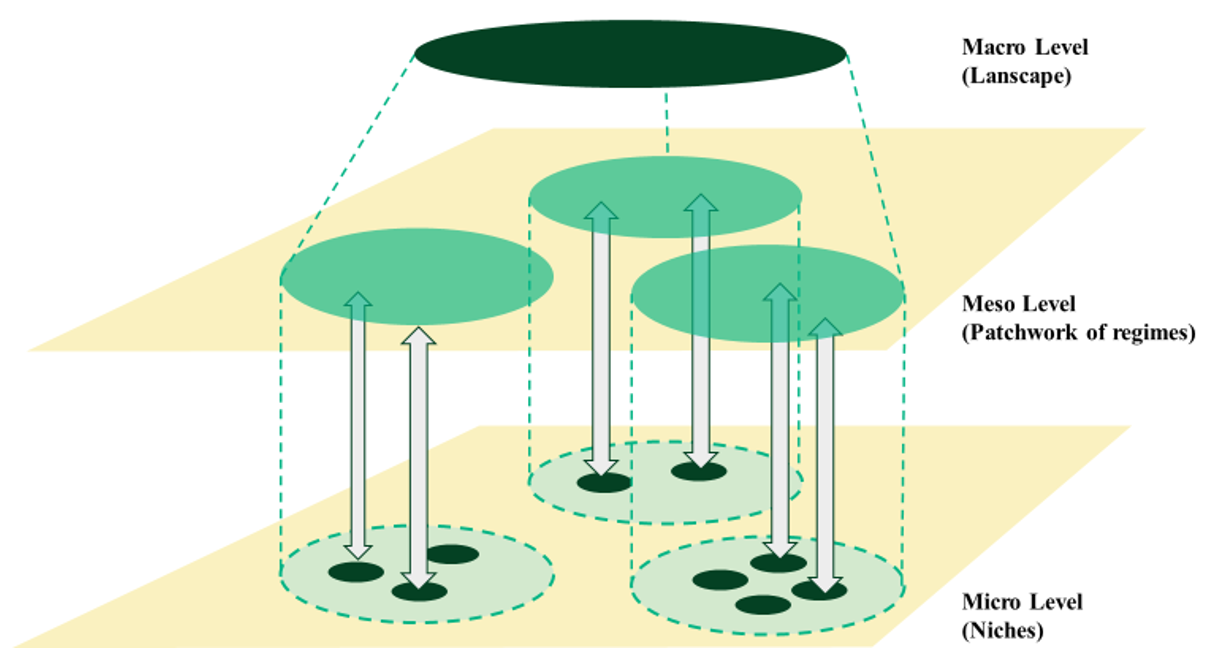
Figure 1: Multi-level framework, Own illustration adapted from Geels (2002)4
2.2.1 Regimes
The MLP serves to analyze transitions, particularly in the context of sustainable transformations. Such transitions are understood as a shift from an existing socio-technical regime to a new one: “[…] we define transitions as changes from one socio-technical regime to another […]” (Geels & Schot 2007, p. 399)8. Regimes form the middle analytical level of the MLP and represent established socio-technical configurations. They consist of a variety of interconnected elements, including technologies, infrastructures, actor networks, as well as social norms and institutional structures. This close interlinking creates a high degree of stability. As Geels (2002) puts it “The stability of established socio-technical configurations results from the linkages between heterogeneous elements. The elements and the linkages are the result of activities of social groups which (re)produce them”(p.1259)4. It is precisely this stability that makes regimes a central element of the MLP. They can both channel innovations and transitions and stabilize existing structures. The aim of this chapter is therefore to examine in more detail the definition, structure, and key dynamics of regimes.
To better understand the significance of regimes in socio-technical transformations, it is first necessary to look at their theoretical foundations. The concept of the socio-technical regime in the MLP builds on the term technological regime, originally developed in innovation research8. Rip and Kemp (1998) already described technological regimes as rule sets and structures anchored in specific industries or systems:
„A technological regime is the rule-set or grammar embedded in a complex of engineering practices, production process technologies, product characteristics, skills and procedures, ways of handling relevant artifacts and persons, ways of defining problems—all of them embedded in institutions and infrastructures.”(p.338)11
As part of the further development of the MLP, Frank Geels expanded the concept of the technological regime into the socio-technical regime. Technological developments cannot be viewed in isolation; they are always influenced by social, economic, and political factors as well4. While technological regimes mainly refer to technological routines, production processes, and standards, the concept of the socio-technical regime broadens this perspective to include societal, political, and economic dimensions. This extension highlights that technological developments are always embedded in a network of actors, institutions, and market mechanisms. They are not determined solely by technical feasibility but result from an interplay of regulatory frameworks, social norms, economic interests, and political decision-making processes. Thus, the expanded regime concept enables a more differentiated analysis of the interconnections between technology, society, and institutions12. Socio-technical regimes are therefore more than just technical systems; they also encompass institutional structures, established networks, and cognitive frameworks that shape the development, diffusion, and stabilization of new technologies. For the sake of simplicity, the term “regime” will be used throughout this thesis to refer to socio-technical regimes.
In summary, regimes within the MLP consist of three central components. First, systems, meaning the material and infrastructural resources that characterize a technological domain. Second, actors, including companies, political decision-makers, research institutions, users, and other societal groups that can either stabilize or challenge the regime. And third, formal and informal rules, which guide the behavior of these actors and regulate the regime12. These elements are closely interconnected and mutually influence each other, providing stability to the regime. Figure 2 illustrates these mutual interactions.
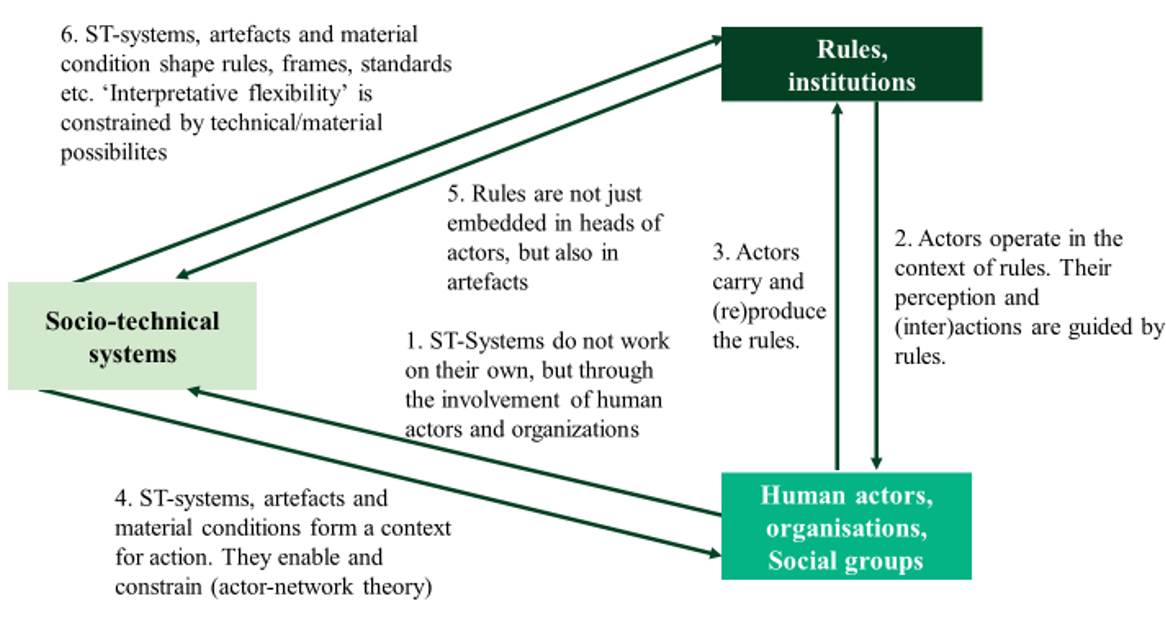
Figure 2: Three interrelated analytical dimensions, Own illustration adapted from Geels (2004)12
Rules create the framework for actors’ actions by structuring their perceptions, decisions, and interactions. They define which behaviors are considered legitimate, for example through legal regulations, industrial standards, or social norms. Rules are not static; rather, they are constantly (re)produced and further developed through the actions of actors. Companies, for instance, may influence regulatory frameworks through lobbying or challenge existing norms by introducing new technologies. However, rules are not uniform but can be divided into different types that influence actors’ behavior in different ways. Geels and Schot (2007) distinguish in their work between regulative, normative, and cognitive rules. Regulative rules include legal requirements, industrial standards, and formal regulations that directly enable or restrict certain actions. Normative rules refer to social values, role expectations, and behavioral norms that define what is seen as appropriate or desirable. Cognitive rules guide the perception and interpretation of possible actions. They include belief systems, problem definitions, innovation strategies, and heuristic guidelines8. These rules not only have a restricting function, for example by legitimizing or delegitimizing certain actions. They also support social processes by coordinating activities, creating predictability, and enabling trust between actors8. This is particularly relevant because social groups, despite a certain degree of independence, are mutually dependent. Their activities are closely linked and coordinated13. Within these groups, actors share common rules that have emerged from earlier interactions and structure their collective actions. At the same time, rules are not only applied but also interpreted, adapted, and developed further. In practice, recurring action patterns emerge that show similarities but still allow for individual variations. Actors pursue their own strategies and interests, which can change over time through social interaction. Their actions, whether through strategic investments by companies or political decisions by authorities, are usually aimed at improving their position and securing resources12. Thus, regimes consist of a semi-coherent set of rules that are closely interconnected. Changes to individual rules are therefore rarely isolated, as rule systems often depend on each other. This mutual dependency provides regimes with their stability and enables the coordinated alignment of different actors’ activities12. At the same time, technological developments are closely linked to the tasks they are intended to fulfill. As a result, existing technological practices and interests become entrenched within a regime14.
Consequently, human actors are not only carriers of a regime but also actively shape it. They implement, modify, or question existing rules, especially in the context of innovations and transformations. For example, car manufacturers stabilized the combustion engine regime, while new actors, through innovations in electric mobility, challenged existing rules and initiated shifts within the regime. Moreover, actors influence the socio-technical system through technological developments, strategic market decisions, or institutional reforms. These interventions affect not only the rule structures but also the material and infrastructural foundations of a regime.
Socio-technical systems consist of material structures, technological artifacts, and infrastructural frameworks that define the scope of actors’ actions. Existing transport infrastructures, for instance, determine how easily new mobility concepts can be integrated or whether they face technical and institutional resistance. Similarly, technological artifacts such as existing production facilities in industry can slow down innovation because their conversion would require high investments. At the same time, socio-technical systems also feed back into institutional frameworks by reinforcing technological standards, norms, and routines.
This close interconnection between rules, technologies, and actors leads to the long-term stability of regimes. Regimes create a framework within which innovations can develop, supported by investments, standards, and networks that provide orientation and security. At the same time, path dependencies and lock-in effects emerge, stabilizing deeply rooted structures and making change more difficult3. As a result, regimes often persist for decades, and technological developments usually proceed incrementally4.
Path dependencies play a major role in the stability of regimes by reinforcing economic, technological, and institutional structures. Past investments in infrastructures, skills, and knowledge create high sunk costs, making a shift to alternative systems economically and organizationally unattractive12. As a result, companies and institutions have an interest in maintaining existing systems, since change would involve high costs and considerable uncertainties. This inertia is further reinforced by mutual dependencies between actors. Economic, political, and social actors are tied to the existing regime and rely on its stability. Network externalities strengthen this effect: the more actors use an established system, the more attractive it becomes, as standards are reinforced and investments in complementary technologies become worthwhile12. A positive feedback loop emerges, making deviations from the existing regime increasingly difficult. Klitkou et al. emphasize that established technologies often dominate not because they are superior, but because they benefit from structural advantages due to their widespread use15.
Lock-in mechanisms act as additional structural barriers that hinder deep transformations. They can be distinguished across four dimensions: techno-economic, social, cognitive, and institutional. These mechanisms reinforce path dependencies and ensure that innovations usually occur only incrementally, while radical changes face strong resistance16. Techno-economic lock-ins arise from high investments in existing infrastructures and production processes. They create so-called vested interests, meaning established interests that make system change unattractive. Established technologies such as the combustion engine appear more efficient and cost-effective than new alternatives because they have been optimized over decades. Social lock-ins further reinforce this inertia; they are based on habitual practices, norms, and everyday routines. Users tend to stick to familiar solutions, making the acceptance of radical innovations more difficult. An example is the automotive sector, where, despite available alternatives, the preference for private cars continues to dominate16. Cognitive lock-ins emerge from dominant ways of thinking and established innovation logics. Within a regime, companies and research institutions typically focus on existing technologies. Resources are primarily invested in optimizing current systems, while disruptive alternatives receive little attention, which further entrenches existing pathways16. Institutional lock-ins are created by political structures, legal frameworks, and regulatory paths. Companies with strong political influence can block or weaken regulatory changes, for example, through lobbying activities. As a result, established technologies are artificially stabilized, for instance through specific legislation or support programs. Political frameworks thus not only determine the speed of technological change but also its direction16.
Klitkou et al. (2015) criticize that the description of lock-in mechanisms within the MLP is often too undifferentiated and portrayed as overarching stability factors15. Lock-ins are frequently described as general stabilizing elements without sufficiently considering their specific forms in different regimes. In their work, they emphasize that a more precise differentiation of these mechanisms is essential to better understand regime stability and innovation barriers. They therefore identify several key mechanisms that stabilize existing socio-technical systems while simultaneously making alternative innovation pathways more difficult (see Table 1). In addition to economic and technological mechanisms, Smith and Raven (2012) highlight that political, symbolic, and cultural factors also play a major role in stabilizing existing regimes17. Political networks, economic interests, and regulatory structures work together to maintain existing systems and make profound change more difficult. Moreover, societal values and symbolic representations significantly contribute to the persistence of existing regimes. Cultural narratives shape how new technologies are perceived and can greatly hinder their societal acceptance, especially when they do not fit into established guiding images, norms, or ideas of modernity17. These mechanisms make it clear that socio-technical regimes are stabilized not only by technological and economic factors, but also by social, political, and institutional structures15,17. Geels describes this stability as the result of co-evolutionary processes in which technological developments, cultural norms, political institutions, and economic structures mutually influence each other3. These interconnections create long-term stability and make profound change particularly difficult. Transformations often occur only slowly and usually require external shocks or targeted strategic interventions. Overall, it becomes clear that regime stability is the result of complex interactions between various economic, technological, political, and cultural mechanisms.
| Lock-in Mechanism | Description | |
| 1 | Learning Effects | As a technology is increasingly used and produced, efficiency and competence improve while costs decrease. This leads actors, such as companies, educational institutions, and research institutes, to specialize more strongly in established technologies. As a result, new technologies find it difficult to break through, since existing systems increasingly focus on optimizing current solutions. |
| 2 | Economies of Scale | Economies of scale arise from the production of large quantities, allowing fixed costs to be spread over more units. These effects favor capital-intensive industries with established infrastructures and disadvantage new technologies, which initially require high investments without yet achieving comparable production volumes. |
| 3 | Economies of Scope | When companies create synergies between related products by sharing resources, economies of scope emerge. These promote specialized production and market structures, which in turn make it harder for entirely new, incompatible technologies to be introduced. |
| 4 | Network Externalities | The value of a technology increases with the number of its users, as standardization, compatibility, and network effects grow. New technologies must overcome these established standards, which poses a major challenge, especially in sectors with high system integration. |
| 5 | Informational Increasing Returns | Technologies that are already widespread receive more public attention, political support, and societal acceptance. New approaches face greater difficulties because they are initially less visible and lack trust or institutional backing. |
| 6 | Technological Interrelatedness | New technologies often need to be compatible with existing infrastructures. High costs for necessary adjustments make their introduction more difficult. As a result, established technical systems are favored, even if alternative solutions would be superior from an ecological or functional perspective. |
| 7 | Collective Action | Established actors coordinate their behavior through political networks, regulatory instruments, and societal norms. In doing so, they stabilize the status quo and make it harder for new actors to enter the market, thereby hindering profound transformations. |
| 8 | Institutional Learning Effects | Institutional structures such as subsidy programs, regulatory mechanisms, or research funding are often tailored to existing technologies. New technologies are only slowly incorporated, as institutional learning processes tend to be incremental and rarely support deep system changes. |
| 9 | Differentiation of Power and Institutions | Influential actors use their position to shape regulatory conditions in their favor. They maintain subsidies or create market access barriers that disadvantage alternative technologies and further entrench existing systems. |
Table 1: Overview of lock-in mechanisms stabilizing socio-technical regimes. Own depiction based on Klitkou et. al. (2015)15
From an evolutionary perspective, regimes therefore function as selection and retention mechanisms that favor incremental innovations, while radical changes encounter significant resistance4. Incremental innovations can be more easily implemented within existing structures because they do not fundamentally challenge established rules and networks. In contrast, disruptive innovations require structural adjustments across multiple levels of a regime and are therefore often associated with greater challenges8. This helps explain why established technologies often persist over long periods, even when alternatives are available.
Contrary to common assumptions, regimes do not consist of homogeneous rule structures but of diverse institutional logics that show both stabilizing and conflictual dynamics. Different normative frameworks, values, and practices within a regime can lead to internal tensions that may either hinder or facilitate transformations18. Whether a regime is capable of change depends on the extent to which competing institutional logics are integrated or destabilized by internal contradictions. Established actors often actively contribute to blocking profound changes9. Companies, political institutions, and business associations use targeted strategies to preserve existing regime structures and secure their own positions. These strategies include political influence, lobbying activities, and the selective promotion of narratives that portray regulatory change as economically risky or socially unsustainable. A comprehensive understanding of regime stability and change therefore requires analyzing both the internal institutional dynamics and the power strategies of established actors who can actively shape or obstruct transformations.
The resilience of a regime to change largely depends on its degree of institutionalization18. Fuenfschilling and Truffer (2014) explain this process by drawing on an institutionalization model structured around three distinct phases. In the phase of habitualization, new practices initially emerge in an unstable and limited form. During objectification, a consensus on their relevance develops, leading to greater legitimacy. Finally, sedimentation results in structures becoming firmly established and difficult to change. The further this process progresses, the more stable a regime becomes and the more difficult is the transformation18. However, institutionalization does not mean that regimes are static entities. Rather, regimes consist of various institutional logics that encompass normative frameworks, values, and practices. While some of these logics reinforce the status quo, others create tensions from which potential for long-term change can emerge18. Thus, the degree of institutionalization not only determines the stability of a regime but also its capacity for change, either through internal contradictions or through external impulses.
In addition to internal tensions, established actors often actively resist profound change. Geels therefore advocates for extending the MLP with a political economy perspective to better capture power structures and political influence strategies9. Resistance manifests in various strategies through which actors seek to maintain existing structures and block transformative processes. A central strategy is the shaping of information flows and interpretive frameworks (“framing”). Companies deliberately fund research or create narratives to steer political debates in their favor. They also use financial influence, for example through political donations or strategic investments in political networks, to shape regulations. Furthermore, established actors rely on organized pressure mechanisms, including intensive lobbying and the strategic mobilization of stakeholders to support the existing regime. Finally, companies may also resort to confrontational measures, such as initiating legal actions against new regulations or threatening to relocate production sites in order to influence political decisions9.
The transformation of socio-technical regimes is therefore not driven by technological innovations alone. It also arises through political processes, societal debates, and economic power struggles. While institutional logics shape internal tensions, political and economic actors actively influence external resistance against profound transformations. Thus, a comprehensive understanding of regime stability and change requires an integrated analysis of these interactions. Regimes are, accordingly, dynamic structures that both secure stability and enable transformations. Their change depends on internal conflicts as well as external impulses that challenge existing structures. Within the MLP, regimes function as the intermediate level between the stable socio-technical landscape and the innovation-driven niches. They are therefore not only anchors of stability but also key instruments for change.
A central feature of regimes within the MLP is their analytical flexibility. Geels emphasizes that the MLP does not impose fixed boundaries, but that the concept of the regime can be adapted to the specific research focus3. This openness allows regimes to be analyzed either as broad sectoral structures or as specific subfields, depending on the research objective. Despite this flexibility, regimes, as previously outlined, display a high degree of structural stability. They consist of a web of interwoven rules, institutions, and technological practices that are continuously reproduced by social groups14. This complex interaction is exemplified by the automobile regime: The physical infrastructure, such as road networks and traffic facilities, is planned and maintained by state institutions like ministries of transport. Cultural meanings and symbolic values associated with cars arise from the interaction between users, media, and societal discourses. Mobility practices and routines develop through the everyday usage by different user groups. The structure of the industry results from the interplay between car manufacturers and their suppliers. Technological knowledge is created by engineers and designers, while the vehicles themselves are produced through industrial manufacturing processes4. Together, these processes create strong mechanisms of structural maintenance, making profound transformations particularly challenging.
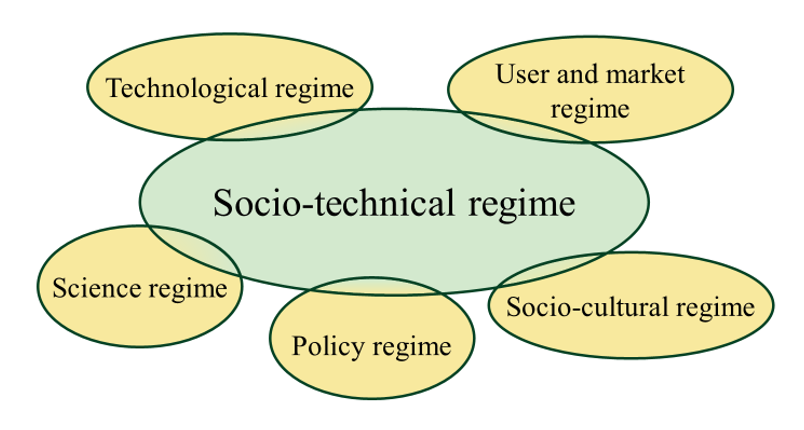
Figure 3: Meta-Coordination between Sub-regimes, Own illustration adapted from Geels (2004)12
Figure 3 shows that socio-technical regimes consist of several sub-regimes, which together contribute to the stabilization of the overall system. In addition to technological structures, political, scientific, cultural, market-related, and user-related sub-regimes also play a role. These sub-structures are not homogeneous but are hierarchically organized: while the overarching regime encompasses long-established norms and structures, sub-regimes refer to specific technological fields or sectors. An example of this is the mobility regime presented earlier, which has developed over decades around the combustion engine. It includes existing infrastructures, regulatory frameworks, and social practices. Within this framework, however, distinct sub-regimes can be identified, such as those for public transportation systems or electric mobility. While the overall mobility system is considered stable, a differentiated analysis shows that a separate sub-regime with its own rules, technologies, and market structures is emerging in the field of electric mobility. The multi-level perspective of the MLP therefore requires clear analytical distinctions, as stability mechanisms, dynamics, and transformation potentials differ depending on the level of analysis. A change that appears as a fundamental regime shift on one level may only represent an incremental adjustment within a larger overarching system on another level8. This highlights that the influence of external factors on regimes is context-dependent. While a regime in a specific sector or region may undergo transformative changes, the overarching socio-technical system often remains stable. Thus, the classification of a regime depends on the chosen analytical perspective, making a clear definition of the research object essential8. However, this flexibility also creates certain disadvantages in research practice, which will be discussed further in Chapter 2.4.
Within the MLP, regimes form the central level where socio-technical structures, institutional rules, and actor networks are stabilized over long periods of time. Their persistence is based on the interplay of technological, economic, political, and cultural factors, supported by mechanisms such as path dependencies, lock-in effects, and institutional logics. At the same time, regimes are not rigid structures. They are subject to internal tensions and gradual changes. External influences or targeted strategies by individual actors can accelerate these processes and enable profound transformations. To better understand the dynamics between stability and change, it is necessary to examine the other two levels of the MLP. The following chapter first analyzes the role of the landscape level as the broader context for regime shifts. The chapter after that then explores how niches act as sources of radical innovation and can trigger technological transformations. Finally, the interactions between these levels will be examined in detail within the framework of transition pathways.
2.2.2 Landscapes
The landscape level forms a central analytical dimension within the MLP. It encompasses macro-social, economic, and ecological conditions that are deeply embedded in societal structures and shape technological and social development paths over the long term. As an overarching context, it provides the structural background in which socio-technical systems are embedded. Its distinct characteristic lies in its relative stability and the fact that changes usually occur slowly over decades and largely escape the direct influence of individual actors4,12. In interaction with regimes and niches, the landscape acts as a structuring framework that both opens up opportunities and imposes constraints. While regimes stabilize established structures and niches serve as spaces for innovation, landscape trends often exert indirect influence, for example through cultural shifts or systemic shocks. Under certain conditions, however, the landscape itself can become a driver of profound transformations. Analyzing the landscape level is therefore essential to understand the interplay between stability and change.
The term “socio-technical landscape” is deliberately chosen as a metaphor. It points to key characteristics of this level: its relative stability, its spatial-material structure, and its societal and institutional embeddedness. The landscape encompasses long-term macrostructural trends that usually change only slowly but exert a deep influence on socio-technical systems. These include demographic change, urbanization, geopolitical developments, shifts in cultural values, large infrastructures (e.g., energy or transport systems), and natural developments such as climate change4. These elements are not purely material but are also shaped by symbolic and cultural dimensions, for example through visions of progress, notions of individualism, or dominant economic logics. Thus, the landscape is a multilayered, hybrid level that combines physical, institutional, ideational, and discursive components8,10. The metaphor of the landscape also implies a structuring effect: The landscape changes slowly, is not directly steerable, yet still guides actions. It acts as an exogenous environmental condition that favors or constrains certain developments without setting specific impulses itself12. Its influence manifests through structural “gradients” that guide actors’ behavior without their explicit choice. Thus, the landscape exerts an indirect but profound influence and contributes significantly to explaining long-term path dependencies and barriers to transformation.
In addition to its inertia, the landscape is characterized by internal heterogeneity. It unites macroeconomic conditions, cultural meaning systems, ecological developments, and political power structures10. This complexity makes clear empirical capture difficult but enables the embedding of technological change into broader societal contexts. The landscape serves as an interface between material factors, such as infrastructure or resource availability, and symbolic-cultural interpretations, such as societal visions or normative expectations. Thus, the landscape concept supports a holistic analysis in which technological change is not seen in isolation but as the result of wider institutional, cultural, and political dynamics3. Moreover, the landscape possesses a temporal depth dimension. Its changes typically occur slowly but cumulatively8. This long-term nature stabilizes existing institutions, infrastructures, and guiding visions, but it also holds potential for fundamental change, especially when multiple formerly stable elements are disrupted at the same time. In such situations, the landscape’s apparent inertia can be broken by external shocks, technological breakthroughs, or discursive shifts. Examples include economic crises, geopolitical conflicts, or global protest movements that challenge established orders. Thus, the landscape is not merely a passive background but, under certain conditions, can itself become a driver of deep transitions. Such impacts are particularly evident with exogenous changes that affect entire systems and trigger systemic disruptions.
Four key dimensions can be identified to systematically differentiate landscape changes: frequency, amplitude (intensity), speed, and scope8. On this basis, Geels and Schot derive four types of external landscape developments relevant for socio-technical transitions. The first type refers to regular changes characterized by low intensity and slow, continuous development. Second, they distinguish specific shocks that occur suddenly and have a high amplitude. Third, they identify disruptive changes that unfold more slowly but have deep and sector-specific effects. Fourth, they describe avalanche-like changes, marked by high speed, large intensity, and broad sectoral impact.
These four types represent different dynamics at the landscape level that can significantly influence transition processes at the regime and niche levels. Table 2 visualizes the four forms of landscape influences.
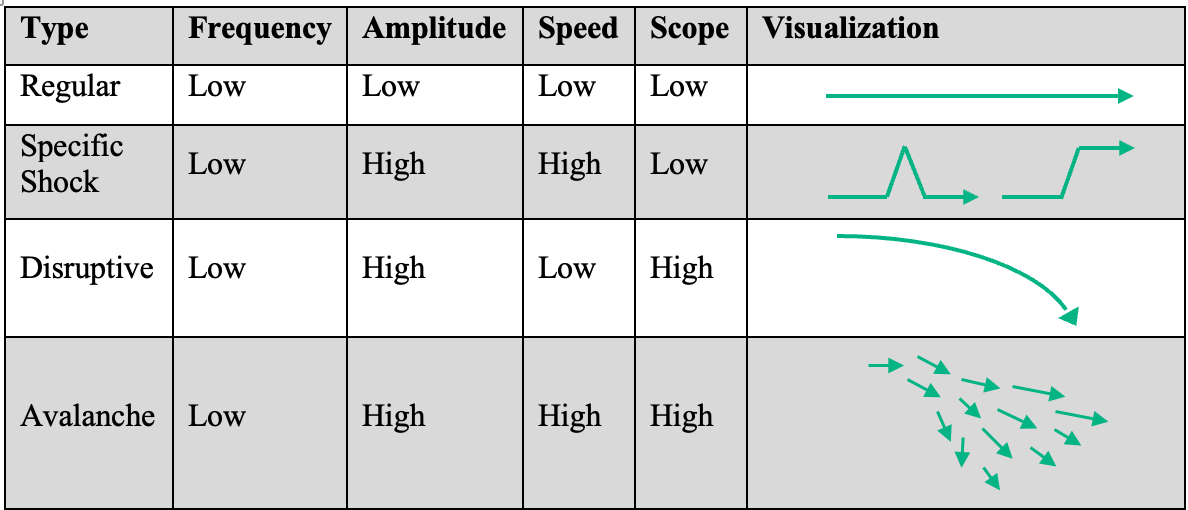
Table 2: Types of environmental change. Own depiction adapted from Geels & Shot (2007)8
An empirical example of a disruptive landscape change is the increasing digitalization and technologization of business models, such as in the retail and automotive industries. Disruption arises here through new technologies and services that challenge existing markets and establish alternative value creation logics. For instance, online platforms like Amazon and Zalando have put traditional retail under pressure by offering cheaper and more convenient shopping options. In the automotive industry, disruption is evident in the spread of electric vehicles and autonomous driving systems, which challenge the combustion engine regime. Companies like Tesla have changed entire industry structures through technological innovations and new business models19.
An example of a specific shock with landscape characteristics is the COVID-19 pandemic, which led to abrupt changes in social practices, mobility, and digital infrastructure worldwide. In many areas, the pandemic accelerated the adoption of new technologies, such as remote work and telemedicine, with potentially long-term impacts on sectoral regimes20,21.
Regular landscape changes, such as demographic shifts, create continuous pressure for adaptation due to their persistence. Global aging is fundamentally transforming the demands placed on healthcare, care, and social systems. The growing need for age-appropriate infrastructure, integrated care, and new forms of housing forces existing regimes to adapt. At the same time, new opportunities for socially sustainable innovations are emerging22.
A current example of an avalanche-like change is the Russian war of aggression against the Ukraine. The conflict has not only shifted geopolitical power relations but has also triggered profound consequences for energy supply, food security, security strategies, and global supply chains. The sudden escalation created systemic pressure on various regimes, for instance through Europe’s energy policy realignment, massive price increases in raw material markets, and major security policy shifts within the EU and NATO23,24.
These examples illustrate that landscape changes are neither homogeneous nor predictable. They often follow non-linear trajectories, have context-dependent effects, and trigger complex feedback loops with regimes and niches. How these dynamics specifically influence transformation pathways will be discussed in more detail in the chapter on Transition Pathways.
Although changes at the landscape level can have profound impacts on socio-technical systems, they do not automatically produce effects. What matters is how such macrostructural developments are perceived, interpreted, and translated into action strategies by societal actors. The landscape is therefore not a direct driver but rather a space of possibilities whose meaning emerges through social interpretation8,12 . In the short term, the landscape lies beyond the direct influence of individual actors. It forms an environment shaped by material, institutional, and cultural inertia. Actors cannot freely escape this context but must initially accept it as a framework for action. Nevertheless, the landscape is not immutable. In the long term, it can change, particularly when collective practices within regimes evolve and feed back into broader structures. Raven et al. (2012) vividly describe this with the metaphor of a geographic landscape: Some paths can be followed with little resistance, while others require greater resources, legitimacy, or institutional support25. Although it is possible to act against dominant trends, actors often choose the path of least resistance. This further illustrates that the landscape is not a static backdrop but a historically grown, modifiable structure, shaped by cultural patterns, political orientations, symbolic orders, and institutional frameworks. Over the course of transitions, actors can indirectly influence the landscape, for example, through social movements, public debates, or the establishment of new guiding visions. Thus, the landscape is not only a context but also an object of societal negotiation. It is precisely this processual character that makes it a central analytical level within the MLP.
Since landscape influences are always mediated by actors’ interpretations, they can have both stabilizing and destabilizing effects3. The landscape functions as a structuring context that makes certain options more likely while hindering or blocking others8. It is not a uniform influence but rather a multilayered, partly contradictory structure in which different dynamics can operate simultaneously. A striking example of this is climate change. It poses a growing challenge for carbon-intensive regimes such as energy, industry, and transport. Regulatory targets, increasing societal expectations, and political pressure destabilize existing business models and raise the need for innovation and change12,26. At the same time, stabilizing forces persist: cultural narratives, such as the car as a symbol of individual freedom, independence, and social status. These narratives are further supported by material infrastructures such as road networks and fuel stations. Economic and political frameworks, like subsidies for conventional engines or tax benefits for company cars, also help maintain established structures26.
Overall, the landscape appears as a dynamic arena where long-term developments, such as environmental changes, cultural shifts, power relations, or economic disruptions, can open up new opportunities for action but also reinforce blockages10. Especially when regimes lose legitimacy or their capacity to solve problems, the acceptance of alternative niche solutions increases. Thus, the effects of the landscape are context-dependent: it can act both as a catalyst for change and as a barrier to transformation.
Because landscape influences do not act uniformly, it is analytically useful to differentiate the types of pressure more clearly. Morone et al. (2015) propose a fundamental distinction: unintentional and intentional pressure27. Unintentional pressure arises from exogenous events such as natural disasters, geopolitical crises, or economic shocks, which destabilize regimes without aiming explicitly at change. Intentional pressure, by contrast, results from deliberate interventions by actors at or near the landscape level, such as governments, international organizations, or Non-governmental organizations (NGOs). These actors use political, economic, or normative levers to initiate or accelerate regime change intentionally. According to Morone et al., the combination of different types of pressure is particularly effective, for example, when regulation and economic incentives work together. Such cases create a “combined pressure mechanism” that, through its complexity, can generate strong transformation dynamics27. The strategic application of pressure on the regime level will be discussed in more detail in Chapter 3: Practical Implementation. This perspective expands the classical understanding of the landscape as a purely exogenous influence. Rather than being a mere background, it becomes an arena for strategic action where actors can actively intervene. The landscape thus appears as an intermediate field between structure and agency, encompassing both unintentional macro trends and deliberate interventions.
Despite its central role in the MLP, the landscape level shows certain conceptual ambiguities. Geels (2011) critically describes it as a kind of “garbage can” (p.36) where various exogenous influences, from climate change to cultural visions, are collected without a clear system3. While this openness facilitates the inclusion of macrostructural factors, it also leads to difficulties in distinguishing the landscape from the regime level. For instance, cultural values and governance structures operate on both levels, resulting in analytical overlaps10. Another point of criticism concerns the lack of integration of critical social theory. Although Geels and Schot emphasize the inertia and heterogeneity of the landscape, they leave open how power relations, discursive practices, or political processes shape this level8. Lawhon and Murphy also argue that the MLP is overly technology-centered and tends to neglect social conflicts and political power structures28. A stronger connection to discourse-theoretical approaches could help conceptualize the landscape as a socially contested space of meaning, rather than merely an external backdrop. The spatial dimension of the landscape is also largely underexplored28. Raven et al. point out that landscapes often represent transnational structures shaped by geographically distributed regimes but are interpreted and acted upon differently depending on the context25. In the energy transition, for example, climate change is globally recognized as a landscape factor, but national actors respond differently, such as Germany’s phase-out of coal compared to the expansion of nuclear energy in other countries. They therefore advocate for a spatially differentiated analysis that understands the landscape as a multidimensional, context-dependent structure rather than as a monolithic entity. Although the landscape does not create direct spaces for action, it structures the conditions under which actors operate25. Berkhout et al. also call for a more dynamic perspective that explicitly incorporates political-economic influences29. In practice, the conceptual ambiguities become visible in the context of the energy transition: here, sustainability values (landscape) and regulatory frameworks (regime) blur, affecting analytical clarity. Lawhon and Murphy therefore propose integrating political-ecological approaches to systematically capture ecological, social, and economic interrelations28. Such extensions could help to develop the landscape from a residual category into a precise unit of analysis.
Overall, it becomes clear that the landscape is an indispensable but analytically ambivalent level within the MLP. It frames transitions through deep-rooted structures, ranging from macro-social trends and material infrastructures to cultural meaning systems. Its strength lies in situating technological developments within societal contexts and in making the interplay between stability and change visible. At the same time, its conceptual openness complicates its application. Its influence is always mediated through interpretations, interests, and strategies. The typologies and examples presented, from digitalization to climate change, illustrate that the landscape can either enable or block change, depending on its interaction with regimes and niches. This interplay will be discussed in more detail in the chapter on Transition Pathways. To fully exploit the analytical potential of the landscape, clearer systematization and stronger grounding in social theory are needed, taking into account power, space, and discourse. Only then can the landscape be understood as a dynamic arena of societal negotiation, not as a vague residual category, but as a key to explaining profound transformation processes.
2.2.3 Niches
This chapter analyzes the role of niches within the MLP framework. It examines their structural characteristics, internal development processes, and key mechanisms, such as protection, learning, and scaling, that enable them to diffuse into existing socio-technical regimes or even transform them over time. As protected spaces, niches allow for the experimentation with new technologies, business models, or social practices outside the dominant selection pressures of existing socio-technical regimes8. This protective function is central to understanding niches. It creates the conditions necessary for early learning processes, the building of social trust, and the gradual development of innovative solutions. Geels (2002), describes niches as “incubation rooms” (p.1261) where radical innovations can emerge and mature under reduced selection pressures4. Without such protected environments, many innovations would hardly survive their early stages due to technical uncertainties, lack of infrastructure, and limited societal acceptance4. The development of niches is closely linked to co-evolutionary processes, where new technologies, markets, and user preferences influence each other4. Thus, niches are more than mere technological testing grounds; they are dynamic spaces where technical artifacts, social practices, and cultural meanings co-evolve. Their ability to respond to changes in adjacent system areas and to shape them is crucial for establishing stable structures. Niches are therefore always embedded in interactions with existing regimes, which they both challenge and are influenced by4.
In their early development phases, niches are often characterized by uncertainty and instability. They typically operate outside established market and regime structures, limiting their visibility and connectivity. Standardized designs, stable user preferences, and viable business models are often lacking4. These structural challenges mean that many innovations do not move beyond the experimental stage, especially when protective mechanisms such as political support programs, regulatory exemptions, or subsidies are absent17. However, if such protective spaces are strategically created, niches can gradually stabilize and develop technological structures. Repeated experiments, the building of robust networks, and the aggregation of knowledge, for example through modeling or best practices, support the expansion of local innovations. With growing trust and the development of marketable business models, niches can be scaled30 and eventually challenge or transform established regimes5,17. Niche innovations involve not only technical novelties but also new social practices, business models, and infrastructural changes. They differ significantly from the existing system and open up new options for action16,31. Innovations can be classified into different types, such as radical or incremental changes, systemic innovations, or paradigm shifts8. Arnold et al. illustrate this distinction using the example of the mobility sector, with differentiating innovation pathways such as technological improvements, modal shifts, or structural changes32. The concept of “Mobility as a Service” (MaaS) further shows how technical, organizational, and social components can interact within niches. This classification highlights that niches are not defined solely by technological novelty but also by their potential to fundamentally change cultural practices and institutional structures.
In every society, there are alternative forms of action and behavior that differ from the established regime and are referred to as niches within transition theory. Some of these niches are more adaptable and respond more flexibly to changes in their environment than dominant regimes33. Particularly in the context of sustainability transitions, the focus on radical innovations is crucial, they differ fundamentally from existing solutions, usually lack an established market structure, and often encounter low demand. As “proto-markets,” niches provide a protected space for testing such innovations, which are initially often unprofitable, difficult to integrate, and linked to new infrastructural or regulatory requirements. Nevertheless, actors, especially public institutions, invest in these developments because they promise long-term societal benefits5. Radical innovations are not based on existing designs but bring about profound technological, social, or infrastructural changes. Their market introduction is often associated with low user acceptance, unclear standards, or a lack of supporting infrastructure34. Geels emphasizes that the degree of radicalness of such innovations depends on how far they differ technically, socially, or institutionally from existing systems. Cultural visions can play a supportive role by generating legitimacy and mobilizing societal support30. At the same time, resistance can arise, for example, when social groups fear negative consequences or feel excluded. Controversial examples include biofuels, onshore wind energy, and carbon capture and storage30. Table 3 illustrates different forms of radical niche innovations in the fields of mobility, food, and energy. These can be categorized into four types: technological, social, business model–related, and infrastructural innovations. Niches are defined not only by technological novelty but also by their cultural embeddedness and structural impact. What is crucial is the degree of system change triggered by an innovation, for example, through the creation of new markets, the transformation of cultural practices, or the challenge to existing power structures.
| Type of Innovation | Mobility | Agro-food | Energy (electricity, heat) |
| Radical technical innovation | Battery-electric vehicles, (plug-in) hybrid electric vehicles, biofuel cars, hydrogen cars | Permaculture, agro-ecology, artificial meat, plant-based milk, manure digestion | Renewable electricity (wind, solar, biomass, hydro), heat pumps, passive house, biomass stoves, smart meters |
| Grassroots and social innovation | Car sharing, bike clubs, modal shift to bicycles and buses, teleworking, tele-conferencing | Alternative food networks, organic food, less-meat initiatives, urban farming | Decentralized energy production (“prosumers”), community energy, energy cafés |
| Business model innovation | Mobility services, car sharing, bike sharing | Alternative food networks, organic food | Energy service companies, back-up capacity for electricity provision, vehicle-to-grid electricity provision |
| Infrastructural innovation | Intermodal transport systems, compact cities, revamped urban transport systems (tram, light-rail, metro) | Efficient irrigation systems, agro-forestry, rewilding, multi-functional land-use | District heating systems, smart grids, bio-methane in reconfigured gas grid |
Table 3:Examples of radical niche-innovations. Own depiction adapted from Geels (2019)30
Although niches are often understood as counter-concepts to established regimes, structural parallels exist. Both are based on interacting communities of actors that are coordinated through formal, cognitive, and normative rules. The key difference lies in the stability of these rules: while regimes rely on consolidated and stable structures, niches are characterized by dynamic and evolving rule frameworks8. Rules also structure action, build trust, and stabilize expectations within niches. However, unlike in regimes, these rules remain flexible and are subject to active negotiation8. Over the course of their development, these rules can gradually solidify. Semi-coherent rule structures, such as shared expectations, routines, or normative guidelines, coordinate technological and economic activities within the niche and significantly influence its stabilization and its ability to link up with existing regimes8.
A niche can evolve into a regime when its structures are stabilized, standardized, and institutionalized over time to the extent that they can replace or transform dominant practices and infrastructures5. However, the transition is rarely clear-cut, as the maturity of an innovation can be perceived differently. Indicators of increasing stabilization include the spread of a dominant design, support from influential actors, improved cost-performance ratios (e.g., through economies of scale), and market penetration8. The relationship between niches and regimes is dynamic. On the one hand, niches often emerge in response to the inertia of established systems, which are shaped by path dependencies and institutionalized routines3. In such contexts, they open spaces for alternative technologies and practices that can enable new development pathways17. At the same time, there is also mutual interaction: regime actors can actively support niches, for example through pilot projects, funding programs, or regulatory adjustments, but they may also oppose them if their power positions appear threatened8. The success of a niche innovation therefore does not depend solely on its technological quality but largely on its strategic embedding, institutional legitimacy, and political support17,33.
Intermediary actors such as industry associations, NGOs, or professional societies play a key role in niche development by aggregating knowledge, disseminating information, and enabling coordination. Here, the balance between diversity and consolidation is crucial. While diversity signals innovation potential, excessive fragmentation can increase uncertainty and disperse resources5. Innovations often go through phases of mutual adjustment, during which normative principles and regime structures converge, though not always without conflict. Incompatible values and objectives can create tensions, for example when originally transformative concepts are weakened through integration into existing systems. The organic food movement, initially regional and values-based, was partly diluted by its incorporation into global supply chains, causing core principles such as regionality and transparency to fade into the background34. Such developments raise the question of whether radical innovations risk being reduced to incremental changes during the adjustment process. A targeted analysis of value patterns can help detect and strategically manage these processes at an early stage. Niches do not emerge through direct state intervention but through the collective actions of diverse actors5. Besides technology-driven innovations, alternative pathways also exist. Shared visions and sustainable guiding principles can initiate social learning processes and experiments.
Similarly, civil society actors, local initiatives, or NGOs can serve as starting points for niche formation by experimenting with new business models, mobilization strategies, or funding mechanisms. Such processes are often socially motivated rather than primarily technology-driven. The dynamics that emerge depend heavily on the specific context34. The distinction between niche and regime is therefore context-dependent but can be sharpened using two perspectives. The quantitative approach focuses on indicators such as market shares, for example, the modal split in the transport sector, while the qualitative approach examines institutional structures, behavioral patterns, and power relations. Thus, nuclear energy can still be considered a regime despite declining usage due to its strong institutional embedding, whereas renewable energies may remain niches despite growing market shares if they lack stable organizational forms and broad societal acceptance32. Whether a niche innovation competes with the regime or integrates symbiotically ultimately depends on its transformative potential and compatibility. Challenging niches question existing structures, while complementary approaches aim to further develop them8.
While the previous sections focused on the structural characteristics and distinction between niches and regimes, the following section highlights the functional mechanisms that contribute to the development, stabilization, and scaling of niches. The focus lies on internal processes such as social networks, collective learning processes, expectation formation, and specific protection mechanisms. Niches serve as spaces for experimentation and development in socio-technical transitions. Their long-term success depends on whether functional structures are established within these spaces that stabilize and further develop innovations. Three interrelated processes are particularly important: networks that mobilize resources and enable cooperation, expectations that structure actions, and learning processes that allow for the adaptation of technological, institutional, and social frameworks. Successful niches are characterized by the coherent interaction of these three processes, creating increasing structural consistency5,34. To analytically capture these processes, the concept of Shielding, Nurturing, and Empowerment was developed. It describes the key conditions for building and integrating stable niche structures: protection from external selection pressures (Shielding), targeted support of internal development (Nurturing), and either integration into or challenge to existing systems (Empowerment)17. Another influential concept is Strategic Niche Management (SNM), developed in the 1990s in response to technology-oriented innovation policy. It aims to systematically link technological development with societal embedding. Within the MLP, SNM was placed in a broader context that considers the interactions with both the regime and landscape levels5. SNM has been critically discussed, particularly due to its strong technological focus and its neglect of social power relations3. Since this thesis primarily focuses on the MLP, SNM will not be explored in depth. Nevertheless, key insights on expectation formation, network development, and learning processes will be integrated into the following discussion of the internal functional mechanisms of niches, to provide a differentiated analysis within the MLP framework.
A key element in the development and stabilization of niches is the underlying social networks. Niches do not emerge through state intervention but through the collective action of heterogeneous actors working together on new solutions5. These networks connect businesses, research institutions, policymakers, NGOs, and civil society initiatives, forming the organizational foundation for the creation and dissemination of alternative socio-technical solutions. Their composition reflects the diversity of interests, resources, and competencies required for building robust niches5,33. Civil society actors often play a pioneering role by testing new ideas and challenging established structures. Within niches, networks emerge along supply chains, user relationships, and collaborations between producers, suppliers, and users, all of which are essential for the later diffusion of innovations4. Similar to regimes, these networks coordinate activities, but they differ through their lower stability, smaller size, and more dynamic rule formation8. The quality and scope of a niche network strongly influence whether resources can be mobilized, knowledge integrated, and political support established. Successful networks are characterized by breadth (inclusion of diverse actors) and depth (access to resources and decision-making power)5. They facilitate the alignment between technological development, societal goals, and user needs. In this interplay, collective expectations arise that structure action, generate legitimacy, and reduce uncertainties34. To have a stabilizing effect, expectations should be widely shared, clearly formulated, and supported by ongoing projects5. From these expectation-building processes, semi-coherent rules, shared routines, normative orientations, and technical standards, develop, coordinating behavior within the network and contributing to the structural consolidation of the niche. Thus, building functioning networks is not only the basis for mobilizing resources and embedding innovations socially but also a central precondition for the diffusion of innovations. While cooperation fosters further development, conflicts with established actors can act as barriers. Ultimately, financial, organizational, and infrastructural conditions determine the development trajectory of a niche33.
The previously described processes of network building, expectation stabilization, and rule development form the foundation for the targeted support of niche innovations. This interplay is captured under the concept of nurturing, which refers to measures that promote the maturation and unfolding of innovations within protected spaces17. In addition to network building and expectation management, nurturing particularly includes targeted learning processes. These learning processes enable actors to make technological, social, and institutional adjustments. In the MLP, niches are considered spaces where new technologies and practices are not only tested but also systematically further developed, shielded from the selection pressures of established regimes4,5,34. Geels identifies three main forms of learning: learning by doing, learning by using, and learning by interacting. “Learning by doing” refers to the practical improvement of technologies through application; “learning by using” describes user feedback to developers; and “learning by interacting” highlights the interaction and knowledge exchange between different actor groups along the innovation chain4. These forms of learning help reduce uncertainty in early phases and improve the compatibility of innovations. The goal is to develop rules, designs, and heuristics that enhance technical performance, market readiness, and operational capability34. Alongside the acquisition of practical and technical knowledge, known as first-order learning, second-order learning is particularly crucial. This deeper learning refers to the ability to critically question and adapt basic assumptions, frameworks, and goals5. Only through this reflexive process can an innovation move beyond merely improving existing technologies and contribute to structural changes in social, institutional, and political contexts. Suitable institutional frameworks, such as funding programs, political incentives, or supportive networks, are essential for enabling such processes5. A central element of sustainable niche development is the aggregation and systematization of decentralized learning experiences. Standardization, modeling, and best-practice approaches help consolidate situational knowledge from local projects30. These mechanisms foster the creation of a shared knowledge base, which is critical for developing dominant designs and guiding future developments. The transition of innovations into more stable niche or regime structures does not occur linearly but through repeated experimentation, learning cycles, and reconfigurations4. Only when abstract rules, technical models, and search heuristics emerge from local experiential knowledge can a consistent technological trajectory be established. Technical communities such as engineering or standardization bodies, as well as energy and innovation agencies, play key roles in this process by systematizing learning processes, initiating comparative studies, and embedding knowledge institutionally30. These mechanisms are illustrated in Figure 4. The figure shows how implicit knowledge from local projects can be transformed into an overarching technological trajectory through aggregation, coordination, and rule formation.
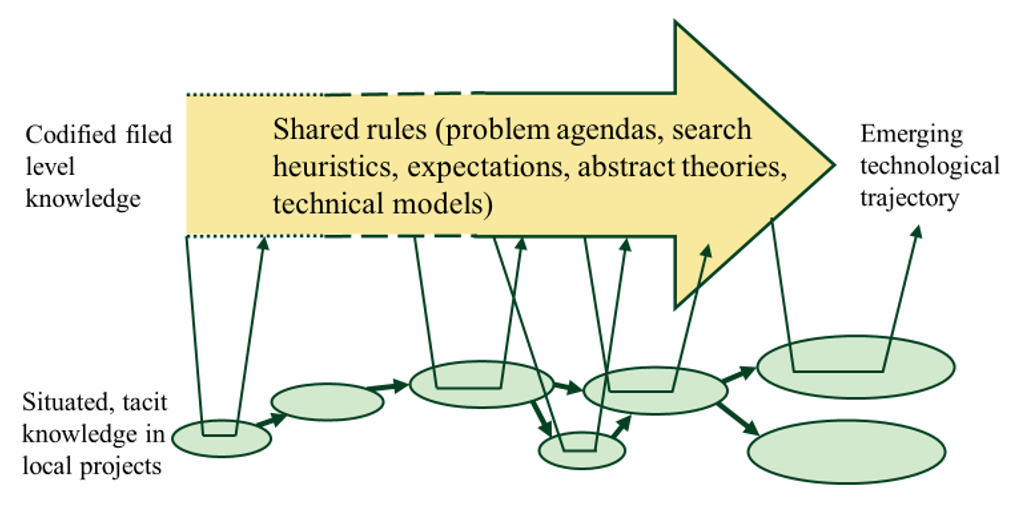
Figure 4: Innovation trajectory emerging from sequences of local projects, Own illustration adapted from Geels (2019)30
The emergence of dominant designs is a key intermediate step on the path to regime integration. While aggregation, standardization, and modeling contribute to internal stabilization, the ultimate transformative potential of an innovation depends on its compatibility with existing structures. Regime changes occur when learning experiences from niches are accumulated, taken up by regime actors, and further developed, usually in the form of gradual adaptations of existing practices and perceptions5. A central link between these internal and external processes is the concept of anchoring. It describes the gradual embedding of innovations into socio-technical systems through technological, institutional, and network-related anchors31. This process is not linear but shaped by feedback loops and is often mediated by hybrid actors such as associations or semi-public agencies31. However, these processes require that niches are effectively protected from external selection pressures in their early phases, through so-called shielding mechanisms. Without targeted protection, many innovations risk failing in the so-called “valley of death,” between development and market introduction5. Numerous examples highlight the importance of such protective spaces: technologies like radar, digital computers, or jet engines were initially developed under state support in military contexts4. Similarly, photovoltaics originally emerged as a niche technology in the space sector and was tested through targeted support programs in remote areas before being integrated into broader energy systems in the 1990s through political incentives17. Urban pilot projects for electric vehicles or car-sharing services show comparable patterns34. Shielding includes targeted measures to protect against market, institutional, and technological selection mechanisms. A distinction is made between passive shielding, which arises in peripheral regions or through existing funding structures, and active shielding, where protective spaces are strategically created, for example, through subsidies, regulatory exemptions, or specific research funding17. How such mechanisms can be concretely operationalized will be analyzed in Chapter 3.1. They form the necessary basis for niche innovations not only to survive but also to develop scaling potential.
Protection, learning, and networking processes are central prerequisites for the development of stable niches. However, they alone are not sufficient to achieve the transition into existing regimes. What ultimately matters is how niche innovations grow beyond their protected spaces, expand their reach, and are either integrated into existing systems or contribute to their transformation. This phase is described by the concept of empowerment, which complements the previously discussed mechanisms of shielding and nurturing by adding a third perspective on the transition from niche to regime17.
Smith and Raven (2012) distinguish between two forms of empowerment. Fit-and-Conform refers to a gradual integration of the niche into existing structures, where innovations adapt to established standards, infrastructures, and market logics. In this process, protective measures gradually lose their significance. In contrast, Stretch-and-Transform pursues a more transformative strategy, with niches challenging existing structures and reshaping them through the establishment of new rules, practices, and meanings17. This distinction will be further explored in the next chapter on Transition Pathways.
The empowerment process, however, is not without its ambiguities. Maintaining protective measures for too long can lead to the consolidation of inefficient solutions or create protectionist path dependencies. Therefore, some scholars call for a strategic design of support instruments that not only promote the development of niches but also ensure the gradual phasing out of protection once innovations become viable and competitive17. Despite numerous pilot projects, many niches struggle to expand their influence beyond the local context. Fragmentation of initiatives, lack of stable market and user relationships, weak institutional anchoring, technical uncertainties, high costs, and limited societal acceptance are common barriers30. In this regard, the concept of anchoring gains particular importance, as it describes the gradual embedding of fragile innovations into existing socio-technical systems31. Anchoring involves several intertwined dimensions. Technological anchoring refers to the concrete design and early use of technical features that stabilize the innovation. Network anchoring focuses on building robust support structures and alliances that connect niche innovations with broader societal and industrial actors. Institutional anchoring, in turn, concerns the establishment of new rules, norms, and shared meanings that help innovations gain legitimacy within existing regimes31. The anchoring process is rarely linear. It typically takes place in an intermediate space between niche and regime and is often mediated by hybrid actors such as innovation agencies, industry associations, or progressive companies, which act as translators within so-called hybrid forums31. Within this process, three mechanisms play a crucial role. Novelty branching promotes the diversity of innovation paths to enhance compatibility with existing regimes. Novelty articulation aims to improve the alignment of innovations with existing infrastructures through more precise concept development. Finally, the emergence of new opportunities enables the creation of new applications and business models during the anchoring phase, as illustrated by the evolution of combined heat and power systems (CHP) from self-consumption devices to grid-connected feed-in systems31.
These processes illustrate that the transition from niches to regimes requires a coordinated, multi-dimensional strategy. Nevertheless, success remains uncertain. Many niches fail due to a lack of market integration, political resistance, or insufficient legitimacy5. Successful transformations therefore require institutional learning capacities, strategic adaptation, and flexibility to respond to external impulses, such as technological breakthroughs or socio-political crises4. Niches are thus not isolated experimental spaces but dynamic interfaces of socio-technical change. Their success depends on how effectively they can link to existing structures, mobilize support, and gain societal acceptance17. This chapter provides an analytical basis for understanding the internal development mechanisms and transition processes of niches. The following chapter on Transition Pathways will explore how such transitions actually unfold and how they can be shaped systematically.
2.3 Transition Pathways and Multi-Level Dynamics
The previous chapters have described the core elements of the MLP, which conceptualizes socio-technical transformations as the result of dynamic interactions between niches, regimes, and the socio-technical landscape2. Although these levels differ in terms of stability and degree of structuration, it is only their interplay that enables a deeper understanding of change processes. This becomes particularly relevant at the interfaces, where landscape trends, regime instabilities, and niche innovations converge and create windows of opportunity for transformation3,4. The aim of this chapter is to systematically analyze these multi-level dynamics and to show how different transition pathways can emerge from them. Research in this field has evolved from early, often linear models toward a more differentiated understanding that recognizes diversity, contingency, and complexity. Transition pathways not only serve as an analytical framework to structure different trajectories of change but are especially central to sustainability transitions, since these require not only technological innovation but also social and political transformation3. A particular focus will be placed on the role of agency. Transitions cannot be explained solely by structural dynamics but largely depend on whether actors are able to recognize, strategically exploit, and actively shape windows of opportunity8. This perspective on agency will be explicitly considered in the following sections. The chapter is divided into two parts. Section 3.3.1 introduces the conceptual foundations of transition pathways and analyzes key mechanisms of multi-level dynamics. Building on this, Section 3.3.2 presents different types of transition pathways.
2.3.1 Multi-Level Dynamics and Mechanisms in Transition Processes
Transition pathways are a central analytical tool within the MLP to capture the diversity, dynamics, and context-dependency of socio-technical transformations8. In contrast to linear models of innovation or diffusion, transition pathways analyze not only technological developments but also the complex interplay between niches, regimes, and the socio-technical landscape. This multi-level approach is particularly relevant for sustainability transitions, as these cannot be explained by market-driven innovation alone but are strongly shaped by societal goals, political frameworks, and normative negotiations3. Sustainability transitions face specific challenges. Since sustainability represents a collective good, direct market incentives are often lacking. Furthermore, structural barriers such as high upfront costs, technological uncertainties, and incompatibilities with existing infrastructures complicate the process of change. In highly regulated or capital-intensive sectors such as energy, mobility, or food, these barriers are further reinforced by path dependencies and the strategic behavior of regime actors3. As a result, political actors, social movements, and civil society initiatives become key drivers of sustainable transformation.
At the core of the MLP lies the idea that transitions must be understood as non-linear processes resulting from dynamic interactions across different levels3. Feedback loops, path dependencies, and unstable equilibria mean that the course of transitions is largely unpredictable. Transition pathways serve as a heuristic framework to analytically structure this diversity8. A particularly important mechanism is alignment: only when learning processes in niches, internal tensions within regimes, and external pressures from the landscape come together do so-called “windows of opportunity” for fundamental change emerge4. Such windows typically result from the interaction of internal and external factors. External impulses include environmental or economic crises, geopolitical conflicts, technological megatrends, or shifting consumer preferences. At the same time, internal developments such as technical failures, institutional contradictions, or decreasing social legitimacy can destabilize existing regimes. These instabilities open up opportunities that actors in niches can strategically exploit7. It is important to note that such transitions are not simple substitutions but are based on circular causality: changes at one level influence processes at other levels, which in turn feed back and either reinforce or weaken the transition3. Regimes are considered relatively stable structures that support incremental innovation but often resist deep transformations. Markets, institutions, infrastructures, and symbolic meanings are aligned and reproduce existing paths. Nevertheless, regimes are not static; internal dynamics such as political pressure, shifting user practices, or new knowledge can undermine their stability4. At the same time, niches give rise to new technologies, social practices, or business models. Niches do not evolve independently but are closely intertwined with developments at the regime and landscape levels4. Only the combination of niche maturity, regime instability triggered by internal tensions, and external landscape pressures creates windows of opportunity4. A vivid example is the transformation of the music industry around the turn of the millennium. Initially, file-sharing technologies developed within protected niche spaces, largely ignored or underestimated by regime actors. Meanwhile, user practices shifted, digital infrastructures became more widely available, and traditional business models came under pressure. The music industry responded hesitantly, creating space for external actors like Apple: with iTunes, a new market model for legal digital distribution was established35. In MLP terms, all three levels can be identified in this case: at the niche level, new technologies (file sharing, MP3) emerged; at the landscape level, broader trends like digitalization, internet expansion, and changing cultural expectations exerted influence; and at the regime level, institutional inertia delayed the response. In the end, new structures prevailed, not through a simple technology substitution but through the complex interplay of innovation, crisis, and strategic action.
Transitions rarely unfold abruptly. They are typically gradual processes in which multiple mechanisms interact. A central element is technological hybridization. In early phases, new technologies are not introduced as complete substitutes but are initially combined with existing solutions. The aim is to improve specific problems within the regime without immediately challenging the overall system. Such hybrid solutions reduce uncertainty for users and producers, facilitate initial experiences with the new technology, and support the development of accompanying infrastructures, routines, and knowledge bases4. A historical example is the introduction of electric motors during the early industrial era. Rather than immediately replacing steam power, electric motors were first used to complement existing mechanical systems, such as improving the efficiency of power transmission. Only with increasing market maturity, efficiency improvements, and infrastructure expansion did the gradual substitution of steam technology occur4.
Another important mechanism is niche cumulation. New technologies rarely penetrate mass markets directly but instead diffuse gradually through different market segments. This sequential expansion is often supported by external factors such as the growth of specific submarkets, shifting user preferences, or landscape-level changes4. Especially in areas where incumbent technologies reach functional or economic limits, demand for alternatives tends to rise. As innovations spread, cascading effects frequently emerge: changes in one domain, such as technology, create adaptation pressures in others, such as infrastructures, regulatory frameworks, or user practices. Regimes do not transform all at once but rather through a series of asynchronous subprocesses. These incremental changes often unfold over long periods and affect various dimensions of the socio-technical system4. Transitions are thus non-linear, fragmented, and shaped by feedback loops and path dependencies. However, transition processes rarely follow a predictable trajectory. Unexpected developments, such as technological breakthroughs, political conflicts, societal resistance, or innovation races, can accelerate or hinder transitions36.
The MLP offers a differentiated framework for capturing these complex dynamics and classifying them through typical transition pathways. The specific form a transition pathway takes is always context-specific, emerging from the interplay of the factors discussed above. Nonetheless, the literature identifies three basic patterns: bottom-up transitions, where niches gain enough strength to displace regimes; top-down transitions, where landscape-level changes force regime adaptation; and proactive regime transformations, where innovations from niches are strategically integrated into existing structures35. Another crucial dimension is agency. Whether and how transitions succeed depends not only on structural conditions but also significantly on the ability of actors to recognize, interpret, and strategically seize windows of opportunity8.
Agency, meaning the ability of actors to actively intervene in transformation processes, is central to understanding socio-technical transitions. Although the MLP is often interpreted as a structurally oriented approach that emphasizes macro-level dynamics between niches, regimes, and the socio-technical landscape, it nonetheless assigns a key role to agency8. It is actors who recognize, interpret, and strategically exploit windows of opportunity. They shape transition processes by initiating innovations, influencing political decision-making, or steering public discourse. Agency, therefore, is not merely a reaction to structural conditions but an active contribution to shaping change.
Four basic forms of agency can be distinguished. First, rational action is based on existing rules and follows cost-benefit considerations. Second, interpretive action involves the interpretation, modification, or creation of rules and collective meaning structures. Third, power- and interest-driven action aims at consciously altering rules through lobbying, coalition-building, or institutional interventions. Fourth, routine-based action stabilizes existing structures by reproducing rules largely without questioning them8. These forms of agency are closely linked to the concept of empowerment: actors largely determine through their strategic behavior whether and how niches can establish themselves against existing regimes17. Thus, transformation processes involve not only technological innovation but also struggles over the interpretation of problems, access to resources, and the mobilization of political support.
Especially in the context of sustainability transitions, interpretive and power-based agency plays a crucial role. They determine whether new practices or technologies gain political legitimacy, societal acceptance, and structural support. However, the ways agency is exercised vary depending on the actors’ positions, as niche, regime, and landscape actors possess different resources and strategies to influence transformation processes. In this context, immaterial factors such as cultural meanings, social interpretations, and public discourses gain increasing importance alongside material resources. Interpretive struggles come to the fore: different actor groups interpret problems, innovations, and potential solution pathways in diverse ways and compete for societal attention, political support, and legitimate positioning. They develop specific storylines or narratives to frame change in ways that suit their interests. Positive and broadly resonant narratives can strengthen niche innovations, generate societal acceptance, and open up access to resources or political backing. Conversely, critical or delegitimizing discourses can place pressure on existing regimes by highlighting ecological deficits, social inequalities, or a lack of innovation capacity30. This highlights that transitions are not solely the result of structural shifts but are also shaped by strategic negotiation processes. Agency is not a homogeneous concept but rather encompasses a range of actions that unfold differently depending on context, power relations, and institutional frameworks.
In addition to discursive dynamics, political processes play a central role in shaping transitions. Transformations are never purely technical or economic adjustment processes; they are always also the result of political struggles and power conflicts30. Established power relations, institutional inertia, and resistance from dominant actor groups often contribute to the stabilization of existing regimes and act as barriers to profound change. At the same time, political constellations can create opportunities for transformation. Social movements, policy entrepreneurs, or new coalitions can actively create windows of opportunity, strengthen niches, and challenge existing structures. Whether transitions succeed therefore largely depends on political negotiation processes in which shifts in power, coalition dynamics, and external events such as elections, crises, or protest movements mutually reinforce or weaken one another30. In this context, incumbents , that is, established companies, associations, or interest groups, are particularly relevant. These actors possess significant resources, strong institutional embeddedness, and substantial political influence. Often, they act as barriers to change through targeted lobbying, strategic discursive framing, or the use of regulatory structures30. However, incumbents are not necessarily hostile to innovation. Under certain conditions, such as increasing societal pressure, new regulatory requirements, or emerging market opportunities, they can become active participants in transformation processes. Particularly in the context of sustainability transitions, it is evident that many incumbents are beginning to strategically reposition themselves and invest in sustainable technologies or business models30. Whether incumbents block or facilitate change significantly affects the pace and direction of transitions.
Closely linked to this is the question of how existing regimes become destabilized. Destabilization can be initiated through gradual developments in niches but can also be politically driven, for example through phase-out strategies such as the coal exit or regulatory interventions in the automotive industry. Such measures deliberately create spaces for new technologies and alternative structures. However, they are often accompanied by social and economic risks, such as job losses or regional structural disruptions. Political measures like compensation schemes or retraining programs are therefore often necessary to reduce resistance and ensure that transformation processes are socially acceptable30. Political processes and the behavior of incumbent actors are thus not marginal factors, but key levers for shaping the course and direction of transitions.
The concept of empowerment links the question of agency to the potential of niches to influence or transform existing regimes. It describes how niches, through the strategic actions of actors, move beyond their protected spaces and begin to affect established structures17. At its core, empowerment addresses the conditions under which niches can develop beyond their initial role and generate system-level change.
Two basic forms of empowerment are distinguished: fit-and-conform and stretch-and-transform. In fit-and-conform empowerment, innovations are adapted so that they can integrate into existing regime structures and compete within them without challenging the underlying logic. In contrast, stretch-and-transform aims at a profound transformation of the regime, with niches serving not only as technological alternatives but also as carriers of new norms, rules, and selection criteria17.
Both strategies have advantages and drawbacks. Fit-and-conform can facilitate market entry but carries the risk that original sustainability goals are diluted or adapted to existing market logics. There is also the danger that niches may be co-opted by regime actors if political support measures, such as subsidy programs, end up stabilizing the status quo rather than enabling change. Without accompanying institutional reforms, niches risk becoming conservative rather than transformative forces17. In contrast, stretch-and-transform explicitly seeks to reshape the regime. However, this type of empowerment requires more than technological innovation: it also needs societal movements, political support, and favorable landscape conditions to enable such deep transitions17.
The choice of strategy depends largely on the agency of the involved actors as well as on the political, cultural, and institutional context. Discursive framing also plays a critical role: fit-and-conform strategies often align with dominant narratives such as efficiency, economic growth, or competitiveness, while stretch-and-transform approaches typically challenge existing interests and aim for systemic reorientation17. Whether empowerment succeeds is therefore not automatic. It depends on whether actors are able to mobilize both material and symbolic resources and actively shape societal negotiation processes.
Overall, the analysis highlights that transitions within the MLP never result from isolated innovation steps but are instead the outcome of a complex interplay between regime dynamics, niche developments, landscape influences, and strategic actor agency. Whether change proceeds incrementally or leads to a transformative shift depends on which of these dynamics prevail in specific contexts and how they are shaped. Transitions are usually lengthy, recursive reorganization processes, in which technological, institutional, economic, and cultural elements co-evolve. Central to these processes are path dependencies, feedback loops, unstable equilibria, and the emergence of windows of opportunity. This dynamic is often described in the MLP as a standard mechanism: “Landscape pressures destabilize the regime, creating windows of opportunity for novelties to emerge and reshape the regime” (Geels 2002, p. 1272)4. Figure 5 illustrates this basic process: external landscape pressures destabilize the regime while innovations simultaneously mature within niches. When windows of opportunity open, stabilized niche solutions can break through and, through a gradual process of reconfiguration, transform the regime.
The next chapter will examine typical patterns of these transitions in more detail. The aim is to systematically demonstrate, using the concept of transition pathways, how different constellations of multi-level dynamics shape specific transformation trajectories.

Figure 5: Multi-level dynamics, Own illustration adapted from Geels (2002)4
2.3.2 Transition Pathways
As outlined in the previous chapter, the MLP does not explain transformations as linear processes, but rather as the result of dynamic interactions between niches, regimes, and landscapes. To analytically capture the diversity of transition processes, Geels and Schot (2007) developed a typology of transition pathways, which has been widely adopted in research8. This typology offers a differentiated model for describing various transformation trajectories and explains how niche maturity, landscape pressures, and their interactions with the regime lead to different types of transitions.
At the core of the typology are three determining factors: first, the nature and intensity of landscape changes; second, the development stage of niches (niche readiness); and third, the timing8. These factors determine whether an existing regime remains stable, adapts, or is replaced by new socio-technical configurations. External changes can have stabilizing or destabilizing effects. Geels and Schot distinguish between four types of landscape changes: regular trends with minor impacts, specific shocks such as geopolitical crises, disruptive changes with deep but gradual effects, and avalanche-like transformations with widespread, cross-sectoral dynamics (see also chapter on Landscapes)8. Depending on the form, intensity, and duration of these influences, a regime may experience different levels of pressure, ranging from minor adjustments to profound restructuring. Niche innovations often go through long development phases within protected spaces. What is crucial is whether, at the moment of external destabilization, they possess sufficient technical, institutional, and societal maturity to compete with the existing regime8. Key aspects in this regard include network building, legitimacy, resource availability, and standardization. Whether a niche is sufficiently developed cannot be answered in general terms, but several approaches for evaluation exist (see chapter on Niches). The decisive catalyst for transitions is the window of opportunity, a period in which regime instability and niche maturity coincide. If this synchronization does not occur, niches may fail to exert an influence, or regimes may remain stable despite external pressure. Only the interaction of all three factors, landscape pressure, niche development, and timing, enables profound transitions. The nature of the niche-regime interaction also plays a role: some niches act competitively and seek to replace the regime, while others have a symbiotic effect by complementing existing structures. Furthermore, landscape changes do not necessarily trigger transitions; depending on how they are interpreted, they can also reinforce regimes8. Based on this logic, Geels and Schot (2007) distinguish five ideal-typical transition pathways: Reproduction, Transformation, Reconfiguration, Technological Substitution, and De-alignment and Re-alignment. The model is complemented by hybrid and sequential pathways, as transitions often do not follow a single pure type but are shaped by combinations or phased developments over time8. An additional phase model describes typical temporal sequences of transitions.
The following sections will explain the transition pathways in detail, focusing on actor constellations, interactions between the MLP levels, and typical transition dynamics. To illustrate the transition pathways, scenarios from a study by Verbong and Geels (2008) will also be used. These scenarios model different development trajectories in the electricity sector. They do not serve as empirical proof, but rather as illustrative examples to demonstrate how the ideal-typical transition pathways operate.
The reproduction pathway describes transitions in which a socio-technical regime remains largely stable despite external influences and does not undergo fundamental transformation. In this scenario, landscape changes are either weak or stabilizing; they do not create significant pressure for change8. Adjustments occur through incremental innovations, technological optimizations, or institutional fine-tuning, but the fundamental structures of the regime remain intact. Radical niche innovations play little role in this pathway, as the regime is still perceived as functional and provides stable solutions to societal needs. Innovations are integrated into existing infrastructures, norms, and markets without altering the underlying system logic8. This pathway is typically found in long-lived, capital-intensive infrastructure sectors such as energy supply, transport, or water management, where systems are difficult to change due to high investment costs and institutional stability. Despite their persistence, reproduction processes can eventually become the starting point for later transformations, particularly if landscape pressures increase or niche innovations gain momentum over time.
The transformation pathway describes transitions in which a regime comes under moderate, often disruptive pressure from landscape developments, while niche innovations are not yet mature enough to trigger a systemic shift8. In such cases, the initiative for change lies mainly with regime actors themselves. External groups, such as social movements, NGOs, media, or scientific communities, exert indirect influence by highlighting deficiencies and generating public pressure. Regime actors respond to this pressure not by breaking away, but by making selective, gradual adjustments. Existing goals, rules, and practices are modified without fundamentally challenging the system’s core logic. Niche actors play a relatively minor role in this scenario, as their innovations lack sufficient maturity, resources, or societal acceptance. Instead, negotiation processes dominate between regime actors and external groups, in which incumbents use their structural power to manage change and maintain their position8,37. The transition progresses in an evolutionary and conflictual manner, usually resulting in a reorganization rather than a deep structural break.
An illustrative example of this transition pathway is provided by the scenario “Further towards hybrid grids” in the electricity sector37. Established energy companies respond to external pressures, such as environmental movements and societal debates, by gradually adjusting their strategies. The core regime remains structurally intact. Technological innovations such as offshore wind farms, biomass plants, and coal or nuclear plants equipped with carbon capture and storage (CCS) technologies are integrated without fundamentally changing the centralized energy system. Decentralized innovations like photovoltaics, urban wind power, or urban micro-CHP systems remain confined to niche spaces. As a result, a hybrid system emerges that combines traditional and sustainable elements without a disruptive transformation37.
Figure 6 visualizes this pathway, showing how regime actors respond to landscape pressure by symbiotically integrating niche innovations and implementing gradual adjustments without dissolving the core structure of the system.
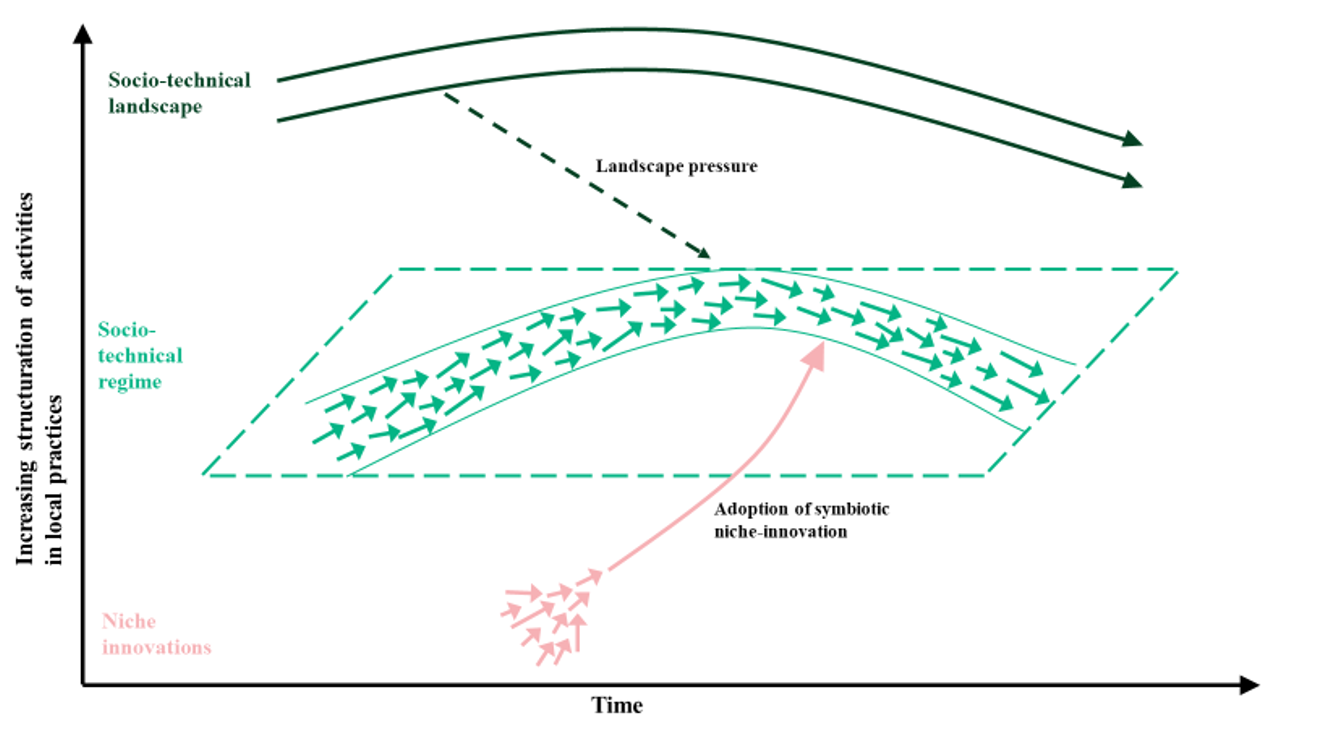
Figure 6: Transformation pathway, Own illustration adapted from Geels & Schot (2007)8
The de-alignment and re-alignment pathway describes transitions triggered by sudden, profound landscape changes, known as “avalanche changes.” Such shocks put multiple socio-technical subsystems under pressure simultaneously and lead to a massive erosion of existing regime structures8. Trust in the regime’s problem-solving capacity declines. Many established actors withdraw, reduce their investments, or no longer actively adapt their strategies. Unlike the transformation pathway, an institutional vacuum emerges: no mature niche innovation is ready to immediately replace the old regime. However, this gap creates new opportunities for action, particularly for new actor groups such as local initiatives, new market entrants, civil society networks, or municipal organizations. Driven by alternative visions such as autonomy, sustainability, or decentralization, these actors experiment with new technologies and organizational forms37. This results in a phase of open search processes, characterized by uncertainty and intense competition: multiple niches compete simultaneously to succeed the old regime. Typically, both parallel and sequential interactions occur between emerging niche innovations13. Parallel interactions enable mutual learning, joint infrastructure development, or the sharing of technical solutions, while sequential interactions allow later innovations to build on institutional foundations established by earlier experiments. Over time, some niches stabilize. One dominant configuration emerges, becomes the nucleus of a new regime, and establishes new technological, institutional, and cultural structures8. The result resembles the transformation pathway, but the key difference is that the transition here is not led by established actors, but shaped by an open field of search and competition among new actor constellations.
An illustrative example is the scenario “Towards distributed generation” in the electricity sector37. External shocks such as oil crises, geopolitical tensions, or supply shortages lead to a loss of trust in large centralized utilities. Municipal utilities, citizen cooperatives, and local networks initiate a multitude of decentralized experiments with wind power, photovoltaics, biomass, or micro-CHP systems. These systems are organized through microgrids. Gradually, a new, highly decentralized and flexible energy system emerges from these parallel experiments, clearly departing from the former centralized logic37.
Figure 7 illustrates this dynamic process, showing how the massive erosion of the regime creates space for parallel niche experiments and how a new dominant configuration eventually emerges from a diversity of innovations.
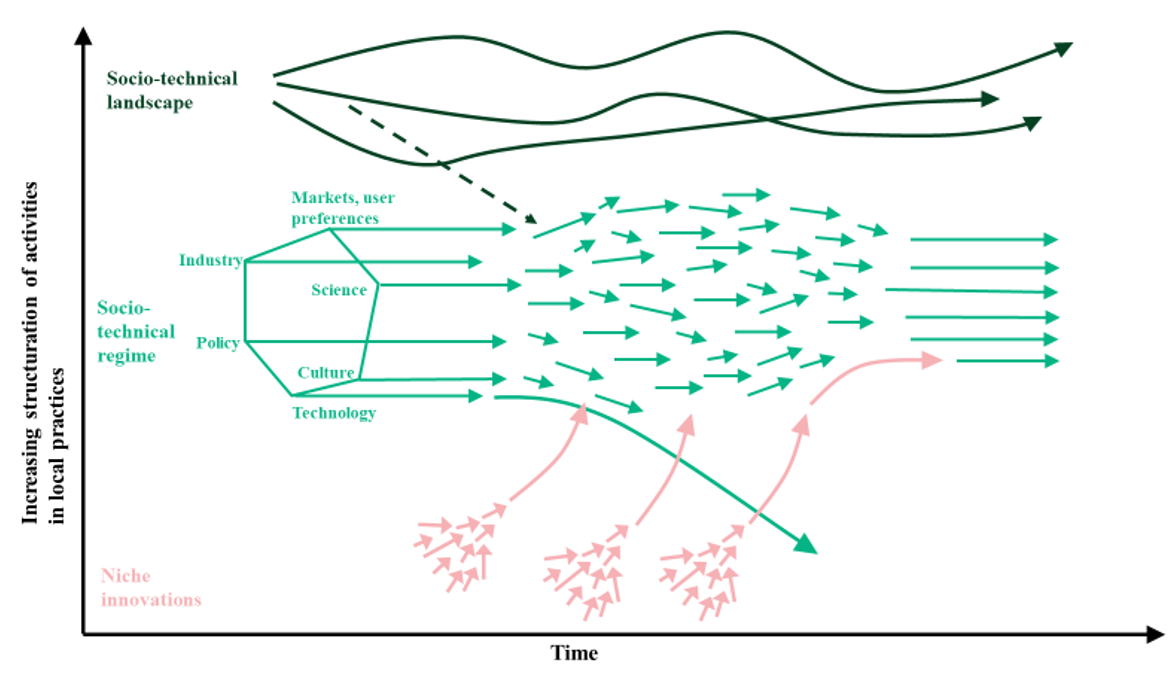
Figure 7: De-alignment and re-alignment pathway, Own illustration adapted from Geels & Schot (2007)8
The technological substitution pathway describes transitions in which stabilized niche innovations replace an existing regime, thereby triggering a profound system transformation8. The main drivers are usually new actors such as start-ups, technology firms, or companies from outside the incumbent sector, which develop alternative technologies within protected niches. In the initial phase, the regime remains stable. Established incumbents respond with incremental adjustments, such as efficiency improvements, product enhancements, or organizational optimizations. Radical niche innovations receive only limited access to resources or markets during this stage. A transition occurs only when strong external landscape changes, such as ecological crises, technological disruptions, or political upheavals, destabilize the regime and create new opportunities for action. In the emerging window of opportunity, stabilized niches encounter a weakened regime. New actor groups strategically exploit the instability to scale up their innovations. Competitive and displacement processes ensue, with incumbents and newcomers confronting each other. While incumbents attempt to maintain control through adaptation, newcomers actively drive the transition forward. The diffusion process typically proceeds gradually, beginning in niche markets and supported by cumulative niche expansion. Not only is the technology itself disseminated, but market structures, infrastructures, institutional frameworks, user practices, and cultural meanings are also transformed. The result is a deep substitution of the old regime. In contrast to the de-alignment and re-alignment pathway, this transition is less chaotic and more strongly driven by the internal maturity of niches. The system change does not emerge from an institutional vacuum but from an organically developed innovation dynamic8.
Figure 8 illustrates this transition, showing how a stabilized niche, supported by external shocks, breaks through the structures of the old regime and initiates a broad restructuring of technologies, markets, and user practices
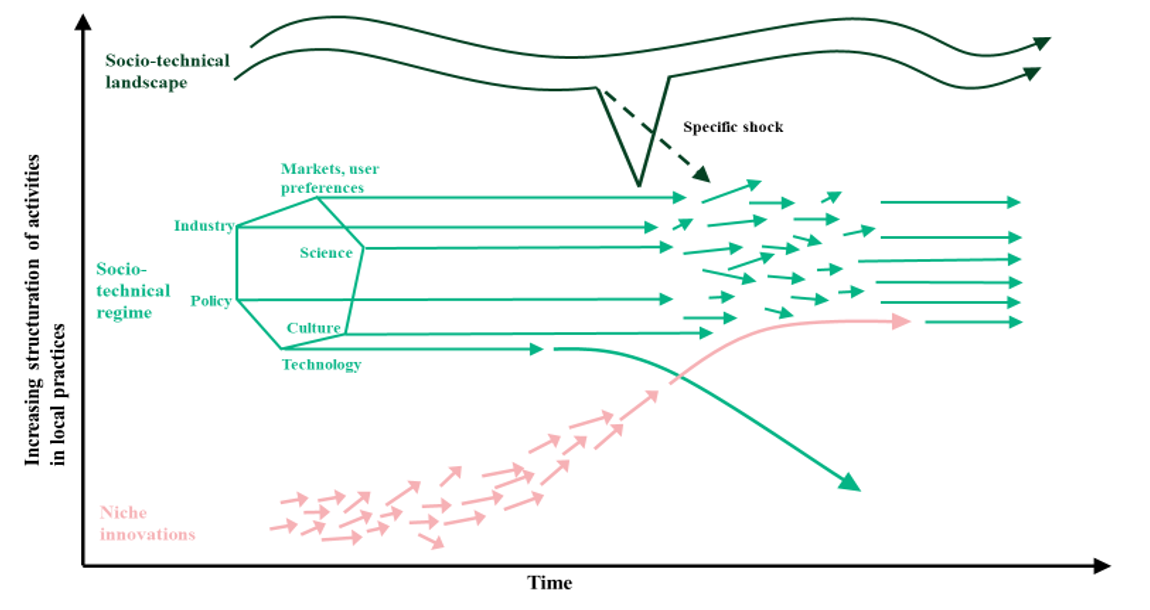
Figure 8: Technological substitution pathway, Own illustration adapted from Geels & Schot (2007)8
The reconfiguration pathway describes transitions in which an existing regime is not abruptly replaced, but gradually transformed through the integration of symbiotic niche innovations8. In contrast to disruptive pathways, a cooperative dynamic between regime actors (such as companies, authorities, or associations) and niche actors, particularly suppliers or technology developers, is central to this process. In the early phase, regime actors deliberately adopt specific innovations to solve concrete problems or achieve efficiency gains. The integrated niche solutions do not compete with the regime but complement and stabilize it. This symbiotic relationship creates incentives for pragmatic cooperation, where new technologies are integrated wherever they offer functional advantages without fundamentally questioning the structure of the regime. Over time, this integration accumulates: additional actors, suppliers, and networks become involved, and further technologies are introduced. Thus, a gradual reorganization emerges in which not only technical components but also institutional frameworks, user practices, and symbolic meanings are transformed. However, the change remains incremental: central organizations retain their roles, existing networks persist, and the transformation unfolds as a slow restructuring rather than a disruptive break. Typically, regime actors themselves are the driving force behind this pathway. They respond to external pressures not with resistance but with adaptation, cooperation, and recombination. The interplay of old and new elements thus leads to a profound but evolutionary transformation of the system8.
A fitting example is provided by the scenario “Towards a Supergrid” in the electricity sector37. In response to geopolitical uncertainties and increasing sustainability demands, regime actors initiate a reorganization of the energy infrastructure. In cooperation with technology developers, offshore wind farms, large-scale solar plants, and hydropower stations are expanded. These innovations are not introduced as radical breaks but are integrated through the extension of existing systems. In this way, a European super grid emerges: a new, highly interconnected system that builds on existing structures and gradually transforms them37.
Figure 9 illustrates this mechanism, showing how symbiotic innovations are gradually integrated into the regime, how networks evolve, and how, over time, the system undergoes a comprehensive reorganization of its elements and interconnections.
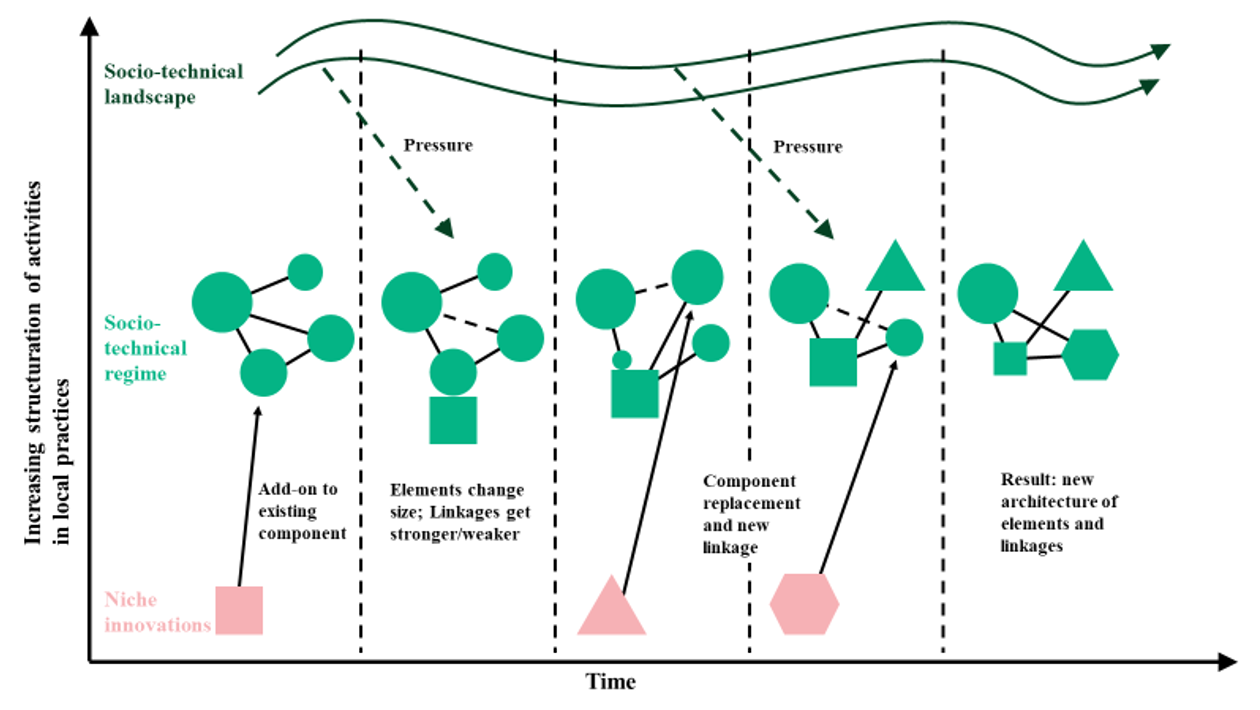
Figure 9: Reconfiguration pathway, Own illustration adapted from Geels & Schot (2007)8
In practice, transitions rarely follow a single, clearly defined pathway. Instead, hybrid or sequential developments often emerge, in which several transition pathways overlap simultaneously or occur consecutively8. Hybrid transitions are characterized by the parallel operation of different mechanisms, whereas sequential transitions can be understood as a series of successive shifts between pathways.
Particularly under increasing landscape pressure, it is often observed that regime actors gradually adjust their strategies. Initially, they typically respond with incremental adaptations, as described in the transformation pathway. As external pressure intensifies, for example through political reforms, technological advancements, or rising societal expectations, a shift towards a reconfiguration pathway may occur, where symbiotic niche innovations are embedded into existing structures. In parallel, more radical niche innovations often develop and begin to stabilize. When internal change and external pressure accumulate, two main developments become possible: if the niche has already matured sufficiently, a technological substitution pathway may emerge, leading to the rapid replacement of the existing regime. If, however, the niche is not yet fully stabilized, a de-alignment and re-alignment pathway is more likely, in which the regime collapses, an institutional vacuum arises, and different niches compete until a new dominant configuration establishes itself.
A current example of such overlapping pathways can be seen in the automotive sector. Digital mobility services like car-sharing and ride-sharing are being symbiotically integrated into existing vehicle architectures, a pattern typical of the reconfiguration pathway. At the same time, the declining legitimacy of the combustion engine shows tendencies towards de-alignment. Parallel to this, actors such as Tesla and BYD are driving forward the electrification of the drivetrain, thus preparing the ground for a possible technological substitution38. In this sector, both hybrid processes, such as the simultaneous digitalization and electrification of mobility, and sequential developments, where early transformations pave the way for more disruptive changes, are clearly observable.
For better clarity, Table 4 summarizes the key features of the four ideal-typical transition pathways in a comparative format. The table highlights how the pathways differ in terms of the nature of landscape pressure, regime actors’ responses, niche maturity, key actor constellations, typical interaction patterns, as well as transition dynamics and outcomes. It thus provides a compact overview to support the subsequent analysis and classification of empirical case studies.
| Transition Path | Landscape Development | Regime Status | Niche Status | Main Actors | Interactions | Dynamics | Typical outcome |
| Reproduction Path | Stable, minor changes | Regime remains stable, responds with incremental adjustments | Immature or marginal | Regime actors | Incremental innovations within the regime | Stability & gradual adaptation | Continuation of the existing regime with minor changes |
| Transformation Path | Moderate, mostly disruptive pressure | Regime adapts but remains dominant | Not yet stabilized | Regime actors + external groups (NGOs, media) | Negotiation, selective incorporation of niches | Evolutionary change | Adaptation and gradual reorganization of the regime |
| Reconfiguration Path | Gradual pressure (e.g. efficiency issues, societal expectations) | Regime adopts symbiotic innovations | Moderately developed | Regime actors + niche actors (e.g. suppliers) | Cooperation, symbiotic integration | Incremental transformation | Restructuring of the regime without radical disruption |
| Technological Substitution Path | Sudden and strong pressure | Regime destabilized, loses control | Strong and stable niches | New market actors, pioneers | Competition and displacement dynamics | Disruptive regime shift | Substitution of the existing regime by new technologies |
| De-alignment & Re-alignment Path | Avalanche-like, multiple shocks | Erosion and withdrawal of regime actors | Unstable but diverse niches | New local actors, social movements, municipal utilities | Parallel and sequential niche interactions | Open search and competition phase | Emergence of a new, often decentralized regime |
Table 4: Key features of the four ideal-typical transition pathways
After presenting and comparing the various transition pathways in terms of their logic, dynamics, and actor structures, the question arises as to how transitions unfold over time. Transitions are not singular events; rather, they typically evolve over extended periods through several distinct phases. In MLP research, a widely used phase model has been established to sketch typical development trajectories, regardless of the specific pathway followed.
In the initial phase, experimentation and learning dominate. Innovations emerge within niches, such as laboratories, pilot projects, or through civil society initiatives. These early developments are characterized by high uncertainty, limited resources, a lack of economies of scale, and technical as well as social skepticism. Particularly in the case of sustainability innovations, the so-called “novelty trap” is frequently observed: new solutions are often perceived as immature, unreliable, or incompatible with existing everyday practices30.
In the second phase, niche innovations begin to stabilize. Projects are consolidated, technical standards are established, networks are built, and a dominant design starts to emerge. First applications are introduced into market niches, and consumers increasingly integrate the innovation into their daily lives. At the same time, visions, narratives, and societal discourses shape public perceptions and the acceptance of the technology. Nevertheless, resistance often persists, particularly among groups who perceive themselves as disadvantaged by the changes30.
With increasing technological maturity, internal learning processes, declining costs, and growing political support, the innovation spreads beyond the niche. External factors such as policy interventions, value shifts, or crises can further accelerate this process. This phase is frequently marked by conflicts: between old and new technologies, between incumbent and emerging actors, and over resources and political framing30.
In the final phase, the innovation becomes the new regime: it partially or fully replaces existing structures. New routines, infrastructures, regulations, and social practices become firmly established. The transition reaches a new stable equilibrium, but with different actors, rules, and system logics than before30.
The phase model thus complements the ideal-typical typology of transition pathways by adding a temporal dimension, illustrating that transitions are not abrupt but unfold through successive stages. These phases are depicted as the temporal axis in Figure 10, providing a more detailed representation of the progression of transition processes. At the same time, the model remains intentionally generalized. In reality, transformation processes are often considerably more complex and shaped by additional dynamics. Consequently, alternative typologies have also emerged, aiming to capture this complexity and context-specificity in a more differentiated manner.
Figure 10: Multi-level dynamics with transition phases, Own illustration adapted from Geels (2019)30
While this thesis focuses primarily on the application of the established MLP typology, two alternative models will also be briefly introduced to offer additional perspectives on transformations and to contribute to the theoretical framing. A detailed analysis of these models would go beyond the scope of this work; however, their core ideas provide valuable impulses for both research and practice.
An alternative approach is proposed by Berkhout et al., who address the question of why not all niche innovations lead to profound systemic change29. Their typology differentiates transitions along two axes: the origin of change impulses (internal vs. external) and the degree of coordination (emergent vs. strategic). From this, they derive four ideal-type transitions: Endogenous Renewal, where the regime evolves through its own internal innovation capabilities; Re-orientation of Trajectories, which describes incremental adjustments within the regime; Emergent Transformation, triggered by external impulses without central coordination; and Purposive Transition, a deliberately planned change driven by external actor coalitions29.
The added value of this typology for MLP research lies in its focus on internally driven or emergent dynamics, an aspect somewhat underrepresented in the classical MLP, which emphasizes niche developments. However, Geels and Schot criticize the binary distinction between “high” and “low” coordination, arguing that coordination processes in transitions are typically negotiated and evolve dynamically over time8.
A more process-oriented perspective is provided by de Haan and Rotmans (2011) with their Multi-Pattern Perspective (MPP). They conceptualize transitions not as clearly delineated pathways, but as sequences of typical patterns triggered by functional disturbances. They identify three starting conditions: tensions (external challenges), stress (internal contradictions), and pressure (competition from alternatives). Based on these, they develop core patterns such as Empowerment (niche ascent), Reconstellation (top-down change), and Adaptation (regime-driven response). Transitions typically emerge through combinations of these patterns, which they describe as transition storylines. Additionally, they distinguish four types of transitions, empowerment, reconstellation, adaptation, and squeezed transitions, the latter characterized by simultaneous bottom-up and top-down dynamics. The MPP thus extends the MLP by introducing greater analytical openness to nonlinear, hybrid, and incomplete transformation processes1.
The models by Berkhout et al. (2005) and de Haan and Rotmans (2011) demonstrate that transitions do not necessarily follow linear trajectories nor are they always initiated by niche innovations. Rather, they sensitize researchers to alternative logics of change, emergent dynamics, and internal regime transformations. While these models are theoretically relevant supplements to this study, they do not form the core of the analysis. Nevertheless, their inclusion sharpens the understanding of the diverse pathways that transitions can take.
The analysis of transition pathways and underlying multi-level dynamics demonstrates that socio-technical transitions are highly complex, non-linear, and context-dependent processes. They emerge from the interactions between niches, regimes, and the socio-technical landscape, which act as central driving forces4,8. Transitions do not follow a clear cause-and-effect logic but are shaped by recursive feedback loops, unstable equilibria, and windows of opportunity in which technological, societal, and political developments converge4,8. Three central insights can be derived from this analysis. First, the course of transitions is highly path-dependent. The type and intensity of landscape developments, the maturity of niches, and the responsiveness of the regime largely determine which ideal-type pathway is taken8. Second, agency plays a decisive role. Whether windows of opportunity are recognized and strategically used depends on how actors interpret their positions, form coalitions, and shape discourses17,30. Third, timing is crucial: only when niche maturity and regime instability coincide can a transition window emerge8.
For sustainability transitions, these findings imply specific requirements. Sustainability transitions do not merely aim at efficiency improvements, but at systemic, normatively driven changes, such as decarbonization, resource conservation, or social justice3. These goals often clash with existing market logics, leading to blockages, goal conflicts, or resistance. Therefore, it is essential to understand empowerment processes, hybridization dynamics, and coordination mechanisms in which niche and regime actors actively participate in shaping transformations17. Two key implications arise for the practical application of the MLP. First, transition pathways serve as a heuristic tool to empirically structure and compare complex transformation processes. Second, they sensitize governance strategies to critical levers, such as the strategic opening and use of windows of opportunity, the building of stable networks, the management of uncertainties, or the shaping of narrative frameworks36.
Overall, the analysis shows that the MLP has established itself as a powerful framework to explain the complex dynamics of socio-technical transformations. At the same time, new questions arise, particularly concerning its limited explanatory power in highly contingent contexts, the role of power and conflict, and the empirical application of the pathway types. The next chapter will therefore focus on central criticisms, research gaps, and current developments within the MLP. The aim is to systematically review existing debates in the literature and to identify key challenges as well as potential avenues for the further development of the MLP.
2.4 Criticisms, Research Gaps and Current Debates of the MLP
The MLP is one of the most established frameworks in transition research. Its conceptual openness and heuristic structure enable the analysis of complex socio-technical changes across different levels and over long time periods. By distinguishing between niches, regimes, and the socio-technical landscape, it provides differentiated access to questions of stability and change4,8. Socio-technical transitions are rare, long-term, and multi-dimensional processes that affect entire infrastructures and societal domains. Due to the lack of extensive datasets, alternative, multi-dimensional theories are required. Geels compares their complexity to major historical events such as the Industrial Revolution, arguing that a singular explanation is not possible3. The MLP therefore does not offer a deterministic model, but rather a framework for analyzing patterns, mechanisms, and co-evolutionary dynamics. Despite its strengths, the MLP has been subject to increasing critical discussion. Scholars highlight conceptual ambiguities, methodological inconsistencies, as well as normative and empirical limitations2,28,39. In particular, issues such as power, agency, spatial dimensions, cultural meanings, and social practices are seen as underdeveloped. At the same time, the MLP continues to evolve through the integration of new disciplinary perspectives.
The aim of this chapter is to systematically address central points of critique and to link them with current research approaches. The identified weaknesses are not viewed as refutations of the core assumptions, but rather as starting points for productive revisions. The analysis is structured around six thematic focal points: conceptual ambiguities, agency and power, methodological challenges, spatial and global contextualization, social and normative dimensions, and perspectives for theoretical and practical development.
A central challenge of the MLP becomes apparent in the inconsistent use of key concepts, particularly the notion of “regime.” In research practice, it often remains unclear whether the term refers to specific technologies (e.g., fossil fuels), institutional arrangements (e.g., electricity market regulations), or broader socio-technical systems (e.g., electricity supply)3,8. Depending on the chosen system boundaries, transitions can be interpreted either as profound transformations or merely as incremental adaptations, which complicates the comparability of studies and reduces the empirical validity of the MLP39. Moreover, the regime concept is sometimes used to describe institutional rule systems, sometimes material infrastructures, and sometimes collective patterns of action. This conceptual blending blurs the distinction between social rules and material structures and can lead to depictions of regimes as if they were independent actors3. It is often overlooked that regimes are the result of collective social practices and can internally contain significant tensions, contradictions, or competing interests. To adequately capture the diversity within regimes, a more differentiated analytical approach is necessary.
Another critical point concerns the frequent isolated examination of individual regimes. Many studies assume a stable regime that is destabilized by niche innovations and external pressures. In reality, however, transformation processes often cross sectoral boundaries. Developments such as electromobility or smart grids arise at the intersection of energy, mobility, and information and communication technology (ICT) systems3. Such cross-sectoral interactions have so far received little attention, limiting the explanatory power of the MLP. Future research should therefore place greater emphasis on the interdependencies between regimes, including synergies, goal conflicts, and mutual blockages. This complexity highlights that the MLP must be theoretically expanded. It is not sufficient to focus solely on the three levels; the co-evolution between multiple regimes must also be systematically addressed. Approaches such as multi-regime interactions or structured regime coupling offer promising perspectives in this regard.
These conceptual ambiguities directly affect the empirical application of the MLP. Originally, the MLP was developed as a heuristic model to structure qualitative case studies of complex, historically embedded transformation processes. While this openness is one of its strengths, it has also led to methodological uncertainties and epistemological tensions. Many studies rely on qualitative, descriptive case analyses that reconstruct historical development paths, but often heavily draw on secondary sources and lack methodological transparency39. A particularly critical issue is the retrospective definition of the start and end points of transitions, which is often determined ex post without clear criteria. This hampers the comparability between studies and limits the transferability of results.
Another challenge concerns the epistemological positioning of the MLP. It cannot be clearly assigned either to the positivist tradition or to interpretive approaches, but operates as a mid-range theory in the tension field between the two3,16. While this creates opportunities for interdisciplinary connections, for example with institutional or discourse theories, the MLP often lacks clear concepts for integrating different theoretical perspectives. Strengthening the MLP as a transdisciplinary analytical framework requires more precise conceptual work, clearly defined methodological standards, and systematic reflection on its basic assumptions.
According to Köhler et al. (2019), the current debate on methodological challenges in transition research can be summarized into five key dilemmas: the tension between qualitative depth and generalizability, the need for differentiated process analyses, the insufficient linkage between micro-, meso-, and macro-levels, the methodological handling of complex transformation dynamics, and the relationship between science and practice2. Only through a clearer methodological foundation, a more differentiated theory development, and an openness to adjacent perspectives can the MLP fulfil its aim of capturing complex transformation processes in an empirically robust, analytically consistent, and context-sensitive way.
Another major criticism of the MLP concerns its handling of agency, power relations, and political negotiation processes. In many schematic representations, change appears as a structure-driven process in which actors are barely visible. This reading has led to the widespread perception that the MLP neglects individual and collective agency8. However, agency is indeed part of the theoretical core of the model, as discussed in the previous chapters on levels and transition pathways. The vertical axis of the model points to the increasing institutionalization of practices and highlights that niches, regimes, and landscapes are actively reproduced and transformed by social groups. Routines, learning processes, and strategic action are central mechanisms through which actors shape transitions3. The theoretical foundation of the MLP combines material approaches from evolutionary economics (e.g., markets, investments, competition) with interpretative perspectives from Science and Technology Studies (e.g., discourses, visions, networks). Agency is thus understood as a mixture of routinised, boundedly rational action and strategic, meaning-oriented action. Hence, the general criticism that the MLP ignores agency is too simplistic and overlooks the theoretical breadth of the model.
Nonetheless, it must be acknowledged that the political dimensions of agency, such as the exercise of power, conflict, and strategic coalition-building, have been underemphasized in many empirical studies. Only more recent research explicitly extends the MLP by incorporating political science approaches, for example to analyze power conflicts, policy processes, or the responses of incumbent actors2,3.
Another point of critique is the strong focus in many studies on bottom-up processes. Niche innovations and their integration are often placed at the center, whereas top-down mechanisms such as political interventions, crises, or macrostructural impulses receive less attention. Although the transition pathways provide different interaction patterns between levels, a niche-centered perspective often dominates in practice3. This one-sidedness can be overcome by integrating complementary concepts, for instance from revolution studies, which analyze societal transformations as resulting from both spontaneous mass movements and planned coups or structurally induced crises3. Expanding the perspective in this way raises fundamental questions about the democratic legitimacy of transitions: Who defines what constitutes sustainable change? Which actors have the necessary resources to enforce their visions? And which groups are excluded? Many governance processes reveal a marked power imbalance in favor of economic and political elites. Civil society organizations and marginalized groups often have limited influence on the framing of problems or the development of solutions. While transition research emphasizes the importance of pluralistic and participatory approaches, in practice participation often serves to legitimize pre-existing strategies rather than enabling genuine democratic negotiation28,40. A concrete example of this issue is the technocratic orientation of many transition processes. Participation is often seen merely as a means to legitimize existing strategies rather than as an opportunity for substantive democratic engagement. This contradicts the normative claim of the MLP to systematically integrate diverse societal actors and perspectives. As a result, transitions may prioritize technological innovation without sufficiently addressing social inequalities, power conflicts, or cultural values40.
Against this backdrop, various scholars call for a stronger integration of political theories into the MLP. Approaches such as the Advocacy Coalition Framework, Multiple Streams Models, or discourse-analytical perspectives offer tools to systematically analyze political conflicts, institutional path dependencies, and coalition formations30. Additionally, concepts of relational, structural, and dispositional power2 can help to conceptualize agency as politically embedded action. This shift draws greater attention to struggles over meaning, mechanisms of institutional exclusion, and strategic mobilization. It also reveals how unequally influence and resources are distributed among different actor groups. The central value of these perspectives lies in recognizing that transitions are not only processes of technical innovation but also deeply social and political processes2,40. Overall, it becomes clear that while the MLP already provides conceptual tools for analyzing agency, power, and politics, these have only been partially utilized to date. Future research should address these gaps by systematically examining political processes, actor conflicts, and governance structures. Only by capturing the different expressions of agency more systematically can the MLP fully realize its potential to conceptualize transitions as socially contested, conflictual, and power-laden processes.
Another major criticism of the MLP concerns its limited sensitivity to spatial contexts and geographical scales. Although niches, regimes, and landscapes are conceptualized as functional levels with different degrees of stability, their spatial anchoring remains largely unspecified28. As a result, important spatial differences, such as the uneven diffusion of innovations, regional path dependencies, or locally rooted resistance, are difficult to capture. Questions like why transitions occur faster or differently in certain regions, why local innovations fail to scale up, or how regional power relations influence transitions often remain unanswered.
In empirical practice, there is a strong focus on national contexts, particularly European countries such as the Netherlands, where the MLP was originally developed. Subnational, urban, or transnational dynamics are rarely analyzed in a differentiated way28. This makes it difficult to adequately study the complex interactions between local innovation processes, global markets, and international policies. Yet cities and regions have long played active roles in transitions: they selectively absorb external influences, institutionalize them, and develop their own transition pathways, for example through urban governance initiatives, transnational city networks, or local intermediaries25. A more spatially focused MLP would need to systematically integrate such multi-scalar and networked governance forms. Scale should not be understood as a hierarchical structure, but rather as a network of interconnected actors, knowledge, resources, and institutions that circulate across spaces25.
Concepts from relational economic geography and political ecology emphasize that space is not neutral or passive but structured by power relations, access, and exclusion. From this perspective, globalization is not a borderless process but a selective, uneven dynamic that shapes transitions in different regions in distinct ways25. A spatially differentiated analysis within the MLP could help to uncover these dynamics and explain existing inequalities more effectively.
In the Global South, the established MLP categories often reach their limits. Fragmented, informal, or hybrid regimes are common and do not easily compare to Western institutional structures. Politically unstable contexts, weak infrastructures, and asymmetric dependencies complicate a direct application of the model. Furthermore, in many regions, the primary concerns are not technological innovation or CO₂ reduction but basic service provision, social justice, and poverty alleviation2,28. These differences clearly show that sustainability is not a universally defined goal but a context-specific negotiation process. A spatially sensitive MLP would need to systematically integrate such local problem constellations and normative frameworks, for example by considering translational networks or territorial power structures. There is also a need to better recognize context-based innovation approaches, such as locally embedded technologies or community-driven solutions. Even if these approaches are not always scalable, they can still unleash significant transformative potential. In this context, urban areas have increasingly moved to the center of transition research. Cities are not only dense infrastructural spaces but also laboratories for governance innovations, real-world experiments, and participatory procedures2. Urbanization, digitalization, and social inequalities intersect in specific ways in cities, creating complex, place-bound challenges in areas such as mobility, energy, and housing. Urban transitions are characterized by functional density, institutional fragmentation, and social disparities, which can make transitions more difficult but also open new spaces of opportunity.
These insights make it clear that the MLP must engage more systematically with geographical, political, and cultural contexts. Space should no longer be treated merely as an analytical backdrop but must be recognized as a constitutive dimension of socio-technical transitions. This also requires a critical reflection on knowledge production, representational politics, and power over definitions: Who defines which regions are considered “innovative”? Who frames transition pathways? And which actors are systematically underrepresented? A politically and ecologically sensitive MLP can help to systematically address these questions, thereby enhancing both its analytical depth and its societal relevance28. Overall, it becomes clear that a contextualized, spatially sensitive perspective not only addresses existing explanatory gaps but is also crucial for developing a globally relevant and socially just transition research agenda.
Another major criticism of the MLP concerns its technology-oriented focus. This often leads to a neglect of the societal embeddedness and cultural meaning dimensions of innovations. Many studies primarily concentrate on material artefacts and functional infrastructures, such as solar panels, electromobility, or new energy systems. However, the social practices, norms, and interpretative patterns that enable, structure, and transform these technologies often remain underexplored28,39. This narrowing reduces transitions to technical innovation pathways and underestimates the role of social routines, cultural narratives, and political negotiation processes as integral parts of transformation.
Stronger integration of social science perspectives opens up new analytical potentials. Lawhon and Murphy, for instance, call for a more explicit consideration of social practices, ownership structures, and discursive processes in order to better understand technical change28. Technologies never unfold their effects in isolation but always interact with normative expectations, institutional structures, and everyday routines. Who develops, disseminates, or prioritizes new technologies is strongly shaped by socio-cultural constellations, as is their societal acceptance and impact.
The discursive framing of transitions plays a particularly important role. Discourse-theoretical and framing-oriented extensions of the MLP reveal that transformation processes are also symbolically negotiated. Different societal actors interpret problems, technologies, and solution pathways in distinct ways, framing them as moral crises, economic challenges, or geopolitical risks30. These competing interpretations, so-called “framing struggles”, significantly influence which innovations are legitimized, politically supported, or socially adopted. It is not only empirical evidence that matters but also cultural resonance, proximity to everyday life, and the credibility of the actors involved. Cultural interpretations are also closely linked to normative notions of sustainability, which, as previously discussed, are highly context-dependent and politically contested. While overarching goals such as greenhouse gas reduction find broad support, ideas about how to concretely achieve these goals vary widely40. Different actors prioritize ecological, economic, and social criteria depending on their interests. Although the normative openness of the sustainability concept is theoretically acknowledged in transition research, it often remains empirically under-reflected. Transition management, for example, frequently focuses on implementing pre-defined visions of the future without systematically questioning their origins, value foundations, or exclusion mechanisms40.
Against this background, grassroots and values-based forms of innovation are gaining increasing attention. Community-based energy projects, solidarity farming, or alternative mobility initiatives do not seek technological disruption within market-based frameworks but aim at changing everyday practices and local lifestyles30. Such projects create alternative logics of transformation but are often structurally disadvantaged. They rely on voluntary engagement, encounter institutional barriers, and have limited resources. Nevertheless, they contribute significantly to diversifying innovation pathways and open new perspectives for sustainable transitions beyond market-driven and technology-centered logics.
The debate about normative issues is not limited to local initiatives or cultural meanings but also touches upon broader questions of justice within transition research. Köhler et al. (2019) identify six key research perspectives to systematically incorporate these dimensions: analyzing distributive and participatory inequalities, anticipating unintended effects of technological innovation, promoting reflexivity among the research community regarding social justice, integrating new actor groups such as non-users and marginalized communities, considering alternative justice concepts, particularly from non-Western contexts, and including non-human actors like the environment and public health in normative evaluations2.
These perspectives clearly show that social practices, cultural meanings, and normative negotiation processes are not peripheral aspects but central dimensions of socio-technical transitions. They significantly influence how innovations emerge, gain societal resonance, and which alternatives are systematically excluded. Stronger integration of these dimensions can not only enhance the explanatory power of the MLP but also sharpen its normative orientation towards a fairer, more inclusive, and culturally sensitive transition research agenda.
The criticisms outlined above not only reveal analytical limitations of the MLP but also provide important impulses for its conceptual advancement and interdisciplinary opening. A clear trend emerges towards moving away from technology-centered case studies towards systemic, multidimensional, and context-specific approaches. The central challenge lies in productively combining the conceptual openness of the MLP with theoretical clarity, empirical robustness, and political relevance.
A significant advancement can be seen in the growing systemic perspective on transitions. Instead of relying on linear diffusion models of individual niche innovations, research increasingly focuses on complex reconfigurations of entire socio-technical systems. Studies show that transformations in sectors such as energy or mobility do not follow mono-causal trajectories but are shaped by the interaction of technological, infrastructural, institutional, and cultural changes30. Such systemic approaches emphasize the importance of sector-spanning interdependencies, interactive innovations, and long-term dynamics.
Closely linked to this perspective shift is the increasing engagement with the deliberate destabilization and phase-out of established regimes. While the MLP initially concentrated on the emergence and diffusion of niche innovations, it has become clearer that dismantling existing infrastructures, particularly in the fossil energy sector, is not merely an outcome but often a prerequisite for the development of sustainable alternatives30. Political interventions, social movements, and economic incentive systems play a central role here, highlighting that transitions do not happen automatically but must be actively managed, accompanied, and socially cushioned.
Another area of research concerns the analysis of internal dynamics within existing regimes. While regimes were traditionally regarded as stability-enhancing structures, more recent studies point to their potential for internal transformation, for example through organizational learning, strategic realignment, or political repositioning. This suggests that regimes are not only barriers to change but can also act as levers for transformation if established actors actively adapt existing structures to pursue new sustainability goals16. This opens new perspectives on the interplay between bottom-up and top-down processes, multi-regime interactions, and hybrid transition strategies. Against this background, system-spanning concepts such as the theory of “deep transitions” are gaining importance. These approaches aim to analyze parallel transformations across multiple sectors, such as energy, food, mobility, and industry, in connection with global megatrends like digitalization or urbanization2. Such perspectives not only acknowledge sectoral interlinkages and transversal innovation processes but also promote integrative theory-building and more interdisciplinary research practices.
In parallel, the need for a more differentiated governance perspective within the MLP is growing. While early approaches like Transition Management or SNM primarily addressed the initial phases of transitions, attention is increasingly shifting towards later stages such as diffusion, scaling, and acceleration2. Traditional policy instruments like subsidies and regulation are now being supplemented by experimental formats such as real-world laboratories, urban experiments, and participatory governance mechanisms. Particularly, intermediaries, actors that mediate between politics, civil society, and business, are gaining importance as coordinating bodies.
At the same time, the role of civil society actors and social movements is being reassessed. These groups play a crucial role in delegitimizing incumbent regimes, establishing alternative narratives, and democratizing transformation processes. Future research should therefore more closely investigate the conditions under which grassroots initiatives, Civil Society Organizations (CSOs), and social movements scale, achieve political influence, or are integrated or marginalized by existing power structures2. This also requires a finer differentiation between actors and greater attention to cultural meaning-making and symbolic practices.
Another largely untapped potential lies in analyzing companies, financial flows, and organizational innovation. Given the growing cross-sectoral linkages, such as through digitalization and electrification, questions about institutional power relations, corporate strategy, and financial regulation are becoming increasingly relevant. Research on sustainable business models, platform-based innovation networks, or new ownership structures could help expand the MLP and systematically integrate corporate dynamics into transition processes2.
The criticism of the MLP has not only revealed its analytical limitations but has also provided important impulses for its further development. Its heuristic strength, conceptual openness, and analytical depth remain central advantages. However, its future relevance will depend on whether it can evolve into a reflexive, learning-oriented, and interdisciplinary framework. The integration of neighboring theoretical traditions, such as policy and power research, geography, sociology, or environmental economics, offers promising entry points for this advancement. In doing so, the MLP could move beyond serving merely as an explanatory model and develop into a guiding framework with the potential to actively shape transformative science. How the MLP can be concretely operationalized and used to support the governance of sustainable transitions will be analyzed in the following chapter.
3 Practical Implementation of the MLP
After systematically outlining the theoretical foundations, concepts, and debates surrounding the MLP in the previous chapters, this chapter now addresses the question of how the MLP can be concretely applied to the governance of sustainability transitions. The aim is to translate the analytical insights into practice-oriented strategies for action. The central focus lies on how transformation processes can be purposefully supported, accelerated, or steered. The MLP serves not only as a conceptual framework for analyzing past developments but also as a strategic basis for shaping future governance processes.
The chapter is divided into three sections. Section 4.1 systematizes fundamental operationalization strategies within a co-evolutionary governance perspective. Section 4.2 discusses the role of state actors and cross-sectoral governance approaches. Section 4.3 focuses on the contributions and challenges of corporate actors. Together, the chapter develops a practice-oriented perspective on how the MLP can be used as a strategic navigation tool for managing sustainable change.
3.1 Strategic Framework for Operationalizing the MLP
The transition from an analytical to an action-oriented use of the MLP requires a systematic reflection on how systemic change can be purposefully supported, accelerated, or steered. Originally developed as an explanatory framework for long-term socio-technical transformations, the MLP is increasingly being applied as a heuristic tool to develop governance strategies for sustainability transitions4,9,14. At the center of this approach lies the question of how the dynamic interactions between the micro, meso, and macro levels can be strategically addressed and translated into concrete governance approaches. Two core governance logics are particularly important: the promotion of niche innovations and the creation of transformative pressure on existing regimes. These logics do not operate in isolation but rather act as complementary elements of a co-evolutionary understanding of governance, which must be tailored to different phases and contexts41. The following sections reconstruct the theoretical foundations of these two strategies and illustrate, based on the transition phase model, how different governance mechanisms can be applied along the innovation process, from early development, through diffusion, to potential regime stabilization. The aim is to develop a strategic understanding of the MLP that goes beyond analytical descriptions and identifies concrete operational entry points for shaping sustainable transformations.
One of the key advantages of the MLP lies in its ability to conceptualize transformation processes as long-term, multi-phase developments characterized by different dynamics and governance requirements. This perspective highlights that sustainable transitions cannot be achieved through singular interventions or linear planning, but rather unfold as gradual, co-evolutionary processes involving complex interactions between niches, regimes, and landscapes4,7. The four ideal-typical phases of a transition (see Figure 10), experimentation, stabilization, diffusion, and institutionalization, not only mark different stages of innovation development but also open up specific entry points for strategic governance.
In the early experimentation phase, technical and organizational novelties often emerge as responses to perceived problems related to regime dysfunctions or changing landscape conditions. These processes are characterized by high uncertainty, low institutional embeddedness, and an experimental nature. Governance approaches at this stage should primarily promote openness, exploration, and learning, for instance by creating protected spaces that foster diversity and social learning.
In the second phase – stabilization -, technical designs, social practices, and user expectations begin to consolidate into more stable configurations. Linking innovations to relevant markets, infrastructures, and societal discourses becomes increasingly important. Strategically, this phase offers opportunities to support promising niches, for example through infrastructure policies, regulatory adjustments, or narrative framing and expectation management.
The third phase marks the beginning of diffusion, where niche innovations start to compete directly with established regime structures. Success depends on whether the innovation can establish itself as a superior or at least equivalent alternative, not only technically but also normatively, institutionally, and in everyday practices. The breakthrough is largely influenced by windows of opportunity, moments when internal maturity and external openings reinforce each other4,7. Governance measures in this phase require a finely tuned combination of niche support and regime intervention, such as market-shaping instruments, strategic framing, or sector-specific targets.
The final institutionalization phase involves deep structural changes within the socio-technical system, such as the dismantling of old infrastructures, normative shifts, and institutional reorganization. Governance at this stage focuses on stabilizing system changes, moderating structural uncertainties, and establishing new patterns of reproduction. Importantly, transitions between phases are neither clear-cut nor automatic, but highly dependent on context, path dependencies, and strategic coordination7,9.
The evolving governance requirements across these phases are illustrated in Figure 11. The diagram highlights not only the shifts between stability and instability within socio-technical regimes but also the types of political measures that are particularly effective in each phase. While early stages are characterized by experimental diversity, learning processes, and vision building, later stages increasingly require structural anchoring, regime adjustment, and political fine-tuning. It becomes clear that niche support and regime pressure are not mutually exclusive but can act complementarily, for instance, through initial shielding and nurturing, followed by political empowerment and structural transformation17 (see Chapter 3.2.3).
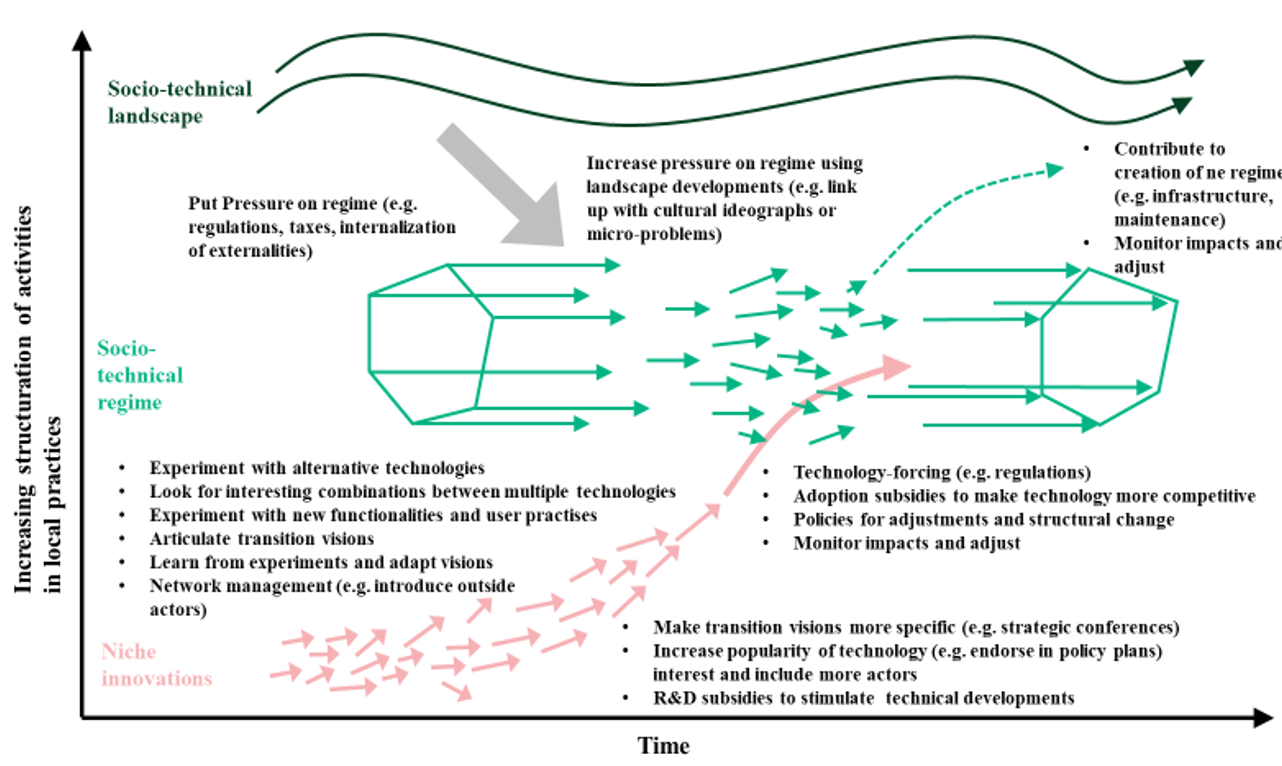
Figure 11: Different transition policies in different phases, Own illustration adapted from Geels (2006)7
Concluding a first fundamental operational strategy focuses on the targeted strengthening and strategic support of niches. Since niches are considered the seedbeds of radical innovations, they form a central starting point for building alternative socio-technical configurations and, in the medium term, for integrating them into existing regimes7. The creation of such innovation spaces is a crucial lever for enabling and actively shaping transformation processes. The MLP emphasizes that niches do not emerge spontaneously but must be actively shielded, nurtured, and empowered in order to achieve long-term viability.
At the core of niche support are three interlinked governance modes: shielding, nurturing, and empowerment, as established within the framework of SNM17. These concepts were systematically explained in Chapter 2.2.3 and now serve as the foundation for the implementation of niche support strategies.
In the early emergence phase of innovative niches shielding takes precedence. The aim is to protect pioneering projects from selective market forces, institutional routines, and socio-cultural norms. From a political-administrative perspective, this can be achieved through financial support measures such as research and pilot programs, regulatory exemptions like experimental clauses, or the establishment of protected test environments such as real-world laboratories7,14.
As discussed in the theoretical section, a distinction can be made between passive and active shielding. While passive protective spaces often result from favorable contextual conditions, active measures aim to deliberately create selective protection environments. These can be designed on both the supply and demand sides. Since selection environments are multidimensional, protective mechanisms must address technological, political, social, and cultural aspects simultaneously. Table 5 systematizes typical selection pressures along central regime dimensions and illustrates with examples how passive and active protective mechanisms can be practically implemented.
| Regime Dimension | Selection Pressures | Need for Protective Space | Example of Passive Shielding | Example of Active Shielding |
| Industry structure | Organizational norms, value chains, labor structures, production routines | Innovations may require new business models, inter-organizational coordination, or alternative production systems | Emerging initiatives build on marginal organizational settings or niche market segments | Targeted support programs for novel organizational constellations or business models |
| Technologies and infrastructures | Standardization, system compatibility, infrastructure lock-ins | New technologies may face entry barriers due to incompatibility with prevailing systems and standards | Deployment in isolated or less regulated areas without full infrastructure integration | Exemptions from existing technical standards or tailored infrastructure pilots |
| Knowledge base | Dominant research paradigms, disciplinary boundaries, publication norms | Alternative knowledge may be excluded by institutionalized peer review systems or disciplinary conservatism | General R&D funding available without strict thematic restrictions | Dedicated funding streams for transdisciplinary or experimental research approaches |
| User relations and markets | Market preferences, consumer expectations, institutional routines | Innovations may challenge dominant consumption patterns or user roles | Niche users adopt innovations based on personal values or experimentation culture | Policy incentives for early adopters or inclusive market creation programs |
| Public policies and political power | Legal norms, administrative procedures, political priorities | Existing regulatory frameworks may favor incumbent solutions and inhibit experimentation | Existing legal grey zones allow temporary implementation of new solutions | Temporary legal waivers or tailored governance frameworks for experimentation |
| Cultural significance and associations of the regime | Media discourses, symbolic meanings, cultural expectations | Innovations may lack legitimacy if they contradict dominant narratives or symbolic associations | Support from grassroots movements or alternative media that promote novelty | Strategic communication efforts to reframe innovations in culturally resonant ways |
Table 5: Socio-technical selection pressures and protective space. Own depiction based on Smith & Raven (2012)17
The protection strategies outlined in Table 5 exemplify how selective pressures operate across different regime dimensions and how they can be addressed through both active and passive shielding. They highlight that protective spaces must be shaped not only technologically, but also politically, institutionally, and culturally. To capture these diverse protection needs in a theoretically grounded and strategically manageable way, embedding the approach in social science concepts proves valuable. In particular, frameworks such as SCOT, LTS, and ANT offer key insights into how technological developments are embedded in social negotiation processes and how governance can influence symbolic, organizational, and network-related dynamics.
The conceptual foundation for this early phase can be found in the SCOT framework, which emphasizes the social dimension of technological development. According to SCOT, new technologies do not emerge solely as functional problem-solvers, but through negotiation processes within social groups, where meanings, uses, and goals co-evolve7. Governance strategies should therefore target not only technical feasibility but also symbolic resonance and discursive framing, for example through visioning processes, strategic narratives, or civil society participation.
Complementing this, LTS approaches highlight the role of so-called system builders, individual or collective actors who integrate technical, social, and institutional elements into functioning systems. Governance measures can thus focus on actively supporting these actors, for instance by fostering innovation clusters, cross-sectoral networks, or public-private partnerships7.
The ANT also provides important implications for strategic shielding. ANT stresses the significance of enrolment processes, in which heterogeneous actors, technologies, and interests are aligned and stabilized into joint development trajectories. Successful niche building therefore requires not only technical experimentation, but also the targeted mobilization of resources, discourses, and actor networks capable of shaping and stabilizing innovations7,14.
Overall, it becomes clear that in the early phase, the aim is not to directly steer technological development, but rather to strategically enable diversity and social learning. Protective spaces thus serve as a starting point for later strategic scaling and structural embedding.
As innovations mature, the focus of governance shifts towards targeted consolidation and social embedding, referred to as nurturing. In this stabilization phase, a niche begins to solidify both functionally and institutionally. Technological designs, user expectations, and application contexts become more concrete, and the first stable configurations emerge, moving beyond a purely experimental character7,17. The aim is to strategically advance these configurations, not only technologically, but also normatively, organizationally, and infrastructurally.
Politically and administratively, this entails stabilizing networks, deepening learning processes, and adjusting institutional frameworks. Possible instruments include cross-sectoral dialogue platforms, targeted innovation platforms, new regulatory approaches, or infrastructure measures that prepare the functional integration into existing systems. Particularly important in this phase is the building of expectations. Expectations serve as collective orientations for action, enabling coordination in uncertain environments and influencing investment and consumption decisions14. Strategies such as visioning processes, future missions, or publicly visible roadmaps help to establish shared goals and mobilize coalitions. However, the interpretative flexibility of visions remains ambivalent: while it enables broad alliances, it also risks dilution and inconsistent governance. Therefore, governance strategies should combine visionary orientation with strategic clarity.
As niches increasingly connect to political discourses and societal problem structures, narrative governance becomes more relevant. Strategic communication of societal benefits or symbolic alignment with overarching transformation goals can help secure public acceptance and broaden political resonance. Nurturing thus aims not only at technological maturity but also at embedding the niche socio-technically, transferring it into societal arenas where it can develop structural connectivity. With the transition into the diffusion phase, the focus shifts from protection and nurturing towards the active strategic empowerment of the niche. Empowerment seeks not only to functionally stabilize the niche innovation but also to position it structurally to influence, challenge, or eventually replace regime configurations17. Empowerment thus represents the bridge between experimental innovation and systemic change.
This process comprises two complementary dimensions: internal empowerment, strengthening market readiness, organizational capability, and infrastructural connectivity of the innovation; and external empowerment, aimed at normatively, institutionally, and discursively destabilizing regimes and creating spaces for structural change.
Operationally, empowerment can be supported through a variety of measures: investment incentives and market-creating instruments (such as procurement policies, tax benefits, or carbon pricing), regulatory changes (such as standards, quotas, or licensing procedures), and political goal-setting (such as sectoral transformation pathways) are key levers to both scale up niche innovations and restrict the room for maneuver of established practices7,9,14.
However, lowering structural barriers alone is insufficient. Equally critical is the articulation of clear selection pressures on existing regimes. Only when established actor constellations are confronted with coherent, actionable, and normatively legitimized expectations does a situation emerge in which innovations are perceived not just as competitive, but as necessary and desirable. This requires strategic framing through narratives, visions, and publicly visible goal conflicts that delegitimize existing regime practices and strengthen alternatives14. Moreover, domestication research emphasizes the role of users in the transformation process. Innovations must not only be technologically compatible but must also be integrable into everyday routines, symbolic meanings, and cultural lifeworlds7. Governance should therefore address cultural infrastructures as well, for example through education, communicative framing, or social experimentation spaces that promote new usage practices and thus enhance the everyday relevance of innovations. Empowerment, then, is not merely the endpoint of successful niche development, but a complex, phase-specific process that strategically connects innovation maturity, political framing, and societal connectivity. Its practical implementation shows that governance must aim not only at promoting the new but also at actively challenging the existing.
While the first strategy focuses on the development and strengthening of niches, the second strategy for operationalization within the MLP targets the existing regime. The objective is to place established structures and practices under pressure in order to break path dependencies and unlock transformation potentials. Effective governance thus requires the deliberate combination of support and confrontation in line with a co-evolutionary understanding.
Regimes are not merely technical or organizational systems, but complex configurations of infrastructures, norms, routines, and cultural practices that create stability and inertia4,14. Therefore, strategic governance of sustainable transitions must also aim at actively exerting pressure on these structures to stimulate systemic change.
At the core of the second strategy is not merely the existence of external challenges, such as ecological crises, new market logics, or societal value changes, but their strategic articulation. Transformative pressure only becomes effective when it is coherent, actionable, and systematically embedded14. This can be achieved through political targets, regulatory standards, fiscal instruments such as carbon pricing, or the withdrawal of privileges for unsustainable infrastructures7,9. The focus lies less on simply increasing pressure and more on structuring, making it visible, and ensuring it is accessible to political, economic, and societal actors. Key for that is the understanding of the adaptive capacity of regimes, meaning their ability to respond to external pressures without fundamentally altering their core structures14. In practice, political pressure rarely leads to immediate system disruption but often triggers incremental adjustments. These adjustments may either contribute to gradual transformation, for example through the integration of new practices, or stabilize existing structures if innovations are selectively co-opted or symbolically appropriated. This can be observed in phenomena such as greenwashing or the use of sustainability rhetoric without substantial changes to business models.
This creates a strategic tension for governance: on the one hand, it is necessary to create selection pressures to initiate change; on the other, these pressures must be designed to foster transformative adaptations rather than mere symbolic reactions. The aim is to expand the room for sustainable alternatives while simultaneously reducing the structural attractiveness of incumbent pathways. Thus, governance must be not only technically or functionally informed but also politically and culturally contextualized, for example through discourse interventions, problem framings, or symbolic politics9,14. Special attention should be given to those phases in which existing regimes become unstable, opening “windows of opportunity” for structural transformation4. Strategic regime management should actively monitor, anticipate, and exploit such moments through timing strategies, sector-specific implementation plans, or the coordination of civil society initiatives.
In many cases, incumbent actors respond to increasing pressure with strategic resistance, such as reframing narratives, lobbying, delaying regulation, or selectively co-opting innovations9. These practices can result in transitions that are formally initiated but effectively blocked or redirected towards system-stabilizing innovations, for instance when fossil fuel companies integrate carbon-neutral technologies into their portfolios without fundamentally changing their business models. Effective governance must therefore also address asymmetrical power relations, for example by strengthening civil society counterweights, creating participatory negotiation formats, or delegitimizing fossil future narratives14.
Finally, access to resources is a crucial element of strategic intervention. Those who control symbolic, regulatory, financial, or infrastructural resources largely determine the direction and pace of transformation processes14. Transformative governance must therefore establish institutional frameworks that enable a fair distribution and strategic mobilization of these resources, for instance through targeted funding programs, the restructuring of political-administrative systems, or the development of new legitimacy formats.
The two governance strategies described, supporting niches and exerting pressure on existing regimes, do not unfold their transformative potential in isolation but rather in interplay. It is precisely their complementary integration, in the sense of a co-evolutionary governance approach, that constitutes the core of a strategically oriented operationalization of the MLP. While early phases of a transition focus on protection mechanisms, learning processes, and network-building to strengthen niches, later phases increasingly require structural interventions in regime configurations, such as political target setting, regulatory pressure, or the symbolic delegitimization of dominant pathways7,9.
Governance within the MLP framework should thus not be understood as a linear steering process but rather as an adaptive, context-sensitive coordination of dynamic system processes, which must be tailored both to specific phases and actor constellations. Key operational entry points arise from the timing and quality of interactions between the micro-, meso-, and macro-levels, particularly when “windows of opportunity” open, during which external instabilities, mature niche configurations, and political room for maneuver coincide4,14. In such constellations, transformation processes can not only be analytically described but also strategically shaped.
The operational strategies outlined here form the conceptual foundation for the following sections, which discuss specific governance implications at the institutional level, first for public policy-making in Chapter 3.2 and subsequently for businesses and economic actors in Chapter 3.3.
3.2 Implications for Politics & Public Policy
The implementation of profound sustainability transitions is hardly possible without political steering. Politics does not merely act as a regulatory force but actively shapes the co-evolution of socio-technical systems. It establishes institutional frameworks, sets normative impulses, and influences societal development pathways. Within the context of the MLP, politics is increasingly understood as an integral part of regime and niche developments, rather than as an external influencing factor located at the landscape level. Political decisions can open innovation pathways, stabilize niches, or destabilize existing structures to enable transformation.
Building on the governance strategies outlined in Chapter 3.1, this chapter focuses on concrete political action options within the duality of niche support and regime destabilization. At its core is the question of under which conditions political interventions can generate transformative impact and which instruments are suitable for this purpose. A key distinction is made between regulatory policies, which aim to modify existing rules, and transformative policies, which actively shape societal learning processes, power relations, and cultural negotiations. In this view, political governance itself becomes part of transformative change.
The chapter is structured into three sections. First, it analyses the political framework conditions necessary for transformative governance, particularly through the conceptual lens of transformational system failures such as directionality, coordination, and reflexivity. The second part presents political measures and policy instruments, differentiated according to their impact on niche support and regime destabilization. Finally, key findings are synthesized and political recommendations are derived to develop an integrative understanding of political governance opportunities within the MLP framework.
Effective governance of profound sustainability transitions requires more than the promotion of technological innovations. It demands political framework conditions that enable targeted change and break existing path dependencies. Traditional innovation policy approaches, which primarily respond to market or system failures, such as by developing infrastructure, promoting knowledge, or fostering networks, fall short in this regard. To strategically shape transitions, political interventions must also address structural deficits related to strategic goal setting, cross-sectoral coordination, societal demand articulation, and learning-based policy adaptation. These so-called transformational system failures represent major governance barriers in the context of sustainable transformations41.
The following analysis is therefore guided by a systematic typology of market, system, and transformational failures (see Table 6). While classical market and system failures have often been addressed, the focus now shifts to four areas that are particularly relevant for transformative policy: directionality failure, demand articulation failure, policy coordination failure, and reflexivity failure. For each of these governance deficits, the MLP framework identifies targeted political governance competences that provide analytical orientation and from which concrete intervention strategies can be derived.
| Category | Type | Mechanism (Summary) | Policy Implications |
| Market failure | Information asymmetries | Uncertainty about outcomes and timeframes → insufficient private R&D investments | Public R&D funding programs, public risk-sharing, state-funded basic research |
| Knowledge spillovers | Knowledge as a public good → investment reluctance | Support for open innovation systems, IPR regulation, publicly accessible knowledge platforms | |
| External costs | Cost shifting to third parties (e.g. environment) | Internalization via carbon pricing, taxes, regulations, or emissions trading schemes | |
| Overuse of commons | Misaligned incentives due to unregulated resource access | Introduction of usage rights, quota systems, regulatory control of resource access | |
| Structural system failure | Infrastructure failure | Lack of physical and knowledge-related infrastructure | Long-term infrastructure investments, development of testbeds and demonstration projects, strengthening digital and social infrastructure |
| Institutional failure | Absence or obstructiveness of hard rules; soft norms (culture, values) act as barriers | Regulatory reform, governance innovations, support for cultural and social innovation | |
| Network failure | Networks are either too tight (lock-in) or too weak (lack of interaction) | Development of intermediaries, innovation clusters, platforms for stakeholder interaction | |
| Capability failure | Lack of knowledge, resources, and skills | Training, capacity building, innovation consulting, competence development in firms and public institutions | |
| Transformational failure | Directionality failure | Lack of strategic orientation and collective vision | Mission-oriented policy, future visions, roadmaps, targeted support for specific technologies or societal goals |
| Demand articulation failure | User needs are not systematically identified or integrated | Promotion of user integration (Living Labs, SNM), public dialogue, user-centered design of products and services | |
| Policy coordination failure | Lack of horizontal (across sectors) and vertical (across levels) coordination | Governance reform, inter-ministerial coordination, multi-level governance, cross-sectoral strategies | |
| Reflexivity failure | Lack of learning and adaptability in dynamic contexts | Establishment of monitoring and evaluation systems, adaptive policy instruments, platforms for societal learning and discourse |
Table 6: Overview of failures in the context of transformative change. Own depiction adapted from Weber & Rohracher (2012)41
A key obstacle for the political governance of sustainability transitions lies in directionality failure, the lack of strategic orientation and collective visions to structure and legitimize political action41. While traditional innovation policy often operates with technological neutrality, the MLP emphasizes the need to deliberately guide innovation pathways through the interplay of normative visions, institutional rules, and cultural interpretations. Without strategic goal-setting, change remains confined to niche spaces or unfolds uncoordinated within regimes. The MLP further illustrates that political governance must actively engage with tensions within existing paths, for example by opening and leveraging windows of opportunity at the landscape level or by steering expectations within regimes30.
Policies, therefore, should not only promote innovation but must also be mission-oriented, structuring collective search processes through roadmaps, visioning exercises, and targeted support mechanisms (see Table 6). An integrated policy mix is crucial, combining hard instruments such as regulations and standard-setting with soft formats like public dialogue arenas and participatory future workshops. Only by doing so can transformation be consciously, legitimately, and co-evolutionarily shaped within the MLP logic41,42.
Another obstacle to sustainability transitions is demand articulation failure, the insufficient integration of societal needs and user practices into innovation processes41. While traditional innovation policies are often supply-driven, the MLP stresses the importance of socially embedded practices and cultural meanings for the success of innovations. Technologies only unfold their transformative potential when they are integrated into everyday routines, interpretative frameworks, and institutional contexts. The transition from niche to regime dominance requires not only technical maturity but also broad societal legitimacy.
Missing demand articulation can lead to innovations being marginalized or blocked despite technical feasibility. Political governance must therefore actively target the co-evolution of technology and use. Approaches such as living labs, real-world laboratories, strategic niche management, or user-centered design processes offer promising formats to embed innovations in real-world contexts, generate early feedback, and identify social incompatibilities33,41.
Additionally, political measures should strengthen the competencies of users, for example through educational programs, consumer advice, or training, thereby enhancing their capacity to articulate needs. A crucial shift is thus required toward a policy understanding that views social practices not as barriers but as leverage points for innovation. Only through context-sensitive, co-productive policies can transitions become socially embedded and move beyond the niche stage. The MLP offers the conceptual foundation for this by highlighting demand, use, and culture as distinct dimensions of innovation30.
A third governance challenge is policy coordination failure, the inadequate alignment between political sectors and institutional levels41. In complex transformation processes, isolated sectoral measures are insufficient. What is needed are coherent governance structures capable of addressing horizontal conflicts (e.g., between energy, transport, and social policy) as well as vertical coordination gaps across national, regional, and local levels. The MLP shows that political impulses only unfold transformative effects when they are coherently embedded within the dynamics between landscape, regime, and niche levels. Lack of coordination can block niche developments through contradictory regulations or hinder the translation of international climate goals into national and local actions. Particularly at the municipal level, significant implementation deficits are evident: while cities and municipalities are crucial actors, they often lack the resources, competencies, and institutional linkages required for systemic effectiveness33,41.
Transformative policy must therefore create coordination platforms, promote integrative strategies, and institutionalize cross-sectoral governance units. A good example is the promotion of electromobility, where success heavily depended on the synchronization of charging infrastructure, market incentives, and regulatory adjustments. Non-state actors such as standardization bodies and civil society organizations must also be actively involved in governance structures.
The MLP highlights that system transformations are not linear planning processes but dynamic negotiation processes involving actors, technologies, institutions, and meanings30.
The final governance failure in sustainability transitions is reflexivity failure, the insufficient ability of political systems to adapt to new insights, goal conflicts, and dynamic contextual conditions41. Within an MLP framework that conceptualizes transitions as non-linear, path-dependent, and conflict-ridden processes across niche, regime, and landscape levels, reflexive policymaking becomes a prerequisite for strategic governance. Political processes must remain learning-oriented, capable of self-questioning, and responsive to changing circumstances. Reflexive governance requires that political institutions have the monitoring, anticipation, and learning capacities necessary to systematically observe, evaluate, and, when needed, realign transition processes. This includes impact assessments, strategy reviews, foresight processes, and the inclusion of scientific and civil society expertise. Political programs should be designed as adaptive, learning-open process architectures, particularly in dynamic contexts characterized by disruptive technologies or sudden landscape pressures. Reflexivity is crucial at all levels of the MLP: recognizing and leveraging external shocks at the landscape level30, reassessing institutional structures at the regime level, and fostering experimental learning at the niche level. Implementation can occur through transition platforms, real-world laboratories, or systemic intermediaries that moderate collective learning processes and feed back into political decision-making33,41.
Thus, reflexivity is not an optional supplement but a core element of effective transition policy. It strengthens systemic search processes at the niche level, stabilizes transformative narratives at the regime level, and translates landscape impulses into strategic learning30. Only through dialogical, reversible, and learning-oriented policymaking can complex transitions be legitimately and durably anchored.
The analysis of the four transformational system failures, directionality, demand articulation, policy coordination, and reflexivity, reveals that sustainability transitions are neither linear nor purely technocratic processes. They require strategic governance, institutional learning capacities, and societal negotiation.
The MLP offers not only a diagnostic framework but also a design-oriented approach that enables targeted political interventions at the intersections of landscape, regime, and niche.
The systematic engagement with these failures highlights the political prerequisites for successful transitions: clear strategic goal orientation, integration of societal practices, coherent multi-level coordination, and adaptive governance. These elements form the foundation for a transformative policy that not only fosters innovation but actively reshapes existing structures.
The following section explores how these governance logics can be practically implemented through targeted policy mixes that strengthen niches, challenge incumbent regimes, and build reflexive learning architectures, focusing on concrete opportunities for political decision-makers within a co-evolutionary MLP framework.
Research on policy mixes shows that effective transformative policies cannot rely on isolated instruments but require coherent, complementary, and context-specific combinations of measures30. In the early phases of transitions, soft, network-based instruments dominate, fostering learning processes, expectation formation, and actor networking. In later phases, fiscal and regulatory measures gain importance to scale niches and destabilize incumbent regimes5.
Policy mixes systematically analyze synergies and trade-offs between measures, a major advantage given fragmented governance structures and sectoral interest divergences. A key weakness of current transition policies lies in their lack of coherence and strategic orientation. Often, policy approaches remain fragmented, technology-centered, and poorly integrated with societal dynamics30. The MLP offers an expanded operational framework by conceptualizing political interventions as part of co-evolutionary transformation processes. Policy mixes link various policy instruments across institutional levels and transition phases, ranging from soft formats such as real-world laboratories to hard regulations. Particularly effective are strategies that combine classical steering mechanisms like subsidies, taxes, or standards with dialogical formats such as stakeholder arenas, thereby simultaneously enhancing incentives, legitimacy, and societal acceptance5,43. Crucially, success depends not only on the choice of appropriate instruments but also on their strategic combination, context-sensitive embedding, and temporal sequencing aligned with the logic of transformation. The distinction between creative (C-) and destructive (D-) functions of political measures, as illustrated in Table 7, provides a systematic foundation for this.
| Creative Functions – Supporting Innovation, Development and Diffusion | ||
| C1 | Knowledge development and diffusion | This function emphasizes the role of education, R&D support, and learning processes in the emergence and spread of innovations. Examples include research programs, innovation platforms, demonstration projects, and best available technology guidelines. |
| C2 | Creation of niche markets | New markets must be institutionally established through measures such as regulation, certificate trading schemes, or feed-in tariffs. These markets help to stabilize and expand emerging technologies. |
| C3 | Improvement of price-performance ratios | Niche innovations need to become price-competitive through learning processes, economies of scale, and targeted support (e.g. demonstration programs). This is crucial for their success against established technologies |
| C4 | Entrepreneurial experimentation | Pilot projects, experimental spaces, or innovation-friendly regulatory conditions foster the testing of new technologies and business models. This includes, for example, tax incentives or start-up grants. |
| C5 | Resource mobilization | Innovations require financial and human capital. Policy measures such as subsidies, favorable loans, or the development of network infrastructures can provide crucial support. |
| C6 | Legitimation by powerful actors | Public acceptance of innovations depends on the backing of influential actors. Supportive measures include public procurement strategies, labelling initiatives, or the creation of multi-stakeholder platforms. |
| C7 | Guidance of search processes | Goal-setting, roadmaps, or innovation strategies can steer search and development in desired directions. Relevant instruments include strategic R&D programs or political and societal future visions. |
| Destructive Functions – Regime Destabilization | ||
| D1 | Control policies | Instruments such as CO₂ taxes, emissions trading, or environmental levies put pressure on established regimes by internalizing external costs. The aim is to create fairer competitive conditions for niche innovations. |
| D2 | Structural changes to regime rules | Comprehensive political reforms can weaken incumbent regimes, for example through new legal frameworks, market liberalization, or a redistribution of economic incentives in favor of sustainable alternatives. |
| D3 | Reduction of support for established technologies | Withdrawing subsidies or discontinuing specific support programs (e.g. for fossil fuels or combustion technologies) can contribute to the erosion of dominant technological systems. |
| D4 | Changes in social networks and replacement of core actors | Establishing new actor configurations or marginalizing traditional lobbying groups and decision-making structures can destabilize existing regimes. Instruments include alternative forums, systemic intermediaries, or the targeted support of new entrants. |
Table 7: Policy functions supporting niche creation (C) and regime destabilization (D). Own depiction based on Kivimaa & Kern (2016)43
The promotion of sustainable niches constitutes a central lever of transformative governance and unfolds its full potential through the interplay with societal practices, institutional configurations, and political frameworks. The C-functions presented in Table 7 provide a systematic orientation framework without prescribing the specific design of individual measures. The strategic combination and context-specific embedding of suitable instruments are decisive in not only protecting niches but also fostering their stabilization, scaling, and societal embedding. Real-world laboratories, demonstration projects, and participatory future dialogues play a key role in facilitating interdisciplinary learning and embedding innovations within real-world application contexts5. Municipal heating transition projects or pilot initiatives in the field of circular water management exemplify how technological innovations can be supported and legitimized through citizen participation, monitoring, and education33. Building functional niche markets is equally important, for instance through feed-in tariffs, fiscal incentives, or targeted infrastructure investments. The success of battery electric vehicles (BEVs) in Norway illustrates how a combination of such measures can simultaneously address economic and symbolic barriers44. Flexible experimental spaces are also necessary to test new business models. Measures such as technology-neutral innovation competitions, start-up funding schemes, or regulatory sandboxes provide targeted opportunity structures for innovative actors. Particularly in the mobility sector, significant potential lies in supporting innovations such as MaaS platforms, low-car neighborhoods, or cargo bike logistics, developments often driven by small actor constellations that require flexible support schemes to fully unfold their impact26,33. In addition, personnel and institutional resources should be mobilized, and alliances with powerful actors built. Public procurement strategies, labeling initiatives, and strategic partnerships can help ensure that emerging solutions are perceived not merely as isolated experiments but as socially viable alternatives9. Only through the interplay of these elements can effective niche promotion succeed, not as a technocratic program, but as a learning-oriented, culturally embedded, and strategically integrated policy in the spirit of the MLP.
The promotion of niches can only unfold its full potential in conjunction with societal practices, institutional structures, and political frameworks. What matters is not merely the instrumental content of individual measures but their strategic combination, temporal sequencing, and narrative embedding. Storytelling, symbolic politics, and collective visions provide orientation and enhance societal resonance. Thus, niche policy is less a technical support measure than a political negotiation and learning process that requires cultural sensitivity and institutional openness5. At the same time, the governance of niche innovations is inherently linked to fundamental tensions. Political decision-makers must navigate between competing demands, such as openness versus goal orientation, diversity versus resource concentration, or protection versus exposure to market competition. These dilemmas are not resolvable but require reflexive, context-sensitive governance that actively engages with contradictions5. Table 8 provides an overview of typical goal conflicts, such as how much protection is necessary, how much risk-taking is possible, and how much integration into existing structures is appropriate.
| Category | Policy Option A | Policy Option B |
| Expectations, visions | Be flexible, engage in iterative visioning exercises; adjust visions to circumstances and seize windows of opportunity. | Be persistent, stick to the vision, persist when the going gets tough. |
| Learning (1) | Create variety to facilitate broad learning. | Too much variety dilutes precious resources and prevents accumulation. It also creates uncertainty and delays choices. |
| Learning (2) | Upscaling through bricolage strategy and stepwise learning. Disadvantages: (1) slow, (2) incremental steps. | Upscaling through breakthrough strategy and big leaps to achieve success rapidly. Disadvantages: (1) danger of failure, (2) misalignment with selection environment. |
| Network | Work with incumbent actors who have resources, competence, and ‘mass’. Try to change their agenda, visions | For radical innovation, collaborate with outsiders who think differently And have new ideas. Incumbents may resist or encapsulate innovation. |
| Protection | Protection is needed to enable nurturing of niche-innovations. | Do not protect too long or too much, risk of weak selection pressures |
| Niche–regime interaction | Wait for ‘cracks’ in the regime, then vigorously stimulate niches. Nurture niches in the meantime. | Use niche experiences to influence regime actor perceptions and actively create cracks in the regime. |
Table 8: Policy dilemmas for niche development. Own depiction adapted from Geels & Schot (2008)5
While innovation-promoting measures support the development of alternative socio-technical configurations, regime-destabilizing policies address the structural inertia of existing systems. Since established regimes are stabilized through path dependencies, normative frameworks, and powerful actor networks, support measures alone are insufficient. Only targeted interventions that challenge existing structures create real opportunities for sustainable alternatives (see Table 7). A central instrument in this regard is control-oriented policies (D1), which internalize external costs and put pressure on established technologies43. CO₂ pricing, environmental levies, or emissions trading schemes alter competitive conditions in favor of sustainable options. Measures such as congestion charges, emissions-based parking fees, or CO₂ fleet limits in the transport sector have demonstrated impact, especially when embedded within consistent regulatory frameworks44. These interventions not only exert economic pressure but also symbolically influence societal norms and behavioral patterns.
Deep institutional reforms (D2) are also essential to modify regime rules. Market liberalization, adjusted approval processes, or new funding logics can create new opportunities for action43. In the water sector, for example, modified licensing procedures for decentralized sanitation systems have opened new possibilities where infrastructural lock-ins previously blocked innovation33. Similarly, in the housing sector, changes in land-use policies and urban development funding have strengthened alternative housing models such as cooperatives and community-oriented neighborhood concepts.
Another important lever is the withdrawal of established support structures (D3). Phasing out subsidies for fossil heating systems or eliminating company car privileges shifts financial incentives and sends strong political signals43. In the automotive sector, for instance, the gradual withdrawal of support for internal combustion engines combined with the expansion of charging infrastructure is accelerating the transition towards zero-emission vehicles9.
Changing actor constellations within regimes (D4) is equally crucial. Creating new arenas for alternative actors, such as living labs, intermediaries, or cross-sectoral platforms, opens space for negotiation processes and institutional reorientation43. Particularly in the mobility sector, new actor groups centered around MaaS, bicycle logistics, and sharing models are increasingly challenging traditional transport interests. Political frameworks can support this shift by promoting participatory formats, strategic narratives, and symbolic policies that question dominant imaginaries such as the primacy of private car ownership. Effective transformation policy thus combines the promotion of sustainable niches with the targeted destabilization of existing regimes. In the transport sector, for example, measures like CO₂pricing or parking space reductions only exert transformative pressure when combined with attractive alternatives such as public transport, cycling infrastructure, or intermodal platforms44. Ultimately, governance must reflexively, context-sensitively, and legitimately coordinate contradictory demands in order to channel disruptive impulses into constructive transformation pathways.
The analysis shows that the governance strategies outlined in Chapter 3.1, niche promotion and regime destabilization, can only unfold their transformative potential if they are embedded within a coherent, adaptive, and reflexive transformation policy. A purely technocratic understanding of policymaking falls short in this regard. Instead, what is required is active, strategically anticipatory government action that builds on learning institutions, targeted alliances, and societal negotiation processes.
Several key policy recommendations can be derived for the successful steering of sustainability transitions: First, time-limited “windows of opportunity” must be identified and strategically utilized. Second, the complexity of transitions demands context-specific policy mix strategies that combine soft and hard measures. Third, participatory formats such as living labs are as important as a clear strategic orientation to ensure legitimacy and effectiveness. Fourth, institutional coordination must be strengthened, and reflexive governance structures need to be established. Finally, courageous policymaking is required, one that questions established interests, fosters new actor coalitions, and actively destabilizes incumbent regimes. Effective transition policy in the spirit of the MLP is therefore an integrative negotiation process that shapes not only technological innovations but also cultural meanings, institutional structures, power relations, and social practices. Political decision-makers must act not only as regulators but also as coordinators, enablers, and learners. However, the concrete realization of this role is closely interwoven with the strategies and agency of other societal actor groups. How businesses respond to political impulses, develop their own strategies, and position themselves either as innovation drivers or as regime stabilizers will be analyzed in the following Chapter 3.3.
3.3 Implications for Industry & Businesses
Companies play a dual role in sustainability transitions: they stabilize existing socio-technical regimes through investments and networks, yet simultaneously possess the resources and capabilities to initiate profound change. The MLP provides an analytical framework to understand this ambivalence within the interplay of niches, regimes, and landscape (see Chapter 2.2). In light of global challenges such as climate change and resource scarcity, incremental action is no longer sufficient, companies must assume strategic roles in actively shaping far-reaching transformations45. The aim of this chapter is to demonstrate how companies can contribute to sustainable transitions within the MLP framework, not only through internal measures but also through their engagement in networks, across different levels, and in interaction with other actors.
Within the MLP framework, companies can be located across different levels. Established firms are deeply embedded in existing socio-technical systems and possess significant resources, political networks, and institutional power9. As a result, they tend to stabilize existing regimes, for example through investments, standardization, or lobbying activities12. At the same time, lock-ins such as sunk costs, path dependencies, and regulatory barriers hinder profound changes16. In the early phases of transitions, these actors often respond cautiously or defensively. Only under external pressure, such as political reforms or technological disruptions, do opportunities emerge for selective cooperation or incremental adjustments8,9,37. Change usually occurs in an evolutionary manner, through symbiotic adaptations (see also Reconfiguration Pathway).
In contrast, companies operating in niches, such as start-ups, civil society initiatives, or technology-driven pioneers, possess greater degrees of freedom. They develop alternative business models, technologies, or practices, often in an experimental and normatively motivated manner5,34. Their peripheral system position offers strategic room for maneuver but is simultaneously associated with challenges such as limited resources, regulatory uncertainty, and low market acceptance4,17.
Operating between niche and regime positions are hybrid firms, which explore new fields through ventures such as exploratory subsidiaries or by strategically balancing between stable markets and emerging opportunities30,38. These intermediary positions demand high levels of flexibility, reflexivity, and coordination capabilities, yet also open up possibilities to mediate between old and new system logics, for instance through standard-setting, narrative shaping, or alliance building.
Throughout socio-technical transitions, the scope of action and the demands placed on companies change significantly. During the experimentation phase, exploratory learning, risk acceptance, and network building dominate, typically driven by start-ups or corporate venturing initiatives. As stabilization progresses, the focus shifts towards scaling, infrastructure development, and market integration. In the diffusion and conflict phase, strategic narrative management, coalition building, and the handling of regulatory uncertainty become central. Finally, during institutionalization, the main objective is to anchor new norms and strategically position oneself within the emerging regime30. Continuous reflection on one’s system position is crucial. Only those who realistically assess their path dependencies, networks, and institutional embedment in relation to niches, regimes, and the landscape can develop effective transformation strategies, whether as pioneers or as incumbent firms navigating between stabilization and change. The transition from incremental optimization to transformative reorientation requires an expanded self-understanding: it is not merely about improving technical efficiency, but about structural changes towards decarbonization, resource conservation, and social inclusion3. Incumbent firms must strategically leverage their resources, for instance, to overcome lock-ins or to develop sustainable business models that align with societal visions and regulatory frameworks9,30. A suitable framework for orientation is Transition Management. Building on the assumptions of the MLP, it extends them by incorporating governance perspectives and concrete steering instruments. It emphasizes the co-responsibility of corporate action in shaping societal futures and calls for continuous organizational learning, strategic reflection, and the development of adaptive structures and leadership cultures45,46.
Especially companies in hybrid roles, those that simultaneously serve established markets while exploring new business fields, face particular challenges. They must develop organizational ambidexterity, meaning the ability to stabilize existing core competencies (exploitation) while simultaneously advancing radical innovations (exploration). This is less about balancing resources and more about productively managing tensions such as return expectations, coalition logics, and innovation dynamics. A key instrument for this purpose is the use of so-called “shadow tracks”, protected innovation spaces that operate independently from the core business but are strategically coupled to it45. Shadow tracks enable the gradual integration of new practices into existing systems and contribute to the stabilization of niches47. Three management logics can be distinguished for implementing ambidexterity: First, the organizational separation of exploration and exploitation, for example through spin-offs or dedicated innovation units. Second, the establishment of structured interfaces, such as employee rotations, dual leadership models, or integrated goal systems. Third, a reflexive handling of goal conflicts, balancing short-term profitability with long-term transformational objectives. Ambidexterity is thus less a structural issue and more a matter of leadership and organizational culture. It requires clear visions, adaptive steering mechanisms, and the willingness to productively connect stability and change. New market entrants also face specific challenges. Despite their greater degrees of freedom, they often struggle with scarce resources, a lack of market acceptance, and the risk of strategic co-optation by regime actors17. Their transformative potential largely depends on their ability to shape expectations, build political alliances, and achieve narrative resonance, particularly through the strategic communication of visions and values30.
Regardless of their system position, companies depend on coordination with other actors and appropriate forms of governance. Sustainability transitions do not proceed in a linear way and cannot be centrally managed. However, through targeted contributions such as coalition building, policy engagement, norm-setting processes, or the reflection on their own innovation cultures, companies can play a significant role in transformation processes. A realistic assessment of their own system position is crucial in order to strategically use “windows of opportunity”8. Sustainability should not be seen as a threat but rather as a strategic task, not in the sense of universal best practices, but differentiated according to context, phase, and corporate role. The MLP illustrates that corporate action is always embedded in institutional contexts, sector-specific regimes, and network structures. Especially in complex transformation processes, capabilities such as alliance building, anticipating political expectations, and shaping societal narratives expand the strategic scope for action.
The concept of endogenous enactment highlights that strategies are shaped less by objective conditions and more by subjective interpretations of decision-makers47. Managers interpret their environment individually and develop strategies between stabilization and change. Sustainability is increasingly understood as a strategic field of innovation. Concepts such as Corporate Social Responsibility (CSR), Corporate Citizenship, or Shared Value link business success with societal benefits, provided that sustainability becomes an integral part of corporate strategy46. This integration must not be limited to symbolic measures or reputation management, but must include deep organizational processes and strategic goal systems. Entrepreneurial engagement becomes transformative in the sense of the MLP only when it is aimed at changing socio-technical structures at the niche, regime, or landscape level. Empirical studies show that corporate behavior remains context-dependent: a company can act as both an innovation driver and a blocker depending on the situation. The MLP, complemented by approaches from Transition Management, offers a reflexive framework for evaluating and shaping transformation strategies47.
Two central conclusions can be drawn from the analysis: First, entrepreneurial action requires a differentiated self-understanding between system maintenance and system innovation. Second, there is no universal transformation strategy. The practical application of the MLP demands a context-specific and phase-adaptive approach that systematically takes into account organizational diversity, institutional embeddedness, and strategic orientation.
A key influence on corporate action is the socio-technical landscape, understood as the slow-changing yet powerful macro-level within the MLP framework4. Companies cannot directly shape the landscape, but they can anticipate and strategically use it, for example through adapting business models, proactive framing, or forming political alliances. Landscape trends open up “windows of opportunity” and indirectly structure the scope for action. In this sense, the landscape level is an integral part of strategic transition governance.
In the predevelopment phase, companies face the challenge of advancing radical ideas under conditions of institutional uncertainty4. Creating protected spaces through shielding measures such as living labs or internal innovation hubs enables experimental learning and legitimizes new approaches. Particularly important is the development of heterogeneous networks aimed at forming collective visions through visioning and mission-building processes5,17. These activities can be seen as part of strategic visioning in the sense of Transition Management46. Case studies show that companies can make significant contributions to solving societal challenges through cross-sector platforms. For instance, the ESHA Group initiated a cross-sector platform to develop integrated sustainability solutions in CO₂reduction, resource efficiency, and building safety. In collaboration with municipalities, NGOs, and research institutions, shared visions were created and practical implementation projects were launched45. For companies already positioned within existing regimes, an observational mode is recommended during this phase. Through monitoring, CSR initiatives, or corporate venturing, potentially disruptive developments can be identified early and accompanied in preparation, without immediately endangering the core business. In the take-off phase, the focus shifts toward scaling and institutionalizing innovations30. Niche actors should now concentrate on nurturing strategies, developing viable business models, and expanding strategic networks. Intermediary actors such as cluster platforms or industry associations act as mediators between the system levels31. Strategic network activities, such as participatory visioning processes or targeted public engagement to shape expectations, also gain importance. At the same time, regime actors start to open up. Open innovation approaches and collaborations with progressive sub-regimes allow companies to explore new innovation pathways without threatening existing business models8. An example is the CROB coalition, a cross-sector alliance promoting biogas as an alternative fuel in the transport sector. Strategic partnerships were built along the entire value chain, supported by targeted political initiatives. This helped identify and adapt regulatory barriers, thus enabling pilot projects45. For companies, three key fields of action can be identified during this phase: developing viable business models, achieving institutional embedding through cooperation platforms and governance structures, and managing expectations towards politics and the public.
In the subsequent acceleration phase, niche actors enter direct competition with existing structures and must ensure not only technical but also cultural and institutional compatibility. Empowerment strategies such as Fit-and-Conform or Stretch-and-Transform become relevant17. Political influence becomes increasingly important. Companies should actively position themselves in discourses, engage in agenda-setting, and contribute to the development of new sectoral visions9,14. In parallel, living labs and pilot projects come into focus as practical environments for testing new solutions, promoting acceptance, and revealing structural barriers. These initiatives foster technological advancements as well as trust and legitimacy, which are central prerequisites for embedding transitions within society45. For regime actors, the challenge in this phase is to balance stability with innovation. Shadow tracks offer a way to test new approaches with limited risk45. At the same time, adaptive capacities are necessary to actively shape regulatory, narrative, and market frameworks.
In the stabilization phase, the goal is the lasting embedding of successful innovations. For niche actors, this means participating in standardization processes, institutionalizing new practices, and helping to establish sectoral norms and guiding visions17,31. The protective status of niches should now be gradually removed to avoid new path dependencies and to transfer innovations into the societal mainstream17. Companies within regime contexts must respond to this dynamic, for example by disinvesting, restructuring existing processes, or integrating new competencies and narratives9. Reflexive monitoring instruments become necessary to assess actual contributions to systemic transformation46. Dialogue formats with internal and external stakeholders can foster learning processes and open up new horizons, supporting adaptive governance.
Across all phases of transformation, it becomes clear that strategic empowerment strategies, cooperation, and intermediary actors are crucial for scaling transformative approaches30. Cooperation across company boundaries is not altruistic but strategic, for example to coordinate technological developments or to enhance political influence47. Three central lessons learned can be derived: First, strategic coordination and societal legitimacy are more decisive for success than technological excellence. Second, trust, both within the organization and in external networks, is a key factor, especially in conflict-prone phases of scaling and regime change. Third, transitions proceed iteratively and require adaptive governance capacities combined with a long-term orientation. Companies that institutionalize these principles early on strengthen both their resilience and their capacity for innovation.
However, the range of corporate reactions remains wide, depending on resource bases, institutional embeddedness, and strategic self-perception. A key insight is that there is no single role or single path but rather a variety of possible positionings along a dynamic coordinate system between innovation and cooperation. To support strategic orientation, Magnusson and Wemer (2022) propose a typology that classifies companies into four ideal types based on their willingness to innovate and their mode of cooperation47 (see Figure 12).
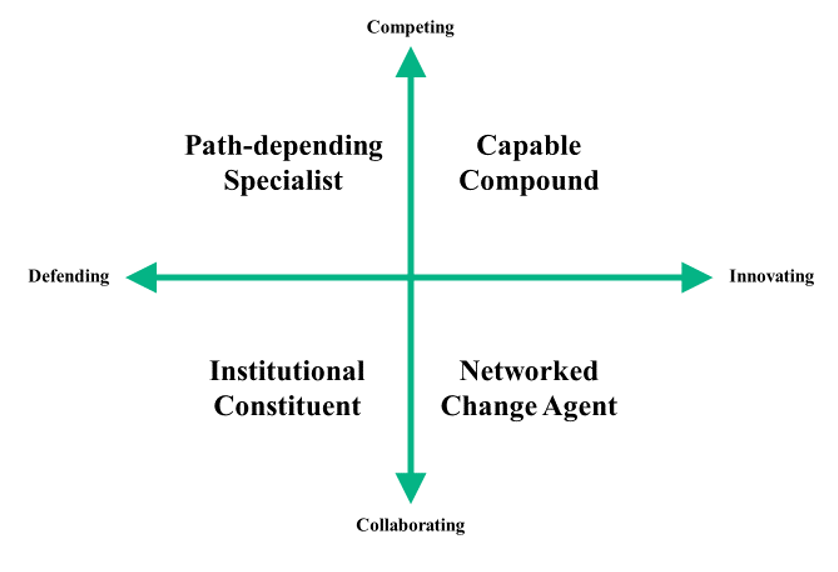
Figure 12: Conceptualization of incumbent firms, Own illustration adapted from Magnusson & Wemer (2022)47
Capable Compounds combine an innovation orientation with competitive logic and often drive change through technological leadership. Networked Change Agents, in contrast, rely on collaborative innovation and act as hubs within co-creative ecosystems. Institutional Constituents stabilize existing regimes but increasingly seek cooperative solutions for system maintenance. Path-dependent Specialists, on the other hand, act competitively based on established routines and are often more resistant to deep structural change47.
This typology illustrates that companies do not approach sustainability transitions from a homogeneous perspective, but rather according to their resource base, institutional embeddedness, and strategic self-understanding. What matters, therefore, is not adopting the “right” role, but consciously reflecting on one’s own system position and the ability to adapt strategy and action logic according to the specific phase. In this way, cooperation and innovation strategies can be systematically aligned, and context-specific governance approaches can be developed that consider both the company’s profile and the requirements of the transition. Strategic differentiation thus does not become a barrier but rather a lever for transformative impact, provided it is carried out consciously and with sensitivity to context.
In summary, this chapter shows that companies play a dual role in sustainability transitions: they secure existing structures and can simultaneously act as drivers of systemic renewal. The MLP serves not only as an analytical instrument but also as a strategic orientation framework that systematically captures corporate agency along system positions, phases, and institutional settings. At the center stands strategic agency: companies must realistically assess their role within the MLP framework, build structures for organizational ambidexterity, and actively use external dynamics, such as societal expectations, political developments, and macrostructural trends, for their transformation processes. Transition does not require a universal solution but differentiated, phase-adaptive governance strategies, ranging from shielding and nurturing to institutional embedding. In this sense, the MLP, extended by the governance elements of Transition Management, provides a strategic compass that enables companies not only to understand sustainability transitions but also to actively shape them. Crucially, the MLP should not be regarded as a static model but as a dynamic learning tool that supports strategic differentiation, organizational reflexivity, and a productive engagement with uncertainty.
References
1 de Haan, J. H. & Rotmans, J. Patterns in transitions: Understanding complex chains of change. Technological Forecasting and Social Change 78, 90-102 (2011). https://doi.org/10.1016/j.techfore.2010.10.008
2 Köhler, J. et al. An agenda for sustainability transitions research: State of the art and future directions. Environmental Innovation and Societal Transitions 31, 1-32 (2019). https://doi.org/10.1016/j.eist.2019.01.004
3 Geels, F. W. The multi-level perspective on sustainability transitions: Responses to seven criticisms. Environmental Innovation and Societal Transitions 1, 24-40 (2011). https://doi.org/10.1016/j.eist.2011.02.002
4 Geels, F. W. Technological transitions as evolutionary reconfiguration processes: A multilevel perspective and a case-study. Research Policy 32, 1257–1274 (2002). https://doi.org/10.1016/S0048-7333(02)00062-8
5 Schot, J. & Geels, F. W. Strategic niche management and sustainable innovation journeys: Theory, findings, research agenda, and policy. Technology Analysis & Strategic Management 20, 537-554 (2008). https://doi.org/10.1080/09537320802292651
6 Geels, F. W. The Multi-Level Perspective on Sustainability Transitions: Background, overview, and current research topics. (Cambridge University Press, 2024).
https://doi.org/10.33774/coe-2024-c15gb.
7 Geels, F. W. in Understanding Industrial Transformation (ed Xander; Wieczorek Olsthoorn, Anna J.) Ch. 9, 163-186 (Springer Dordrecht, 2006)
https://doi.org/10.1007/1-4020-4418-6_9.
8 Geels, F. W. S., Johan. Typology of sociotechnical transition pathways. Research Policy 36, 399-417 (2007). https://doi.org/10.1016/j.respol.2007.01.003
9 Geels, F. W. Regime Resistance against Low-Carbon Transitions: Introducing Politics and Power into the Multi-Level Perspective. Theory, Culture & Society 31, 21-40 (2014). https://doi.org/10.1177/0263276414531627
10 Smith, A., Voß, J.-P. & Grin, J. Innovation studies and sustainability transitions: The allure of the multi-level perspective and its challenges. Research Policy 39, 435-448 (2010). https://doi.org/10.1016/j.respol.2010.01.023
11 Rip, A. & Kemp, R. in Human choice and climate change: Vol. II, resources and technology (eds Steve Rayner & Elizabeth L. Malone) 327-399 (Battelle Press, 1998).
12 Geels, F. W. From sectoral systems of innovation to socio-technical systems – Insights about dynamics and change from sociology and institutional theory. Research Policy 33, 897-920 (2004). https://doi.org/10.1016/j.respol.2004.01.015
13 Geels, F. W. Processes and patterns in transitions and system innovations: Refining the co-evolutionary multi-level perspective. Technological Forecasting & Social Change 72, 681-696 (2005). https://doi.org/10.1016/j.techfore.2004.08.014
14 Smith, A., Stirling, A. & Berkhout, F. The governance of sustainable socio-technical transitions. Research Policy 34, 1491-1510 (2005). https://doi.org/10.1016/j.respol.2005.07.005
15 Klitkou, A., Bolwig, S., Hansen, T. & Wessberg, N. The role of lock-in mechanisms in transition processes: The case of energy for road transport. Environmental Innovation and Societal Transitions 16, 22-37 (2015). https://doi.org/10.1016/j.eist.2015.07.005
16 Geels, F. W. Disruption and low-carbon system transformation: Progress and new challenges in socio-technical transitions research and the Multi-Level Perspective. Energy Research & Social Science 37, 224-231 (2018). https://doi.org/10.1016/j.erss.2017.10.010
17 Smith, A. & Raven, R. What is protective space? Reconsidering niches in transitions to sustainability. Research Policy 41, 1025-1036 (2012). https://doi.org/10.1016/j.respol.2011.12.012
18 Fuenfschilling, L. & Truffer, B. The structuration of socio-technical regimes—Conceptual foundations from institutional theory. Research Policy 43, 772-791 (2014). https://doi.org/10.1016/j.respol.2013.10.010
19 Digitales Institut. Die Macht der disruptiven Entwicklung – Eine revolutionäre Veränderung in der Wirtschaft, <https://digitales-institut.de/die-macht-der-disruptiven-entwicklung-eine-revolutionaere-veraenderung-in-der-wirtschaft/> (2023).
20 Landeszentrale für politische Bildung Baden-Württemberg. Wie verändert Corona die Arbeitswelt?, <https://www.lpb-bw.de/arbeit-und-corona> (2021).
21 Landeszentrale für politische Bildung Baden-Württemberg. Wie verändert Corona unsere Gesellschaft?, <https://www.lpb-bw.de/gesellschaft-und-corona> (2022).
22 World Health Organization. World report on ageing and health: summary. (2015).
23 Rohde, C. Die potenziellen geopolitischen Folgen des Ukraine-Krieges. Zeitschrift für Außen- und Sicherheitspolitik 15, 201-220 (2022). https://doi.org/10.1007/s12399-022-00922-8
24 Eurich, M. Die Entwicklung der Rohstoffpreise seit dem russischen Angriff skrieg auf die Ukraine. Wirtschaftsdienst 102, 811-812 (2022). https://doi.org/10.1007/s10273-022-3305-2
25 Raven, R., Schot, J. & Berkhout, F. Space and scale in socio-technical transitions. Environmental Innovation and Societal Transitions 4, 63-78 (2012). https://doi.org/10.1016/j.eist.2012.08.001
26 Geels, F. W. A socio-technical analysis of low-carbon transitions: introducing the multi-level perspective into transport studies. Journal of Transport Geography 24, 471-482 (2012). https://doi.org/10.1016/j.jtrangeo.2012.01.021
27 Morone, P., Lopolito, A., Anguilano, D., Sica, E. & Tartiu, V. E. Unpacking landscape pressures on socio-technical regimes: Insights on the urban waste management system. Environmental Innovation and Societal Transitions 20, 62-74 (2016). https://doi.org/10.1016/j.eist.2015.10.005
28 Lawhon, M. & Murphy, J. T. Socio-technical regimes and sustainability transitions: Insights from political ecology. Progress in Human Geography 36, 354-378 (2011). https://doi.org/10.1177/0309132511427960
29 Berkhout, F., Smith, A. & Stirling, A. in System Innovation and the Transition to Sustainability: Theory, Evidence and Policy (eds Boelie Elzen, Frank W. Geels, & Ken Greem) 48-75 (Edward Elgar, 2004).
https://doi.org/10.4337/9781845423421.
30 Geels, F. W. Socio-technical transitions to sustainability: a review of criticisms and elaborations of the Multi-Level Perspective. Current Opinion in Environmental Sustainability 39, 187-201 (2019). https://doi.org/10.1016/j.cosust.2019.06.009
31 Elzen, B., van Mierlo, B. & Leeuwis, C. Anchoring of innovations: Assessing Dutch efforts to harvest energy from glasshouses. Environmental Innovation and Societal Transitions 5, 1-18 (2012). https://doi.org/10.1016/j.eist.2012.10.006
32 Arnold, A., Schippl, J. & Wassermann, S. Von der Nische in den Mainstream? Über Akteure, Angebote und das Diffusionspotential von Mobility as a Service. (2018).
http://dx.doi.org/10.18419/opus-10037.
33 Köhler, J. H. et al. Anwendung der Mehr-Ebenen-Perspektive auf Transitionen: Initiativen in den kommunal geprägten Handlungsfeldern Energie, Wasser, Bauen & Wohnen. (Fraunhofer-Institut für System- und Innovationsforschung ISI, Karlsruhe, Karlsruhe, 2017).
https://doi.org/10.24406/publica-fhg-298253.
34 Witkamp, M. J., Raven, R. P. J. M. & Royakkers, L. M. M. Strategic niche management of social innovations: the case of social entrepreneurship. Technology Analysis & Strategic Management 23, 667-681 (2011). https://doi.org/10.1080/09537325.2011.585035
35 Schrape, J.-F. Kurze Einführung in die Multi-Level Perspective, <https://gedankenstrich.org/2014/11/kurze-einfuhrung-in-die-multi-level-perspective/> (2014).
36 Geels, F. W., Berkhout, F. & van Vuuren, D. P. Bridging analytical approaches for low-carbon transitions. Nature Climate Change 6, 576-583 (2016). https://doi.org/10.1038/nclimate2980
37 Verbong, G. P. J. & Geels, F. W. in First International Conference on Infrastructure Systems and Services: Building Networks for a Brighter Future (INFRA) (IEEE, Rotterdam, 2008).
https://doi.org/10.1109/INFRA.2008.5439655.
38 Gandenberger, C., Clausen, J. & Grimm, A. Theoretische Grundlagen für die Analyse von Transformationsprozessen auf Branchenebene und Anwendung auf die Automobilbranche. (Working Paper Forschungsförderung, 2020).
39 Genus, A. & Coles, A.-M. Rethinking the multi-level perspective of technological transitions. Research Policy37, 1436-1445 (2008). https://doi.org/10.1016/j.respol.2008.05.006
40 Smith, A. & Stirling, A. The Politics of Social ecological Resilience and Sustainable Socio-technical Transitions. Ecology and Society 15 (2010). https://doi.org/10.5751/ES-03218-150111
41 Weber, K. M. & Rohracher, H. Legitimizing research, technology and innovation policies for transformative change. Research Policy 41, 1037-1047 (2012). https://doi.org/10.1016/j.respol.2011.10.015
42 Hess, D. J. Sustainability transitions: A political coalition perspective. Research Policy 43, 278-283 (2014). https://doi.org/10.1016/j.respol.2013.10.008
43 Kivimaa, P. & Kern, F. Creative destruction or mere niche support? Innovation policy mixes for sustainability transitions. Research Policy 45, 205-217 (2016). https://doi.org/10.1016/j.respol.2015.09.008
44 Berkeley, N., Bailey, D., Jones, A. & Jarvis, D. Assessing the transition towards Battery Electric Vehicles: A Multi-Level Perspective on drivers of, and barriers to, take up. Transportation Research Part A: Policy and Practice 106, 320-332 (2017). https://doi.org/10.1016/j.tra.2017.10.004
45 Loorbach, D., van Bakel, J. C., Whiteman, G. & Rotmans, J. Business strategies for transitions towards sustainable systems. Business Strategy and the Environment 19, 133-146 (2009). https://doi.org/10.1002/bse.645
46 Loorbach, D. & Wijsman, K. Business transition management: exploring a new role for business in sustainability transitions. Journal of Cleaner Production 45, 20-28 (2013). https://doi.org/10.1016/j.jclepro.2012.11.002
47 Magnusson, T. & Werner, V. Conceptualisations of incumbent firms in sustainability transitions: Insights from organisation theory and a systematic literature review. Business Strategy and the Environment 32, 903-919 (2022). https://doi.org/10.1002/bse.3081