
Authors: Mateo Arteaga, Armelle Bonmort
Edited by: –
Last updated: May 16, 2026
Executive summary
Biogas and biomass are key components of the transition to renewable energy systems, offering opportunities to reduce greenhouse gas emissions, improve waste management, and support circular economy models. Biomass refers to organic material such as wood, agricultural residues, and waste streams, while biogas is produced through the anaerobic digestion of organic matter and consists primarily of methane and carbon dioxide.
Organizations can leverage these technologies to convert waste into valuable energy, heat, or fuel. Effective implementation requires careful management of feedstock quality, pretreatment processes, and contamination control to ensure stable and efficient anaerobic digestion. Reactor design, operating conditions, and upgrading technologies are also critical to optimizing output and enabling integration into gas grids or energy systems.
Economically, biogas and biomass projects depend heavily on feedstock availability, logistics, scale, and policy support. Revenue streams may include energy sales, waste treatment fees, byproducts such as digestate, and carbon credits. While costs have declined, financial viability often still depends on subsidies, favorable regulation, and efficient supply chains.
From an environmental perspective, these energy sources can significantly reduce methane emissions and contribute to climate goals when managed sustainably. However, risks such as land-use change, biodiversity loss, and emissions from poor combustion must be mitigated. Lifecycle assessments and responsible sourcing are essential to ensure net environmental benefits.
Social and regulatory factors also shape deployment. Public acceptance, workforce skills, and safety management are critical, alongside strong policy frameworks and monitoring systems. Organizations adopting biogas and biomass solutions should integrate technical, economic, environmental, and social considerations to maximize sustainability performance.
1 Description and history
The need for energy and its related services to support human social and economic growth, welfare, and health is growing.1Owusu, P. A. & Asumadu-Sarkodie, S. A review of renewable energy sources, sustainability issues and climate change mitigation. Cogent Engineering vol. 3 Preprint at https://doi.org/10.1080/23311916.2016.1167990 (2016). Furthermore, overall industrial development has led to an exponential increase in global energy demand.2Mignogna, D., Ceci, P., Cafaro, C., Corazzi, G. & Avino, P. Production of Biogas and Biomethane as Renewable Energy Sources: A Review. Applied Sciences (Switzerland) vol. 13 Preprint at https://doi.org/10.3390/app131810219 (2023). Fossil resources, particularly oil and natural gas are finite and should be viewed as diminishing assets, with efforts focused on discovering alternative sources of energy.3Omer, A. An overview of biomass and biogas for energy generation: Recent development and perspectives. in Advanced Materials – TechConnect Briefs 2016 vol. 2 122–125 (TechConnect, 2016). It is well established that fossil fuels are the major contributors to pollution and global warming, which are primarily produced by the generation of CO₂ and sulfur compounds. However, fossil fuels (such as coal, oil, and gas) continue to be used across the world due to technical, economic, and societal advancements.
Recent energy crises, together with concerns about the rapid depletion of non-renewable resources, have prompted industrialized countries to promote renewable energy production, distributed generation, and energy efficiency solutions. Access to renewable energy and other energy challenges are now considered global priorities for sustainable development.2Mignogna, D., Ceci, P., Cafaro, C., Corazzi, G. & Avino, P. Production of Biogas and Biomethane as Renewable Energy Sources: A Review. Applied Sciences (Switzerland) vol. 13 Preprint at https://doi.org/10.3390/app131810219 (2023).
Renewable energy relies on sources that are constantly replenished by nature, such as the sun, the wind, water, geothermal heat, and biomass. Renewable energy technologies convert these resources into useable forms of energy, including electricity, heat, chemical products, or mechanical power solids.4NREL. Renewable Energy: An Overview. NREL/FS-710-27955. (2001). At present, renewable energy sources account for approximately 14% of global needs, although the development and use of renewable energy sources are expected to increase.5Pimentel, D. et al. Renewable energy: Current and potential issues. BioScience vol. 52 Preprint at https://doi.org/10.1641/0006-3568(2002)052[1111:RECAPI]2.0.CO;2 (2002). Strong policy incentives have been created for the development of more competitive renewable energy production technologies within the European Union, which has established regulatory frameworks aimed at achieving climate neutrality by 2050.
In this context, bioenergy has gained increasing attention as a renewable energy option capable of contributing to energy diversification and climate neutrality. Within bioenergy, biomass and biogas stand out because of their strong links to agricultural, forestry, and organic waste resources. Their development reflects not only the important transition toward low-carbon-energy-system, but also the growing attention on resources efficiency and circular use of biological materials within modern economies.
1.1 Definition and scope of biomass and biogas
1.1.1 Biomass
Biomass is the plant materials produced by the reaction between carbon dioxide in the air, water, and sunlight via photosynthesis to produce carbohydrates, that serve as the building blocks of biomass.6McKendry, P. Energy production from biomass (part 1): overview of biomass. Bioresour. Technol. 83, 37–46 (2002). Biomass energy sources include wood and wood processing waste, such as firewood, wood pellets, sawdust, and black liquor from pulp and paper mills. Agricultural crops and waste materials like corn, soybeans, sugarcane, and food processing residues. Biogenic materials in municipal solid waste like paper, textiles, food waste, and yard waste. Additionally, animal manure and human sewage. Biomass can be converted to energy through various processes, including direct combustion (burning) to produce heat, thermochemical conversion to produce solid, gaseous, and liquid fuels, chemical conversion to produce liquid fuels, and biological conversion to produce liquid and gaseous fuels.7U.S. Energy Information Administration. Biomass explained / The history of biomass as a renewable energy source. https://www.eia.gov/energyexplained/biomass/ https://www.eia.gov/energyexplained/biomass/.
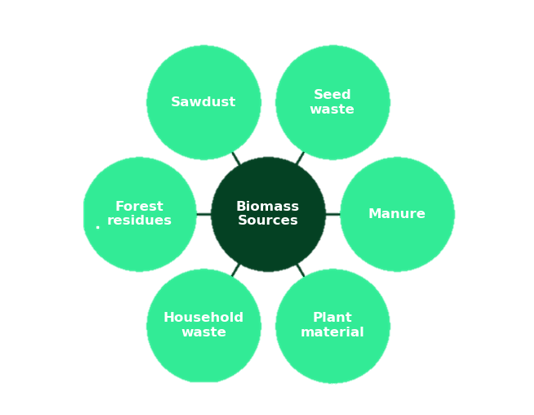
Figure 1: Main sources of biomass7U.S. Energy Information Administration. Biomass explained / The history of biomass as a renewable energy source. https://www.eia.gov/energyexplained/biomass/ https://www.eia.gov/energyexplained/biomass/.
1.1.2 Biogas
Biogas has a significant role to play in the worldwide energy transition because of the need to shift the global electricity networks from fossil fuel-based generation to low-carbon and renewable energy-based power production.8Kabeyi, M. J. B. & Olanrewaju, O. A. Biogas Production and Applications in the Sustainable Energy Transition. Journal of Energy 2022, 1–43 (2022). Biogas is a combination of carbon dioxide, methane, and small quantities of other gases produced by anaerobic digestion of organic waste in an oxygen-free environment. The composition of biogas varies based on the feedstock and digestion conditions, but methane typically accounts for 45-75% of the mixture, with most of the remaining part being CO.2Mignogna, D., Ceci, P., Cafaro, C., Corazzi, G. & Avino, P. Production of Biogas and Biomethane as Renewable Energy Sources: A Review. Applied Sciences (Switzerland) vol. 13 Preprint at https://doi.org/10.3390/app131810219 (2023). The energy content of biogas varies with a lower heating value (LHV) ranging from 16 to 28 MJ/m³ based on feedstock and digestion conditions. It can be used for numerical purposes, including electricity, heating, and cooking. Biomethane has an LHV of around 36 MJ/m³ almost similar to natural gas. So, it can be used without any changes in transmission and distribution infrastructure and is suitable for natural gas vehicles.9Deressa, L., Libsu, S., Chavan, R. B., Manaye, D. & Dabassa, A. Production of Biogas from Fruit and Vegetable Wastes Mixed with Different Wastes. Environment and Ecology Research 3, 65–71 (2015). In 2018, more than 90% of the world’s biogas production was utilized to generate heat and electricity, with the remaining 9% either being injected into the natural gas grid or being used as biomethane in the mobility industry.
1.2 Historical development
1.2.1 Biomass
Historically, biomass has been one of the oldest sources of energy, as early human civilizations relied on wood for cooking and heating purposes.6McKendry, P. Energy production from biomass (part 1): overview of biomass. Bioresour. Technol. 83, 37–46 (2002). There is a lot of evidence to support the claim that humans first used biomass as an energy source between 230,000 and 1.5 million years ago. Biomass existed long before humans were on Earth. Around the 19th century, we began to consider more modern applications of biomass resources. Here are some of the most common examples of biomass from the 19th century.8Kabeyi, M. J. B. & Olanrewaju, O. A. Biogas Production and Applications in the Sustainable Energy Transition. Journal of Energy 2022, 1–43 (2022).,7U.S. Energy Information Administration. Biomass explained / The history of biomass as a renewable energy source. https://www.eia.gov/energyexplained/biomass/ https://www.eia.gov/energyexplained/biomass/.
Ethanol, one of the first biofuels, originated from fermentation, and distillation was first documented in the 12th century in Italy. By the 1100s, it had been used for cooking and lighting. Ethanol is derived from biomass, primarily grains, and produced through fermentation and distillation, making it a readily available renewable fuel. In 1826, ethanol and turpentine were combined to power the first internal combustion engine. Its widespread use lasted until the late 19th century, indicating an important period in biofuel development.7U.S. Energy Information Administration. Biomass explained / The history of biomass as a renewable energy source. https://www.eia.gov/energyexplained/biomass/ https://www.eia.gov/energyexplained/biomass/.
As people began exploring ethanol’s potential as an alternative energy source, they also discovered that vegetable and fish oils could be used for heating and lighting. Historically, several civilizations, including the Egyptians and Sumerians, used animal and plant-based oils for combustion.7U.S. Energy Information Administration. Biomass explained / The history of biomass as a renewable energy source. https://www.eia.gov/energyexplained/biomass/ https://www.eia.gov/energyexplained/biomass/.
From the 1700s to the 1960s, pine sap was a precious renewable resource until the widespread use of petroleum. In its raw form, it played an important role in the shipbuilding sector. When distilled, the pine sap provided various important chemical compounds, with turpentine being the most significant. Turpentine had multiple applications, but its primary use as an alternative energy source was lamp oil.7U.S. Energy Information Administration. Biomass explained / The history of biomass as a renewable energy source. https://www.eia.gov/energyexplained/biomass/ https://www.eia.gov/energyexplained/biomass/.
During the late 20th century, biomass gained renewed attention as a result of the energy crises of the 1970s, when geopolitical tensions and reduced oil exports highlighted the vulnerability of fossil fuel dependence. Since then, technological developments have expanded the range of biomass applications. While the combustion of woody biomass remains common, new approaches such as energy crops, biofuels production, and anaerobic digestion of organic waste have significantly diversified its role in renewable energy systems.7U.S. Energy Information Administration. Biomass explained / The history of biomass as a renewable energy source. https://www.eia.gov/energyexplained/biomass/ https://www.eia.gov/energyexplained/biomass/.
1.2.2 Biogas
Although biogas has gained popularity in recent decades, it has been utilized since the 10th century BC by the Assyrians to heat bathwater. Its origins were unknown until around 2,500 years later when Jan Baptist Van Helmont discovered that decaying organic matter produced combustible gasses. In the 1700s, Count Alessandro Volta related the amount of decomposing matter to the volume of gas produced, and in the early 1800s, Sir Humphry Davy recognized methane as the principal component.10Vanguard Renewables. Waste Matters: The History of Biogas. https://www.waste360.com/anaerobic-digestion/waste-matters-the-history-of-biogas https://www.waste360.com/anaerobic-digestion/waste-matters-the-history-of-biogas.
In 1859, the first anaerobic digester plant became operational in Bombay, India, and by 1895, biogas produced by a sewage plant in Exeter, England, was used for powering streetlights. In the year 1930, scientists identified anaerobic bacteria as the primary producer of biogas and identified the ideal conditions for producing methane. However, anaerobic digestion started to gain popularity in the 1970s as an alternative method of replacing fossil fuels. With the tremendous increase in demand for renewable energy in the twenty-first century, anaerobic digestion has been developed as an alternative way to meet increasing decarbonized energy demand and global methane reduction targets.10Vanguard Renewables. Waste Matters: The History of Biogas. https://www.waste360.com/anaerobic-digestion/waste-matters-the-history-of-biogas https://www.waste360.com/anaerobic-digestion/waste-matters-the-history-of-biogas.
1.3 Feedstock quality and pretreatment
1.3.1 Feedstock quality assessment
In biogas production systems based on anaerobic digestion, the efficiency and stability of the process depend strongly on the physical and chemical characteristics of the feedstock. The key parameters evaluated are the total solids (TS) and volatile solids (VS). Total solids represent the dry matter content of the substrate and volatile solids correspond to the biodegradable organic fraction that can be converted into biogas. In many organic wastes used for anaerobic digestion, volatile solids represent around 70-90% of the total solids.9Deressa, L., Libsu, S., Chavan, R. B., Manaye, D. & Dabassa, A. Production of Biogas from Fruit and Vegetable Wastes Mixed with Different Wastes. Environment and Ecology Research 3, 65–71 (2015).
Another important parameter is the carbon-to-nitrogen (C/N) ratio within the substrate, which affects microbial growth and metabolic balance within the digester. Anaerobic digestion generally performs best when the C/N ratio is maintained within an appropriate range. An excessive amount of nitrogen can lead to ammonia accumulation and microbial inhibition.11Mata-Alvarez, J. et al. A critical review on anaerobic co-digestion achievements between 2010 and 2013. Renewable and Sustainable Energy Reviews vol. 36 412–427 Preprint at https://doi.org/10.1016/j.rser.2014.04.039 (2014). On the other hand, insufficient nitrogen may limit microbial growth. In practice, the digestion has stable performances when the C/N ratio is approximately between 20 and 30.11Mata-Alvarez, J. et al. A critical review on anaerobic co-digestion achievements between 2010 and 2013. Renewable and Sustainable Energy Reviews vol. 36 412–427 Preprint at https://doi.org/10.1016/j.rser.2014.04.039 (2014).
Moreover, substrates containing fats, oils and grease (FOG) may significantly increase methane production potential because of their high energy content. However, during digestion, these compounds can produce long-chain fatty acids (LCFAs), which may accumulate and inhibit microbial activity when present in excessive concentrations and can end in a destabilization of the digestion process.11Mata-Alvarez, J. et al. A critical review on anaerobic co-digestion achievements between 2010 and 2013. Renewable and Sustainable Energy Reviews vol. 36 412–427 Preprint at https://doi.org/10.1016/j.rser.2014.04.039 (2014).
1.3.2 Pretreatment options and optimization
Pretreatment of organic waste is applied to improve anaerobic digestion to break down the substrates faster.12Montgomery, L. F. R. & Bochmann, G. Pretreatment of Feedstock for Enhanced Biogas Production Pretreatment of Feedstock for Enhanced Biogas Production (Electronic Version). (2014). Pretreatment enhances the hydrolysis of complex substrates and increases the biogas yield by breaking cells and releasing organic matter.13Appels, L., Baeyens, J., Degrève, J. & Dewil, R. Principles and potential of the anaerobic digestion of waste-activated sludge. Progress in Energy and Combustion Science vol. 34 755–781 Preprint at https://doi.org/10.1016/j.pecs.2008.06.002 (2008). Mechanical pretreatment, such as shredding or milling, reduces particle size and increases surface area, making it easier for microbes and enzymes to act. Thermal treatments, including heating or steam explosion, break cell walls and solubilize proteins and carbohydrates. Alkaline pretreatment uses chemicals like sodium hydroxide to break down fats, proteins and complex carbohydrates. Biological pretreatment uses enzymes or specialized microbes to degrade tough materials under mild conditions.12Montgomery, L. F. R. & Bochmann, G. Pretreatment of Feedstock for Enhanced Biogas Production Pretreatment of Feedstock for Enhanced Biogas Production (Electronic Version). (2014).
1.3.3 Contamination controls
Contamination control is important in anaerobic digestion to protect equipment, reduce downtime, and improve conversion efficiency. Feedstocks can contain plastics, stones, sand and grit, which are not biodegradable and can accumulate in digesters and abrade pumps and mixers. Inorganic solids such as grit and stone are commonly present in agricultural and municipal wastes, while plastics can come from packaging and household residues.14Risques Sanitaires Du Biogaz Evaluation Des Risques Sanitaires Liés à l’injection de Biogaz Dans Le Réseau de Gaz Naturel. http://www.afsset.fr (2008).
Plastics in digestates can reach a few percent of the total solids in poorly sorted feedstocks, while grit and sand typically represent less than 1-2% of the dry mass, but even small amounts can cause significant mechanical wear.14Risques Sanitaires Du Biogaz Evaluation Des Risques Sanitaires Liés à l’injection de Biogaz Dans Le Réseau de Gaz Naturel. http://www.afsset.fr (2008). Moreover, microplastics are widely found in biowaste streams and sewage sludges and may accumulate in digesters if not removed, affecting digestate quality and posing environmental concerns.15Pera, L., Gandiglio, M., Marocco, P., Pumiglia, D. & Santarelli, M. Trace contaminants in biogas: Biomass sources, variability and implications for technology applications. Journal of Environmental Chemical Engineering vol. 12 Preprint at https://doi.org/10.1016/j.jece.2024.114478 (2024). Pre-sorting, adsorption of contaminants and grit removal systems are therefore critical to minimize these contaminants, protect equipment and maintain stable biogas production.14Risques Sanitaires Du Biogaz Evaluation Des Risques Sanitaires Liés à l’injection de Biogaz Dans Le Réseau de Gaz Naturel. http://www.afsset.fr (2008).
1.4 Anaerobic digestion process stages, reactor designs, and configurations
1.4.1 Biological stages of anaerobic digestion and key operating parameters
An anaerobic digestion (AD) occurs through a series of biological phases in which organic matter is progressively converted into biogas. The main stages are:
1. Hydrolysis
Large organic polymers such as carbohydrates, proteins, and lipids are broken down into soluble monomers (sugars, amino acids, fatty acids) by hydrolytic bacteria. Hydrolysis is sensitive to temperature, generally occurring efficiently at mesophilic 30-40°C or thermophilic 50-60°C.16Meegoda, J. N., Li, B., Patel, K. & Wang, L. B. A review of the processes, parameters, and optimization of anaerobic digestion. International Journal of Environmental Research and Public Health vol. 15 Preprint at https://doi.org/10.3390/ijerph15102224 (2018).
2. Acidogenesis
The monomers produced during hydrolysis are fermented by acidogenic bacteria into volatile fatty acids (VFAs), alcohols, hydrogen, and carbon dioxide. Thes intermediates are then available for the next digestion.17Green Gas Inc. Stages of Anaerobic Digestion: Essential Guide to Biogas Production. https://greengasinc.com/energy/stages-of-anaerobic-digestion/ (2025).
3. Acetogenesis
Acetogenic bacteria converts VFAs and alcohols from acidogenesis into acetate, hydrogen, and carbon dioxide, providing substates suitable for methane-producing microbes.16Meegoda, J. N., Li, B., Patel, K. & Wang, L. B. A review of the processes, parameters, and optimization of anaerobic digestion. International Journal of Environmental Research and Public Health vol. 15 Preprint at https://doi.org/10.3390/ijerph15102224 (2018).
4. Methanogenesis
Methanogenic archaea convert acetate, hydrogen, and carbon dioxide into methane (CH₄) and carbon dioxide. This final stage produces the majority of biogas.17Green Gas Inc. Stages of Anaerobic Digestion: Essential Guide to Biogas Production. https://greengasinc.com/energy/stages-of-anaerobic-digestion/ (2025).
The efficiency and stability of these phases are influenced by operating parameters. Temperature regimes can be mesophilic (30-40°C) or thermophilic (50-60°C). With thermophilic conditions increasing reaction rates but requiring more energy and being more sensitive to shocks.16Meegoda, J. N., Li, B., Patel, K. & Wang, L. B. A review of the processes, parameters, and optimization of anaerobic digestion. International Journal of Environmental Research and Public Health vol. 15 Preprint at https://doi.org/10.3390/ijerph15102224 (2018). Solide retention time (SRT) must be sufficient for slow-growing methanogens, while organic loading rate (ORL) must match microbial capacity to prevent acid accumulation. The pH should also remain near neutral (6,8-7,4) and mixing ensure uniform substrate-microbe contact and prevent scum or sediment.17Green Gas Inc. Stages of Anaerobic Digestion: Essential Guide to Biogas Production. https://greengasinc.com/energy/stages-of-anaerobic-digestion/ (2025).
1.4.2 Common reactor configurations: scales, strengths, and constraints
Several reactor configurations are used in anaerobic digestion. Each of them uses different technologies suited for different feedstock composition, solids concentration, land availability, and scale of biogas production.
Continuous stirred tank reactor (CSTR)
The continuously stirred tank reactors use a mixing mechanism to continuously stir the feedstock inside a tank. The stirring action keeps the material uniform and improves contact between microorganisms and organic waste, which increases digestion efficiency. CSTR systems can handle both liquid and slurry waste and are often used in facilities that process large volumes of organic material. Their main disadvantages are higher complexity, energy consumption, and maintenance requirement compared to simpler systems.18FASTECH. Types of Biogas Systems Explained. https://www.fastechus.com/blog/types-of-biogas-systems (2024).
Lagoon systems
Lagoon systems are artificial ponds designed to process wastewater and organic pollutants. Covered lagoon systems capture biogas using a secondary cover that prevents gas from escaping into the atmosphere. These systems are widely used in agricultural operations with large amounts of animal wastewater. However, they require large land areas and are generally unsuitable for processing solid or dry wastes.18FASTECH. Types of Biogas Systems Explained. https://www.fastechus.com/blog/types-of-biogas-systems (2024).
Upflow anaerobic sludge blanket (UASB)
Upflow anaerobic sludge blanket reactors treat wastewater by passing it upward through a blanket of microbial sludge. The sludge layer helps break down organic pollutants while separating solid, liquids, and gases during digestion. UASB systems are known for their efficiency and relatively low energy demand and are widely used in industrial and municipal wastewater treatment. However, they require careful monitoring and skilled operation.18FASTECH. Types of Biogas Systems Explained. https://www.fastechus.com/blog/types-of-biogas-systems (2024).
Batch digesters
Batch reactors operate by loading the reactor with feedstock and allowing digestion to occur over a defined period before the system is emptied. They are considered one of the simplest reactor designs. They usually consist of a tank where the reaction takes place. These systems do not require continuous mixing, stirring or pumping, which makes them relatively simple and low cost to operate. However, methane production typically decreases over time as the substrate is consumed. Moreover, batch systems may require larger reactor volumes and can experience issues such as channeling or clogging.19Banerjee, S., Prasad, N. & Selvaraju, S. Reactor Design for Biogas Production-A Short Review. Journal of Energy and Power Technology 04, 1–22 (2022).
Plug-flow reactor (PFR)
Plug-flow reactors are long, rectangular channels where the substrate flows from one end to the other with limited back mixing. These reactors are often used for high-solids substrates, such as animal manure slurries or organic municipal waste. The design allows the material to move progressively through the digester while undergoing anaerobic degradation. Plug flow systems are considered high-rate digesters and can provide efficient substate conversion and stable operation, especially in dry digestion processes.19Banerjee, S., Prasad, N. & Selvaraju, S. Reactor Design for Biogas Production-A Short Review. Journal of Energy and Power Technology 04, 1–22 (2022).
1.5 Biogas upgrading and grid injection
1.5.1 Biogas upgrading technologies
Raw biogas produced from anaerobic digestion mainly contains methane (CH₄) around 60-70%, and carbon dioxide (CO₂) around 30-40%, but also impurities such as hydrogen sulfide (H₂S), water vapor (H₂O), oxygen (O₂), nitrogen (N₂), and trace compounds like siloxanes. These components must be removed to increase methane concentration and produce biomethane suitable for energy use or injection into natural gas grids.20Gkotsis, P., Kougias, P., Mitrakas, M. & Zouboulis, A. Biogas upgrading technologies – Recent advances in membrane-based processes. International Journal of Hydrogen Energy vol. 48 3965–3993 Preprint at https://doi.org/10.1016/j.ijhydene.2022.10.228 (2023).
Several technologies are used for this upgrading process:
1. Water scrubbing is based on the higher solubility of CO₂ and H₂S in water compared with methane. Under pressure, these gases dissolve in water while methane remains in the gas phase. This process is simple and can achieve methane recovery higher than 97%.21Chen, X. Y., Vinh-Thang, H., Ramirez, A. A., Rodrigue, D. & Kaliaguine, S. Membrane gas separation technologies for biogas upgrading. RSC Advances vol. 5 24399–24448 Preprint at https://doi.org/10.1039/c5ra00666j (2015).
2. Chemical scrubbing (amine absorption) uses chemical solvents that react with CO₂ and H₂S. This method can achieve methane purities around 97-99%, although additional energy is required to regenerate the solvent.22Hidalgo, D. & Martín-Marroquín, J. M. Cryogenic Technologies for Biogas Upgrading: A Critical Review of Processes, Performance, and Prospects. Technologies vol. 13 Preprint at https://doi.org/10.3390/technologies13080364 (2025).
3. Pressure Swing Adsorption (PSA) uses porous adsorbent materials (e.g., zeolites or activated carbon) that selectively adsorb CO₂ and other gases under pressure. When the pressure is reduced, the adsorbed gases are released, and the adsorbent material is regenerated.20Gkotsis, P., Kougias, P., Mitrakas, M. & Zouboulis, A. Biogas upgrading technologies – Recent advances in membrane-based processes. International Journal of Hydrogen Energy vol. 48 3965–3993 Preprint at https://doi.org/10.1016/j.ijhydene.2022.10.228 (2023).
4. Membrane separation relies on semi-permeable membranes that allow gases such as CO₂ and water vapor to permeate faster than methane. Multiple membranes stages can be used to achieve methane concentration of 95-98%.22Hidalgo, D. & Martín-Marroquín, J. M. Cryogenic Technologies for Biogas Upgrading: A Critical Review of Processes, Performance, and Prospects. Technologies vol. 13 Preprint at https://doi.org/10.3390/technologies13080364 (2025).
5. Cryogenic separation separates gases based on their different boiling points. By cooling the gas mixture to very low temperatures, CO₂ can be condensed and removed, producing high purity biomethane that can exceed 99% methane.22Hidalgo, D. & Martín-Marroquín, J. M. Cryogenic Technologies for Biogas Upgrading: A Critical Review of Processes, Performance, and Prospects. Technologies vol. 13 Preprint at https://doi.org/10.3390/technologies13080364 (2025).
1.5.2 Biogas grid injection and quality requirements
To be injected into natural gas pipelines or used as vehicle fuel, biogas must meet strict quality standards. Biomethane typically contains 96-98% methane and needs to be between 80 and 96% to be fed into the natural gas network, although there are different criteria in different countries.23Sengur, O., Akgul, D. & Calli, B. In situ methane enrichment with vacuum application to produce biogas with higher methane content. Environmental Science and Pollution Research 32, 28307–28318 (2025).
Several impurities must also be removed during upgrading. Carbon dioxide is removed to increase the energy content of the gas, while hydrogen sulfide must be eliminated because it can cause corrosion pipelines and equipment. Water vapor must be reduced to prevent condensation, and trace compounds such as siloxanes must be removed because they can form solid deposits during combustion.23Sengur, O., Akgul, D. & Calli, B. In situ methane enrichment with vacuum application to produce biogas with higher methane content. Environmental Science and Pollution Research 32, 28307–28318 (2025).
The choice of upgrading technology depends on several factors, including plant scale, methane recovery, energy consumption, and the composition of the raw biogas. For example, membrane and PSA systems generally require cleaner feed gas to prevent fouling or damage to the separation materials, while scrubbing technologies can tolerate higher impurity levels. Cryogenic systems can achieve very high methane purity but are usually applied at larger scales due to their higher capital and energy requirements.22Hidalgo, D. & Martín-Marroquín, J. M. Cryogenic Technologies for Biogas Upgrading: A Critical Review of Processes, Performance, and Prospects. Technologies vol. 13 Preprint at https://doi.org/10.3390/technologies13080364 (2025). As a result, selecting an upgrading pathway requires a site-specific evaluation that balances methane purity targets, operational complexity, and techno-economic considerations.20Gkotsis, P., Kougias, P., Mitrakas, M. & Zouboulis, A. Biogas upgrading technologies – Recent advances in membrane-based processes. International Journal of Hydrogen Energy vol. 48 3965–3993 Preprint at https://doi.org/10.1016/j.ijhydene.2022.10.228 (2023).
1.6 System integration and sector coupling
1.6.1 Co-digestion with multiple organic waste streams
Co-digestion is defined as the simultaneous anaerobic digestion of two or more substrates in the same digester.24Jacob, S. et al. Anaerobic digestion-derived digestate valorization: green chemistry innovations for resource recovery and reutilization. Green Chemistry vol. 27 7472–7505 Preprint at https://doi.org/10.1039/d5gc01053e (2025). This approach has gained increasing attention because combining substrates with complementary characteristics can improve nutrient balance and provide a more stable environment for microbial communities.25Farghali, M., Osman, A. I., Umetsu, K. & Rooney, D. W. Integration of biogas systems into a carbon zero and hydrogen economy: a review. Environmental Chemistry Letters vol. 20 2853–2927 Preprint at https://doi.org/10.1007/s10311-022-01468-z (2022). As a result, co-digestion can lead to higher methane yield compared with the digestion of single substrates.24Jacob, S. et al. Anaerobic digestion-derived digestate valorization: green chemistry innovations for resource recovery and reutilization. Green Chemistry vol. 27 7472–7505 Preprint at https://doi.org/10.1039/d5gc01053e (2025).
Municipal solid waste, wastewater sludge, and agro-industrial residues are among the most common substrates used in co-digestion systems. The organic fraction of municipal solid waste contains large amounts of biodegradable material that can be converted into biogas through anaerobic digestion.26Obileke, K. C., Makaka, G. & Nwokolo, N. Recent Advancements in Anaerobic Digestion and Gasification Technology. Applied Sciences (Switzerland) vol. 13 Preprint at https://doi.org/10.3390/app13095597 (2023). However, contaminants such as plastics, metals and glass are often present in municipal waste streams and therefore require pre-treatment before digestion.26Obileke, K. C., Makaka, G. & Nwokolo, N. Recent Advancements in Anaerobic Digestion and Gasification Technology. Applied Sciences (Switzerland) vol. 13 Preprint at https://doi.org/10.3390/app13095597 (2023).
Anaerobic digestion is widely used in wastewater treatment plants to stabilize sewage sludge and recover energy in form of biogas.25Farghali, M., Osman, A. I., Umetsu, K. & Rooney, D. W. Integration of biogas systems into a carbon zero and hydrogen economy: a review. Environmental Chemistry Letters vol. 20 2853–2927 Preprint at https://doi.org/10.1007/s10311-022-01468-z (2022). However, the digestion of sludge alone may result in relatively low methane production because of its limited organic content.25Farghali, M., Osman, A. I., Umetsu, K. & Rooney, D. W. Integration of biogas systems into a carbon zero and hydrogen economy: a review. Environmental Chemistry Letters vol. 20 2853–2927 Preprint at https://doi.org/10.1007/s10311-022-01468-z (2022). Co-digestion with additional organic wastes such as food waste or agricultural residues can increase the organic loading rate and enhance energy recovery within wastewater treatment systems.25Farghali, M., Osman, A. I., Umetsu, K. & Rooney, D. W. Integration of biogas systems into a carbon zero and hydrogen economy: a review. Environmental Chemistry Letters vol. 20 2853–2927 Preprint at https://doi.org/10.1007/s10311-022-01468-z (2022).
1.6.2 Heat integration and combined heat and power (CHP)
Biogas produced form anaerobic digestion can be used in combined heat and power (CHP) systems to simultaneously generate electricity and useful heat.25Farghali, M., Osman, A. I., Umetsu, K. & Rooney, D. W. Integration of biogas systems into a carbon zero and hydrogen economy: a review. Environmental Chemistry Letters vol. 20 2853–2927 Preprint at https://doi.org/10.1007/s10311-022-01468-z (2022). In these systems, methane is combusted in a gas engine or turbine to produce electricity, while the heat generated during the process is recovered.25Farghali, M., Osman, A. I., Umetsu, K. & Rooney, D. W. Integration of biogas systems into a carbon zero and hydrogen economy: a review. Environmental Chemistry Letters vol. 20 2853–2927 Preprint at https://doi.org/10.1007/s10311-022-01468-z (2022). The recovered heat can be reused within the biogas plant to maintain the operating temperature of the anaerobic digester.25Farghali, M., Osman, A. I., Umetsu, K. & Rooney, D. W. Integration of biogas systems into a carbon zero and hydrogen economy: a review. Environmental Chemistry Letters vol. 20 2853–2927 Preprint at https://doi.org/10.1007/s10311-022-01468-z (2022). This internal heat integration improves the overall efficiency of the facility and contributes to improving the energy balance of wastewater treatment plants.25Farghali, M., Osman, A. I., Umetsu, K. & Rooney, D. W. Integration of biogas systems into a carbon zero and hydrogen economy: a review. Environmental Chemistry Letters vol. 20 2853–2927 Preprint at https://doi.org/10.1007/s10311-022-01468-z (2022).
1.6.3 Coupling with power-to-gas systems
Recent studies have explored the integration of anaerobic digestion with power-to-gas technologies, which connect renewable electricity production with biogas systems. In this concept, renewable electricity is used in electrolyzers to produce hydrogen through a methanation reaction to produce additional methane.25Farghali, M., Osman, A. I., Umetsu, K. & Rooney, D. W. Integration of biogas systems into a carbon zero and hydrogen economy: a review. Environmental Chemistry Letters vol. 20 2853–2927 Preprint at https://doi.org/10.1007/s10311-022-01468-z (2022). This approach allows the utilization of CO₂ that would otherwise be removed during the upgrading process. Integrating biogas plants with hydrogen technologies therefore provides opportunities to increase methane production, store renewable electricity in the form of synthetic methane and reduce the carbon intensity of energy systems.25Farghali, M., Osman, A. I., Umetsu, K. & Rooney, D. W. Integration of biogas systems into a carbon zero and hydrogen economy: a review. Environmental Chemistry Letters vol. 20 2853–2927 Preprint at https://doi.org/10.1007/s10311-022-01468-z (2022).
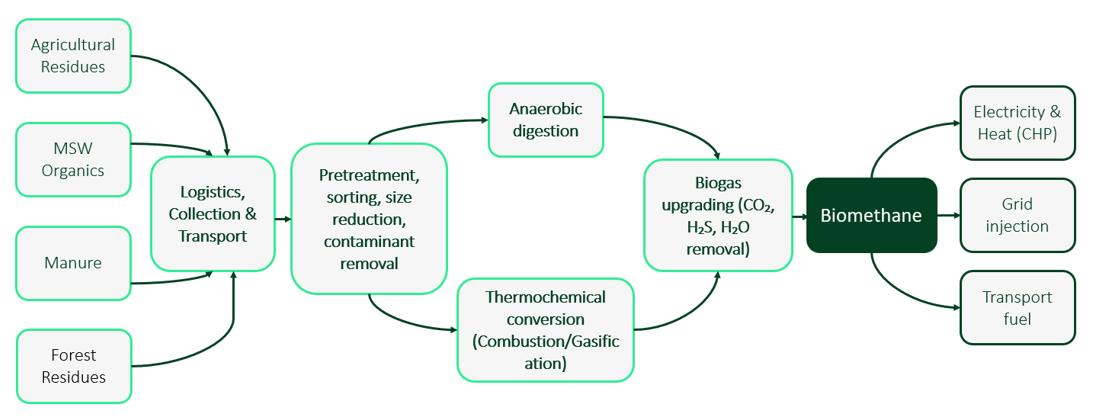
Figure 2: Process flow diagram of biogas
2 Economic performance
Biomass is a major renewable source for energy, and in all scenarios it will play a major role in the transition to a sustainable energy system.27Abelha, P. & Kiel, J. Techno-economic assessment of biomass upgrading by washing and torrefaction. Biomass Bioenergy 142, (2020). Biomass and biogas integration to a circular economy is particularly important for the future development of a sustainable future, considering this byproduct of human development is always going to be present and will grow with increasing population. The global population has grown by roughly 1 billion per decade over the last half-century, and it is expected to reach 10 billion by 2050, and agriculture remains the primary economic activity for more than two-thirds of the world’s population, in addition to playing a critical role in food production.28Ayub, A. et al. Sustainable economic growth potential of biomass-enriched countries through bioenergy production: State-of-the-art assessment using product space model. Front. Energy Res. 11, (2023).
Rapid population growth, along with a volatile global economy and escalating trade tensions between key power centers call for more food production and novel solutions at the intersection of the food industry and biowaste management.29Marousek, J., Strunecky, O., Vaníčková, R., Midelashvili, E. & Minofar, B. Techno-economic considerations on latest trends in biowaste valuation. Systems Microbiology and Biomanufacturing vol. 4 598–606 Preprint at https://doi.org/10.1007/s43393-023-00216-w (2024). For this reason, it is important to make biomass an economically viable technology that works in parallel to the other energetic renewable solutions. Biomass energy with carbon capture and storage (BECCS) also plays an important role in multiple scenarios to limit global mean temperature increases to 1.5°C or 2°C above pre-industrial levels, not just in energy production.30Vaughan, N. E. et al. Evaluating the use of biomass energy with carbon capture and storage in low emission scenarios. Environmental Research Letters 13, (2018).
2.1 Cost structure and CAPEX, OPEX drivers
2.1.1 Feasibility foundations
The economic feasibility of biomass and biogas is generally evaluated in terms of technology and fuel costs, as well as financial constraints specific to each region. Developing countries face higher electricity costs due to outdated infrastructure and limited access to advanced bioenergy technologies. In contrast, agricultural economies benefit from lower feedstock prices due to abundant biomass, making bioenergy a more feasible alternative to fossil fuels. Using forest biomass for bioenergy can increase national revenue while also helping reduce poverty by lowering fossil fuel import bills.28Ayub, A. et al. Sustainable economic growth potential of biomass-enriched countries through bioenergy production: State-of-the-art assessment using product space model. Front. Energy Res. 11, (2023).
2.1.2 Supply chain and logistic considerations
Several economic considerations influence the viability of biomass utilization. One of the main concerns is its low energy density, which means higher transportation and delivery costs to refinery plants. Furthermore, biomass feedstocks are spread across broad areas, making collection costly and logistically challenging. Pretreatment procedures like drying and pyrolysis increase production costs by reducing moisture content and increasing energy density. Another important consideration is the seasonal variability of biomass, which demands careful planning and scheduling to ensure continuous supply and quality. These constraints highlight the need for an efficient supply chain network in making biomass-to-bioenergy conversion commercially viable.31Mirkouei, A., Haapala, K. R., Sessions, J. & Murthy, G. S. A review and future directions in techno-economic modeling and optimization of upstream forest biomass to bio-oil supply chains. Renewable and Sustainable Energy Reviews vol. 67 15–35 Preprint at https://doi.org/10.1016/j.rser.2016.08.053 (2017).
2.1.3 Factors affecting economic sustainability
The economic sustainability of biogas production extends beyond mere profit generation and is influenced by multiple factors:
a. Availability, accessibility, and properties of input materials
b. Ongoing expenses for maintenance and system operation
c. Production and application of byproducts
d. Necessary to maintain long-term economic viability.8Kabeyi, M. J. B. & Olanrewaju, O. A. Biogas Production and Applications in the Sustainable Energy Transition. Journal of Energy 2022, 1–43 (2022).
2.1.4 Capital expenditure trends
The initial investment costs for biogas and biomass facilities vary significantly based on scale and technology:

Figure 3: CAPEX32IRENA. RENEWABLE POWER GENERATION COSTS IN 2023 2. https://www.irena.org/-/media/Files/IRENA/Agency/Publication/2024/Sep/IRENA_Renewable_power_generation_costs_in_2023.pdf (2024).
The CAPEX for bioenergy installations has decreased over time, with costs in 2010 averaging approximately $3010/kW compared to $2730/kW in 2023, representing a 9% reduction.16Meegoda, J. N., Li, B., Patel, K. & Wang, L. B. A review of the processes, parameters, and optimization of anaerobic digestion. International Journal of Environmental Research and Public Health vol. 15 Preprint at https://doi.org/10.3390/ijerph15102224 (2018). This decrease is primarily attributed to technological maturation, improved manufacturing processes, and increased competition among technology providers.
2.2 LCOE comparison and cost competitiveness
The LCOE provides a standardized mechanism for comparing various sources of electricity generation. According to the International Renewable Energy Agency (IRENA), the global weighted average LCOE for bioenergy in 2023 was $0.072/kWh. This data shows that bioenergy (including biogas and biomass) is more expensive than solar PV, onshore wind, geothermal, and hydropower, but it is still cost-competitive with offshore wind and conventional fossil fuels.16Meegoda, J. N., Li, B., Patel, K. & Wang, L. B. A review of the processes, parameters, and optimization of anaerobic digestion. International Journal of Environmental Research and Public Health vol. 15 Preprint at https://doi.org/10.3390/ijerph15102224 (2018).
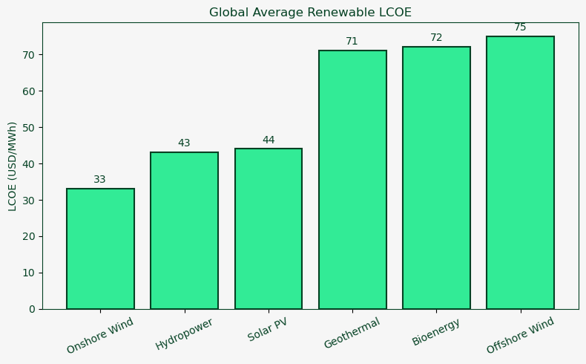
Figure 4: LCOE32IRENA. RENEWABLE POWER GENERATION COSTS IN 2023 2. https://www.irena.org/-/media/Files/IRENA/Agency/Publication/2024/Sep/IRENA_Renewable_power_generation_costs_in_2023.pdf (2024).
An analysis into the current cost of biomethane production shows that the cost of biomethane production and upgrading in 2023 ranges from €54-91/MWh, reaching the lower values when the facility is bigger than 14 MW, showing that economies of scale help drive capital costs as well as operational costs.33BIP Europe. Insights of the Current Cost of Biomethane Production From Real Industry Data. (2023). There is a consideration that when using public feedstocks there is an increase in capital and operational costs but cause the feedstock cost to be negative in some cases, leading to an overall decrease in total costs. The feedstock costs range from $1-9/GJ or around €3-27/MWh, and the weighted average cost of biogas power in Europe was around €80/MWh.32IRENA. RENEWABLE POWER GENERATION COSTS IN 2023 2. https://www.irena.org/-/media/Files/IRENA/Agency/Publication/2024/Sep/IRENA_Renewable_power_generation_costs_in_2023.pdf (2024).
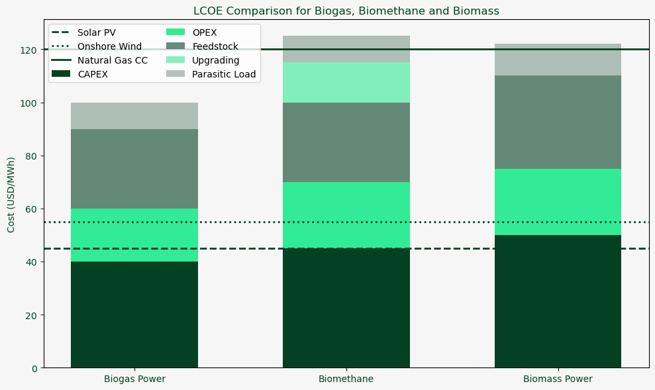
Figure 5: LCOE of biomethane, biogas and biomass power16Meegoda, J. N., Li, B., Patel, K. & Wang, L. B. A review of the processes, parameters, and optimization of anaerobic digestion. International Journal of Environmental Research and Public Health vol. 15 Preprint at https://doi.org/10.3390/ijerph15102224 (2018).,34Bilbao, A. et al. Renewable Power Generation Costs in 2023. IRENA 2024. https://www.irena.org/Publications/2024/Sep/Renewable-Power-Generation-Costs-in-2023 (2024).
2.3 Market size and growth dynamics
The biogas and biomass sectors are experiencing notable growth, driven by increasing demand for renewable energy and advancements in technology:
The global biogas market size was USD 133.61 billion in 2024 and is expected to grow from USD 140.89 billion in 2025 to USD 191.19 billion by 2032 at a CAGR of 4.46% during the forecast period. Europe dominated the global market with a share of 53.6% in 2024.35Fortune Business Insights. Biogas Market Size, Share & Industry Analysis. https://www.fortunebusinessinsights.com/industry-reports/biogas-market-100910.
The biomass market is projected to register a CAGR of 7.12%, reaching approximately $82.59 billion by 2030. Factors contributing to this growth include the availability of raw materials and increasing demand for biomass energy across various end-use sectors.36Sejal Akre. Biomass Market. https://www.marketresearchfuture.com/reports/biomass-market-18830.
These trends indicate a positive outlook for the adoption of biogas and biomass as integral components of the global renewable energy landscape. In Germany, an EU analysis concluded that the theoretical German infrastructure to process the animal manure currently available would require about 1400-2000 biogas plants, providing around 800-940 MW. Given the heavy subsidizing of the German biomass market, and the Renewable Energy Act, the country has already built up 8600 biogas plants with a capacity of 6.5 GW, suggesting that the biomass market should not expand more given it has already satisfied its necessity to process manure feedstock.37Sophie Scherger. Learning from Germany’s decades of public biogas support. https://www.iatp.org/germany-biogas-lessons (2026).
2.4 Project development, financing, and revenue stacking
Biogas plants are financed using equity, debt, subsidies and tax credits. Biogas production has been promoted in the European Union to achieve its goals of energy transitioning. Germany has today the largest biogas market in the world, with around 8600 production sites, which represent around 45% of the biogas plants in the EU.37Sophie Scherger. Learning from Germany’s decades of public biogas support. https://www.iatp.org/germany-biogas-lessons (2026).
The plants in Germany are mainly used for electricity production, and some to less extent in district heating. The financing of these plants has been mainly supported by the Renewable Energy Act in 2000, which granted plant operators subsidies for up to 20 years, receiving up to €178/MWh.37Sophie Scherger. Learning from Germany’s decades of public biogas support. https://www.iatp.org/germany-biogas-lessons (2026). For private projects significant equity is required to start up, and solid energy contracts from clients to secure their debt.
To cover the costs, biogas plants have several revenue sources such as treatment fees, energy sales, digestate sales and carbon credits. In North America, 60-80% of the revenue comes from accepting and treating feedstock waste.38Biogas World. Biogas Plant development Handbook. https://biogasworld.com/biogas-plant-development-handbook/#economics_handbook (2026). The average tipping fee in the US in 2020 was $31.82 per ton, and facilities charge differently according to quality, type or source of feedstock.39EPA. Anaerobic Digestion Facilities Processing Food Waste in the U.S. (2020 & 2021). https://www.epa.gov/anaerobic-digestion/anaerobic-digestion-facilities-processing-food-waste-us-2020-2021#Tipping (2025).
Next are the energy sales which represent 20-40% of the income, where only in markets with high feed-in-tariffs like Germany will represent the majority of the project income.
Some lesser sources of income can constitute selling compost or digestate, where prices range at around €5.5/m3 for raw digestate, 7 for separated and 21.4 when treated.40Grandas Tavera, C., Raab, T. & Holguin Trujillo, L. Valorization of biogas digestate as organic fertilizer for closing the loop on the economic viability to develop biogas projects in Colombia. Cleaner and Circular Bioeconomy 4, 100035 (2023).
A last component of revenue can be Carbon Credits, where a biogas digester can represent 2 to 5 tons of CO₂ equivalent (where 1 Carbon Credit = 1 ton of CO₂e) avoided per year, with a carbon price of €10-20 per credit, representing €20-100 per digester.41Crbcoin. Biogas Digesters: Turning Organic Waste into Carbon Credit Revenue. https://crbcoin.com/biogas-digesters-turning-organic-waste-into-carbon-credit-revenue/ (2025).
2.5 Case studies and performance benchmarks
Specific case studies of the economic feasibility of biogas projects help highlight the challenges and realities of implementing these operations. Given that the source of feedstock can be so varied, there are different sectors where biogas can be implemented, like dairy, food processors, municipalities, pulp or paper. Some case studies will highlight the findings on each sector and different KPI metrics to showcase their performance.
2.5.1 Dairy farm – Poland
A dairy farm with a biogas plant of 0.499 MW in Poland was studied, where the majority of the feedstock came from cow manure and slurry, supplemented with maize silage for technical reasons. The economic analysis of the plant revealed that a subsidy of around 40-60% was required to have economic efficiency. The revenues of the farm came in the majority from the sale of government certificates from 2016-2021, the revenue from electricity sales only increased due to the energy crisis in 2022. Even with this increased revenue, and for different scenarios where the subsidies are taken into consideration for the revenue calculation, the maximum Internal Rate of Return (IRR) was found to be 7% and the Net Present Value (NPV) was negative for all assumptions.42Kusz, D. et al. The Economic Efficiencies of Investment in Biogas Plants—A Case Study of a Biogas Plant Using Waste from a Dairy Farm in Poland. Energies (Basel). 17, (2024). This case study shows the sensitivity of this investment projects to current energy prices and substrate costs, as well as showing the important reliance on government policies to enhance economic viability.
When taking into consideration the gains from the thermal energy at market price and the digestate production, then the project becomes economically viable, and suggests that expanding the ability to take advantage of the heat produced for house heating and to dry agricultural produce could take the IRR up to 21%. This study highlights that biomass can be best taken advantage of in energetic terms for its heating value, and when considering all the extracting potential it has for energy, then it can be considered a profitable investment, particularly for small installations that are close to the source of feedstock.
2.5.2 Municipal organic waste – Lower Silesia
On a waste treatment plant in Lower Silesia waste is processed from 16 communes, and organic waste is segregated to produce renewable biogas that goes into a combined heat and power (CHP) system. The plant treats about 110,000 tons of organic waste per year and yields around 5500 MWh per year and generates 6800 GJ of heat. The methane content of the biogas produced was around 58%, a metric which directly affects the electricity production, as methane concentration in biogas range from 50-65%. Another important metric was the content of hydrogen sulfide, which was kept at about 125ppm, as this can damage engines, heat exchangers and fittings.43Seruga, P. et al. Anaerobic Digestion as a Component of Circular Bioeconomy—Case Study Approach. Energies (Basel). 16, 140 (2022).
2.5.3 Food industry
Food and paper waste are two of the largest components in municipal waste. Residual waste was taken from the cafeteria at Ohio State University, and the yield of methane was maximized by varying the feedstock to inoculum ratio (F/I) in a co-digestion system from 0-100% food waste with paper food packages. The yield of methane was maximized at around 530L/kg of volatile solids, and the highest net profit was obtained with 75% food waste, which achieved an IRR of 20.7%, and the shortest payback period of 5 years.44Xu, F. et al. Multi-criteria assessment of food waste and waste paper anaerobic co-digestion: Effects of inoculation ratio, total solids content, and feedstock composition. Renew. Energy 194, 40–50 (2022). This results show the impact of feedstock ratios and digestion conditions to boost biogas and methane yield, and strengthen the business case for AD installations in food processing and organic waste recovery applications.
2.5.4 Pulp and paper industry
A USAB anaerobic digestor was installed in a Recycled paper mill wastewater in Morocco, and experiments were conducted at optimal organic loading rates to assess the chemical oxygen demand (COD) removal. The system demonstrated an effective COD removal of 80.6% and an average methane concentration in the biogas of 73%, with low levels of hydrogen sulfide (0.16%).45Bakraoui, M. et al. Biogas production from recycled paper mill wastewater by UASB digester: Optimal and mesophilic conditions. Biotechnology Reports 25, e00402 (2020). This case study demonstrates the good integration that a biogas system can have in industry, forming part of an effective integrated circular economy system where the waste is integrated into the business model.
2.6 Key challenges in transition as conclusion
A bio-based economy has been recognized as a viable solution to both environmental and economic issues. Industrialists and other stakeholders, including economists, have focused efforts on transitioning from a fossil-based to a bio-based economy. However, the transition to a bio-based economy is hindered by challenges and limitations.46Qyyum, M. A. et al. Biowaste to bioenergy options for sustainable economic growth opportunities in developing countries: Product space model analysis and policy map development. Renewable and Sustainable Energy Reviews 169, (2022).
2.6.1 Scale and capacity limitations
Currently, the bio-based economy is limited to small-scale production. Capacity enhancement is a challenge that must be addressed if the future energy mix is bio-based.46Qyyum, M. A. et al. Biowaste to bioenergy options for sustainable economic growth opportunities in developing countries: Product space model analysis and policy map development. Renewable and Sustainable Energy Reviews 169, (2022).
2.6.2 Resource allocation concerns
Another issue under debate is the availability of biomass/biowaste to meet the bioenergy demand. Dedicating arable land for bioenergy production may reduce the share of food crops, leading to food insecurity. The current food vs. fuel discussion (for example, should biomass be used as a fuel?) affects the overall use of biomass and consequently affects policy development.46Qyyum, M. A. et al. Biowaste to bioenergy options for sustainable economic growth opportunities in developing countries: Product space model analysis and policy map development. Renewable and Sustainable Energy Reviews 169, (2022).
2.6.3 Production economics and transportation
Biofuel production and transportation, particularly over long distances, are essential for developing a bio-based economy. The per-unit cost of biofuel production must be reduced to compete with fossil fuels. This issue can be resolved by adopting and promoting the latest technology to reduce overall costs.46Qyyum, M. A. et al. Biowaste to bioenergy options for sustainable economic growth opportunities in developing countries: Product space model analysis and policy map development. Renewable and Sustainable Energy Reviews 169, (2022).
2.6.4 Skills and expertise gap
The lack of skills and expertise needed to exploit bioenergy resources significantly hinders the development of the local bioenergy industry.46Qyyum, M. A. et al. Biowaste to bioenergy options for sustainable economic growth opportunities in developing countries: Product space model analysis and policy map development. Renewable and Sustainable Energy Reviews 169, (2022).
3 Ecological performance
The increasing urgency to address climate change and reduce dependency on fossil fuels has accelerated the search for sustainable energy solutions. Among the most feasible alternatives are biomass and biogas, both renewable energy sources derived from organic substances. Biomass and biogas have tremendous promises to reduce greenhouse gas (GHG) emissions, waste management, and develop sustainable energy systems.47Angelidaki, I. & Ellegaard, L. Codigestion in Centralized Biogas Plants Codigestion of Manure and Organic Wastes in Centralized Biogas Plants Status and Future Trends. Applied Biochemistry and Biotechnology vol. 109 (2003). The ecological performance of these energy systems is an important component in determining their sustainability. For example, biogas production produces renewable energy and reduces methane emissions from decomposing organic waste.48Möller, K. & Müller, T. Effects of anaerobic digestion on digestate nutrient availability and crop growth: A review. Engineering in Life Sciences vol. 12 242–257 Preprint at https://doi.org/10.1002/elsc.201100085 (2012). Although biomass is a resource of renewable energy, its impact on the environment remains a concern, particularly regarding deforestation, land-use changes, and combustion-related air pollution. However, biomass can be a key component in lowering carbon emissions and advancing energy security if it is procured responsibly and handled effectively.49Smith, P. et al. Biophysical and economic limits to negative CO₂ emissions. Nature Climate Change vol. 6 42–50 Preprint at https://doi.org/10.1038/nclimate2870 (2016).
Globally, biogas and biomass help to achieve Sustainable Development Goals 7 (Affordable and Clean Energy) and 13 (Climate Action). Countries such as Germany and Sweden have integrated biogas into their waste management systems, significantly decreasing methane emissions from landfills. According to the International Energy Agency (IEA), biogas production has the potential to decrease methane emissions by up to 80%, supporting climate mitigation efforts.50IEA. Renewables 2021: Analysis and Forecast to 2026. https://www.iea.org/reports/renewables-2021 (2021).
3.1 Lifecycle assessment framework
Life Cycle Assessment (LCA) is a standardized methodology that evaluates the environmental impact of bioenergy systems across their full life cycle. The purpose is to quantify environmental impacts such as greenhouse gas (GHG) emissions and energy efficiency using a consistent methodological framework. The international ISO standard ISO 14040 and ISO 14044 define the principles and procedures.51ISO. INTERNATIONAL STANDARD – ISO 14040. Environmental management — Life cycle assessment — Principles and framework. Int. J. Life Cycle Assess. 2006, (2006). The EU has defined the LCA in the RED II methodology, considering a restricted list of GHG and excluding infrastructures’ emissions.52Bouter, A. et al. Updating the greenhouse gas emissions of liquid biofuels from Annex V of the Renewable Energy Directive II (RED II): An overview. Biomass Bioenergy 199, (2025). In bioenergy systems, LCA includes feedstock production, transport, the conversion process (AD), and the final use of energy.
The framework begins by setting a goal & scope definition with a functional unit. Then, the life cycle inventory (LCI) is established, where the input is the energy and raw materials, which goes into the system boundary that consists of all the processes, beginning with the feedstock collection, biomass transport, conversion process, upgrading, distribution, final use, digestate and recycling. The outputs are heat energy and pollution emissions such as C02, CO, CH4, SO2, NOX, PM10.52Bouter, A. et al. Updating the greenhouse gas emissions of liquid biofuels from Annex V of the Renewable Energy Directive II (RED II): An overview. Biomass Bioenergy 199, (2025).,53Kumawat, R., Gidwani, L. & Rana, K. B. Comparative analysis of life cycle assessment of biogas-powered and coal-powered power plant for optimized environmental operation. Heliyon 10, (2024).
Another important component of the bioenergy LCA is to identify key emission hotspots along the supply chain. The co-products of the process such as digestate can also be considered in the analysis and credit avoided fossil fuels or synthetic fertilizers. The results are analyzed and compared normally to conventional fossil fuels, and recommendations for improving environmental performance are proposed.53Kumawat, R., Gidwani, L. & Rana, K. B. Comparative analysis of life cycle assessment of biogas-powered and coal-powered power plant for optimized environmental operation. Heliyon 10, (2024).
3.2 Greenhouse gas performance
Biogas production significantly decreases methane emissions by capturing methane from organic waste, which would otherwise be discharged into the environment. With biomass power generation, a reduction of 14.7% in whole life carbon emissions can be achieved compared to coal power generation.54Wang, Y. & Yang, Y. Research on Greenhouse Gas Emissions and Economic Assessment of Biomass Gasification Power Generation Technology in China Based on LCA Method. Sustainability (Switzerland) 14, (2022). Methane is an extremely potent greenhouse gas that has the potential to cause global warming around 28-34 times higher than carbon dioxide over 100 years. The transformation of organic waste into biogas helps to minimize climate change and reduce carbon footprint.55IPCC. Climate Change 2014 Synthesis Report Summary Chapter for Policymakers. Ipcc (2014). The carbon neutrality of biogas is further improved by using digestate, the byproduct of anaerobic digestion, as a nutrient-rich biofertilizer. This practice decreases reliance on chemical fertilizers, which are energy-intensive to manufacture, hence cutting greenhouse gas emissions. Biogas generation contributes to a closed-loop system that exemplifies circular economy concepts by converting biological waste into useful resources while supporting sustainable energy and recycling of nutrients.48Möller, K. & Müller, T. Effects of anaerobic digestion on digestate nutrient availability and crop growth: A review. Engineering in Life Sciences vol. 12 242–257 Preprint at https://doi.org/10.1002/elsc.201100085 (2012).
When biomass is sourced sustainably, the carbon dioxide (CO₂) emitted during burning is balanced by the CO₂ absorbed during biomass growth, making it carbon-neutral. This balance is maintained by growing new biomass at the same pace as it is consumed, resulting in low net emissions. However, improper harvesting practices can result in deforestation and increased carbon dioxide emissions, undermining the environmental advantages. For example, converting forests to biomass plantations might create a “carbon debt” that may require decades to repay.56Zimmermann, A. W. et al. Techno-Economic Assessment Guidelines for CO₂ Utilization. Frontiers in Energy Research vol. 8 Preprint at https://doi.org/10.3389/fenrg.2020.00005 (2020). Furthermore, the carbon footprint of biomass energy is highly dependent on the type of feedstock and the efficiency of the converting procedure. For example, Woody biomass has a lower carbon footprint than agricultural leftovers because it has a higher energy density and less moisture. Advanced technologies like carbon capture and storage (CCS) may further decrease the carbon emissions connected with biomass energy, making it a more environmentally friendly option.30Vaughan, N. E. et al. Evaluating the use of biomass energy with carbon capture and storage in low emission scenarios. Environmental Research Letters 13, (2018).
3.3 Air quality and emissions control
Biogas combustion emits up to 90% less particulate matter (PM2.5) and can emit significantly less nitrogen oxides (NOₓ) compared to coal depending on the combustion technology and emission control system used.57IEA Bioenergy. Energy From Biogas. (2022). This considerable reduction in pollutants helps to improve air quality and public health, especially in areas transitioning away from coal and diesel reliance. In developing countries, the use of clean cookstoves utilizing biogas has been demonstrated to decrease indoor air pollution by 60-80%, addressing a key health problem and decreasing the incidence of respiratory illnesses. Furthermore, using biogas in CHP (combined heat and power) systems improves energy efficiency and decreases greenhouse gas emissions when compared to traditional energy systems, making it a viable option for both rural and urban energy demands all over the world.49Smith, P. et al. Biophysical and economic limits to negative CO₂ emissions. Nature Climate Change vol. 6 42–50 Preprint at https://doi.org/10.1038/nclimate2870 (2016).
Biomass combustion can emit pollutants such as carbon monoxide and volatile organic substances if it is not properly controlled. Modern technologies, like gasification and pelletization, have been invented to reduce these emissions and enhance the environmental sustainability of biomass energy systems globally. Sustainably sourced biomass used in industrial operations can decrease carbon dioxide emissions by up to 40% in comparison to fossil fuels. However, the ecological effect of biomass changes with feedstock type and burning procedures. The current study continues to increase combustion effectiveness and minimize lifecycle emissions so that biomass remains a sustainable energy source.58Kammen, D. M., Bailis, R. & Herzog, A. V. Clean Energy for Development and Economic Growth: Biomass and Other Renewable Energy Options to Meet Energy and Development Needs in Poor Nations. (2001).
3.4 Biodiversity and land use
The ecological performance of biomass is heavily dependent on land use practices. Large-scale monoculture systems for biomass feedstock cultivation can lead to reduced biodiversity, soil degradation, and water scarcity. To reduce environmental consequences and promote ecosystem health, sustainable biomass production necessitates integrated land management strategies such as agroforestry and diverse cropping systems.59Slade, R., Bauen, A. & Gross, R. Global bioenergy resources. Nature Climate Change vol. 4 99–105 Preprint at https://doi.org/10.1038/nclimate2097 (2014). Furthermore, using marginal lands for biomass cultivation can reduce conflict between food and energy production while repairing deteriorated soils. Perennial grasses, such as switchgrass and miscanthus, can be produced on marginal soils, providing a sustainable source of biomass without compromising food security.60Tilman, D., Hill, J. & Lehman, C. Carbon-Negative Biofuels from Low-Input High-Diversity Grassland Biomass. Science (1979). 314, 1598–1600 (2006). Agroforestry systems, which include trees, crops, and livestock, can improve biodiversity and soil conditions while providing biomass feedstock. These technologies not only promote sustainable cultivation of biomass but also help to mitigate climate change through carbon sequestration.61Jose, S. Agroforestry for ecosystem services and environmental benefits: An overview. Agroforestry Systems vol. 76 1–10 Preprint at https://doi.org/10.1007/s10457-009-9229-7 (2009).
Biogas generation from organic materials, such as crop residues and manure, is a sustainable alternative that avoids conflicts between land use and biodiversity loss. To ensure the long-term viability of biogas production, it is essential to balance feedstock availability with ecosystem health. However, relying solely on energy crops for feedstock can result in habitat loss and soil degradation. To minimize ecological impacts, sustainable biogas systems should prioritize waste-based feedstock and integrate diversified cropping practices. Proper digestate management is also essential to prevent nutrient runoff and water pollution.62Weiland, P. Biogas production: Current state and perspectives. Applied Microbiology and Biotechnology vol. 85 849–860 Preprint at https://doi.org/10.1007/s00253-009-2246-7 (2010).
3.5 Digestate management and nutrient recycling
After the biogas has been created, the residual digestate remains, and its handling is an important component of ecological management in the biogas generation. Digestate is a nutrient-rich byproduct of anaerobic digestion, so it has an important role in circular economy strategies by returning nutrients back to agricultural soils. The material typically contains high levels of nitrogen, phosphorous, potassium and organic matter (NPK). Using digestate instead of mineral fertilizer can reduce energy use and greenhouse gas emissions associated with production of fertilizer, and at the same time close the nutrient cycles within the agricultural system.63IEA Bioenergy. Utilisation of digestate from biogas plants as biofertiliser. https://task37.ieabioenergy.com/wp-content/uploads/sites/32/2022/02/Digestate_Brochure_Revised_12-2010.pdf (2010).
After digestion, the digestate can be mechanically separated the same way as manure, with screw presses or centrifuges. The solid fraction is rich in phosphorous and organic matter and needs to be stored without disturbance or composted to avoid methane emission. The liquid fraction has a high concentration of ammonium nitrogen and is stored in tanks or lagoons before land application.63IEA Bioenergy. Utilisation of digestate from biogas plants as biofertiliser. https://task37.ieabioenergy.com/wp-content/uploads/sites/32/2022/02/Digestate_Brochure_Revised_12-2010.pdf (2010).
There must be a consideration of plant uptake to apply any fertilizer, where nutrient leaching and runoff into ground and surface waters can occur if there is too little uptake (for example in autumn and winter), so digestate must be stored until correct time of application.63IEA Bioenergy. Utilisation of digestate from biogas plants as biofertiliser. https://task37.ieabioenergy.com/wp-content/uploads/sites/32/2022/02/Digestate_Brochure_Revised_12-2010.pdf (2010).
Although anaerobic digestion reduces pathogen levels compared with untreated manure, digestate may still contain residual pathogens and must therefore be managed carefully to protect soil and water quality. Another consideration is the microplastics that can be present, and so monitoring feedstock quality and having proper treatment and storage practices are also important for maintaining environmental safety.62Weiland, P. Biogas production: Current state and perspectives. Applied Microbiology and Biotechnology vol. 85 849–860 Preprint at https://doi.org/10.1007/s00253-009-2246-7 (2010).,64European Commision. Digestate and Compost as Fertilisers: Risk Assessment and Risk Management Options. (2019).
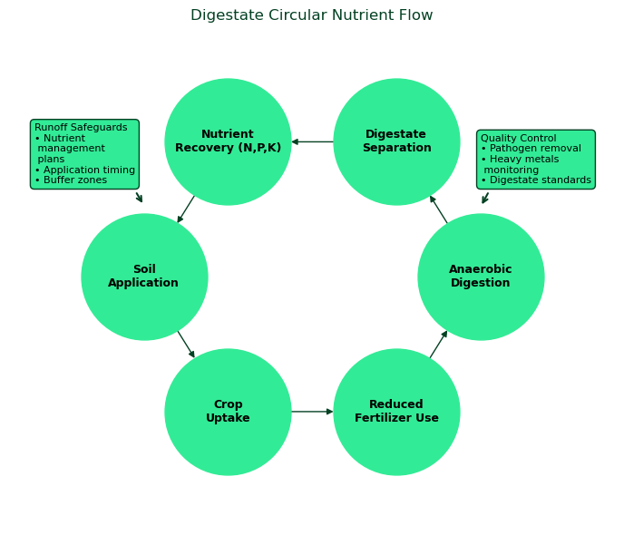
Figure 6: Digestate circular nutrient flow
For further use of the digestate and to improve circular value, the digestate can be further processed to support regulatory compliance. Common alternatives are composting to stabilize the material and reduce odors and drying or pelletizing to concentrate nutrients and make transportation easier. For the liquid digestate ammonium recovery can be done to produce liquid fertilizer, and phosphorous reduction via precipitation methods like struvite crystallization.64European Commision. Digestate and Compost as Fertilisers: Risk Assessment and Risk Management Options. (2019).
3.6 Evolution of ecological performance over time
3.6.1 Biogas
1980s–2000s: Early biogas plants often suffered from poor gas sealing and limited process control, which could lead to significant methane losses. Modern anaerobic digestion systems use improved digester design, gas-tight storage, and monitoring systems that significantly reduce methane leakage while producing biogas typically containing 50–70% methane.62Weiland, P. Biogas production: Current state and perspectives. Applied Microbiology and Biotechnology vol. 85 849–860 Preprint at https://doi.org/10.1007/s00253-009-2246-7 (2010).,65Scarlat, N., Dallemand, J. F. & Fahl, F. Biogas: Developments and perspectives in Europe. Renewable Energy vol. 129 457–472 Preprint at https://doi.org/10.1016/j.renene.2018.03.006 (2018).
2010s–Present: The co-digestion of food waste with manure has enhanced biogas outputs by 30-50%, improving resource productivity and waste valorization.28Ayub, A. et al. Sustainable economic growth potential of biomass-enriched countries through bioenergy production: State-of-the-art assessment using product space model. Front. Energy Res. 11, (2023). Policies, such as the EU Renewable Energy Directive II, have further pushed sustainable feedstock utilization.65Scarlat, N., Dallemand, J. F. & Fahl, F. Biogas: Developments and perspectives in Europe. Renewable Energy vol. 129 457–472 Preprint at https://doi.org/10.1016/j.renene.2018.03.006 (2018).
3.6.2 Biomass
Pre-2000: Biomass depended on open combustion and deforestation, generating 5 to 10 times more particulate matter compared to the current systems.66Bond, T. C. et al. A technology-based global inventory of black and organic carbon emissions from combustion. Journal of Geophysical Research: Atmospheres 109, (2004).
Post-2010: Advanced methods such as palletization and gasification have reduced emissions by 80%, while second-generation biofuels now utilize non-food biomass, decreasing land-use competition.67Nussbaumer, T. Combustion and Co-combustion of Biomass: Fundamentals, Technologies, and Primary Measures for Emission Reduction. Energy and Fuels 17, (2003).
4 Social impact
Social acceptance of bioenergy has emerged as a critical aspect in shifting from nonrenewable to renewable energy. However, public knowledge and awareness of bioenergy remain low compared to solar and wind energy. Many European countries resist bioenergy due to conflicts and a lack of social actors’ participation in decision-making, which alters priorities and limits application success.68Fytili, D. & Zabaniotou, A. Social acceptance of bioenergy in the context of climate change and sustainability – A review. Current Opinion in Green and Sustainable Chemistry vol. 8 5–9 Preprint at https://doi.org/10.1016/j.cogsc.2017.07.006 (2017). The level of social acceptance for biogas as a renewable energy source is often overlooked. Although several projects have concentrated on the development of new biogas facilities around the world, local objections are not uncommon. How consumers, citizens, and workers participate in the new circular economy has a mutual impact on social acceptance and new circular business models, which could involve renewable energy.69Mazzanti, M., Modica, M. & Rampa, A. The biogas dilemma: An analysis on the social approval of large new plants. Waste Management 133, 10–18 (2021). The evolution of social acceptance for biogas technologies has followed a complex trajectory over time. Early biogas adoption in the 1970s and 1980s was primarily driven by energy security concerns rather than environmental benefits, with limited public engagement. Since the early 2000s, acceptance has improved in countries with strong policy support and educational initiatives.70Sovacool, B. K. Rejecting renewables: The socio-technical impediments to renewable electricity in the United States. Energy Policy 37, 4500–4513 (2009). Nowadays recent research on public perception of agricultural biogas plants in the European context show that although awareness of biogas and its benefits remains limited compared to other renewables, respondents identified energy and heat production as major advantages and highlighted that education and proper siting are key to increasing social acceptance in the EU.71Lisiak-Zielińska, M., Jałoszyńska, S., Borowiak, K., Budka, A. & Dach, J. Perception of biogas plants: A public awareness and preference – A case study for the agricultural landscape. Renew. Energy 217, (2023).
4.1 Employment and economic development
4.1.1 Job creation
The primary social benefit of biogas technology is that it generates job opportunities for both qualified and unskilled workers. Biofuels create numerous job opportunities, including biomass cultivation and harvesting, transportation, plant management, equipment manufacturing, and maintenance.72Mignogna, D., Szabó, M., Ceci, P. & Avino, P. Biomass Energy and Biofuels: Perspective, Potentials, and Challenges in the Energy Transition. Sustainability (Switzerland) vol. 16 Preprint at https://doi.org/10.3390/su16167036 (2024). Employment opportunities are also created in the design, manufacture, operation, and maintenance of biogas equipment and appliances. China has more than 90,000 individuals working directly or indirectly in biogas-related employment, while Germany and India have 85,000 and 50,000, respectively.8Kabeyi, M. J. B. & Olanrewaju, O. A. Biogas Production and Applications in the Sustainable Energy Transition. Journal of Energy 2022, 1–43 (2022). Total renewable energy jobs globally in 2023 reached 16.2 million, up from 13.7 million in 2022. Globally, there were 2.8 million biofuel jobs in 2023, with the bulk in the agricultural supply chain. Brazil has the largest number of jobs (994,000), followed by Indonesia (798,600).73IRENA. Renewable Energy and Jobs: Annual Review 2024. (2024).
4.1.2 Energy access and poverty alleviation
Decentralized bioenergy production is a significant driver of increased access to modern, clean, and inexpensive energy, particularly in rural areas. Nearly a billion people in these places do not have access to power. This can speed up the development of circular integrated food and energy systems.43Seruga, P. et al. Anaerobic Digestion as a Component of Circular Bioeconomy—Case Study Approach. Energies (Basel). 16, 140 (2022). Efficient bioenergy production in rural areas can provide affordable energy, improving public health and education while reducing poverty.74Souza, G. M. et al. The role of bioenergy in a climate-changing world. Environmental Development vol. 23 57–64 Preprint at https://doi.org/10.1016/j.envdev.2017.02.008 (2017). The governments of India and China have been advocating household biodigesters as a rural energy source for decades. This provides a major incentive for farmers to channel organic residues, waste, and manure through the biodigester to obtain both biogas as an energy source and organic fertilizer for their agricultural fields.75Cossel, M. Von et al. Prospects of bioenergy cropping systems for a more social‐ecologically sound bioeconomy. Agronomy vol. 9 Preprint at https://doi.org/10.3390/agronomy9100605 (2019).
4.1.3 Environmental and community stability
The use of biogas minimizes the environmental impact of organic waste, which can otherwise be a source of conflict among neighbors. Biogas lamps provide a clean source of affordable light, benefiting schoolchildren who can use it for studying and homework. In rural areas of developing countries, women and children spend long hours collecting firewood, leading to deforestation. Biogas reduces this burden and improves social relations and well-being.8Kabeyi, M. J. B. & Olanrewaju, O. A. Biogas Production and Applications in the Sustainable Energy Transition. Journal of Energy 2022, 1–43 (2022). The Food and Agriculture Organization of the United Nations regards the integration of renewable energy production into rural smallholder farming systems as vital for the provision and sustenance of rural livelihoods and the sustainable improvement of agricultural production systems. ‘Integrated Food and Energy Systems’ (IFESs) are based on the principles of sustainable production intensification. Agricultural productivity is maximized through high agrobiodiversity while maintaining the productive capacity of the overall land-use system.75Cossel, M. Von et al. Prospects of bioenergy cropping systems for a more social‐ecologically sound bioeconomy. Agronomy vol. 9 Preprint at https://doi.org/10.3390/agronomy9100605 (2019).
An example of an IFES is the ‘livestock-biogas-fruit system’ developed in Guangdong, South China. Orchard residues and pig manure form the feedstock for biodigesters located under the pig stables. The digester provides biogas as a clean energy source and organic fertilizer. The latter, in turn, improves soil fertility and reduces mineral fertilizer inputs. Further, chickens roam in the orchards, feeding on weeds and pests, decreasing pesticide application and additionally providing manure for bio digestion.75Cossel, M. Von et al. Prospects of bioenergy cropping systems for a more social‐ecologically sound bioeconomy. Agronomy vol. 9 Preprint at https://doi.org/10.3390/agronomy9100605 (2019).
4.2 Community acceptance and social risks
4.2.1 Community resistance and social conflict
Protests against new biogas plants are common due to concerns over social acceptability and business models.69Mazzanti, M., Modica, M. & Rampa, A. The biogas dilemma: An analysis on the social approval of large new plants. Waste Management 133, 10–18 (2021). In the case of bioenergy, local opposition has become a precarious issue for many projects, potentially causing delays and interrupting operations. The reasons for local opposition are mostly rooted in perceived injustice regarding the decision-making process and the sharing of burdens and benefits. Local residents in particular have to cope with changes in their living environment because of odor and noise emissions induced by the plant.45Bakraoui, M. et al. Biogas production from recycled paper mill wastewater by UASB digester: Optimal and mesophilic conditions. Biotechnology Reports 25, e00402 (2020).
4.2.2 Health concerns
Workers and populations near biogas plants could be exposed to pollutants such as nitrogen dioxide, Sulfur dioxide, bacteria, fungi, and endotoxins.76Schumacher, K. & Schultmann, F. Local Acceptance of Biogas Plants: A Comparative Study in the Trinational Upper Rhine Region. Waste Biomass Valorization 8, 2393–2412 (2017). The main greenhouse gases produced by biogas include carbon dioxide (CO₂), methane (CH₄), and nitrogen oxide (N₂O), raising environmental and health concerns.8Kabeyi, M. J. B. & Olanrewaju, O. A. Biogas Production and Applications in the Sustainable Energy Transition. Journal of Energy 2022, 1–43 (2022). Failures of biogas installations have caused deaths and injuries in the past. In 2005, Germany witnessed an accident where hydrogen Sulphide was released in a plant loading bay due to non-compliance with health and safety regulations, leading to four deaths and one hospitalization. Hydrogen Sulphide, being highly toxic, poses a significant hazard to human health and life even at low concentrations.77Stolecka, K. & Rusin, A. Potential hazards posed by biogas plants. Renewable and Sustainable Energy Reviews 135, (2021).
4.2.3 Land use and environmental issues
The utilization of marginal land is often linked to negative social-ecological impacts such as biodiversity losses, environmental pollution, and a decrease in the recreational value of landscape.74Souza, G. M. et al. The role of bioenergy in a climate-changing world. Environmental Development vol. 23 57–64 Preprint at https://doi.org/10.1016/j.envdev.2017.02.008 (2017). Bioenergy crop production influences biodiversity mainly through changes in land use (crop types and intensification) and land cover, which potentially result in habitat loss and fragmentation.75Cossel, M. Von et al. Prospects of bioenergy cropping systems for a more social‐ecologically sound bioeconomy. Agronomy vol. 9 Preprint at https://doi.org/10.3390/agronomy9100605 (2019).
4.3 Health safety and environmental risk management (HSE)
Biogas production implies handling flammable gases, toxic compounds, pressurized systems and biological materials. For these reasons, health safety and environmental management (HSE) is essential to prevent risks to workers, communities and ecosystems.78Lusk, P. & Rivard, C. Deploying Anaerobic Digesters: Current Status and Future Possibilities R· .I!S=I. (1996).
4.3.1 Gas hazards
Methane is the primary component of biogas and presents a significant fire and explosion hazard since it is a flammable gas that can form explosive mixtures with air.78Lusk, P. & Rivard, C. Deploying Anaerobic Digesters: Current Status and Future Possibilities R· .I!S=I. (1996). Hydrogen sulfide is another important hazard because it is highly toxic, exposure can lead to serious health effects even at relatively low concentrations.78Lusk, P. & Rivard, C. Deploying Anaerobic Digesters: Current Status and Future Possibilities R· .I!S=I. (1996). Carbon dioxide can also present risks in enclosed environments since it may displace air and create an atmosphere with insufficient oxygen to support human life.79Shelford, T., Gooch, C., Choudhury, A. & Lansing, S. A Technical Reference Guide for Dairy-Derived Biogas Production, Treatment and Utilization.
4.3.2 Explosive atmospheres and pressure risks
Biogas systems may form explosive mixtures when methane accumulates and mixes with air. Safety guidance for anaerobic digestion systems highlights that gas releases can be flammable, explosive or immediately toxic particularly when gases accumulate under roofs or in enclosed spaces.78Lusk, P. & Rivard, C. Deploying Anaerobic Digesters: Current Status and Future Possibilities R· .I!S=I. (1996). Digesters and gas storage systems may also operate under pressure, which requires appropriate safety measures such as pressure-relief valves and gas handling systems to prevent equipment failure or uncontrolled gas releases.
4.3.3 Confined space and biological risks
Many parts of biogas facilities, such as tanks, digesters and manure pits are considered confined spaces. These spaces may contain toxic gases and oxygen-deficient atmospheres that pose serious risks to workers entering them without proper procedures.79Shelford, T., Gooch, C., Choudhury, A. & Lansing, S. A Technical Reference Guide for Dairy-Derived Biogas Production, Treatment and Utilization.
4.3.4 Monitoring, prevention and safety systems
Modern biogas plants rely on several monitoring and prevention systems to reduce operational risks. Gas monitoring devices are commonly used to detect methane leaks and other hazardous gases. Safety guidance notes that periodic sweeping of a biogas system with a gas monitor is recommended to detect any leaks.80Sara Martin and Craig Coker. Biogas Piping Design And Safety. https://www.biocycle.net/biogas-piping-design-safety/?utm_source (2016).
In addition, engineering controls such as pressure-relief valves, ventilations systems, and flare systems are commonly installed to prevent gas accumulation, control excess pressure and safely burn excess biogas during abnormal operating conditions.
4.3.5 Emergency response and training
Safety management also relies on proper training and emergency planning. Operators must be trained to identify gas hazards, follow confined-space safety procedures, and use appropriate protective equipment. Emergency plans typically include procedures for gas leaks, evacuation protocols, and coordination with local emergency services.81Safety Around Anaerobic Digesters. https://extension.psu.edu/media/wysiwyg//extensions/catalog_product/31039e0699034e01befd274295bf2c7e/p/i/picture1-jpg.jpg.
5 Political and legal aspects
Political and regulatory frameworks, including the laws, legislation, and incentives that governments use to encourage renewable energy sources, heavily drive the advancement and spread of biogas and biomass technologies.65Scarlat, N., Dallemand, J. F. & Fahl, F. Biogas: Developments and perspectives in Europe. Renewable Energy vol. 129 457–472 Preprint at https://doi.org/10.1016/j.renene.2018.03.006 (2018). Policy measures are critical in overcoming hurdles to implementing renewable energy, such as high initial prices, technological problems, and competition in the market with fossil fuels.50IEA. Renewables 2021: Analysis and Forecast to 2026. https://www.iea.org/reports/renewables-2021 (2021). This section will explore both the political and legal aspects of biogas and biomass, focusing on significant policies, their consequences, and the benefits and drawbacks of various approaches.
5.1 Key renewable energy policy frameworks
5.1.1 Renewable Energy Directives (RED) in the European Union
The European Union’s Renewable Energy Directive (RED) has been playing a key role in promoting biogas and biomass as renewable energy sources. RED established obligatory objectives for all EU member courtiers to reach a 20% renewable energy share of total energy consumption by 2020, which was later boosted to 32% by 2030 under RED II (European Commission, 2018). This policy has resulted in major investments in biogas and biomass technology across Europe.82European Commission. Proposal for a Directive of the European Parliament and of the Council amending Directive (EU) 2018/2001. COM(2022) 222 final 2022/0160, (2022).
5.1.2 Feed-in Tariffs (FiTs) in Germany
Germany’s Renewable Energy Sources Act (EEG) introduced the Feed-in Tariffs (FiTs) to encourage the generation of renewable energy, such as biogas and biomass. Under this policy, energy producer will receive a fixed payment for the electricity they feed into the grid, which promotes financial stability and encourages investment in renewable energy technology. This policy has been extremely effective, with Germany running over 9,000 biogas plants by 2020, strengthening its position as a global leader in biogas generation.83IEA. Energy Policy Review – Germany 2020. Germany 2020 (2020).
5.1.3 The Renewable Fuel Standard (RFS) in the United States
The United States Renewable Fuel Standard (RFS) is a government program that mandates the incorporation of renewable fuels, such as biogas and biomass-derived fuels, into the country’s transportation fuel supply chain. This policy has significantly contributed to the expansion of the biogas sector, notably the generation of renewable natural gas (RNG) from organic waste products.84Bracmort, K. The renewable fuel standard (RFS): An overview (updated). in Key Congressional Reports for September 2019. Part IV (2020).
5.1.4 National Biogas and Organic Manure Programme in India
The National Biogas and Organic Manure Programme of India intends to increase biogas production for cooking and power generation in rural regions. The program grants financial incentives for the establishment of biogas plants, resulting in the construction of approximately 5 million plants around the country. These plants contribute to sustainable agriculture and rural livelihoods by producing organic manure in addition to renewable electricity.85Energy, M. of N. and R. MNRE Annual Report 2020-21. J. Chem. Inf. Model. 53, (2021).
5.1.5 China’s Biogas Development Policy
China has established large-scale biogas development initiatives as part of its renewable energy and rural development goals. The National Biogas Construction Plan encourages the development of household and industrial biogas plants, particularly in rural regions, to reduce energy poverty and decrease dependency on coal. By 2020, China has installed more than 40 million domestic biogas digesters, which makes it one of the largest biogas marketplaces worldwide.50IEA. Renewables 2021: Analysis and Forecast to 2026. https://www.iea.org/reports/renewables-2021 (2021).
5.2 Pros and cons of alternative policies
5.2.1 Feed-in Tariffs (FiTs) vs. Renewable Portfolio Standards (RPS)
Feed-in Tariffs (FiTs) provide assured payments to renewable energy suppliers, promoting financial stability and investment. This can result in increased energy bills for customers. Besides, Renewable Portfolio Standards (RPS) require companies to get a specific amount of their energy from renewables, encouraging competition and perhaps cutting prices. On the other hand, RPS doesn’t allow the same amount of financial assurance to producers.86Carley, S. State renewable energy electricity policies: An empirical evaluation of effectiveness. Energy Policy 37, 3071–3081 (2009).
5.2.2 Subsidies vs. carbon pricing
Subsidies for biogas and biomass plants can help to drive technological adoption, but they can also strain government resources. Carbon pricing, which includes carbon taxes or cap-and-trade systems, internalizes the negative environmental impacts associated with fossil fuels, making renewable energy more viable. However, carbon pricing can face political opposition and may negatively impact low-income households.87Goulder, L. H. & Schein, A. R. Carbon taxes versus cap and trade: A critical review. Clim. Chang. Econ. (Singap). 4, (2013).
5.2.3 Mandates vs. voluntary programs
Mandates, like the Renewable Fuel Standard (RFS) in the United States, assure a minimum amount of renewable energy consumption by legally enforcing compliance, but that can be inefficient and difficult to adjust when market conditions shift. In contrast, voluntary initiatives, such as green energy certification schemes or corporate renewable energy commitments, provide more freedom and stimulate innovation by enabling participants to adopt renewable energy at their own speed. However, voluntary initiatives may not achieve the same widespread acceptance or impact as requirements, as they rely on individual or organizational desire rather than governmental enforcement.50IEA. Renewables 2021: Analysis and Forecast to 2026. https://www.iea.org/reports/renewables-2021 (2021).
5.3 Monitoring reporting and verification systems
Biogas and biomass facilities require structured monitoring, reporting, and verification (MRV) systems to ensure reliable operation, environmental compliance, and eligibility for renewable energy incentives. Within the biogas sector methane emission quantification is becoming a significant topic for the scientific community but is still under development for the industry sector. The methods to evaluate and report the results is still not standardized.88Liebetrau, Jan., Reinelt, Torsten., Agostini, Alessandro., Linke, Bernd. & Murphy, J. D. . Methane Emissions from Biogas Plants : Methods for Measurement, Results and Effect on Greenhouse Gas Balance of Electricity Produced. (IEA Bioenergy, 2017).
Continuous operational monitoring typically tracks biogas flow rate, methane concentration, plant uptime, and parasitic electricity consumption, while methane slip from digesters and upgrading units is monitored to limit greenhouse gas emissions. Environmental performance indicators include odor levels, air emissions such as ammonia and methane, and quality from digestate storage or wastewater streams, which help ensure compliance with environmental regulations.84Bracmort, K. The renewable fuel standard (RFS): An overview (updated). in Key Congressional Reports for September 2019. Part IV (2020).,89Havukainen, J., Uusitalo, V., Niskanen, A., Kapustina, V. & Horttanainen, M. Evaluation of methods for estimating energy performance of biogas production. Renew. Energy 66, (2014).
Data from sensors and plant control systems are usually collected through digital monitoring platforms and supervisory control systems, stored in centralized databases, and periodically reported to regulatory authorities or certification bodies. For projects receiving renewable energy incentives or sustainability certifications, third-party verification and auditing are often required to confirm reported energy production, emissions reductions, and compliance with sustainability standards. The European Union is leading the efforts with harmonizing monitoring and reporting rules with regulations, where present and future AD facilities now need to prove their GHG savings according to the RED III directive in order to minimize unsustainable bioenergy production.90Wechselberger, V. et al. Assessment of whole-site methane emissions from anaerobic digestion plants: Towards establishing emission factors for various plant configurations. Waste Management 191, (2025).
References
- 1Owusu, P. A. & Asumadu-Sarkodie, S. A review of renewable energy sources, sustainability issues and climate change mitigation. Cogent Engineering vol. 3 Preprint at https://doi.org/10.1080/23311916.2016.1167990 (2016).
- 2Mignogna, D., Ceci, P., Cafaro, C., Corazzi, G. & Avino, P. Production of Biogas and Biomethane as Renewable Energy Sources: A Review. Applied Sciences (Switzerland) vol. 13 Preprint at https://doi.org/10.3390/app131810219 (2023).
- 3Omer, A. An overview of biomass and biogas for energy generation: Recent development and perspectives. in Advanced Materials – TechConnect Briefs 2016 vol. 2 122–125 (TechConnect, 2016).
- 4NREL. Renewable Energy: An Overview. NREL/FS-710-27955. (2001).
- 5Pimentel, D. et al. Renewable energy: Current and potential issues. BioScience vol. 52 Preprint at https://doi.org/10.1641/0006-3568(2002)052[1111:RECAPI]2.0.CO;2 (2002).
- 6McKendry, P. Energy production from biomass (part 1): overview of biomass. Bioresour. Technol. 83, 37–46 (2002).
- 7U.S. Energy Information Administration. Biomass explained / The history of biomass as a renewable energy source. https://www.eia.gov/energyexplained/biomass/ https://www.eia.gov/energyexplained/biomass/.
- 8Kabeyi, M. J. B. & Olanrewaju, O. A. Biogas Production and Applications in the Sustainable Energy Transition. Journal of Energy 2022, 1–43 (2022).
- 9Deressa, L., Libsu, S., Chavan, R. B., Manaye, D. & Dabassa, A. Production of Biogas from Fruit and Vegetable Wastes Mixed with Different Wastes. Environment and Ecology Research 3, 65–71 (2015).
- 10Vanguard Renewables. Waste Matters: The History of Biogas. https://www.waste360.com/anaerobic-digestion/waste-matters-the-history-of-biogas https://www.waste360.com/anaerobic-digestion/waste-matters-the-history-of-biogas.
- 11Mata-Alvarez, J. et al. A critical review on anaerobic co-digestion achievements between 2010 and 2013. Renewable and Sustainable Energy Reviews vol. 36 412–427 Preprint at https://doi.org/10.1016/j.rser.2014.04.039 (2014).
- 12Montgomery, L. F. R. & Bochmann, G. Pretreatment of Feedstock for Enhanced Biogas Production Pretreatment of Feedstock for Enhanced Biogas Production (Electronic Version). (2014).
- 13Appels, L., Baeyens, J., Degrève, J. & Dewil, R. Principles and potential of the anaerobic digestion of waste-activated sludge. Progress in Energy and Combustion Science vol. 34 755–781 Preprint at https://doi.org/10.1016/j.pecs.2008.06.002 (2008).
- 14Risques Sanitaires Du Biogaz Evaluation Des Risques Sanitaires Liés à l’injection de Biogaz Dans Le Réseau de Gaz Naturel. http://www.afsset.fr (2008).
- 15Pera, L., Gandiglio, M., Marocco, P., Pumiglia, D. & Santarelli, M. Trace contaminants in biogas: Biomass sources, variability and implications for technology applications. Journal of Environmental Chemical Engineering vol. 12 Preprint at https://doi.org/10.1016/j.jece.2024.114478 (2024).
- 16Meegoda, J. N., Li, B., Patel, K. & Wang, L. B. A review of the processes, parameters, and optimization of anaerobic digestion. International Journal of Environmental Research and Public Health vol. 15 Preprint at https://doi.org/10.3390/ijerph15102224 (2018).
- 17Green Gas Inc. Stages of Anaerobic Digestion: Essential Guide to Biogas Production. https://greengasinc.com/energy/stages-of-anaerobic-digestion/ (2025).
- 18FASTECH. Types of Biogas Systems Explained. https://www.fastechus.com/blog/types-of-biogas-systems (2024).
- 19Banerjee, S., Prasad, N. & Selvaraju, S. Reactor Design for Biogas Production-A Short Review. Journal of Energy and Power Technology 04, 1–22 (2022).
- 20Gkotsis, P., Kougias, P., Mitrakas, M. & Zouboulis, A. Biogas upgrading technologies – Recent advances in membrane-based processes. International Journal of Hydrogen Energy vol. 48 3965–3993 Preprint at https://doi.org/10.1016/j.ijhydene.2022.10.228 (2023).
- 21Chen, X. Y., Vinh-Thang, H., Ramirez, A. A., Rodrigue, D. & Kaliaguine, S. Membrane gas separation technologies for biogas upgrading. RSC Advances vol. 5 24399–24448 Preprint at https://doi.org/10.1039/c5ra00666j (2015).
- 22Hidalgo, D. & Martín-Marroquín, J. M. Cryogenic Technologies for Biogas Upgrading: A Critical Review of Processes, Performance, and Prospects. Technologies vol. 13 Preprint at https://doi.org/10.3390/technologies13080364 (2025).
- 23Sengur, O., Akgul, D. & Calli, B. In situ methane enrichment with vacuum application to produce biogas with higher methane content. Environmental Science and Pollution Research 32, 28307–28318 (2025).
- 24Jacob, S. et al. Anaerobic digestion-derived digestate valorization: green chemistry innovations for resource recovery and reutilization. Green Chemistry vol. 27 7472–7505 Preprint at https://doi.org/10.1039/d5gc01053e (2025).
- 25Farghali, M., Osman, A. I., Umetsu, K. & Rooney, D. W. Integration of biogas systems into a carbon zero and hydrogen economy: a review. Environmental Chemistry Letters vol. 20 2853–2927 Preprint at https://doi.org/10.1007/s10311-022-01468-z (2022).
- 26Obileke, K. C., Makaka, G. & Nwokolo, N. Recent Advancements in Anaerobic Digestion and Gasification Technology. Applied Sciences (Switzerland) vol. 13 Preprint at https://doi.org/10.3390/app13095597 (2023).
- 27Abelha, P. & Kiel, J. Techno-economic assessment of biomass upgrading by washing and torrefaction. Biomass Bioenergy 142, (2020).
- 28Ayub, A. et al. Sustainable economic growth potential of biomass-enriched countries through bioenergy production: State-of-the-art assessment using product space model. Front. Energy Res. 11, (2023).
- 29Marousek, J., Strunecky, O., Vaníčková, R., Midelashvili, E. & Minofar, B. Techno-economic considerations on latest trends in biowaste valuation. Systems Microbiology and Biomanufacturing vol. 4 598–606 Preprint at https://doi.org/10.1007/s43393-023-00216-w (2024).
- 30Vaughan, N. E. et al. Evaluating the use of biomass energy with carbon capture and storage in low emission scenarios. Environmental Research Letters 13, (2018).
- 31Mirkouei, A., Haapala, K. R., Sessions, J. & Murthy, G. S. A review and future directions in techno-economic modeling and optimization of upstream forest biomass to bio-oil supply chains. Renewable and Sustainable Energy Reviews vol. 67 15–35 Preprint at https://doi.org/10.1016/j.rser.2016.08.053 (2017).
- 32IRENA. RENEWABLE POWER GENERATION COSTS IN 2023 2. https://www.irena.org/-/media/Files/IRENA/Agency/Publication/2024/Sep/IRENA_Renewable_power_generation_costs_in_2023.pdf (2024).
- 33BIP Europe. Insights of the Current Cost of Biomethane Production From Real Industry Data. (2023).
- 34Bilbao, A. et al. Renewable Power Generation Costs in 2023. IRENA 2024. https://www.irena.org/Publications/2024/Sep/Renewable-Power-Generation-Costs-in-2023 (2024).
- 35Fortune Business Insights. Biogas Market Size, Share & Industry Analysis. https://www.fortunebusinessinsights.com/industry-reports/biogas-market-100910.
- 36Sejal Akre. Biomass Market. https://www.marketresearchfuture.com/reports/biomass-market-18830.
- 37Sophie Scherger. Learning from Germany’s decades of public biogas support. https://www.iatp.org/germany-biogas-lessons (2026).
- 38Biogas World. Biogas Plant development Handbook. https://biogasworld.com/biogas-plant-development-handbook/#economics_handbook (2026).
- 39EPA. Anaerobic Digestion Facilities Processing Food Waste in the U.S. (2020 & 2021). https://www.epa.gov/anaerobic-digestion/anaerobic-digestion-facilities-processing-food-waste-us-2020-2021#Tipping (2025).
- 40Grandas Tavera, C., Raab, T. & Holguin Trujillo, L. Valorization of biogas digestate as organic fertilizer for closing the loop on the economic viability to develop biogas projects in Colombia. Cleaner and Circular Bioeconomy 4, 100035 (2023).
- 41Crbcoin. Biogas Digesters: Turning Organic Waste into Carbon Credit Revenue. https://crbcoin.com/biogas-digesters-turning-organic-waste-into-carbon-credit-revenue/ (2025).
- 42Kusz, D. et al. The Economic Efficiencies of Investment in Biogas Plants—A Case Study of a Biogas Plant Using Waste from a Dairy Farm in Poland. Energies (Basel). 17, (2024).
- 43Seruga, P. et al. Anaerobic Digestion as a Component of Circular Bioeconomy—Case Study Approach. Energies (Basel). 16, 140 (2022).
- 44Xu, F. et al. Multi-criteria assessment of food waste and waste paper anaerobic co-digestion: Effects of inoculation ratio, total solids content, and feedstock composition. Renew. Energy 194, 40–50 (2022).
- 45Bakraoui, M. et al. Biogas production from recycled paper mill wastewater by UASB digester: Optimal and mesophilic conditions. Biotechnology Reports 25, e00402 (2020).
- 46Qyyum, M. A. et al. Biowaste to bioenergy options for sustainable economic growth opportunities in developing countries: Product space model analysis and policy map development. Renewable and Sustainable Energy Reviews 169, (2022).
- 47Angelidaki, I. & Ellegaard, L. Codigestion in Centralized Biogas Plants Codigestion of Manure and Organic Wastes in Centralized Biogas Plants Status and Future Trends. Applied Biochemistry and Biotechnology vol. 109 (2003).
- 48Möller, K. & Müller, T. Effects of anaerobic digestion on digestate nutrient availability and crop growth: A review. Engineering in Life Sciences vol. 12 242–257 Preprint at https://doi.org/10.1002/elsc.201100085 (2012).
- 49Smith, P. et al. Biophysical and economic limits to negative CO₂ emissions. Nature Climate Change vol. 6 42–50 Preprint at https://doi.org/10.1038/nclimate2870 (2016).
- 50IEA. Renewables 2021: Analysis and Forecast to 2026. https://www.iea.org/reports/renewables-2021 (2021).
- 51ISO. INTERNATIONAL STANDARD – ISO 14040. Environmental management — Life cycle assessment — Principles and framework. Int. J. Life Cycle Assess. 2006, (2006).
- 52Bouter, A. et al. Updating the greenhouse gas emissions of liquid biofuels from Annex V of the Renewable Energy Directive II (RED II): An overview. Biomass Bioenergy 199, (2025).
- 53Kumawat, R., Gidwani, L. & Rana, K. B. Comparative analysis of life cycle assessment of biogas-powered and coal-powered power plant for optimized environmental operation. Heliyon 10, (2024).
- 54Wang, Y. & Yang, Y. Research on Greenhouse Gas Emissions and Economic Assessment of Biomass Gasification Power Generation Technology in China Based on LCA Method. Sustainability (Switzerland) 14, (2022).
- 55IPCC. Climate Change 2014 Synthesis Report Summary Chapter for Policymakers. Ipcc (2014).
- 56Zimmermann, A. W. et al. Techno-Economic Assessment Guidelines for CO₂ Utilization. Frontiers in Energy Research vol. 8 Preprint at https://doi.org/10.3389/fenrg.2020.00005 (2020).
- 57IEA Bioenergy. Energy From Biogas. (2022).
- 58Kammen, D. M., Bailis, R. & Herzog, A. V. Clean Energy for Development and Economic Growth: Biomass and Other Renewable Energy Options to Meet Energy and Development Needs in Poor Nations. (2001).
- 59Slade, R., Bauen, A. & Gross, R. Global bioenergy resources. Nature Climate Change vol. 4 99–105 Preprint at https://doi.org/10.1038/nclimate2097 (2014).
- 60Tilman, D., Hill, J. & Lehman, C. Carbon-Negative Biofuels from Low-Input High-Diversity Grassland Biomass. Science (1979). 314, 1598–1600 (2006).
- 61Jose, S. Agroforestry for ecosystem services and environmental benefits: An overview. Agroforestry Systems vol. 76 1–10 Preprint at https://doi.org/10.1007/s10457-009-9229-7 (2009).
- 62Weiland, P. Biogas production: Current state and perspectives. Applied Microbiology and Biotechnology vol. 85 849–860 Preprint at https://doi.org/10.1007/s00253-009-2246-7 (2010).
- 63IEA Bioenergy. Utilisation of digestate from biogas plants as biofertiliser. https://task37.ieabioenergy.com/wp-content/uploads/sites/32/2022/02/Digestate_Brochure_Revised_12-2010.pdf (2010).
- 64European Commision. Digestate and Compost as Fertilisers: Risk Assessment and Risk Management Options. (2019).
- 65Scarlat, N., Dallemand, J. F. & Fahl, F. Biogas: Developments and perspectives in Europe. Renewable Energy vol. 129 457–472 Preprint at https://doi.org/10.1016/j.renene.2018.03.006 (2018).
- 66Bond, T. C. et al. A technology-based global inventory of black and organic carbon emissions from combustion. Journal of Geophysical Research: Atmospheres 109, (2004).
- 67Nussbaumer, T. Combustion and Co-combustion of Biomass: Fundamentals, Technologies, and Primary Measures for Emission Reduction. Energy and Fuels 17, (2003).
- 68Fytili, D. & Zabaniotou, A. Social acceptance of bioenergy in the context of climate change and sustainability – A review. Current Opinion in Green and Sustainable Chemistry vol. 8 5–9 Preprint at https://doi.org/10.1016/j.cogsc.2017.07.006 (2017).
- 69Mazzanti, M., Modica, M. & Rampa, A. The biogas dilemma: An analysis on the social approval of large new plants. Waste Management 133, 10–18 (2021).
- 70Sovacool, B. K. Rejecting renewables: The socio-technical impediments to renewable electricity in the United States. Energy Policy 37, 4500–4513 (2009).
- 71Lisiak-Zielińska, M., Jałoszyńska, S., Borowiak, K., Budka, A. & Dach, J. Perception of biogas plants: A public awareness and preference – A case study for the agricultural landscape. Renew. Energy 217, (2023).
- 72Mignogna, D., Szabó, M., Ceci, P. & Avino, P. Biomass Energy and Biofuels: Perspective, Potentials, and Challenges in the Energy Transition. Sustainability (Switzerland) vol. 16 Preprint at https://doi.org/10.3390/su16167036 (2024).
- 73IRENA. Renewable Energy and Jobs: Annual Review 2024. (2024).
- 74Souza, G. M. et al. The role of bioenergy in a climate-changing world. Environmental Development vol. 23 57–64 Preprint at https://doi.org/10.1016/j.envdev.2017.02.008 (2017).
- 75Cossel, M. Von et al. Prospects of bioenergy cropping systems for a more social‐ecologically sound bioeconomy. Agronomy vol. 9 Preprint at https://doi.org/10.3390/agronomy9100605 (2019).
- 76Schumacher, K. & Schultmann, F. Local Acceptance of Biogas Plants: A Comparative Study in the Trinational Upper Rhine Region. Waste Biomass Valorization 8, 2393–2412 (2017).
- 77Stolecka, K. & Rusin, A. Potential hazards posed by biogas plants. Renewable and Sustainable Energy Reviews 135, (2021).
- 78Lusk, P. & Rivard, C. Deploying Anaerobic Digesters: Current Status and Future Possibilities R· .I!S=I. (1996).
- 79Shelford, T., Gooch, C., Choudhury, A. & Lansing, S. A Technical Reference Guide for Dairy-Derived Biogas Production, Treatment and Utilization.
- 80Sara Martin and Craig Coker. Biogas Piping Design And Safety. https://www.biocycle.net/biogas-piping-design-safety/?utm_source (2016).
- 81Safety Around Anaerobic Digesters. https://extension.psu.edu/media/wysiwyg//extensions/catalog_product/31039e0699034e01befd274295bf2c7e/p/i/picture1-jpg.jpg.
- 82European Commission. Proposal for a Directive of the European Parliament and of the Council amending Directive (EU) 2018/2001. COM(2022) 222 final 2022/0160, (2022).
- 83IEA. Energy Policy Review – Germany 2020. Germany 2020 (2020).
- 84Bracmort, K. The renewable fuel standard (RFS): An overview (updated). in Key Congressional Reports for September 2019. Part IV (2020).
- 85Energy, M. of N. and R. MNRE Annual Report 2020-21. J. Chem. Inf. Model. 53, (2021).
- 86Carley, S. State renewable energy electricity policies: An empirical evaluation of effectiveness. Energy Policy 37, 3071–3081 (2009).
- 87Goulder, L. H. & Schein, A. R. Carbon taxes versus cap and trade: A critical review. Clim. Chang. Econ. (Singap). 4, (2013).
- 88Liebetrau, Jan., Reinelt, Torsten., Agostini, Alessandro., Linke, Bernd. & Murphy, J. D. . Methane Emissions from Biogas Plants : Methods for Measurement, Results and Effect on Greenhouse Gas Balance of Electricity Produced. (IEA Bioenergy, 2017).
- 89Havukainen, J., Uusitalo, V., Niskanen, A., Kapustina, V. & Horttanainen, M. Evaluation of methods for estimating energy performance of biogas production. Renew. Energy 66, (2014).
- 90Wechselberger, V. et al. Assessment of whole-site methane emissions from anaerobic digestion plants: Towards establishing emission factors for various plant configurations. Waste Management 191, (2025).
- 1Owusu, P. A. & Asumadu-Sarkodie, S. A review of renewable energy sources, sustainability issues and climate change mitigation. Cogent Engineering vol. 3 Preprint at https://doi.org/10.1080/23311916.2016.1167990 (2016).
- 2Mignogna, D., Ceci, P., Cafaro, C., Corazzi, G. & Avino, P. Production of Biogas and Biomethane as Renewable Energy Sources: A Review. Applied Sciences (Switzerland) vol. 13 Preprint at https://doi.org/10.3390/app131810219 (2023).
- 3Omer, A. An overview of biomass and biogas for energy generation: Recent development and perspectives. in Advanced Materials – TechConnect Briefs 2016 vol. 2 122–125 (TechConnect, 2016).
- 4NREL. Renewable Energy: An Overview. NREL/FS-710-27955. (2001).
- 5Pimentel, D. et al. Renewable energy: Current and potential issues. BioScience vol. 52 Preprint at https://doi.org/10.1641/0006-3568(2002)052[1111:RECAPI]2.0.CO;2 (2002).
- 6McKendry, P. Energy production from biomass (part 1): overview of biomass. Bioresour. Technol. 83, 37–46 (2002).
- 7U.S. Energy Information Administration. Biomass explained / The history of biomass as a renewable energy source. https://www.eia.gov/energyexplained/biomass/ https://www.eia.gov/energyexplained/biomass/.
- 8Kabeyi, M. J. B. & Olanrewaju, O. A. Biogas Production and Applications in the Sustainable Energy Transition. Journal of Energy 2022, 1–43 (2022).
- 9Deressa, L., Libsu, S., Chavan, R. B., Manaye, D. & Dabassa, A. Production of Biogas from Fruit and Vegetable Wastes Mixed with Different Wastes. Environment and Ecology Research 3, 65–71 (2015).
- 10Vanguard Renewables. Waste Matters: The History of Biogas. https://www.waste360.com/anaerobic-digestion/waste-matters-the-history-of-biogas https://www.waste360.com/anaerobic-digestion/waste-matters-the-history-of-biogas.
- 11Mata-Alvarez, J. et al. A critical review on anaerobic co-digestion achievements between 2010 and 2013. Renewable and Sustainable Energy Reviews vol. 36 412–427 Preprint at https://doi.org/10.1016/j.rser.2014.04.039 (2014).
- 12Montgomery, L. F. R. & Bochmann, G. Pretreatment of Feedstock for Enhanced Biogas Production Pretreatment of Feedstock for Enhanced Biogas Production (Electronic Version). (2014).
- 13Appels, L., Baeyens, J., Degrève, J. & Dewil, R. Principles and potential of the anaerobic digestion of waste-activated sludge. Progress in Energy and Combustion Science vol. 34 755–781 Preprint at https://doi.org/10.1016/j.pecs.2008.06.002 (2008).
- 14Risques Sanitaires Du Biogaz Evaluation Des Risques Sanitaires Liés à l’injection de Biogaz Dans Le Réseau de Gaz Naturel. http://www.afsset.fr (2008).
- 15Pera, L., Gandiglio, M., Marocco, P., Pumiglia, D. & Santarelli, M. Trace contaminants in biogas: Biomass sources, variability and implications for technology applications. Journal of Environmental Chemical Engineering vol. 12 Preprint at https://doi.org/10.1016/j.jece.2024.114478 (2024).
- 16Meegoda, J. N., Li, B., Patel, K. & Wang, L. B. A review of the processes, parameters, and optimization of anaerobic digestion. International Journal of Environmental Research and Public Health vol. 15 Preprint at https://doi.org/10.3390/ijerph15102224 (2018).
- 17Green Gas Inc. Stages of Anaerobic Digestion: Essential Guide to Biogas Production. https://greengasinc.com/energy/stages-of-anaerobic-digestion/ (2025).
- 18FASTECH. Types of Biogas Systems Explained. https://www.fastechus.com/blog/types-of-biogas-systems (2024).
- 19Banerjee, S., Prasad, N. & Selvaraju, S. Reactor Design for Biogas Production-A Short Review. Journal of Energy and Power Technology 04, 1–22 (2022).
- 20Gkotsis, P., Kougias, P., Mitrakas, M. & Zouboulis, A. Biogas upgrading technologies – Recent advances in membrane-based processes. International Journal of Hydrogen Energy vol. 48 3965–3993 Preprint at https://doi.org/10.1016/j.ijhydene.2022.10.228 (2023).
- 21Chen, X. Y., Vinh-Thang, H., Ramirez, A. A., Rodrigue, D. & Kaliaguine, S. Membrane gas separation technologies for biogas upgrading. RSC Advances vol. 5 24399–24448 Preprint at https://doi.org/10.1039/c5ra00666j (2015).
- 22Hidalgo, D. & Martín-Marroquín, J. M. Cryogenic Technologies for Biogas Upgrading: A Critical Review of Processes, Performance, and Prospects. Technologies vol. 13 Preprint at https://doi.org/10.3390/technologies13080364 (2025).
- 23Sengur, O., Akgul, D. & Calli, B. In situ methane enrichment with vacuum application to produce biogas with higher methane content. Environmental Science and Pollution Research 32, 28307–28318 (2025).
- 24Jacob, S. et al. Anaerobic digestion-derived digestate valorization: green chemistry innovations for resource recovery and reutilization. Green Chemistry vol. 27 7472–7505 Preprint at https://doi.org/10.1039/d5gc01053e (2025).
- 25Farghali, M., Osman, A. I., Umetsu, K. & Rooney, D. W. Integration of biogas systems into a carbon zero and hydrogen economy: a review. Environmental Chemistry Letters vol. 20 2853–2927 Preprint at https://doi.org/10.1007/s10311-022-01468-z (2022).
- 26Obileke, K. C., Makaka, G. & Nwokolo, N. Recent Advancements in Anaerobic Digestion and Gasification Technology. Applied Sciences (Switzerland) vol. 13 Preprint at https://doi.org/10.3390/app13095597 (2023).
- 27Abelha, P. & Kiel, J. Techno-economic assessment of biomass upgrading by washing and torrefaction. Biomass Bioenergy 142, (2020).
- 28Ayub, A. et al. Sustainable economic growth potential of biomass-enriched countries through bioenergy production: State-of-the-art assessment using product space model. Front. Energy Res. 11, (2023).
- 29Marousek, J., Strunecky, O., Vaníčková, R., Midelashvili, E. & Minofar, B. Techno-economic considerations on latest trends in biowaste valuation. Systems Microbiology and Biomanufacturing vol. 4 598–606 Preprint at https://doi.org/10.1007/s43393-023-00216-w (2024).
- 30Vaughan, N. E. et al. Evaluating the use of biomass energy with carbon capture and storage in low emission scenarios. Environmental Research Letters 13, (2018).
- 31Mirkouei, A., Haapala, K. R., Sessions, J. & Murthy, G. S. A review and future directions in techno-economic modeling and optimization of upstream forest biomass to bio-oil supply chains. Renewable and Sustainable Energy Reviews vol. 67 15–35 Preprint at https://doi.org/10.1016/j.rser.2016.08.053 (2017).
- 32IRENA. RENEWABLE POWER GENERATION COSTS IN 2023 2. https://www.irena.org/-/media/Files/IRENA/Agency/Publication/2024/Sep/IRENA_Renewable_power_generation_costs_in_2023.pdf (2024).
- 33BIP Europe. Insights of the Current Cost of Biomethane Production From Real Industry Data. (2023).
- 34Bilbao, A. et al. Renewable Power Generation Costs in 2023. IRENA 2024. https://www.irena.org/Publications/2024/Sep/Renewable-Power-Generation-Costs-in-2023 (2024).
- 35Fortune Business Insights. Biogas Market Size, Share & Industry Analysis. https://www.fortunebusinessinsights.com/industry-reports/biogas-market-100910.
- 36Sejal Akre. Biomass Market. https://www.marketresearchfuture.com/reports/biomass-market-18830.
- 37Sophie Scherger. Learning from Germany’s decades of public biogas support. https://www.iatp.org/germany-biogas-lessons (2026).
- 38Biogas World. Biogas Plant development Handbook. https://biogasworld.com/biogas-plant-development-handbook/#economics_handbook (2026).
- 39EPA. Anaerobic Digestion Facilities Processing Food Waste in the U.S. (2020 & 2021). https://www.epa.gov/anaerobic-digestion/anaerobic-digestion-facilities-processing-food-waste-us-2020-2021#Tipping (2025).
- 40Grandas Tavera, C., Raab, T. & Holguin Trujillo, L. Valorization of biogas digestate as organic fertilizer for closing the loop on the economic viability to develop biogas projects in Colombia. Cleaner and Circular Bioeconomy 4, 100035 (2023).
- 41Crbcoin. Biogas Digesters: Turning Organic Waste into Carbon Credit Revenue. https://crbcoin.com/biogas-digesters-turning-organic-waste-into-carbon-credit-revenue/ (2025).
- 42Kusz, D. et al. The Economic Efficiencies of Investment in Biogas Plants—A Case Study of a Biogas Plant Using Waste from a Dairy Farm in Poland. Energies (Basel). 17, (2024).
- 43Seruga, P. et al. Anaerobic Digestion as a Component of Circular Bioeconomy—Case Study Approach. Energies (Basel). 16, 140 (2022).
- 44Xu, F. et al. Multi-criteria assessment of food waste and waste paper anaerobic co-digestion: Effects of inoculation ratio, total solids content, and feedstock composition. Renew. Energy 194, 40–50 (2022).
- 45Bakraoui, M. et al. Biogas production from recycled paper mill wastewater by UASB digester: Optimal and mesophilic conditions. Biotechnology Reports 25, e00402 (2020).
- 46Qyyum, M. A. et al. Biowaste to bioenergy options for sustainable economic growth opportunities in developing countries: Product space model analysis and policy map development. Renewable and Sustainable Energy Reviews 169, (2022).
- 47Angelidaki, I. & Ellegaard, L. Codigestion in Centralized Biogas Plants Codigestion of Manure and Organic Wastes in Centralized Biogas Plants Status and Future Trends. Applied Biochemistry and Biotechnology vol. 109 (2003).
- 48Möller, K. & Müller, T. Effects of anaerobic digestion on digestate nutrient availability and crop growth: A review. Engineering in Life Sciences vol. 12 242–257 Preprint at https://doi.org/10.1002/elsc.201100085 (2012).
- 49Smith, P. et al. Biophysical and economic limits to negative CO₂ emissions. Nature Climate Change vol. 6 42–50 Preprint at https://doi.org/10.1038/nclimate2870 (2016).
- 50IEA. Renewables 2021: Analysis and Forecast to 2026. https://www.iea.org/reports/renewables-2021 (2021).
- 51ISO. INTERNATIONAL STANDARD – ISO 14040. Environmental management — Life cycle assessment — Principles and framework. Int. J. Life Cycle Assess. 2006, (2006).
- 52Bouter, A. et al. Updating the greenhouse gas emissions of liquid biofuels from Annex V of the Renewable Energy Directive II (RED II): An overview. Biomass Bioenergy 199, (2025).
- 53Kumawat, R., Gidwani, L. & Rana, K. B. Comparative analysis of life cycle assessment of biogas-powered and coal-powered power plant for optimized environmental operation. Heliyon 10, (2024).
- 54Wang, Y. & Yang, Y. Research on Greenhouse Gas Emissions and Economic Assessment of Biomass Gasification Power Generation Technology in China Based on LCA Method. Sustainability (Switzerland) 14, (2022).
- 55IPCC. Climate Change 2014 Synthesis Report Summary Chapter for Policymakers. Ipcc (2014).
- 56Zimmermann, A. W. et al. Techno-Economic Assessment Guidelines for CO₂ Utilization. Frontiers in Energy Research vol. 8 Preprint at https://doi.org/10.3389/fenrg.2020.00005 (2020).
- 57IEA Bioenergy. Energy From Biogas. (2022).
- 58Kammen, D. M., Bailis, R. & Herzog, A. V. Clean Energy for Development and Economic Growth: Biomass and Other Renewable Energy Options to Meet Energy and Development Needs in Poor Nations. (2001).
- 59Slade, R., Bauen, A. & Gross, R. Global bioenergy resources. Nature Climate Change vol. 4 99–105 Preprint at https://doi.org/10.1038/nclimate2097 (2014).
- 60Tilman, D., Hill, J. & Lehman, C. Carbon-Negative Biofuels from Low-Input High-Diversity Grassland Biomass. Science (1979). 314, 1598–1600 (2006).
- 61Jose, S. Agroforestry for ecosystem services and environmental benefits: An overview. Agroforestry Systems vol. 76 1–10 Preprint at https://doi.org/10.1007/s10457-009-9229-7 (2009).
- 62Weiland, P. Biogas production: Current state and perspectives. Applied Microbiology and Biotechnology vol. 85 849–860 Preprint at https://doi.org/10.1007/s00253-009-2246-7 (2010).
- 63IEA Bioenergy. Utilisation of digestate from biogas plants as biofertiliser. https://task37.ieabioenergy.com/wp-content/uploads/sites/32/2022/02/Digestate_Brochure_Revised_12-2010.pdf (2010).
- 64European Commision. Digestate and Compost as Fertilisers: Risk Assessment and Risk Management Options. (2019).
- 65Scarlat, N., Dallemand, J. F. & Fahl, F. Biogas: Developments and perspectives in Europe. Renewable Energy vol. 129 457–472 Preprint at https://doi.org/10.1016/j.renene.2018.03.006 (2018).
- 66Bond, T. C. et al. A technology-based global inventory of black and organic carbon emissions from combustion. Journal of Geophysical Research: Atmospheres 109, (2004).
- 67Nussbaumer, T. Combustion and Co-combustion of Biomass: Fundamentals, Technologies, and Primary Measures for Emission Reduction. Energy and Fuels 17, (2003).
- 68Fytili, D. & Zabaniotou, A. Social acceptance of bioenergy in the context of climate change and sustainability – A review. Current Opinion in Green and Sustainable Chemistry vol. 8 5–9 Preprint at https://doi.org/10.1016/j.cogsc.2017.07.006 (2017).
- 69Mazzanti, M., Modica, M. & Rampa, A. The biogas dilemma: An analysis on the social approval of large new plants. Waste Management 133, 10–18 (2021).
- 70Sovacool, B. K. Rejecting renewables: The socio-technical impediments to renewable electricity in the United States. Energy Policy 37, 4500–4513 (2009).
- 71Lisiak-Zielińska, M., Jałoszyńska, S., Borowiak, K., Budka, A. & Dach, J. Perception of biogas plants: A public awareness and preference – A case study for the agricultural landscape. Renew. Energy 217, (2023).
- 72Mignogna, D., Szabó, M., Ceci, P. & Avino, P. Biomass Energy and Biofuels: Perspective, Potentials, and Challenges in the Energy Transition. Sustainability (Switzerland) vol. 16 Preprint at https://doi.org/10.3390/su16167036 (2024).
- 73IRENA. Renewable Energy and Jobs: Annual Review 2024. (2024).
- 74Souza, G. M. et al. The role of bioenergy in a climate-changing world. Environmental Development vol. 23 57–64 Preprint at https://doi.org/10.1016/j.envdev.2017.02.008 (2017).
- 75Cossel, M. Von et al. Prospects of bioenergy cropping systems for a more social‐ecologically sound bioeconomy. Agronomy vol. 9 Preprint at https://doi.org/10.3390/agronomy9100605 (2019).
- 76Schumacher, K. & Schultmann, F. Local Acceptance of Biogas Plants: A Comparative Study in the Trinational Upper Rhine Region. Waste Biomass Valorization 8, 2393–2412 (2017).
- 77Stolecka, K. & Rusin, A. Potential hazards posed by biogas plants. Renewable and Sustainable Energy Reviews 135, (2021).
- 78Lusk, P. & Rivard, C. Deploying Anaerobic Digesters: Current Status and Future Possibilities R· .I!S=I. (1996).
- 79Shelford, T., Gooch, C., Choudhury, A. & Lansing, S. A Technical Reference Guide for Dairy-Derived Biogas Production, Treatment and Utilization.
- 80Sara Martin and Craig Coker. Biogas Piping Design And Safety. https://www.biocycle.net/biogas-piping-design-safety/?utm_source (2016).
- 81Safety Around Anaerobic Digesters. https://extension.psu.edu/media/wysiwyg//extensions/catalog_product/31039e0699034e01befd274295bf2c7e/p/i/picture1-jpg.jpg.
- 82European Commission. Proposal for a Directive of the European Parliament and of the Council amending Directive (EU) 2018/2001. COM(2022) 222 final 2022/0160, (2022).
- 83IEA. Energy Policy Review – Germany 2020. Germany 2020 (2020).
- 84Bracmort, K. The renewable fuel standard (RFS): An overview (updated). in Key Congressional Reports for September 2019. Part IV (2020).
- 85Energy, M. of N. and R. MNRE Annual Report 2020-21. J. Chem. Inf. Model. 53, (2021).
- 86Carley, S. State renewable energy electricity policies: An empirical evaluation of effectiveness. Energy Policy 37, 3071–3081 (2009).
- 87Goulder, L. H. & Schein, A. R. Carbon taxes versus cap and trade: A critical review. Clim. Chang. Econ. (Singap). 4, (2013).
- 88Liebetrau, Jan., Reinelt, Torsten., Agostini, Alessandro., Linke, Bernd. & Murphy, J. D. . Methane Emissions from Biogas Plants : Methods for Measurement, Results and Effect on Greenhouse Gas Balance of Electricity Produced. (IEA Bioenergy, 2017).
- 89Havukainen, J., Uusitalo, V., Niskanen, A., Kapustina, V. & Horttanainen, M. Evaluation of methods for estimating energy performance of biogas production. Renew. Energy 66, (2014).
- 90Wechselberger, V. et al. Assessment of whole-site methane emissions from anaerobic digestion plants: Towards establishing emission factors for various plant configurations. Waste Management 191, (2025).