
Authors: Alex Chiarodia
Edited by:
Last updated: July 3, 2026
Executive summary
Climate change adaptation has become a strategic priority for organizations because physical risks such as heatwaves, floods, storms, droughts, wildfires, and sea-level rise increasingly disrupt facilities, supply chains, employees, customers, and markets. Transition risks, including regulation, disclosure expectations, carbon pricing, investor pressure, and changing stakeholder demands, further make adaptation a core issue for competitiveness, business continuity, and long-term value creation.
Effective corporate adaptation means more than reacting after disruptions. It requires organizations to understand exposure, sensitivity, vulnerability, adaptive capacity, and resilience; distinguish adaptation from mitigation; and embed climate risk into governance, strategy, operations, investment decisions, and value-chain relationships. Adaptation and mitigation remain complementary: mitigation reduces emissions, while adaptation reduces harm from unavoidable climate impacts and helps firms prepare for future conditions.
The article identifies major drivers of corporate adaptation, including regulation, reporting standards, investor expectations, supply-chain dependencies, technological innovation, leadership commitment, governance structures, and innovation-oriented cultures. It also highlights persistent barriers: fragmented policy environments, uncertain climate data, limited adaptation finance, short-term planning horizons, organizational silos, capability gaps, weak measurement systems, and unclear accountability. These barriers often reinforce one another, causing firms to remain reactive or incremental despite growing awareness of climate risks.
Corporate adaptation is best understood as an iterative, risk-based, and learning-driven process. Organizations need to sense climate signals, assess material risks and opportunities, prioritize adaptation options, implement measures, monitor outcomes, and revise strategies as conditions change. Dynamic capabilities, scenario thinking, adaptation pathways, and organizational learning help companies move from routine risk management toward proactive and, where necessary, transformational adaptation.
The proposed four-stage framework translates these insights into practice: assessment, strategy development, implementation, and monitoring and evaluation. Successful adaptation depends on board-level oversight, cross-functional coordination, stakeholder engagement, reliable indicators, continuous learning, and alignment with sustainability goals. For organizations seeking stronger social and ecological performance, adaptation should therefore be treated not only as risk reduction, but also as a pathway to resilience, legitimacy, innovation, and climate-resilient development.
1 Introduction
1.1 Background and motivation
“Climate Change is the defining issue of our time and we are at a defining moment”.1United Nations. Climate Change https://www.un.org/en/global-issues/climate-change (2025). Climatic hazards are disrupting markets as well as the production sites and logistics of companies.2Serrano, K., Pardo, F., Ibáñez, A. M. & Farinós, J. E. The Impact of Climate Change on the Performance of Agricultural Companies Worldwide. Corp. Soc. Responsib. Environ. Manag. 32, 6475–6493 (2025).,3Er Kara, M., Ghadge, A. & Bititci, U. S. Modelling the impact of climate change risk on supply chain performance. Int. J. Prod. Res. 59, 7317–7335 (2021). In the European Union (EU) climatic extremes caused estimated asset losses of euro (EUR) 822 billion between 1980 and 2024, with over EUR 208 billion in 2021-2024.4European Environment Agency. Economic losses from weather- and climate-related extremes in Europe. https://www.eea.europa.eu/en/analysis/indicators/economic-losses-from-climate-related (2025). Climate change has become a strategic issue that directly shapes firm’s competitiveness and business continuity.5Grover, A. & Kahn, M. E. Enhancing Firm Resilience to Climate Change: A Review of Impact, Adaptation Strategies and Policy Options. J. Econ. Surv. joes.70035 (2025) doi:10.1111/joes.70035. The impacts and risks of climate change are expected to intensify, which increases the need for effective adaptation across systems.6Intergovernmental Panel on Climate Change (IPCC). Climate Change 2023: Synarticle Report. Contribution of Working Groups I, II and III to the Sixth Assessment Report of the Intergovernmental Panel on Climate Change. https://www.ipcc.ch/report/ar6/syr/ (2023) doi:10.59327/IPCC/AR6-9789291691647. In this article, corporate climate change adaptation refers to a “process of adjustment to actual or expected climate and its effects, in order to moderate harm or exploit beneficial opportunities” (p. 2898).7Intergovernmental Panel on Climate Change (IPCC). Climate Change 2022 – Impacts, Adaptation and Vulnerability: Working Group II Contribution to the Sixth Assessment Report of the Intergovernmental Panel on Climate Change. https://www.ipcc.ch/report/ar6/wg2/downloads/report/IPCC_AR6_WGII_FullReport.pdf (2023) doi:10.1017/9781009325844. This brief clarification is important because adaptation is often used inconsistently throughout policy, academic, and managerial contexts.8Sherman, M. et al. Drawing the line between adaptation and development: a systematic literature review of planned adaptation in developing countries. WIREs Clim. Change 7, 707–726 (2016).
Corporate climate risk is commonly understood along the two connected dimensions of physical risks and transition risks. Physical climate risks are understood as the impacts of climate hazards on assets and operations of a firm. They encompass both acute risks and chronic risks. Examples of acute risks are wildfires, storms, and floods. Chronic risks could be risks such as sea-level rise and heatwaves.9Battiston, S., Dafermos, Y. & Monasterolo, I. Climate risks and financial stability. J. Financ. Stab. 54, 100867 (2021).,10Task Force on Climate-related Financial Disclosure (TCFD). Recommendations of the Task Force on Climate Related Financial Disclosures. https://assets.bbhub.io/company/sites/60/2021/10/FINAL-2017-TCFD-Report.pdf (2017). Transition risks are associated with changes in rules, technology, and market including carbon pricing, disclosure expectations, shifting stakeholder demands, and reputational pressures. They increasingly affect competitiveness and access to capital.10Task Force on Climate-related Financial Disclosure (TCFD). Recommendations of the Task Force on Climate Related Financial Disclosures. https://assets.bbhub.io/company/sites/60/2021/10/FINAL-2017-TCFD-Report.pdf (2017). Together, these pressures make climate risk a strategic issue that extends beyond the firm’s own operations into suppliers, employees, customers, and surrounding ecosystems.11Goldstein, A., Turner, W. R., Gladstone, J. & Hole, D. G. The private sector’s climate change risk and adaptation blind spots. Nat. Clim. Change 9, 18–25 (2019).
Although climate change adaptation is considered in the context of risk reduction, it can also create strategic opportunities, especially for those firms that proactively manage risks and innovate in response to changing conditions. Firms that are able to forecast the effects of climate change can reduce losses, protect revenue streams, and strengthen long-term competitiveness.12Teicher, H. M. Practices and pitfalls of competitive resilience: Urban adaptation as real estate firms turn climate risk to competitive advantage. Urban Clim. 25, 9–21 (2018).,13Kouloukoui, D., da Silva Gomes, S. M., Torres, F. A. & Torres, E. A. Business climate risk management: international perspectives and strategic determinants. Environ. Dev. Sustain. 27, 4683–4724 (2023). However, evidence indicates that many companies are not able to use their awareness of climate change as a basis for systematic adaptation. Corporate responses tend to be reactive because of limited information, unclear responsibilities, short-term decision horizons, and uncertainty about which measures are effective.14Averchenkova, A., Crick, F., Kocornik‐Mina, A., Leck, H. & Surminski, S. Multinational and large national corporations and climate adaptation: are we asking the right questions? A review of current knowledge and a new research perspective. WIREs Clim. Change 7, 517–536 (2016).,15Gasbarro, F. & Pinkse, J. Corporate Adaptation Behaviour to Deal With Climate Change: The Influence of Firm‐Specific Interpretations of Physical Climate Impacts. Corp. Soc. Responsib. Environ. Manag. 23, 179–192 (2016).,16Li, X. Physical climate change exposure and firms’ adaptation strategy. Strateg. Manag. J. 46, 750–789 (2025).
This implementation challenge is reinforced by a persistent theory-practice gap. Although academic and practitioner interest in corporate climate change adaptation has grown, insights remain fragmented and are only weakly translated into operational guidance that firms can apply as a coherent process.17Lobonț, O.-R., Varadi, A.-E., Vătavu, S. & Doran, N.-M. Bridges or Barriers? Unpacking the Institutional Drivers of Business Climate Adaptation in the EU. Sustainability 17, 4865 (2025).,18Danese, G. & De Marchi, V. Business adaptation strategies to climate change: A systematic review. J. Clean. Prod. 485, 144322 (2024).,19Hennes, K., Bendig, D. & Löschel, A. Facing the storm: Developing corporate adaptation and resilience action plans amid climate uncertainty. Npj Clim. Action 3, 37 (2024). Consequently, companies increasingly need structured approaches that support the transition from recognizing climate risk to implementing effective adaptation.
Building on the increasing corporate exposure to climate change risks and the existing gap between adaptation knowledge and implementation, this article is driven by both theoretical and practical considerations. From a theoretical perspective, the literature on corporate climate change adaptation has grown extensively but remained conceptually fragmented across drivers, barriers, processes, and outcomes, with a lack of synthesis and evidence on what constitutes effective corporate climate change adaptation in practice.15Gasbarro, F. & Pinkse, J. Corporate Adaptation Behaviour to Deal With Climate Change: The Influence of Firm‐Specific Interpretations of Physical Climate Impacts. Corp. Soc. Responsib. Environ. Manag. 23, 179–192 (2016).,16Li, X. Physical climate change exposure and firms’ adaptation strategy. Strateg. Manag. J. 46, 750–789 (2025).,20Owen, G. What makes climate change adaptation effective? A systematic review of the literature. Glob. Environ. Change 62, 102071 (2020). From a practical perspective, while firms acknowledge climate risks, they face difficulties in developing and implementing effective adaptation measures.14Averchenkova, A., Crick, F., Kocornik‐Mina, A., Leck, H. & Surminski, S. Multinational and large national corporations and climate adaptation: are we asking the right questions? A review of current knowledge and a new research perspective. WIREs Clim. Change 7, 517–536 (2016).,16Li, X. Physical climate change exposure and firms’ adaptation strategy. Strateg. Manag. J. 46, 750–789 (2025). In this context, the article addresses the following research question:
Which factors identified in the literature and in corporate practice enable companies to effectively implement climate change adaptation?
This question links two perspectives. First, it draws on academic work that demonstrates the drivers and barriers of corporate climate change adaptation. Second, it recognises the practical measures that support its implementation. In this article, the term effective refers to corporate climate change adaptation that is sufficiently robust to reduce material climate risk exposure, strengthen resilience, and that is embedded in ongoing decision processes rather than remaining isolated.20Owen, G. What makes climate change adaptation effective? A systematic review of the literature. Glob. Environ. Change 62, 102071 (2020).
To answer the research question, the article pursues the objectives of synthesizing and structuring fragmented academic insights on corporate climate change adaptation, identifying key enabling factors and challenges that shape effective corporate climate change adaptation and relating them to the stages through which corporate climate change adaptation typically unfolds. The academic contribution lies in integrating diverse research strands into a coherent analytical perspective that links drivers, barriers, processes, and effectiveness. The practical contribution lies in developing a process-oriented corporate climate change adaptation framework designed to support implementation in practice.
The article follows a systematic pattern from conceptual synthesis to application. The second chapter elaborates the literature review by defining key concepts and structuring existing literature on drivers, barriers, adaptation processes, and determinants of effective corporate climate change adaptation. Based on these results, the article applies the findings to a four-stage adaptation process framework and illustrates each stage with corporate examples. The article concludes with a summary of the findings, answering the research question, and discussing implications for future research and practice.
2 Literature review
2.1 Foundations of corporate climate change adaptation
2.1.1 Definitions and core concepts
This literature review lays the foundation for understanding how companies respond to climate change and why effective corporate climate change adaptation remains uneven in practice. To support the objectives of this article, existing climate change adaptation concepts are contextualized within a corporate setting and systematically linked so that they can inform the development of a practice-oriented climate change adaptation framework. This section therefore defines and relates the key concepts that underpin corporate climate change adaptation, before introducing typologies of adaptation and clarifying what is meant by effective corporate climate change adaptation. The section concludes by distinguishing adaptation from mitigation and explaining their complementarity.
The definitions of adaptation in the literature are based on definitions developed by the IPCC. Following the trend, this article also uses the IPCC’s definitions as a point of reference. Adaptation is defined as the process of adjustment to actual or expected climate impacts in order to moderate harm or exploit beneficial opportunities.6Intergovernmental Panel on Climate Change (IPCC). Climate Change 2023: Synarticle Report. Contribution of Working Groups I, II and III to the Sixth Assessment Report of the Intergovernmental Panel on Climate Change. https://www.ipcc.ch/report/ar6/syr/ (2023) doi:10.59327/IPCC/AR6-9789291691647.,14Averchenkova, A., Crick, F., Kocornik‐Mina, A., Leck, H. & Surminski, S. Multinational and large national corporations and climate adaptation: are we asking the right questions? A review of current knowledge and a new research perspective. WIREs Clim. Change 7, 517–536 (2016).,21Intergovernmental Panel on Climate Change (IPCC). Climate Change 2014: Synarticle Report. https://www.ipcc.ch/report/ar5/wg2/ (2014).,22Shrestha, S. et al. Climate change adaptation: policy, practice and adaptation gaps in the agriculture sector in Bangladesh, India and Nepal. Int. J. Clim. Change Strateg. Manag. 17, 786–806 (2025).,23Guillén Bolaños, T., Scheffran, J. & Máñez Costa, M. Climate Adaptation and Successful Adaptation Definitions: Latin American Perspectives Using the Delphi Method. Sustainability 14, 5350 (2022). Generally, adaptation is defined as a continuous and learning-based process that occurs over time and in physical, social, and institutional systems rather than as a one-time event.11Goldstein, A., Turner, W. R., Gladstone, J. & Hole, D. G. The private sector’s climate change risk and adaptation blind spots. Nat. Clim. Change 9, 18–25 (2019).,16Li, X. Physical climate change exposure and firms’ adaptation strategy. Strateg. Manag. J. 46, 750–789 (2025).
At the corporate level, adaptation refers to the adjustments that firms make to their strategies, governance structures, operations, and investment decisions in response to current or future climate change impacts in order to remain competitive in the face of changing environmental conditions.14Averchenkova, A., Crick, F., Kocornik‐Mina, A., Leck, H. & Surminski, S. Multinational and large national corporations and climate adaptation: are we asking the right questions? A review of current knowledge and a new research perspective. WIREs Clim. Change 7, 517–536 (2016).,16Li, X. Physical climate change exposure and firms’ adaptation strategy. Strateg. Manag. J. 46, 750–789 (2025).,18Danese, G. & De Marchi, V. Business adaptation strategies to climate change: A systematic review. J. Clean. Prod. 485, 144322 (2024). These adjustments can range from reconfiguring assets and supply chains to changes in decisions with reference to location, risk management, and organizational routines. In practice, these actions are often undertaken within the context of business continuity planning and risk management, as opposed to being labeled as climate change adaptation, which explains why, in corporate discourse, adaptation receives less attention than mitigation.14Averchenkova, A., Crick, F., Kocornik‐Mina, A., Leck, H. & Surminski, S. Multinational and large national corporations and climate adaptation: are we asking the right questions? A review of current knowledge and a new research perspective. WIREs Clim. Change 7, 517–536 (2016).,15Gasbarro, F. & Pinkse, J. Corporate Adaptation Behaviour to Deal With Climate Change: The Influence of Firm‐Specific Interpretations of Physical Climate Impacts. Corp. Soc. Responsib. Environ. Manag. 23, 179–192 (2016). The literature on corporate climate change adaptation further argues that adaptation is influenced by organizational learning and cognitive frames. In this regard, adaptation is increasingly viewed as a process of reconfiguring organizational practices over time rather than as a technical or compliance-driven response.24Berkhout, F., Hertin, J. & Gann, D. M. Learning to Adapt: Organisational Adaptation to Climate Change Impacts. Clim. Change 78, 135–156 (2006).,25Teece, D. J. Explicating dynamic capabilities: the nature and microfoundations of (sustainable) enterprise performance. Strateg. Manag. J. 28, 1319–1350 (2007).,26Zahoor, N., Golgeci, I., Haapanen, L., Ali, I. & Arslan, A. The role of dynamic capabilities and strategic agility of B2B high-tech small and medium-sized enterprises during COVID-19 pandemic: Exploratory case studies from Finland. Ind. Mark. Manag. 105, 502–514 (2022).
To understand why companies must adapt, it is important to define how climate risk is constituted. Literature often examines climate risk using the related concepts of exposure, sensitivity, vulnerability, and adaptive capacity.21Intergovernmental Panel on Climate Change (IPCC). Climate Change 2014: Synarticle Report. https://www.ipcc.ch/report/ar5/wg2/ (2014).,27Sharma, J. & Ravindranath, N. H. Applying IPCC 2014 framework for hazard-specific vulnerability assessment under climate change. Environ. Res. Commun. 1, 051004 (2019). Exposure is the existence of people, assets, infrastructure, or activities in areas or systems that could be negatively impacted by events related to climate change such as floods, storms, heatwaves, droughts, and sea-level rise.6Intergovernmental Panel on Climate Change (IPCC). Climate Change 2023: Synarticle Report. Contribution of Working Groups I, II and III to the Sixth Assessment Report of the Intergovernmental Panel on Climate Change. https://www.ipcc.ch/report/ar6/syr/ (2023) doi:10.59327/IPCC/AR6-9789291691647.,28Lanlan, J., Sarker, M. N. I., Ali, I., Firdaus, R. B. R. & Hossin, M. A. Vulnerability and resilience in the context of natural hazards: a critical conceptual analysis. Environ. Dev. Sustain. 26, 19069–19092 (2023). In a business setting, exposure can occur due to geographically concentrated production facilities, climate-sensitive supply chains, water or energy resource dependencies, or transport and logistic vulnerabilities.6Intergovernmental Panel on Climate Change (IPCC). Climate Change 2023: Synarticle Report. Contribution of Working Groups I, II and III to the Sixth Assessment Report of the Intergovernmental Panel on Climate Change. https://www.ipcc.ch/report/ar6/syr/ (2023) doi:10.59327/IPCC/AR6-9789291691647.,29Che, S., Tao, M. & Ren, X. Climate risk exposure of global energy companies: Green chain vulnerability and countermeasures. J. Environ. Manage. 378, 124755 (2025). Sensitivity is the measure of how a firm’s operations or value chain are affected by climate change effects after being exposed. Two firms can be equally exposed to a threat, but their sensitivity to the threat can be vastly different based on asset design, flexibility, technology, or business models.30Intergovernmental Panel on Climate Change (IPCC). Climate Change 2007: Synarticle Report. https://www.ipcc.ch/site/assets/uploads/2018/02/ar4_syr_full_report.pdf (2007).,31Salata, K.-D. & Yiannakou, A. A Methodological Tool to Integrate Theoretical Concepts in Climate Change Adaptation to Spatial Planning. Sustainability 15, 2693 (2023). Vulnerability is the measure of how susceptible a firm is to damage from climate change effects and is often measured by exposure, sensitivity, and adaptive capacity.28Lanlan, J., Sarker, M. N. I., Ali, I., Firdaus, R. B. R. & Hossin, M. A. Vulnerability and resilience in the context of natural hazards: a critical conceptual analysis. Environ. Dev. Sustain. 26, 19069–19092 (2023). The IPCC (2023) also provides a similar definition of vulnerability as “the propensity or predisposition to be adversely affected” (p. 130).6Intergovernmental Panel on Climate Change (IPCC). Climate Change 2023: Synarticle Report. Contribution of Working Groups I, II and III to the Sixth Assessment Report of the Intergovernmental Panel on Climate Change. https://www.ipcc.ch/report/ar6/syr/ (2023) doi:10.59327/IPCC/AR6-9789291691647. Vulnerability is influenced by both exposure and sensitivity with the moderating influence of adaptive capacity.6Intergovernmental Panel on Climate Change (IPCC). Climate Change 2023: Synarticle Report. Contribution of Working Groups I, II and III to the Sixth Assessment Report of the Intergovernmental Panel on Climate Change. https://www.ipcc.ch/report/ar6/syr/ (2023) doi:10.59327/IPCC/AR6-9789291691647. For firms, high vulnerability means that damage to either their own operations or to critical partners can trigger production stoppages and rising costs, which are ultimately passed on to customers in the form of higher prices.15Gasbarro, F. & Pinkse, J. Corporate Adaptation Behaviour to Deal With Climate Change: The Influence of Firm‐Specific Interpretations of Physical Climate Impacts. Corp. Soc. Responsib. Environ. Manag. 23, 179–192 (2016). Reducing vulnerability is a central objective of corporate adaptation strategies, as it directly influences the degree of climate-related risks firms face.23Guillén Bolaños, T., Scheffran, J. & Máñez Costa, M. Climate Adaptation and Successful Adaptation Definitions: Latin American Perspectives Using the Delphi Method. Sustainability 14, 5350 (2022).
Adaptive capacity is the ability to adapt to present or expected climate impacts in order to reduce harm or seize opportunities in human systems and adjust natural systems with human engagement to enable this adaptation.7Intergovernmental Panel on Climate Change (IPCC). Climate Change 2022 – Impacts, Adaptation and Vulnerability: Working Group II Contribution to the Sixth Assessment Report of the Intergovernmental Panel on Climate Change. https://www.ipcc.ch/report/ar6/wg2/downloads/report/IPCC_AR6_WGII_FullReport.pdf (2023) doi:10.1017/9781009325844.,32Hassan, R., Scholes, R., Ash, N., Condition, M. & Group, T. Ecosystems and Human Well-Being: Current State and Trends: Findings of the Condition and Trends Working Group (Millennium Ecosystem Assessment Series). (2005). In the corporate world, adaptive capacity is influenced by leadership engagement, governance, organizational learning, resource availability, and knowledge infrastructure. It also includes social and institutional aspects such as organizational culture, employee capabilities, and engagement with external stakeholders.7Intergovernmental Panel on Climate Change (IPCC). Climate Change 2022 – Impacts, Adaptation and Vulnerability: Working Group II Contribution to the Sixth Assessment Report of the Intergovernmental Panel on Climate Change. https://www.ipcc.ch/report/ar6/wg2/downloads/report/IPCC_AR6_WGII_FullReport.pdf (2023) doi:10.1017/9781009325844.,28Lanlan, J., Sarker, M. N. I., Ali, I., Firdaus, R. B. R. & Hossin, M. A. Vulnerability and resilience in the context of natural hazards: a critical conceptual analysis. Environ. Dev. Sustain. 26, 19069–19092 (2023).,33Chapagain, P. S. et al. Studies on adaptive capacity to climate change: a synarticle of changing concepts, dimensions, and indicators. Humanit. Soc. Sci. Commun. 12, 331 (2025).,34Perlin, A. P., Gomes, C. M., Motke, F. D., Kruglianskas, I. & Zaluski, F. C. Climate Change Mitigation, Adaptation Practices, and Business Performance in Brazilian Industrial Companies. Sustainability 14, 11506 (2022).,35Castro, B. & Sen, R. Everyday Adaptation: Theorizing climate change adaptation in daily life. Glob. Environ. Change 75, 102555 (2022).
Resilience is described as “the capacity of interconnected social, economic and ecological systems to cope with a hazardous event, trend or disturbance, responding or reorganising in ways that maintain their essential function, identity and structure” (p. 128).6Intergovernmental Panel on Climate Change (IPCC). Climate Change 2023: Synarticle Report. Contribution of Working Groups I, II and III to the Sixth Assessment Report of the Intergovernmental Panel on Climate Change. https://www.ipcc.ch/report/ar6/syr/ (2023) doi:10.59327/IPCC/AR6-9789291691647. In corporate literature, resilience is perceived as the result of successful adaptation, which is evident in the ability of a company to continue operating, recover from disruptions, and create long-term value even in the face of climate change disruptions.6Intergovernmental Panel on Climate Change (IPCC). Climate Change 2023: Synarticle Report. Contribution of Working Groups I, II and III to the Sixth Assessment Report of the Intergovernmental Panel on Climate Change. https://www.ipcc.ch/report/ar6/syr/ (2023) doi:10.59327/IPCC/AR6-9789291691647.,36Beermann, M. Linking corporate climate adaptation strategies with resilience thinking. J. Clean. Prod. 19, 836–842 (2011).,37Linnenluecke, M. K. Resilience in Business and Management Research: A Review of Influential Publications and a Research Agenda. Int. J. Manag. Rev. 19, 4–30 (2017).
Conceptually, adaptation seeks to minimize exposure and sensitivity, improve adaptive capacity, and, thus, lower vulnerability, which in turn builds corporate resilience.31Salata, K.-D. & Yiannakou, A. A Methodological Tool to Integrate Theoretical Concepts in Climate Change Adaptation to Spatial Planning. Sustainability 15, 2693 (2023). This reveals the interdependence of the concepts. Corporate climate change adaptation can be distinguished in a number of ways, which explains how corporations adapt to climate change. In terms of timing, adaptation can be reactive meaning that it is done after the effects of climate change have occurred, or anticipatory in the sense of doing it in advance to reduce future risks or take advantage of opportunities. Anticipatory adaptation is typically seen to have lower long-term costs and more strategic advantages, but it requires foresight and investment under uncertainty.15Gasbarro, F. & Pinkse, J. Corporate Adaptation Behaviour to Deal With Climate Change: The Influence of Firm‐Specific Interpretations of Physical Climate Impacts. Corp. Soc. Responsib. Environ. Manag. 23, 179–192 (2016).,38Fankhauser, S., Smith, J. B. & Tol, R. S. J. Weathering climate change: some simple rules to guide adaptation decisions. Ecol. Econ. 30, 67–78 (1999). In terms of nature and intensity, corporate climate change adaptation can be seen as incremental and transformational. Incremental adaptation involves adjustments within existing business models or systems whereas transformational adaptation entails fundamental changes to strategies or locations. Transformational change becomes increasingly relevant when vulnerabilities are high or climate impacts exceeding the limits of incremental responses.39Kates, R. W., Travis, W. R. & Wilbanks, T. J. Transformational adaptation when incremental adaptations to climate change are insufficient. Proc. Natl. Acad. Sci. 109, 7156–7161 (2012). By governance, climate change adaptation may be internal to the firm or involve collaborative arrangements across value chains.31Salata, K.-D. & Yiannakou, A. A Methodological Tool to Integrate Theoretical Concepts in Climate Change Adaptation to Spatial Planning. Sustainability 15, 2693 (2023).,40Fankhauser, S. Adaptation to Climate Change. Annu. Rev. Resour. Econ. 9, 209–230 (2017).,41Janssen, M. & van der Voort, H. Adaptive governance: Towards a stable, accountable and responsive government. Gov. Inf. Q. 33, 1–5 (2016).,42Janssen, M. & van der Voort, H. Agile and adaptive governance in crisis response: Lessons from the COVID-19 pandemic. Int. J. Inf. Manag. 55, 102180 (2020).
Effective adaptation must involve more than just technical solutions and needs to adopt a holistic approach that considers social, economic, and environmental aspects while aligning with wider sustainability goals such as the Paris Agreement of 2015 and the Sustainable Development Goals.22Shrestha, S. et al. Climate change adaptation: policy, practice and adaptation gaps in the agriculture sector in Bangladesh, India and Nepal. Int. J. Clim. Change Strateg. Manag. 17, 786–806 (2025).,31Salata, K.-D. & Yiannakou, A. A Methodological Tool to Integrate Theoretical Concepts in Climate Change Adaptation to Spatial Planning. Sustainability 15, 2693 (2023).,33Chapagain, P. S. et al. Studies on adaptive capacity to climate change: a synarticle of changing concepts, dimensions, and indicators. Humanit. Soc. Sci. Commun. 12, 331 (2025).,43Zhai, L. & Lee, J.-E. Investigating Vulnerability, Adaptation, and Resilience: A Comprehensive Review within the Context of Climate Change. Atmosphere 15, 474 (2024). Significantly, literature highlights that the effectiveness of adaptation is context-specific and that it is measured in relation to long-term resilience and sustainability rather than being measured against predetermined standards.20Owen, G. What makes climate change adaptation effective? A systematic review of the literature. Glob. Environ. Change 62, 102071 (2020).,23Guillén Bolaños, T., Scheffran, J. & Máñez Costa, M. Climate Adaptation and Successful Adaptation Definitions: Latin American Perspectives Using the Delphi Method. Sustainability 14, 5350 (2022).,33Chapagain, P. S. et al. Studies on adaptive capacity to climate change: a synarticle of changing concepts, dimensions, and indicators. Humanit. Soc. Sci. Commun. 12, 331 (2025). For the purpose of this article, effective corporate climate change adaptation is considered to be a process by which companies assess climate-related risks, integrate adaptation into strategic and operational decision-making, implement measures that reduce vulnerability, and build adaptive capacity as well as resilience over time while aligning with long-term sustainability objectives.31Salata, K.-D. & Yiannakou, A. A Methodological Tool to Integrate Theoretical Concepts in Climate Change Adaptation to Spatial Planning. Sustainability 15, 2693 (2023).
Adaptation and mitigation are conceptually different but complementary aspects of climate action. Mitigation is concerned with the causes of climate change through the reduction of greenhouse gas emissions or an increase in carbon sinks, while adaptation is concerned with reducing the effects of climate change on assets, operations, and markets.34Perlin, A. P., Gomes, C. M., Motke, F. D., Kruglianskas, I. & Zaluski, F. C. Climate Change Mitigation, Adaptation Practices, and Business Performance in Brazilian Industrial Companies. Sustainability 14, 11506 (2022). Maintaining this distinction is important, as many firms conflate adaptation with mitigation or general risk management, which may result in physical climate risks not being adequately addressed.14Averchenkova, A., Crick, F., Kocornik‐Mina, A., Leck, H. & Surminski, S. Multinational and large national corporations and climate adaptation: are we asking the right questions? A review of current knowledge and a new research perspective. WIREs Clim. Change 7, 517–536 (2016).,15Gasbarro, F. & Pinkse, J. Corporate Adaptation Behaviour to Deal With Climate Change: The Influence of Firm‐Specific Interpretations of Physical Climate Impacts. Corp. Soc. Responsib. Environ. Manag. 23, 179–192 (2016). However, there are synergies and trade-offs. For example, energy efficiency and nature-based solutions can address both the reduction of emissions and the increase of resilience, which can contribute to mitigation as well as adaptation goals.36Beermann, M. Linking corporate climate adaptation strategies with resilience thinking. J. Clean. Prod. 19, 836–842 (2011).,44Grafakos, S., Trigg, K., Landauer, M., Chelleri, L. & Dhakal, S. Analytical framework to evaluate the level of integration of climate adaptation and mitigation in cities. Clim. Change 154, 87–106 (2019).,45Sharifi, A. Trade-offs and conflicts between urban climate change mitigation and adaptation measures: A literature review. J. Clean. Prod. 276, 122813 (2020). Hence, incorporating both aspects might enhance climate risk governance and is consistent with IPCC’s idea of climate-resilient development.6Intergovernmental Panel on Climate Change (IPCC). Climate Change 2023: Synarticle Report. Contribution of Working Groups I, II and III to the Sixth Assessment Report of the Intergovernmental Panel on Climate Change. https://www.ipcc.ch/report/ar6/syr/ (2023) doi:10.59327/IPCC/AR6-9789291691647.
Together, these definitions and conceptual relationships provide the analytical foundation for understanding how firms experience climate risks, how they adapt to them, and what can be considered effective corporate climate change adaptation. The next subchapter builds on this foundation by tracing the evolution of corporate climate change adaptation thinking.
2.1.2 Evolution of corporate climate change adaptation thinking
The idea of corporate climate change adaptation has evolved from being primarily associated with mitigation to becoming an integral component of climate governance and business strategy. The early discourse on adaptation focused on the vulnerability of nations, public planning, and societal resilience, while corporations were seen as sources of climate change and as objects of regulation rather than as active actors of adaptation.14Averchenkova, A., Crick, F., Kocornik‐Mina, A., Leck, H. & Surminski, S. Multinational and large national corporations and climate adaptation: are we asking the right questions? A review of current knowledge and a new research perspective. WIREs Clim. Change 7, 517–536 (2016).,36Beermann, M. Linking corporate climate adaptation strategies with resilience thinking. J. Clean. Prod. 19, 836–842 (2011). Over time, scientific reviews and important policy events have defined the term adaptation and ensured that it is considered as equally important as mitigation. They have also provided a governance and disclosure framework that increasingly influences corporate decision-making.7Intergovernmental Panel on Climate Change (IPCC). Climate Change 2022 – Impacts, Adaptation and Vulnerability: Working Group II Contribution to the Sixth Assessment Report of the Intergovernmental Panel on Climate Change. https://www.ipcc.ch/report/ar6/wg2/downloads/report/IPCC_AR6_WGII_FullReport.pdf (2023) doi:10.1017/9781009325844.,21Intergovernmental Panel on Climate Change (IPCC). Climate Change 2014: Synarticle Report. https://www.ipcc.ch/report/ar5/wg2/ (2014).,30Intergovernmental Panel on Climate Change (IPCC). Climate Change 2007: Synarticle Report. https://www.ipcc.ch/site/assets/uploads/2018/02/ar4_syr_full_report.pdf (2007).,46Khan, M. R. & Roberts, J. T. Adaptation and international climate policy. WIREs Clim. Change 4, 171–189 (2013). This section explores this evolution and demonstrates how the developments have contributed to a corporate adaptation agenda which shifted from compliance and occasional risk avoidance to more strategic, opportunity-driven and resilience-focused approaches that are embedded in core business systems.14Averchenkova, A., Crick, F., Kocornik‐Mina, A., Leck, H. & Surminski, S. Multinational and large national corporations and climate adaptation: are we asking the right questions? A review of current knowledge and a new research perspective. WIREs Clim. Change 7, 517–536 (2016).,15Gasbarro, F. & Pinkse, J. Corporate Adaptation Behaviour to Deal With Climate Change: The Influence of Firm‐Specific Interpretations of Physical Climate Impacts. Corp. Soc. Responsib. Environ. Manag. 23, 179–192 (2016).
In the international climate regime, adaptation emerged later and more slowly than mitigation. Throughout the 1990s, adaptation was often treated as secondary, reflecting the initial architecture of climate policy as a mitigation regime with adaptation added incrementally.46Khan, M. R. & Roberts, J. T. Adaptation and international climate policy. WIREs Clim. Change 4, 171–189 (2013). However, the early IPCC reports have already contained response strategies and formed the basis for adaptation as a policy-relevant issue.47Intergovernmental Panel on Climate Change (IPCC). Climate Change: The IPCC Scientific Assessment. https://www.ipcc.ch/site/assets/uploads/2018/03/ipcc_far_wg_I_full_report.pdf (1990). The second assessment report has enhanced the focus on impacts, vulnerability, and adaptive capacity that later became the basis for risk and vulnerability assessments.48Intergovernmental Panel on Climate Change (IPCC). Climate Change 1995: The Science of Climate Change. https://www.ipcc.ch/site/assets/uploads/2018/02/ipcc_sar_wg_I_full_report.pdf (1995).
From the early 2000s to the mid-2010s, adaptation increasingly became institutionalized within the UNFCCC processes and scientific frameworks. The third assessment report further developed the analytical structure of adaptation by establishing relationships between exposure, sensitivity, and adaptive capacity. This was a significantly conceptual advance since it formed the idea of adaptation not only as a response to emergencies, but also as a capacity- and decision-driven process.49Intergovernmental Panel on Climate Change (IPCC). Climate Change 2001: Synarticle Report. https://www.ipcc.ch/site/assets/uploads/2018/05/SYR_TAR_full_report.pdf (2001). Later, the fourth assessment report enhanced adaptation concepts by identifying key vulnerabilities and focusing attention on thresholds, irreversibilities, and high-consequence risks.30Intergovernmental Panel on Climate Change (IPCC). Climate Change 2007: Synarticle Report. https://www.ipcc.ch/site/assets/uploads/2018/02/ar4_syr_full_report.pdf (2007).
Another conceptual turning point came with the fifth assessment report, which highlighted a focus on climate risk as a combined lens of hazard, exposure, and vulnerability.21Intergovernmental Panel on Climate Change (IPCC). Climate Change 2014: Synarticle Report. https://www.ipcc.ch/report/ar5/wg2/ (2014). The risk lens facilitated the connection between the public sector’s climate science and risk governance in the corporate sector, as the latter already structures decision-making around risk identification, assessment, and management under uncertainty. The sixth assessment report and its synthesis report further emphasized a perspective on adaptation gaps, enabling conditions, and limits to adaptation, which incorporated adaptation into the overall concept of climate-resilient development.6Intergovernmental Panel on Climate Change (IPCC). Climate Change 2023: Synarticle Report. Contribution of Working Groups I, II and III to the Sixth Assessment Report of the Intergovernmental Panel on Climate Change. https://www.ipcc.ch/report/ar6/syr/ (2023) doi:10.59327/IPCC/AR6-9789291691647.,7Intergovernmental Panel on Climate Change (IPCC). Climate Change 2022 – Impacts, Adaptation and Vulnerability: Working Group II Contribution to the Sixth Assessment Report of the Intergovernmental Panel on Climate Change. https://www.ipcc.ch/report/ar6/wg2/downloads/report/IPCC_AR6_WGII_FullReport.pdf (2023) doi:10.1017/9781009325844.
At the same time, global policy frameworks increasingly elevated adaptation. The UNFCCC established adaptation as a necessary complement to mitigation. The Paris Agreement represented a change by placing adaptation on a par with mitigation and articulating global objectives in terms of adaptive capacity, resilience, and reduced vulnerability.7Intergovernmental Panel on Climate Change (IPCC). Climate Change 2022 – Impacts, Adaptation and Vulnerability: Working Group II Contribution to the Sixth Assessment Report of the Intergovernmental Panel on Climate Change. https://www.ipcc.ch/report/ar6/wg2/downloads/report/IPCC_AR6_WGII_FullReport.pdf (2023) doi:10.1017/9781009325844.,46Khan, M. R. & Roberts, J. T. Adaptation and international climate policy. WIREs Clim. Change 4, 171–189 (2013). Importantly, the Paris Agreement coincided with the Sustainable Development Goals and the Sendai Framework for Disaster Risk Reduction, creating a governance context that links climate action, resilience, and sustainable development. This evolution created a more salient reference point for corporate responsibility and reporting.7Intergovernmental Panel on Climate Change (IPCC). Climate Change 2022 – Impacts, Adaptation and Vulnerability: Working Group II Contribution to the Sixth Assessment Report of the Intergovernmental Panel on Climate Change. https://www.ipcc.ch/report/ar6/wg2/downloads/report/IPCC_AR6_WGII_FullReport.pdf (2023) doi:10.1017/9781009325844.
While early adaptation debates focused on states and communities, the growing materiality of climate risks progressively centered adaptation around firms. The shift reflected a changing empirical reality in which climate hazards and slow climate changes increasingly affected business continuity through asset damage, operational interruptions, supply-chain disruption, and resource constraints.11Goldstein, A., Turner, W. R., Gladstone, J. & Hole, D. G. The private sector’s climate change risk and adaptation blind spots. Nat. Clim. Change 9, 18–25 (2019).,50Linnenluecke, M. K., Griffiths, A. & Winn, M. I. Firm and industry adaptation to climate change: a review of climate adaptation studies in the business and management field. WIREs Clim. Change 4, 397–416 (2013). As physical risks intensified and transition pressures accelerated, corporate exposure became more visible to regulators. This strengthened the incentives for firms to integrate adaptation into enterprise risk management and strategic planning.14Averchenkova, A., Crick, F., Kocornik‐Mina, A., Leck, H. & Surminski, S. Multinational and large national corporations and climate adaptation: are we asking the right questions? A review of current knowledge and a new research perspective. WIREs Clim. Change 7, 517–536 (2016).,19Hennes, K., Bendig, D. & Löschel, A. Facing the storm: Developing corporate adaptation and resilience action plans amid climate uncertainty. Npj Clim. Action 3, 37 (2024).
A key shift in corporate adaptation thinking is the recognition that adaptation goes beyond protecting individual sites and must address risks across entire value chains and interconnected systems, as many corporate vulnerabilities arise from suppliers, infrastructure, communities, and customers.11Goldstein, A., Turner, W. R., Gladstone, J. & Hole, D. G. The private sector’s climate change risk and adaptation blind spots. Nat. Clim. Change 9, 18–25 (2019). The rise of sectoral guidelines and industry initiatives illustrates this diffusion of adaptation into corporate practice, particularly in environments in which planning, standards, and investments are critical.7Intergovernmental Panel on Climate Change (IPCC). Climate Change 2022 – Impacts, Adaptation and Vulnerability: Working Group II Contribution to the Sixth Assessment Report of the Intergovernmental Panel on Climate Change. https://www.ipcc.ch/report/ar6/wg2/downloads/report/IPCC_AR6_WGII_FullReport.pdf (2023) doi:10.1017/9781009325844.
At the same time, the governance environment around climate risk shifted from voluntary awareness toward greater expectations for disclosure and accountability. Although many corporate adaptation actions remain under labels such as business continuity or operational risk management, the rise of climate-risk disclosure frameworks made companies´ climate risks and responses more visible and easier to compare.14Averchenkova, A., Crick, F., Kocornik‐Mina, A., Leck, H. & Surminski, S. Multinational and large national corporations and climate adaptation: are we asking the right questions? A review of current knowledge and a new research perspective. WIREs Clim. Change 7, 517–536 (2016). This development is central to the corporate evolution of adaptation thinking. Once climate hazards are reframed as financially material risks requiring disclosure, scenario analysis, and board oversight, adaptation becomes part of the language of corporate governance rather than an external environmental concern.11Goldstein, A., Turner, W. R., Gladstone, J. & Hole, D. G. The private sector’s climate change risk and adaptation blind spots. Nat. Clim. Change 9, 18–25 (2019).,16Li, X. Physical climate change exposure and firms’ adaptation strategy. Strateg. Manag. J. 46, 750–789 (2025).,51Adams, R. B. Governance and the Financial Crisis. Int. Rev. Finance 12, 7–38 (2012).
The early corporate involvement in climate change adaptation was generally reactive and compliance-driven. Companies tended to respond after disruptions or under stakeholder pressure, with a focus on short-term operational adaptation rather than long-term transformation.11Goldstein, A., Turner, W. R., Gladstone, J. & Hole, D. G. The private sector’s climate change risk and adaptation blind spots. Nat. Clim. Change 9, 18–25 (2019).,15Gasbarro, F. & Pinkse, J. Corporate Adaptation Behaviour to Deal With Climate Change: The Influence of Firm‐Specific Interpretations of Physical Climate Impacts. Corp. Soc. Responsib. Environ. Manag. 23, 179–192 (2016).,50Linnenluecke, M. K., Griffiths, A. & Winn, M. I. Firm and industry adaptation to climate change: a review of climate adaptation studies in the business and management field. WIREs Clim. Change 4, 397–416 (2013). This approach casts climate change adaptation largely as a defensive expense, required for asset protection and recovery, rather than as a strategic strength. In literature such approaches are described as incremental or routine adaptation including measures such as insurance arrangements, protective infrastructure, and continuity planning that largely maintain current business models.11Goldstein, A., Turner, W. R., Gladstone, J. & Hole, D. G. The private sector’s climate change risk and adaptation blind spots. Nat. Clim. Change 9, 18–25 (2019).,16Li, X. Physical climate change exposure and firms’ adaptation strategy. Strateg. Manag. J. 46, 750–789 (2025). More recent work identified a gradual transition to more strategic and opportunity-focused adaptation, especially in leading companies and physically exposed sectors. Under this approach, climate change adaptation is increasingly incorporated into strategic planning indicating a shift from short-term coping to anticipatory positioning.18Danese, G. & De Marchi, V. Business adaptation strategies to climate change: A systematic review. J. Clean. Prod. 485, 144322 (2024).,19Hennes, K., Bendig, D. & Löschel, A. Facing the storm: Developing corporate adaptation and resilience action plans amid climate uncertainty. Npj Clim. Action 3, 37 (2024).,52Busch, T. Organizational adaptation to disruptions in the natural environment: The case of climate change. Scand. J. Manag. 27, 389–404 (2011).
The current state of corporate climate change adaptation thinking is driven by three interlocking trends. First, there is a growing recognition of the role of adaptation limits and gaps in climate science and policy, which means that incremental measures could become inadequate under higher warming and rising extremes.6Intergovernmental Panel on Climate Change (IPCC). Climate Change 2023: Synarticle Report. Contribution of Working Groups I, II and III to the Sixth Assessment Report of the Intergovernmental Panel on Climate Change. https://www.ipcc.ch/report/ar6/syr/ (2023) doi:10.59327/IPCC/AR6-9789291691647.,39Kates, R. W., Travis, W. R. & Wilbanks, T. J. Transformational adaptation when incremental adaptations to climate change are insufficient. Proc. Natl. Acad. Sci. 109, 7156–7161 (2012). Second, corporate climate change adaptation is increasingly embedded in multi-level governance settings. Policy coherence, standards, infrastructure investment frameworks, and industry guidelines shape what is possible and how risks are allocated, which means that corporate climate change adaptation is rarely an independent process.14Averchenkova, A., Crick, F., Kocornik‐Mina, A., Leck, H. & Surminski, S. Multinational and large national corporations and climate adaptation: are we asking the right questions? A review of current knowledge and a new research perspective. WIREs Clim. Change 7, 517–536 (2016).,53Ledda, A. et al. Adaptation to Climate Change and Regional Planning: A Scrutiny of Sectoral Instruments. Sustainability 12, (2020). Third, corporate climate change adaptation is increasingly assessed not only in technical terms, but also in social and sustainability terms. The linkage between adaptation and climate-resilient development underscores the importance of aligning resilience planning with sustainability pathways while also avoiding maladaptation and considering distributional effects.7Intergovernmental Panel on Climate Change (IPCC). Climate Change 2022 – Impacts, Adaptation and Vulnerability: Working Group II Contribution to the Sixth Assessment Report of the Intergovernmental Panel on Climate Change. https://www.ipcc.ch/report/ar6/wg2/downloads/report/IPCC_AR6_WGII_FullReport.pdf (2023) doi:10.1017/9781009325844.,20Owen, G. What makes climate change adaptation effective? A systematic review of the literature. Glob. Environ. Change 62, 102071 (2020).,54Majlingova, A. & Kádár, T. S. From Risk to Resilience: Integrating Climate Adaptation and Disaster Reduction in the Pursuit of Sustainable Development. Sustainability 17, 5447 (2025).
To sum up, the development of corporate climate change adaptation thinking is moving from macro frameworks to a corporate-relevant agenda defined by risk framing, governance expectations, and strategic imperatives. The literature suggests that corporations have become central climate change adaptation actors because climate risks are materially linked to operational continuity, financial performance, and long-term competitiveness. Moreover, policy and disclosure regimes increasingly translate climate science into management requirements.14Averchenkova, A., Crick, F., Kocornik‐Mina, A., Leck, H. & Surminski, S. Multinational and large national corporations and climate adaptation: are we asking the right questions? A review of current knowledge and a new research perspective. WIREs Clim. Change 7, 517–536 (2016).,15Gasbarro, F. & Pinkse, J. Corporate Adaptation Behaviour to Deal With Climate Change: The Influence of Firm‐Specific Interpretations of Physical Climate Impacts. Corp. Soc. Responsib. Environ. Manag. 23, 179–192 (2016).,50Linnenluecke, M. K., Griffiths, A. & Winn, M. I. Firm and industry adaptation to climate change: a review of climate adaptation studies in the business and management field. WIREs Clim. Change 4, 397–416 (2013). Yet the literature also indicates that many firms remain at the stage of incremental and reactive adaptation.11Goldstein, A., Turner, W. R., Gladstone, J. & Hole, D. G. The private sector’s climate change risk and adaptation blind spots. Nat. Clim. Change 9, 18–25 (2019).
This historical shift sets the foundation for the next part of the literature review. The following section examines the major research themes explaining when and why firms adapt, what prevents corporate climate change adaptation, and what enables effective implementation.
2.2 Major research themes in corporate climate change adaptation
2.2.1 Drivers of corporate climate change adaptation
A central strand in the corporate climate change adaptation literature addresses why and when firms move from general risk awareness toward concrete adaptation action. Building on the conceptual foundations outlined in Section 2.1, this section synthesizes research on corporate climate change adaptation drivers. The IPCC (2023) defines adaptation enablers as “conditions or properties that specifically promote or advance the adaptation process. Enablers are positively associated with the likelihood that adaptation planning occurs, and strategies will be put into practice” (pp. 2546-2547).7Intergovernmental Panel on Climate Change (IPCC). Climate Change 2022 – Impacts, Adaptation and Vulnerability: Working Group II Contribution to the Sixth Assessment Report of the Intergovernmental Panel on Climate Change. https://www.ipcc.ch/report/ar6/wg2/downloads/report/IPCC_AR6_WGII_FullReport.pdf (2023) doi:10.1017/9781009325844. The enabling conditions consistently mentioned by the IPCC are governance, finance, knowledge, and capacity.7Intergovernmental Panel on Climate Change (IPCC). Climate Change 2022 – Impacts, Adaptation and Vulnerability: Working Group II Contribution to the Sixth Assessment Report of the Intergovernmental Panel on Climate Change. https://www.ipcc.ch/report/ar6/wg2/downloads/report/IPCC_AR6_WGII_FullReport.pdf (2023) doi:10.1017/9781009325844. Corporate climate change adaptation is driven by an interaction between external and internal drivers. External drivers shape expectations and incentives, while internal drivers determine the depth, speed, and effectiveness of corporate responses.55Berkhout, F. Adaptation to climate change by organizations. WIREs Clim. Change 3, 91–106 (2012).
The need for regulation and disclosure is consistently cited as an important driver of corporate climate change adaptation. From an institutional viewpoint, regulatory requirements and disclosure norms shape the evolution of corporate climate change adaptation strategies.56Zhong, W. & Jin, L. The Impact of Climate Risk Disclosure on Corporate Green Technology Innovation. Sustainability 17, 2699 (2025). Global frameworks have amplified demands for climate risk disclosure and preparedness moving adaptation from the periphery to the strategic requirement agenda.11Goldstein, A., Turner, W. R., Gladstone, J. & Hole, D. G. The private sector’s climate change risk and adaptation blind spots. Nat. Clim. Change 9, 18–25 (2019). International and regional policy frameworks such as the Paris Agreement and the EU Strategy on Adaptation to Climate Change further influence corporate expectations by shaping policy trends, finance, and national adaptation agendas.57European Commission. Forging a Climate-Resilient Europe: The New EU Strategy on Adaptation to Climate Change (COM(2021) 82 Final). (2021).,58United Nations. Paris Agreement. (2015). More specifically, reporting obligations such as the Task Force on Climate-related Financial Disclosures (TCFD) and the EU Corporate Sustainability Reporting Directive (CSRD) amplify the strategic need for firms to assess, disclose, and manage climate risks and responses.10Task Force on Climate-related Financial Disclosure (TCFD). Recommendations of the Task Force on Climate Related Financial Disclosures. https://assets.bbhub.io/company/sites/60/2021/10/FINAL-2017-TCFD-Report.pdf (2017).,59European Parliament, & Council of the European Union. Directive (EU) 2022/2464 of the European Parliament and of the Council of 14 December 2022 Amending Regulation (EU) No 537/2014, Directive 2004/109/EC, Directive 2006/43/EC and Directive 2013/34/EU, as Regards Corporate Sustainability Reporting (Text with EEA Relevance). (2022). From a governance viewpoint, the IPCC (2023) claims that “a steady increase in national and sub-national laws, policies and regulations that mandate reporting and risk disclosure has promoted climate change adaptation response across public agencies, private firms and community organisations” (p. 2542).7Intergovernmental Panel on Climate Change (IPCC). Climate Change 2022 – Impacts, Adaptation and Vulnerability: Working Group II Contribution to the Sixth Assessment Report of the Intergovernmental Panel on Climate Change. https://www.ipcc.ch/report/ar6/wg2/downloads/report/IPCC_AR6_WGII_FullReport.pdf (2023) doi:10.1017/9781009325844. This is not only beneficial for decision-making, but also raises the potential liability for failing to consider climate risks, thus, encouraging companies to institutionalise adaptation governance and estimate their vulnerability.7Intergovernmental Panel on Climate Change (IPCC). Climate Change 2022 – Impacts, Adaptation and Vulnerability: Working Group II Contribution to the Sixth Assessment Report of the Intergovernmental Panel on Climate Change. https://www.ipcc.ch/report/ar6/wg2/downloads/report/IPCC_AR6_WGII_FullReport.pdf (2023) doi:10.1017/9781009325844.
In addition to regulation, the role of investor expectations in influencing corporate change plays a significant role. Stakeholder theory emphasizes that firms adapt not only to reduce physical risks, but also to ensure legitimacy and trust.60Daddi, T., Todaro, N. M., De Giacomo, M. R. & Frey, M. A Systematic Review of the Use of Organization and Management Theories in Climate Change Studies. Bus. Strategy Environ. 27, 456–474 (2018). Investor-led efforts such as the Carbon Disclosure Project (CDP) and Ceres are increasingly focusing on climate change risks as financially material issues, and evidence demonstrates that lack of disclosure can increase the cost of capital, while more extensive disclosure can be rewarded by markets.61Ceres. Portfolio Climate Risk Management. Case Studies on Evolving Best Practices. https://www.ceres.org/resources/reports/portfolio-climate-risk-management (2020).,62CDP. Climate Change. https://www.cdp.net/en/disclose/question-bank/climate-change. The role of insurers and self-regulatory organizations further reinforce these pressures, and collaborative mechanisms connect corporate climate change adaptation to resilience outcomes.14Averchenkova, A., Crick, F., Kocornik‐Mina, A., Leck, H. & Surminski, S. Multinational and large national corporations and climate adaptation: are we asking the right questions? A review of current knowledge and a new research perspective. WIREs Clim. Change 7, 517–536 (2016).
Supply-chain dependencies represent another important external driver, as climate impacts often materialise across the entire value chain rather than within a single company. Awareness of upstream and downstream vulnerabilities can increase the urgency for action and shape whether firms act early or only react after impacts have occurred.15Gasbarro, F. & Pinkse, J. Corporate Adaptation Behaviour to Deal With Climate Change: The Influence of Firm‐Specific Interpretations of Physical Climate Impacts. Corp. Soc. Responsib. Environ. Manag. 23, 179–192 (2016). Empirical studies have consistently revealed that exposure along the value chain encourages companies to adapt in order to maintain operational continuity and protect market access.14Averchenkova, A., Crick, F., Kocornik‐Mina, A., Leck, H. & Surminski, S. Multinational and large national corporations and climate adaptation: are we asking the right questions? A review of current knowledge and a new research perspective. WIREs Clim. Change 7, 517–536 (2016).,63Gasbarro, F., Iraldo, F. & Daddi, T. The drivers of multinational enterprises’ climate change strategies: A quantitative study on climate-related risks and opportunities. J. Clean. Prod. 160, 8–26 (2017). This reinforces the view that corporate climate change adaptation is embedded in interorganisational and place-based systems, including the role of local governments and infrastructure investments.64Islam, T. A. A business approach to climate adaptation in local communities. J. Environ. Manage. 312, 114938 (2022).
Technological advancements also serve as external drivers in reducing the barriers to action and unlocking new climate change adaptation solutions. The IPCC identifies the capabilities of technology as enabling factors, while improvements in risk analytics and monitoring may reduce costs and provide first-mover advantages.7Intergovernmental Panel on Climate Change (IPCC). Climate Change 2022 – Impacts, Adaptation and Vulnerability: Working Group II Contribution to the Sixth Assessment Report of the Intergovernmental Panel on Climate Change. https://www.ipcc.ch/report/ar6/wg2/downloads/report/IPCC_AR6_WGII_FullReport.pdf (2023) doi:10.1017/9781009325844.,65Intergovernmental Panel on Climate Change (IPCC). Special Report on Renewable Energy Sources and Climate Change Mitigation. (2011). From a business point of view, technology is both an adaptation mechanism and a source of differentiation.63Gasbarro, F., Iraldo, F. & Daddi, T. The drivers of multinational enterprises’ climate change strategies: A quantitative study on climate-related risks and opportunities. J. Clean. Prod. 160, 8–26 (2017).
While external drivers create incentives and expectations, internal drivers largely determine how firms respond. The literature consistently highlights the importance of leadership commitment, governance structures, and innovation culture as key internal drivers that influence the extent to which climate change adaptation is embedded in corporate strategy and routines.55Berkhout, F. Adaptation to climate change by organizations. WIREs Clim. Change 3, 91–106 (2012).,66Wright, C. & Nyberg, D. Corporations and climate change: An overview. WIREs Clim. Change 15, e919 (2024). Leadership commitment affects risk perception, ambition, and time horizons which assist companies in overcoming short-termism and adopting more anticipatory approaches to climate change adaptation.16Li, X. Physical climate change exposure and firms’ adaptation strategy. Strateg. Manag. J. 46, 750–789 (2025).,55Berkhout, F. Adaptation to climate change by organizations. WIREs Clim. Change 3, 91–106 (2012). Moreover, governance structures are also important in embedding climate change adaptation into organizational decision-making.67Chaffin, B. C. & Gunderson, L. H. Emergence, institutionalization and renewal: Rhythms of adaptive governance in complex social-ecological systems. J. Environ. Manage. 165, 81–87 (2016).
An innovation-oriented culture enables firms to move beyond defensive responses toward opportunity creation. The literature increasingly discusses corporate climate change adaptation in relation to innovation, markets, and efficiency, especially in contexts where governance structures and shareholder engagement support eco-innovation.66Wright, C. & Nyberg, D. Corporations and climate change: An overview. WIREs Clim. Change 15, e919 (2024).,68Albitar, K., Nasrallah, N., Hussainey, K. & Wang, Y. Eco-innovation and corporate waste management: The moderating role of ESG performance. Rev. Quant. Finance Account. 63, 781–805 (2024). At the same time, adaptation involves trade-offs and resource reallocation, which highlight the need for strategic prioritization.69Dietz, S. & Lanz, B. Growth and adaptation to climate change in the long run. Eur. Econ. Rev. 173, 104982 (2025).
Across literature, corporate climate change adaptation is driven by the interrelated motivations of risk reduction, opportunity creation, and strategic positioning. Particularly where firms experience or anticipate physical impacts on operations and supply chains, the motivation of risk reduction is high.11Goldstein, A., Turner, W. R., Gladstone, J. & Hole, D. G. The private sector’s climate change risk and adaptation blind spots. Nat. Clim. Change 9, 18–25 (2019). Opportunities like positive economic outcomes and wider improvements in resilience arise when adaptation is linked to innovation.70Timilsina, G. R. Financing Climate Change Adaptation: International Initiatives. Sustainability 13, 6515 (2021). The interaction between external pressures and internal capabilities emphasizes the importance of strategic positioning, where adaptation is associated with legitimacy, competitiveness, and alignment with sustainability structures.71Gomez-Trujillo, A. M., Gonzalez-Perez, M. A. & Baena-Rojas, J. J. Sustainable strategy as a lever for corporate legitimacy and long-term competitive advantage: an examination of an emerging market multinational. Eur. Bus. Rev. 36, 112–139 (2023).
To sum up, literature demonstrates that corporate climate change adaptation is influenced by an interplay between external drivers such as regulation, investor expectations, supply-chain exposure, as well as technology, and internal drivers such as leadership, governance, and innovation culture.55Berkhout, F. Adaptation to climate change by organizations. WIREs Clim. Change 3, 91–106 (2012).,60Daddi, T., Todaro, N. M., De Giacomo, M. R. & Frey, M. A Systematic Review of the Use of Organization and Management Theories in Climate Change Studies. Bus. Strategy Environ. 27, 456–474 (2018).,66Wright, C. & Nyberg, D. Corporations and climate change: An overview. WIREs Clim. Change 15, e919 (2024). Because these drivers influence both motivation and capacity, they must be integrated into a process-based understanding of corporate climate change adaptation. This insight provides a direct transition to the next subchapter, which examines the barriers that constrain corporate climate change adaptation.
2.2.2 Barriers to corporate climate change adaptation
Even though companies are more aware of climate risks and have tools at their disposal, their adaptation efforts are still uneven. Actions are often limited in scope and not integrated into long-term business strategies.7Intergovernmental Panel on Climate Change (IPCC). Climate Change 2022 – Impacts, Adaptation and Vulnerability: Working Group II Contribution to the Sixth Assessment Report of the Intergovernmental Panel on Climate Change. https://www.ipcc.ch/report/ar6/wg2/downloads/report/IPCC_AR6_WGII_FullReport.pdf (2023) doi:10.1017/9781009325844.,40Fankhauser, S. Adaptation to Climate Change. Annu. Rev. Resour. Econ. 9, 209–230 (2017).,72Palutikof, J. P., Street, R. B. & Gardiner, E. P. Decision support platforms for climate change adaptation: an overview and introduction. Clim. Change 153, 459–476 (2019). Literature demonstrates that companies face interconnected barriers that slow down action and prevent climate risk awareness from being turned into consistent planning and implementation. These barriers pose strategic, financial, and reputational risks.63Gasbarro, F., Iraldo, F. & Daddi, T. The drivers of multinational enterprises’ climate change strategies: A quantitative study on climate-related risks and opportunities. J. Clean. Prod. 160, 8–26 (2017).,73Adhikari, B. & Safaee Chalkasra, L. S. Mobilizing private sector investment for climate action: enhancing ambition and scaling up implementation. J. Sustain. Finance Invest. 13, 1110–1127 (2023). Consistent with IPCC assessments, these barriers are grouped along institutional, financial, behavioral, and technological lines and are part of the adaptation gaps that companies cannot overcome in isolation.6Intergovernmental Panel on Climate Change (IPCC). Climate Change 2023: Synarticle Report. Contribution of Working Groups I, II and III to the Sixth Assessment Report of the Intergovernmental Panel on Climate Change. https://www.ipcc.ch/report/ar6/syr/ (2023) doi:10.59327/IPCC/AR6-9789291691647.,40Fankhauser, S. Adaptation to Climate Change. Annu. Rev. Resour. Econ. 9, 209–230 (2017).
Literature typically makes a distinction between external barriers, which are related to the policy, market, financial, and knowledge environment, and internal barriers, which are rooted in corporate governance, decision-making routines, skills, and resources. These barriers are closely interlinked, as poor external enabling factors act as a disincentive for internal investment and organizational change, while internal capacity constraints make it difficult for organizations to take advantage of external incentives.55Berkhout, F. Adaptation to climate change by organizations. WIREs Clim. Change 3, 91–106 (2012).,40Fankhauser, S. Adaptation to Climate Change. Annu. Rev. Resour. Econ. 9, 209–230 (2017).,74Malik, I. H. & Ford, J. D. Addressing the Climate Change Adaptation Gap: Key Themes and Future Directions. Climate 12, 24 (2024).
A key external barrier is the lack of clear and stable climate change adaptation policies. Fragmented rules, overlapping responsibilities, and changing political priorities create uncertainty within firms. This discourages companies from making long-term investments.75Osei, J., Ahenkan, A. & Anuga, S. W. Possibilities for Climate Change Adaptation Investments in Ghana: Exploring Private Sector Concerns and Perceptions About Policy Incentives. Bus. Strategy Environ. 34, 7723–7735 (2025).,76Nalau, J., Preston, B. L. & Maloney, M. C. Is adaptation a local responsibility? Environ. Sci. Policy 48, 89–98 (2015). Inconsistent implementation and weak enforcement further reduce confidence that adaptation objectives will be implemented in practice.77Shi, L. Promise and paradox of metropolitan regional climate adaptation. Environ. Sci. Policy 92, 262–274 (2019). Political influence and changing regulatory expectations can create shifting requirements that encourage risk-averse or wait-and-see behavior among firms.78Sullivan, R. & Gouldson, A. The Governance of Corporate Responses to Climate Change: An International Comparison. Bus. Strategy Environ. 26, 413–425 (2017). Beyond regulation, governance and finance landscapes are often poorly coordinated, with overlapping funding streams and institutions creating inefficiencies.70Timilsina, G. R. Financing Climate Change Adaptation: International Initiatives. Sustainability 13, 6515 (2021). For firms, this fragmentation weakens policy signals, complicates access to financing, and reduces the predictability needed to justify anticipatory adaptation investments.73Adhikari, B. & Safaee Chalkasra, L. S. Mobilizing private sector investment for climate action: enhancing ambition and scaling up implementation. J. Sustain. Finance Invest. 13, 1110–1127 (2023).
Companies also often lack climate information that is useful for decision-making. Climate projections are often general and do not reflect supply-chain or indirect risks well. As a result, companies struggle to understand which risks matter and how to act on them. Large-scale scientific assessments, such as those by the IPCC, are hard to translate into business-level decisions, creating a gap between climate science and corporate practice.15Gasbarro, F. & Pinkse, J. Corporate Adaptation Behaviour to Deal With Climate Change: The Influence of Firm‐Specific Interpretations of Physical Climate Impacts. Corp. Soc. Responsib. Environ. Manag. 23, 179–192 (2016).,16Li, X. Physical climate change exposure and firms’ adaptation strategy. Strateg. Manag. J. 46, 750–789 (2025). To address this gap, companies can use decision-support tools, but many tools are highly technical, poorly aligned with operational decision contexts, and still constrained by uncertainty.72Palutikof, J. P., Street, R. B. & Gardiner, E. P. Decision support platforms for climate change adaptation: an overview and introduction. Clim. Change 153, 459–476 (2019).,79Street, R. B., Pringle, P., Lourenço, T. C. & Nicolletti, M. Transferability of decision-support tools. Clim. Change 153, 523–538 (2019). A recent study reinforces that incomplete climate risk data complicates investment decisions and the implementation of climate change adaptation.75Osei, J., Ahenkan, A. & Anuga, S. W. Possibilities for Climate Change Adaptation Investments in Ghana: Exploring Private Sector Concerns and Perceptions About Policy Incentives. Bus. Strategy Environ. 34, 7723–7735 (2025).
A third major external barrier concerns adaptation finance. At a systemic level, adaptation continues to receive a comparatively limited share of climate finance, while fragmented funding mechanisms and the issue of additionality in funding reduces efficiency and predictability.46Khan, M. R. & Roberts, J. T. Adaptation and international climate policy. WIREs Clim. Change 4, 171–189 (2013).,74Malik, I. H. & Ford, J. D. Addressing the Climate Change Adaptation Gap: Key Themes and Future Directions. Climate 12, 24 (2024). Adaptation investments often generate public benefits, involve high upfront costs, and yield uncertain returns weakening the private business case.70Timilsina, G. R. Financing Climate Change Adaptation: International Initiatives. Sustainability 13, 6515 (2021). At the firm level, the lack of access to dedicated finance, high capital requirements, and uncertainty work against the consideration of adaptation investments.5Grover, A. & Kahn, M. E. Enhancing Firm Resilience to Climate Change: A Review of Impact, Adaptation Strategies and Policy Options. J. Econ. Surv. joes.70035 (2025) doi:10.1111/joes.70035. These challenges are especially relevant for small and medium-sized enterprises which are often considered important suppliers to multinational companies. Constraints on adaptive capacity at the supplier level can therefore cascade through value chains, increasing climate-related exposure and risk for larger firms.5Grover, A. & Kahn, M. E. Enhancing Firm Resilience to Climate Change: A Review of Impact, Adaptation Strategies and Policy Options. J. Econ. Surv. joes.70035 (2025) doi:10.1111/joes.70035.,73Adhikari, B. & Safaee Chalkasra, L. S. Mobilizing private sector investment for climate action: enhancing ambition and scaling up implementation. J. Sustain. Finance Invest. 13, 1110–1127 (2023).,80Leitold, R., Garschagen, M., Tran, V. & Revilla Diez, J. Flood risk reduction and climate change adaptation of manufacturing firms: Global knowledge gaps and lessons from Ho Chi Minh City. Int. J. Disaster Risk Reduct. 61, 102351 (2021).
Among internal barriers, short-termism in corporate planning is consistently highlighted. Short-term financial considerations and other operational pressures frequently mean that adaptation is considered a low-priority and long-term issue.81Aibar‐Guzmán, B., Raimo, N., Vitolla, F. & García‐Sánchez, I. Corporate governance and financial performance: Reframing their relationship in the context of climate change. Corp. Soc. Responsib. Environ. Manag. 31, 1493–1509 (2024). Cognitive barriers including bounded rationality and avoiding uncertainty will further postpone decision-making, even if risks are recognized.82Gifford, R., Kormos, C. & McIntyre, A. Behavioral dimensions of climate change: drivers, responses, barriers, and interventions. WIREs Clim. Change 2, 801–827 (2011). Such processes create wait-and-see approaches that systematically undervalue uncertain benefits.24Berkhout, F., Hertin, J. & Gann, D. M. Learning to Adapt: Organisational Adaptation to Climate Change Impacts. Clim. Change 78, 135–156 (2006).
Adaptation typically requires cross-functional coordination across risk management, operations, finance, and strategy. However, many firms remain organized in functional silos limiting the integration of climate risk into core decision-making processes.54Majlingova, A. & Kádár, T. S. From Risk to Resilience: Integrating Climate Adaptation and Disaster Reduction in the Pursuit of Sustainable Development. Sustainability 17, 5447 (2025). Weak learning cycles and cultural inertia constrain experimentation and hinder the diffusion of lessons from past extreme climate events.24Berkhout, F., Hertin, J. & Gann, D. M. Learning to Adapt: Organisational Adaptation to Climate Change Impacts. Clim. Change 78, 135–156 (2006). Empirical resilience research similarly points to siloed structures and limited preparedness as key obstacles of effective corporate disaster responses.83McKnight, B. & Linnenluecke, M. K. Patterns of Firm Responses to Different Types of Natural Disasters. Bus. Soc. 58, 813–840 (2019).
Capability gaps constitute another central internal barrier. Firms often lack expertise to interpret climate projections, assess adaptation options, or design robust implementation pathways. An important element of capability gaps is also conceptual confusion among an organization, particularly the conflation of adaptation with mitigation or generic risk management.14Averchenkova, A., Crick, F., Kocornik‐Mina, A., Leck, H. & Surminski, S. Multinational and large national corporations and climate adaptation: are we asking the right questions? A review of current knowledge and a new research perspective. WIREs Clim. Change 7, 517–536 (2016). Resource limitations in terms of time, personnel, and finance further constrain early-stage scoping and planning.72Palutikof, J. P., Street, R. B. & Gardiner, E. P. Decision support platforms for climate change adaptation: an overview and introduction. Clim. Change 153, 459–476 (2019). Complex technology such as non-stationary climate modeling can raise the threshold for action and encourage reliance on simplified approaches that may not match operational realities.84Kytomaa, H. K. et al. An integrated method for quantifying and managing extreme weather risks and liabilities for industrial infrastructure and operations. Process Saf. Prog. 38, e12087 (2019).
Finally, the presence of weak measurement and accountability systems further hinders adaptation. Short decision horizons, inconsistent reporting frameworks, and a poor understanding of climate-related impacts make it more difficult to justify adaptation benefits internally.11Goldstein, A., Turner, W. R., Gladstone, J. & Hole, D. G. The private sector’s climate change risk and adaptation blind spots. Nat. Clim. Change 9, 18–25 (2019).,23Guillén Bolaños, T., Scheffran, J. & Máñez Costa, M. Climate Adaptation and Successful Adaptation Definitions: Latin American Perspectives Using the Delphi Method. Sustainability 14, 5350 (2022). When risks and benefits are difficult to measure, adaptation is more likely to be symbolic rather than embedded in strategy and operations.85Aragòn-Correa, J. A., Marcus, A. A. & Vogel, D. The Effects of Mandatory and Voluntary Regulatory Pressures on Firms’ Environmental Strategies: A Review and Recommendations for Future Research. Acad. Manag. Ann. 14, 339–365 (2020). This also makes it less likely to focus on supply-chain and ecosystem dependencies, which are becoming more material as risks are extended through value chains.11Goldstein, A., Turner, W. R., Gladstone, J. & Hole, D. G. The private sector’s climate change risk and adaptation blind spots. Nat. Clim. Change 9, 18–25 (2019).
Crucially, literature emphasizes that these barriers reinforce one another rather than operating alone. Fragmentation of policies reduces the incentives and credibility for an organization which enhances the barrier of short-termism.14Averchenkova, A., Crick, F., Kocornik‐Mina, A., Leck, H. & Surminski, S. Multinational and large national corporations and climate adaptation: are we asking the right questions? A review of current knowledge and a new research perspective. WIREs Clim. Change 7, 517–536 (2016).,75Osei, J., Ahenkan, A. & Anuga, S. W. Possibilities for Climate Change Adaptation Investments in Ghana: Exploring Private Sector Concerns and Perceptions About Policy Incentives. Bus. Strategy Environ. 34, 7723–7735 (2025). Uncertainty in climate data reduces the development of projects and availability of finance, whereas finance constraints hinder investments in internal capacities, thereby creating organizational silos and skill gaps.5Grover, A. & Kahn, M. E. Enhancing Firm Resilience to Climate Change: A Review of Impact, Adaptation Strategies and Policy Options. J. Econ. Surv. joes.70035 (2025) doi:10.1111/joes.70035.,54Majlingova, A. & Kádár, T. S. From Risk to Resilience: Integrating Climate Adaptation and Disaster Reduction in the Pursuit of Sustainable Development. Sustainability 17, 5447 (2025). Together, these dynamics create inertia in which awareness fails to translate into concrete action, amplifying vulnerability and potential losses.73Adhikari, B. & Safaee Chalkasra, L. S. Mobilizing private sector investment for climate action: enhancing ambition and scaling up implementation. J. Sustain. Finance Invest. 13, 1110–1127 (2023). This inertia is particularly problematic given firms’ exposure to both physical risks and transition risks.10Task Force on Climate-related Financial Disclosure (TCFD). Recommendations of the Task Force on Climate Related Financial Disclosures. https://assets.bbhub.io/company/sites/60/2021/10/FINAL-2017-TCFD-Report.pdf (2017). IPCC assessments (2023) stress that “with increasing warming, adaptation options will become more constrained and less effective. At higher levels of warming, losses and damages will increase, and additional human and natural systems will reach adaptation limits” (p. 78).6Intergovernmental Panel on Climate Change (IPCC). Climate Change 2023: Synarticle Report. Contribution of Working Groups I, II and III to the Sixth Assessment Report of the Intergovernmental Panel on Climate Change. https://www.ipcc.ch/report/ar6/syr/ (2023) doi:10.59327/IPCC/AR6-9789291691647. Delayed adaptation can therefore become financially material, while poorly designed responses risk maladaptation.14Averchenkova, A., Crick, F., Kocornik‐Mina, A., Leck, H. & Surminski, S. Multinational and large national corporations and climate adaptation: are we asking the right questions? A review of current knowledge and a new research perspective. WIREs Clim. Change 7, 517–536 (2016).,70Timilsina, G. R. Financing Climate Change Adaptation: International Initiatives. Sustainability 13, 6515 (2021).
Overall, the persistence and interaction of barriers explain why climate risk awareness by itself is not sufficient for effective corporate adaptation. Adaptation is still hindered by interdependent institutional, financial, informational, and organizational factors that are embedded in the existing business routines.16Li, X. Physical climate change exposure and firms’ adaptation strategy. Strateg. Manag. J. 46, 750–789 (2025).,40Fankhauser, S. Adaptation to Climate Change. Annu. Rev. Resour. Econ. 9, 209–230 (2017).,72Palutikof, J. P., Street, R. B. & Gardiner, E. P. Decision support platforms for climate change adaptation: an overview and introduction. Clim. Change 153, 459–476 (2019). This diagnosis directly motivates the article´s practical contribution of a process-oriented framework that explicitly embeds key barriers and drivers across stages of corporate climate change adaptation. The next subchapter turns to corporate climate change adaptation processes and intends to examine how firms can translate motivation into action despite persistent barriers.
2.2.3 Corporate climate change adaptation processes
While the previous sections have examined the drivers and barriers of corporate climate change adaptation, this section focuses on how climate change adaptation unfolds within organizations over time. Literature increasingly converges on the view that corporate climate change adaptation is not a single decision or isolated intervention, but a dynamic, risk-based, and iterative process shaped by learning, governance, and organizational change.55Berkhout, F. Adaptation to climate change by organizations. WIREs Clim. Change 3, 91–106 (2012).,50Linnenluecke, M. K., Griffiths, A. & Winn, M. I. Firm and industry adaptation to climate change: a review of climate adaptation studies in the business and management field. WIREs Clim. Change 4, 397–416 (2013). Understanding this process logic is essential because it underpins the process-oriented adaptation framework developed in chapter 3. This section therefore synthesizes key process perspectives from literature. It also critically evaluates current frameworks of adaptation, explaining why these are often abstract, and why corporate implementation of adaptation is often unclear. These insights establish a theoretical foundation for structuring corporate climate change adaptation as a staged but flexible organizational process.
A central insight across literature is that corporate climate change adaptation closely resembles a risk management process under deep uncertainty rather than a linear planning exercise. Based on early IPCC conceptualisations of vulnerability and adaptive capacity49Intergovernmental Panel on Climate Change (IPCC). Climate Change 2001: Synarticle Report. https://www.ipcc.ch/site/assets/uploads/2018/05/SYR_TAR_full_report.pdf (2001)., assessments have progressively reframed adaptation as a form of risk management.

Figure 1: Risk formulation (own illustration based on IPCC, 201286Intergovernmental Panel on Climate Change (IPCC). Managing the Risks of Extreme Events and Disasters to Advance Climate Change Adaptation: Special Report of the Intergovernmental Panel on Climate Change. https://www.cambridge.org/core/product/identifier/9781139177245/type/book (2012) doi:10.1017/CBO9781139177245.)
The Special Report on Managing the Risks of Extreme Events and Disasters to Advance Climate Change Adaptation (SREX) formalised this logic by expressing risk through an equation. The equation is illustrated by figure 1 and translates the qualitative definition of disaster risk into an analytical framework, in which hazard, exposure, and vulnerability jointly determine potential consequences. Within this framework, hazard and vulnerability are also drivers of the probability component of risk, because hazard defines the likelihood of occurrence of the physical event, while vulnerability determines the likelihood and severity of the associated impacts.86Intergovernmental Panel on Climate Change (IPCC). Managing the Risks of Extreme Events and Disasters to Advance Climate Change Adaptation: Special Report of the Intergovernmental Panel on Climate Change. https://www.cambridge.org/core/product/identifier/9781139177245/type/book (2012) doi:10.1017/CBO9781139177245. In a corporate context, this framework implies that companies must continuously assess the interaction of climate hazards with their exposure, sensitivity, and adaptive capacity. Adaptation in this context occurs through repeated cycles of assessment, response, and revision as risks change and new information emerges.28Lanlan, J., Sarker, M. N. I., Ali, I., Firdaus, R. B. R. & Hossin, M. A. Vulnerability and resilience in the context of natural hazards: a critical conceptual analysis. Environ. Dev. Sustain. 26, 19069–19092 (2023).
Empirical corporate studies confirm this iterative logic. Corporations generally adapt by integrating risk assessment and insurance with diversification, infrastructure and process improvements, as well as collaboration with other organizations.50Linnenluecke, M. K., Griffiths, A. & Winn, M. I. Firm and industry adaptation to climate change: a review of climate adaptation studies in the business and management field. WIREs Clim. Change 4, 397–416 (2013).,80Leitold, R., Garschagen, M., Tran, V. & Revilla Diez, J. Flood risk reduction and climate change adaptation of manufacturing firms: Global knowledge gaps and lessons from Ho Chi Minh City. Int. J. Disaster Risk Reduct. 61, 102351 (2021). Notably, adaptation also entails changes in attitudes, cognition, and behavior, thus, underlining that adaptation is a continuous process of capacity building rather than a one-off decision.50Linnenluecke, M. K., Griffiths, A. & Winn, M. I. Firm and industry adaptation to climate change: a review of climate adaptation studies in the business and management field. WIREs Clim. Change 4, 397–416 (2013). Because climate change introduces long-term uncertainty, risk assessments based solely on past data are no longer sufficient. This is why more flexible and forward-looking approaches are required.84Kytomaa, H. K. et al. An integrated method for quantifying and managing extreme weather risks and liabilities for industrial infrastructure and operations. Process Saf. Prog. 38, e12087 (2019).
To cope with deep uncertainty and long-term planning, there is a growing emphasis in literature on adaptation pathways and learning approaches. Adaptation pathways conceptualise adaptation as a series of actions over time, which enables managers to change strategies as climate conditions change, thresholds are reached, or limits become apparent.87Haasnoot, M., Kwakkel, J. H., Walker, W. E. & ter Maat, J. Dynamic adaptive policy pathways: A method for crafting robust decisions for a deeply uncertain world. Glob. Environ. Change 23, 485–498 (2013).,88Muccione, V. et al. Adaptation pathways for effective responses to climate change risks. WIREs Clim. Change 15, e883 (2024). Instead of locking into one solution, pathways help companies to avoid lock-in and retain flexibility, which aligns well with organizational lifecycle planning.87Haasnoot, M., Kwakkel, J. H., Walker, W. E. & ter Maat, J. Dynamic adaptive policy pathways: A method for crafting robust decisions for a deeply uncertain world. Glob. Environ. Change 23, 485–498 (2013). Closely related is the organizational learning perspective, which views adaptation as a cyclical process of perception, evaluation, enactment, and feedback. Adaptation efforts by firms are dependent on their capacity to learn from experiences and institutionalise new practices. Berkhout (2012) outlines the four fundamental processes of detecting and interpreting climate signals, assessing risks and response options, implementing changes to routines or infrastructure, and monitoring outcomes to inform future decisions. This framework underscores the point that variations in corporate adaptation efforts are frequently less a matter of objective exposure and more a matter of how firms interpret climate risks and organise responses.55Berkhout, F. Adaptation to climate change by organizations. WIREs Clim. Change 3, 91–106 (2012).
Scenario thinking further reinforces this process logic. Since the early Special Report on Emissions Scenarios (SRES), climate research has underlined the importance of thinking about several possible futures at the same time.89Intergovernmental Panel on Climate Change (IPCC). Emissions Scenarios: A Special Report of Working Group III of the Intergovernmental Panel on Climate Change. https://www.ipcc.ch/site/assets/uploads/2018/03/sres-en.pdf (2000). From a business perspective, this means that adaptation planning needs to be robust in the face of various climate and policy pathways, especially as higher warming levels increase adaptation challenges and approach potential limits.90Intergovernmental Panel on Climate Change (IPCC). Global Warming of 1.5°C: An IPCC Special Report on the Impacts of Global Warming of 1.5°C above Pre-Industrial Levels and Related Global Greenhouse Gas Emission Pathways, in the Context of Strengthening the Global Response to the Threat of Climate Change, Sustainable Development, and Efforts to Eradicate Poverty. https://www.ipcc.ch/site/assets/uploads/sites/2/2022/06/SR15_Full_Report_HR.pdf (2018) doi:10.1017/9781009157940. The sixth assessment report highlights that firms must consider transformational adaptation when incremental adaptation becomes insufficient. This involves fundamental changes to business models, locations, or value chains.7Intergovernmental Panel on Climate Change (IPCC). Climate Change 2022 – Impacts, Adaptation and Vulnerability: Working Group II Contribution to the Sixth Assessment Report of the Intergovernmental Panel on Climate Change. https://www.ipcc.ch/report/ar6/wg2/downloads/report/IPCC_AR6_WGII_FullReport.pdf (2023) doi:10.1017/9781009325844.

Figure 2: Foundations of dynamic capabilities (own illustration based on Teece, 200725Teece, D. J. Explicating dynamic capabilities: the nature and microfoundations of (sustainable) enterprise performance. Strateg. Manag. J. 28, 1319–1350 (2007).)
A complementary and increasingly influential perspective conceptualises corporate adaptation through the lens of dynamic capabilities. Drawing on strategic management theory, dynamic capabilities as illustrated in figure 2 describe a firm’s ability to sense external changes, seize emerging opportunities, and reconfigure resources and routines accordingly. Applied to climate change adaptation, this framework explains why firms move beyond routine risk management toward more opportunity-driven and strategic responses.25Teece, D. J. Explicating dynamic capabilities: the nature and microfoundations of (sustainable) enterprise performance. Strateg. Manag. J. 28, 1319–1350 (2007). Sensing involves detecting relevant climate signals and translating scientific information into business-relevant insights. Seizing refers to prioritizing adaptation options and committing resources to implement them. Reconfiguring involves changing structures, processes, and relationships to effect change. The capacity of corporations for dynamic capabilities is shaped by leadership commitment, corporate governance integration, and scientific engagement.16Li, X. Physical climate change exposure and firms’ adaptation strategy. Strateg. Manag. J. 46, 750–789 (2025).,25Teece, D. J. Explicating dynamic capabilities: the nature and microfoundations of (sustainable) enterprise performance. Strateg. Manag. J. 28, 1319–1350 (2007).
This perspective aligns closely with observed strategic adaptation patterns. Berkhout, Hertin, and Gann (2006) identify the four dominant corporate responses of wait-and-see, risk assessment and options appraisal, bearing and managing risks internally, and sharing or shifting risks through collaboration. These patterns map directly onto different stages of the adaptation process and illustrate how firm’s dynamic capabilities shape the depth and timing of their responses.24Berkhout, F., Hertin, J. & Gann, D. M. Learning to Adapt: Organisational Adaptation to Climate Change Impacts. Clim. Change 78, 135–156 (2006). Importantly, many firms remain locked into routine measures such as insurance or technical fixes rather than undertaking non-routine adaptation.91Pinkse, J. & Gasbarro, F. Managing Physical Impacts of Climate Change: An Attentional Perspective on Corporate Adaptation. Bus. Soc. 58, 333–368 (2019).
Reflecting these theoretical insights, a growing number of step-by-step adaptation frameworks have been developed to guide corporate practice. Reviews of corporate and sectoral guides reveal a high degree of convergence on the basic steps of risk assessment, option identification, implementation, and monitoring added by evaluation.92Stafford-Smith, M. et al. Climate change adaptation guidance: Clarifying three modes of planning and implementation. Clim. Risk Manag. 35, 100392 (2022). Although the number of steps differs, all these frameworks have a common process logic to structure learning and decision-making over time. Notably, ISO 14090:2019 offers a business-focused as well as process-structured standard for organizational adaptation, which is organized around the steps of assessment, planning, implementation, and monitoring. This standard is particularly useful in a corporate setting as it articulates adaptation theory in a way that is compatible with existing management systems.93International Organization for Standardization. ISO 14090:2019(En), Adaptation to Climate Change — Principles, Requirements and Guidelines. Similarly, the TCFD focuses on scenario analysis, governance, and risk integration underlining the importance of integrating climate change adaptation into core strategic and financial decision-making.10Task Force on Climate-related Financial Disclosure (TCFD). Recommendations of the Task Force on Climate Related Financial Disclosures. https://assets.bbhub.io/company/sites/60/2021/10/FINAL-2017-TCFD-Report.pdf (2017).
However, although these frameworks are an important step forward, there is still a lack of empirical evidence on their effectiveness. They also tend to assume a certain level of organizational capacity and data availability that may not exist, especially in resource-constrained contexts.94Fünfgeld, H., Lonsdale, K. & Bosomworth, K. Beyond the tools: supporting adaptation when organisational resources and capacities are in short supply. Clim. Change 153, 625–641 (2019). Several frameworks are also conceptually robust but operationally vague, providing high-level guidance without explicitly specifying how companies translate awareness into implementation. Literature further highlights that many frameworks are abstract, focusing on principles rather than concrete organizational processes, which complicates implementation.11Goldstein, A., Turner, W. R., Gladstone, J. & Hole, D. G. The private sector’s climate change risk and adaptation blind spots. Nat. Clim. Change 9, 18–25 (2019). They also tend to underestimate the degree of organizational inertia and attention constraints, being unable to explain how companies choose which climate signals to focus on and how they can shift from routine to transformational adaptation.11Goldstein, A., Turner, W. R., Gladstone, J. & Hole, D. G. The private sector’s climate change risk and adaptation blind spots. Nat. Clim. Change 9, 18–25 (2019).,91Pinkse, J. & Gasbarro, F. Managing Physical Impacts of Climate Change: An Attentional Perspective on Corporate Adaptation. Bus. Soc. 58, 333–368 (2019). Moreover, effectiveness is rarely evaluated in a systematic way, and there is little evidence on the actual resilience outcomes and reduction of vulnerability.14Averchenkova, A., Crick, F., Kocornik‐Mina, A., Leck, H. & Surminski, S. Multinational and large national corporations and climate adaptation: are we asking the right questions? A review of current knowledge and a new research perspective. WIREs Clim. Change 7, 517–536 (2016). These gaps underscore the need for a stronger process orientation in corporate climate change adaptation research, which links risk assessment, strategic decision-making, implementation, and monitoring in a coherent organizational logic.
Taken together, the literature reviewed in this section provides strong evidence that corporate climate change adaptation is viewed as a staged91Pinkse, J. & Gasbarro, F. Managing Physical Impacts of Climate Change: An Attentional Perspective on Corporate Adaptation. Bus. Soc. 58, 333–368 (2019)., iterative, and learning-based process55Berkhout, F. Adaptation to climate change by organizations. WIREs Clim. Change 3, 91–106 (2012). facilitated by dynamic capabilities25Teece, D. J. Explicating dynamic capabilities: the nature and microfoundations of (sustainable) enterprise performance. Strateg. Manag. J. 28, 1319–1350 (2007). and embedded within governance structures.16Li, X. Physical climate change exposure and firms’ adaptation strategy. Strateg. Manag. J. 46, 750–789 (2025). Risk-based diagnostics from the IPCC provide the analytical foundation21Intergovernmental Panel on Climate Change (IPCC). Climate Change 2014: Synarticle Report. https://www.ipcc.ch/report/ar5/wg2/ (2014)., while adaptation pathways87Haasnoot, M., Kwakkel, J. H., Walker, W. E. & ter Maat, J. Dynamic adaptive policy pathways: A method for crafting robust decisions for a deeply uncertain world. Glob. Environ. Change 23, 485–498 (2013). and organizational learning24Berkhout, F., Hertin, J. & Gann, D. M. Learning to Adapt: Organisational Adaptation to Climate Change Impacts. Clim. Change 78, 135–156 (2006). explain how decisions evolve over time. Dynamic capabilities theory clarifies how companies translate awareness into action.25Teece, D. J. Explicating dynamic capabilities: the nature and microfoundations of (sustainable) enterprise performance. Strateg. Manag. J. 28, 1319–1350 (2007). These perspectives together provide the background for the four-stage process framework developed in chapter 3.
2.2.4 Determinants of effective corporate climate change adaptation
While the preceding sections have examined the drivers, barriers, and processes of corporate climate change adaptation, this section addresses the determinants of effective corporate climate change adaptation. Literature increasingly focuses on the fact that the effectiveness of adaptation depends on whether adaptation can enhance resilience and adaptive capacity, reduce vulnerability, and align with broader sustainability as well as justice objectives.20Owen, G. What makes climate change adaptation effective? A systematic review of the literature. Glob. Environ. Change 62, 102071 (2020).,23Guillén Bolaños, T., Scheffran, J. & Máñez Costa, M. Climate Adaptation and Successful Adaptation Definitions: Latin American Perspectives Using the Delphi Method. Sustainability 14, 5350 (2022).
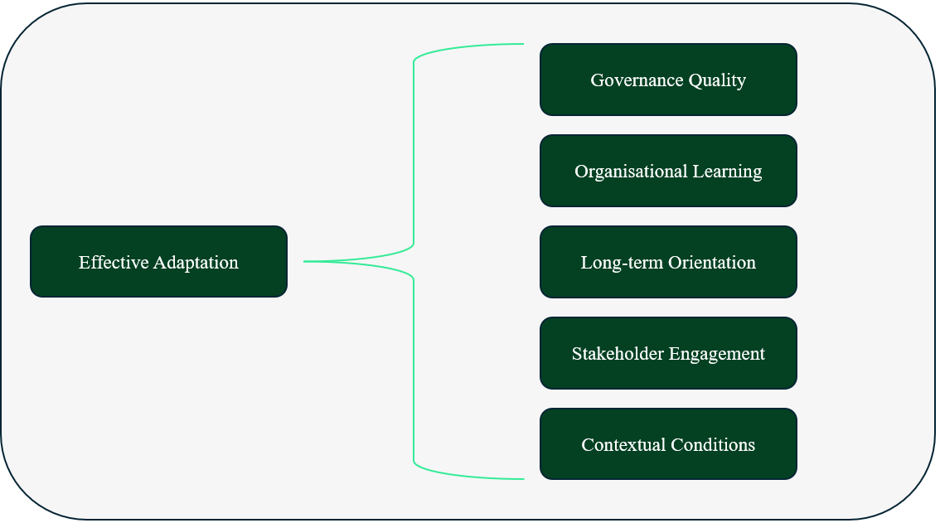
Figure 3: Determinants of effective climate change adaptation (own illustration)
This section therefore synthesizes the key determinants that distinguish effective from ineffective or symbolic adaptation. The key determinants of effective climate change adaptation are represented in figure 3. They consist of governance quality16Li, X. Physical climate change exposure and firms’ adaptation strategy. Strateg. Manag. J. 46, 750–789 (2025)., organizational learning24Berkhout, F., Hertin, J. & Gann, D. M. Learning to Adapt: Organisational Adaptation to Climate Change Impacts. Clim. Change 78, 135–156 (2006)., long-term strategic orientation16Li, X. Physical climate change exposure and firms’ adaptation strategy. Strateg. Manag. J. 46, 750–789 (2025)., stakeholder engagement, and contextual enabling conditions.17Lobonț, O.-R., Varadi, A.-E., Vătavu, S. & Doran, N.-M. Bridges or Barriers? Unpacking the Institutional Drivers of Business Climate Adaptation in the EU. Sustainability 17, 4865 (2025). Together, these determinants clarify why firms can translate awareness into sustained resilience gains.
The quality of governance is identified as a key determinant of effective corporate climate change adaptation. At the corporate level, the quality of governance refers to the extent to which climate risks and adaptation responsibilities are defined, integrated into existing risk management and strategic decisions, and supported by strong oversight. Companies with high-quality governance structures are more likely to shift adaptation efforts from stand-alone actions to enterprise risk management.16Li, X. Physical climate change exposure and firms’ adaptation strategy. Strateg. Manag. J. 46, 750–789 (2025).,95Huang, H. H., Kerstein, J., Wang, C. & Wu, F. (Harry). Firm climate risk, risk management, and bank loan financing. Strateg. Manag. J. 43, 2849–2880 (2022). At the same time, adaptation efforts are influenced by policy, market, and institutional contexts.24Berkhout, F., Hertin, J. & Gann, D. M. Learning to Adapt: Organisational Adaptation to Climate Change Impacts. Clim. Change 78, 135–156 (2006). Effective adaptation requires a vertical coherence between governance levels, horizontal coordination between sectors, and a clear understanding of institutional responsibilities for implementation.53Ledda, A. et al. Adaptation to Climate Change and Regional Planning: A Scrutiny of Sectoral Instruments. Sustainability 12, (2020). In cases where governance structures are inconsistent, companies are likely to face ambiguous incentives and coordination challenges, even with strong internal commitment.16Li, X. Physical climate change exposure and firms’ adaptation strategy. Strateg. Manag. J. 46, 750–789 (2025). The recent policy evolution highlights the rising significance of governance integration. Disclosure and reporting frameworks like the TCFD and the EU’s CSRD are increasingly requiring firms to assess, manage, and disclose physical climate risks and adaptation efforts. This leads to corporations strengthening accountability and strategic alignment.11Goldstein, A., Turner, W. R., Gladstone, J. & Hole, D. G. The private sector’s climate change risk and adaptation blind spots. Nat. Clim. Change 9, 18–25 (2019).,59European Parliament, & Council of the European Union. Directive (EU) 2022/2464 of the European Parliament and of the Council of 14 December 2022 Amending Regulation (EU) No 537/2014, Directive 2004/109/EC, Directive 2006/43/EC and Directive 2013/34/EU, as Regards Corporate Sustainability Reporting (Text with EEA Relevance). (2022). In this regard, governance quality is not only an internal factor, but part of a larger system that connects science, policy, finance, and corporate strategy.
The second important factor of effective adaptation is organizational learning. Climate change poses a threat of slow-moving and uncertain signals, which are interpreted by firms using existing routines and practices.15Gasbarro, F. & Pinkse, J. Corporate Adaptation Behaviour to Deal With Climate Change: The Influence of Firm‐Specific Interpretations of Physical Climate Impacts. Corp. Soc. Responsib. Environ. Manag. 23, 179–192 (2016).,24Berkhout, F., Hertin, J. & Gann, D. M. Learning to Adapt: Organisational Adaptation to Climate Change Impacts. Clim. Change 78, 135–156 (2006). Without purposeful learning mechanisms, organizations tend to rely on established approaches, leading to incremental responses that may be insufficient in the face of rising climate change risks.96Abedi Sarvestani, A. & Millar, J. Building readiness for climate change: A study of organizational learning in the management of natural resources, northeastern Iran. Environ. Dev. 50, 100994 (2024). Literature suggests that effective adaptation is a continuous, learning-focused process involving sensemaking, appraisal, implementation, monitoring, and adjustment.20Owen, G. What makes climate change adaptation effective? A systematic review of the literature. Glob. Environ. Change 62, 102071 (2020).,55Berkhout, F. Adaptation to climate change by organizations. WIREs Clim. Change 3, 91–106 (2012).,50Linnenluecke, M. K., Griffiths, A. & Winn, M. I. Firm and industry adaptation to climate change: a review of climate adaptation studies in the business and management field. WIREs Clim. Change 4, 397–416 (2013). Organizations that focus on learning through scientific engagement, internal knowledge sharing, training, and feedback loops are well positioned to continuously update their risk understanding and refining adaptation measures over time.97Bleda, M., Krull, E., Pinkse, J. & Christodoulou, E. Organizational heuristics and firms’ sensemaking for climate change adaptation. Bus. Strategy Environ. 32, 6124–6137 (2023). Organizational learning is not only a technical process, but also a social and cognitive one.24Berkhout, F., Hertin, J. & Gann, D. M. Learning to Adapt: Organisational Adaptation to Climate Change Impacts. Clim. Change 78, 135–156 (2006).,98Akgün, A. E., Lynn, G. S. & Byrne, J. C. Organizational Learning: A Socio-Cognitive Framework. Hum. Relat. 56, 839–868 (2003). Managerial perceptions and organizational structures influence risk interpretation and prioritization.15Gasbarro, F. & Pinkse, J. Corporate Adaptation Behaviour to Deal With Climate Change: The Influence of Firm‐Specific Interpretations of Physical Climate Impacts. Corp. Soc. Responsib. Environ. Manag. 23, 179–192 (2016).,24Berkhout, F., Hertin, J. & Gann, D. M. Learning to Adapt: Organisational Adaptation to Climate Change Impacts. Clim. Change 78, 135–156 (2006). This indicates that adaptation is dependent on work organization including who is responsible as well as which tools and expertise are used. Effective adaptation requires investing in skills, processes, and a culture of learning in uncertain conditions.20Owen, G. What makes climate change adaptation effective? A systematic review of the literature. Glob. Environ. Change 62, 102071 (2020).,55Berkhout, F. Adaptation to climate change by organizations. WIREs Clim. Change 3, 91–106 (2012).,50Linnenluecke, M. K., Griffiths, A. & Winn, M. I. Firm and industry adaptation to climate change: a review of climate adaptation studies in the business and management field. WIREs Clim. Change 4, 397–416 (2013).,97Bleda, M., Krull, E., Pinkse, J. & Christodoulou, E. Organizational heuristics and firms’ sensemaking for climate change adaptation. Bus. Strategy Environ. 32, 6124–6137 (2023).
The third determinant concerns time horizons and strategic orientation. Climate change occurs on a long-term basis, whereas the time horizon of corporate decision-making is frequently characterized by short-termism and business cycles. Literature reveals that firms with a longer-term strategic orientation are more likely to implement a comprehensive and proactive adaptation approach, even if this means forgoing short-term gains.15Gasbarro, F. & Pinkse, J. Corporate Adaptation Behaviour to Deal With Climate Change: The Influence of Firm‐Specific Interpretations of Physical Climate Impacts. Corp. Soc. Responsib. Environ. Manag. 23, 179–192 (2016).,16Li, X. Physical climate change exposure and firms’ adaptation strategy. Strateg. Manag. J. 46, 750–789 (2025). Strategic adaptation involves aligning climate risks with overall business strategy, scenario planning, and resource allocation.18Danese, G. & De Marchi, V. Business adaptation strategies to climate change: A systematic review. J. Clean. Prod. 485, 144322 (2024).,99Huiskamp, U., ten Brinke, B. & Kramer, G. J. The climate resilience cycle: Using scenario analysis to inform climate‐resilient business strategies. Bus. Strategy Environ. 31, 1763–1775 (2022). This includes recognizing that delaying action can reduce future options and increase costs, especially when climate thresholds and limits are approached.6Intergovernmental Panel on Climate Change (IPCC). Climate Change 2023: Synarticle Report. Contribution of Working Groups I, II and III to the Sixth Assessment Report of the Intergovernmental Panel on Climate Change. https://www.ipcc.ch/report/ar6/syr/ (2023) doi:10.59327/IPCC/AR6-9789291691647.,100Dow, K. et al. Limits to adaptation. Nat. Clim. Change 3, 305–307 (2013). From this perspective, effective adaptation is closely linked to strategic foresight and the willingness to invest in resilience as a source of long-term value creation. The importance of long-term orientation is further supported by the IPCC’s recognition of soft and hard limits to adaptation. The sixth assessment report highlights the fact that, beyond certain thresholds, incremental adaptation may no longer be adequate, and that transformational change may be required in terms of systems, places, or business models.7Intergovernmental Panel on Climate Change (IPCC). Climate Change 2022 – Impacts, Adaptation and Vulnerability: Working Group II Contribution to the Sixth Assessment Report of the Intergovernmental Panel on Climate Change. https://www.ipcc.ch/report/ar6/wg2/downloads/report/IPCC_AR6_WGII_FullReport.pdf (2023) doi:10.1017/9781009325844.,39Kates, R. W., Travis, W. R. & Wilbanks, T. J. Transformational adaptation when incremental adaptations to climate change are insufficient. Proc. Natl. Acad. Sci. 109, 7156–7161 (2012).,101Intergovernmental Panel on Climate Change (IPCC). IPCC Special Report on the Ocean and Cryosphere in a Changing Climate. https://www.ipcc.ch/site/assets/uploads/sites/3/2019/12/SROCC_FullReport_FINAL.pdf (2019). Firms that fail to anticipate these dynamics may find themselves locked into assets or strategies that are no longer sustainable under future climate conditions. Effective adaptation therefore entails not only coping with current risks, but proactively preparing for more severe scenarios consistent with higher warming pathways.16Li, X. Physical climate change exposure and firms’ adaptation strategy. Strateg. Manag. J. 46, 750–789 (2025).,90Intergovernmental Panel on Climate Change (IPCC). Global Warming of 1.5°C: An IPCC Special Report on the Impacts of Global Warming of 1.5°C above Pre-Industrial Levels and Related Global Greenhouse Gas Emission Pathways, in the Context of Strengthening the Global Response to the Threat of Climate Change, Sustainable Development, and Efforts to Eradicate Poverty. https://www.ipcc.ch/site/assets/uploads/sites/2/2022/06/SR15_Full_Report_HR.pdf (2018) doi:10.1017/9781009157940.
Stakeholder engagement is the fourth determinant of effective adaptation. Climate change risks and adaptation actions tend to go beyond corporate boundaries, impacting supply chains, communities, ecosystems, and public infrastructure. This means that adaptation effectiveness is contingent on the capacity to collaborate with a broad range of stakeholders, including investors, regulators, suppliers, customers, and communities.17Lobonț, O.-R., Varadi, A.-E., Vătavu, S. & Doran, N.-M. Bridges or Barriers? Unpacking the Institutional Drivers of Business Climate Adaptation in the EU. Sustainability 17, 4865 (2025).,18Danese, G. & De Marchi, V. Business adaptation strategies to climate change: A systematic review. J. Clean. Prod. 485, 144322 (2024). Collaboration across value chains is especially important, as vulnerabilities in smaller suppliers can cascade upward and threaten corporate resilience.73Adhikari, B. & Safaee Chalkasra, L. S. Mobilizing private sector investment for climate action: enhancing ambition and scaling up implementation. J. Sustain. Finance Invest. 13, 1110–1127 (2023). Despite that, partnerships with public actors can assist corporations in managing uncertainty and aligning private sector adaptation actions with public sector adaptation objectives.102Casady, C. B., Cepparulo, A. & Giuriato, L. Public-private partnerships for low-carbon, climate-resilient infrastructure: Insights from the literature. J. Clean. Prod. 470, 143338 (2024). However, stakeholder engagement also poses normative and political issues. Effective adaptation must consider who adapts and who benefits from adaptation, who participates in decision-making, and whose knowledge is recognized.20Owen, G. What makes climate change adaptation effective? A systematic review of the literature. Glob. Environ. Change 62, 102071 (2020). There is evidence from the agricultural and water sectors that adaptation projects that disregard these issues can worsen inequality and vulnerability, even if they are technically successful.103Albizua, A., Corbera, E. & Pascual, U. Farmers’ vulnerability to global change in Navarre, Spain: large-scale irrigation as maladaptation. Reg. Environ. Change 19, 1147–1158 (2019).,104Serra, V., Ledda, A., Ruiu, M. G. G., Calia, G. & Montis, A. D. Integrating Adaptation to Climate Change into Sustainable Development Policy and Planning. Sustainability 14, (2022). For corporations, this means that climate change adaptation effectiveness cannot be divorced from ethical issues and social legitimacy.
Finally, effective adaptation is also influenced by contextual constraints and enabling factors that partly exceed the control of the firm. The availability of climate information as well as financial resources, regulatory quality, and institutional coordination all impact the feasibility and effectiveness of adaptation.16Li, X. Physical climate change exposure and firms’ adaptation strategy. Strateg. Manag. J. 46, 750–789 (2025).,18Danese, G. & De Marchi, V. Business adaptation strategies to climate change: A systematic review. J. Clean. Prod. 485, 144322 (2024).,105Nwoba, A. C., Boso, N. & Robson, M. J. Corporate sustainability strategies in institutional adversity: Antecedent, outcome, and contingency effects. Bus. Strategy Environ. 30, 787–807 (2021). Firms operating in contexts with poor governance and limited adaptive infrastructure face increased risks of adaptation failure or maladaptation, even with internal capabilities.17Lobonț, O.-R., Varadi, A.-E., Vătavu, S. & Doran, N.-M. Bridges or Barriers? Unpacking the Institutional Drivers of Business Climate Adaptation in the EU. Sustainability 17, 4865 (2025). Literature also emphasizes the need for alignment of adaptation with long-term sustainability goals. Comparative evaluations indicate that the integration of adaptation with sustainable development objectives remains uneven across sectors, with greater alignment in urban settlements as well as forests, and weaker alignment in agriculture and water resources.104Serra, V., Ledda, A., Ruiu, M. G. G., Calia, G. & Montis, A. D. Integrating Adaptation to Climate Change into Sustainable Development Policy and Planning. Sustainability 14, (2022). Adaptation that reduces current risks but leads to increased emissions, ecosystem damage, or inequality is increasingly identified as maladaptive.106Schipper, E. L. F. Maladaptation: When Adaptation to Climate Change Goes Very Wrong. One Earth 3, 409–414 (2020).,107Denham, T., Rickards, L. & Ajulo, O. The jobs of climate adaptation. Build. Cities 5, 283–299 (2024).
In this regard, definitions of effective adaptation are increasingly incorporating normative elements of sustainability, equity, and climate-resilient development. The Global Goal on Adaptation under the Paris Agreement defines effectiveness in terms of increased adaptive capacity, improved resilience, and decreased vulnerability, which serve as guiding principles for both public and private actors. These guiding principles reinforce the importance of indicators that can reflect adaptation actions and progress at various management levels.23Guillén Bolaños, T., Scheffran, J. & Máñez Costa, M. Climate Adaptation and Successful Adaptation Definitions: Latin American Perspectives Using the Delphi Method. Sustainability 14, 5350 (2022).,58United Nations. Paris Agreement. (2015).
Hence, literature suggests that effective corporate climate change adaptation is achieved through the interaction of governance quality16Li, X. Physical climate change exposure and firms’ adaptation strategy. Strateg. Manag. J. 46, 750–789 (2025)., continuous learning24Berkhout, F., Hertin, J. & Gann, D. M. Learning to Adapt: Organisational Adaptation to Climate Change Impacts. Clim. Change 78, 135–156 (2006)., long-term strategic orientation16Li, X. Physical climate change exposure and firms’ adaptation strategy. Strateg. Manag. J. 46, 750–789 (2025)., stakeholder engagement, and supportive contextual conditions.17Lobonț, O.-R., Varadi, A.-E., Vătavu, S. & Doran, N.-M. Bridges or Barriers? Unpacking the Institutional Drivers of Business Climate Adaptation in the EU. Sustainability 17, 4865 (2025). Those corporations that integrate these determinants are well positioned to go beyond symbolic as well as incremental actions and achieve improvements in vulnerability reduction, resilience enhancement, and sustainable competitive advantage.16Li, X. Physical climate change exposure and firms’ adaptation strategy. Strateg. Manag. J. 46, 750–789 (2025).,17Lobonț, O.-R., Varadi, A.-E., Vătavu, S. & Doran, N.-M. Bridges or Barriers? Unpacking the Institutional Drivers of Business Climate Adaptation in the EU. Sustainability 17, 4865 (2025).,18Danese, G. & De Marchi, V. Business adaptation strategies to climate change: A systematic review. J. Clean. Prod. 485, 144322 (2024).,55Berkhout, F. Adaptation to climate change by organizations. WIREs Clim. Change 3, 91–106 (2012). Crucially, effectiveness is not merely technical. As Owen (2020) has underlined, the effectiveness of adaptation is fundamentally ethical and political, since it is necessary to clarify effectiveness for whom and for what.20Owen, G. What makes climate change adaptation effective? A systematic review of the literature. Glob. Environ. Change 62, 102071 (2020). This point underlines the importance of corporate climate change adaptation not only being present or efficient, but also contributing to sustainable and climate-resilient development. These determinants form the foundation for the synthesis in the next section.
2.3 Synarticle and research gaps
This section synthesizes key insights from the literature review and identifies the central research gaps that motivate the development of the corporate climate change adaptation framework in chapter 3. By integrating the four major research themes, drivers, barriers, adaptation processes, and determinants of effectiveness, this section clarifies what consistently matters across studies.
The literature agrees on the interpretation that corporate climate change adaptation has become a strategic imperative as corporations are increasingly exposed to physical and transition risks.9Battiston, S., Dafermos, Y. & Monasterolo, I. Climate risks and financial stability. J. Financ. Stab. 54, 100867 (2021). The role of external drivers such as regulatory pressure11Goldstein, A., Turner, W. R., Gladstone, J. & Hole, D. G. The private sector’s climate change risk and adaptation blind spots. Nat. Clim. Change 9, 18–25 (2019)., investor expectations60Daddi, T., Todaro, N. M., De Giacomo, M. R. & Frey, M. A Systematic Review of the Use of Organization and Management Theories in Climate Change Studies. Bus. Strategy Environ. 27, 456–474 (2018)., supply-chain dependencies15Gasbarro, F. & Pinkse, J. Corporate Adaptation Behaviour to Deal With Climate Change: The Influence of Firm‐Specific Interpretations of Physical Climate Impacts. Corp. Soc. Responsib. Environ. Manag. 23, 179–192 (2016)., and technology63Gasbarro, F., Iraldo, F. & Daddi, T. The drivers of multinational enterprises’ climate change strategies: A quantitative study on climate-related risks and opportunities. J. Clean. Prod. 160, 8–26 (2017). together with internal drivers such as leadership commitment55Berkhout, F. Adaptation to climate change by organizations. WIREs Clim. Change 3, 91–106 (2012)., governance structures67Chaffin, B. C. & Gunderson, L. H. Emergence, institutionalization and renewal: Rhythms of adaptive governance in complex social-ecological systems. J. Environ. Manage. 165, 81–87 (2016). and innovation culture68Albitar, K., Nasrallah, N., Hussainey, K. & Wang, Y. Eco-innovation and corporate waste management: The moderating role of ESG performance. Rev. Quant. Finance Account. 63, 781–805 (2024). motivate corporations to engage in climate change adaptation. These drivers account for why climate change adaptation has emerged as a prominent topic on corporate agendas, especially in the case of large corporations that are subject to pressures from regulations and financial markets.14Averchenkova, A., Crick, F., Kocornik‐Mina, A., Leck, H. & Surminski, S. Multinational and large national corporations and climate adaptation: are we asking the right questions? A review of current knowledge and a new research perspective. WIREs Clim. Change 7, 517–536 (2016).,55Berkhout, F. Adaptation to climate change by organizations. WIREs Clim. Change 3, 91–106 (2012).,60Daddi, T., Todaro, N. M., De Giacomo, M. R. & Frey, M. A Systematic Review of the Use of Organization and Management Theories in Climate Change Studies. Bus. Strategy Environ. 27, 456–474 (2018).,66Wright, C. & Nyberg, D. Corporations and climate change: An overview. WIREs Clim. Change 15, e919 (2024).
At the same time, literature demonstrates that barriers systematically constrain action explaining the persistent gap between awareness and implementation.63Gasbarro, F., Iraldo, F. & Daddi, T. The drivers of multinational enterprises’ climate change strategies: A quantitative study on climate-related risks and opportunities. J. Clean. Prod. 160, 8–26 (2017).,73Adhikari, B. & Safaee Chalkasra, L. S. Mobilizing private sector investment for climate action: enhancing ambition and scaling up implementation. J. Sustain. Finance Invest. 13, 1110–1127 (2023). External barriers such as fragmented policy environments75Osei, J., Ahenkan, A. & Anuga, S. W. Possibilities for Climate Change Adaptation Investments in Ghana: Exploring Private Sector Concerns and Perceptions About Policy Incentives. Bus. Strategy Environ. 34, 7723–7735 (2025)., climate data uncertainty72Palutikof, J. P., Street, R. B. & Gardiner, E. P. Decision support platforms for climate change adaptation: an overview and introduction. Clim. Change 153, 459–476 (2019).,75Osei, J., Ahenkan, A. & Anuga, S. W. Possibilities for Climate Change Adaptation Investments in Ghana: Exploring Private Sector Concerns and Perceptions About Policy Incentives. Bus. Strategy Environ. 34, 7723–7735 (2025).,79Street, R. B., Pringle, P., Lourenço, T. C. & Nicolletti, M. Transferability of decision-support tools. Clim. Change 153, 523–538 (2019)., and financing gaps46Khan, M. R. & Roberts, J. T. Adaptation and international climate policy. WIREs Clim. Change 4, 171–189 (2013).,74Malik, I. H. & Ford, J. D. Addressing the Climate Change Adaptation Gap: Key Themes and Future Directions. Climate 12, 24 (2024). influence internal barriers including short-term decision horizons81Aibar‐Guzmán, B., Raimo, N., Vitolla, F. & García‐Sánchez, I. Corporate governance and financial performance: Reframing their relationship in the context of climate change. Corp. Soc. Responsib. Environ. Manag. 31, 1493–1509 (2024)., organizational silos54Majlingova, A. & Kádár, T. S. From Risk to Resilience: Integrating Climate Adaptation and Disaster Reduction in the Pursuit of Sustainable Development. Sustainability 17, 5447 (2025)., limited expertise14Averchenkova, A., Crick, F., Kocornik‐Mina, A., Leck, H. & Surminski, S. Multinational and large national corporations and climate adaptation: are we asking the right questions? A review of current knowledge and a new research perspective. WIREs Clim. Change 7, 517–536 (2016)., and capacity constraints.73Adhikari, B. & Safaee Chalkasra, L. S. Mobilizing private sector investment for climate action: enhancing ambition and scaling up implementation. J. Sustain. Finance Invest. 13, 1110–1127 (2023). Importantly, these barriers are reinforcing, so that uncertainty and weak incentives slow organizational action, while limited internal capacity reduces firm’s ability to engage with complex climate information.5Grover, A. & Kahn, M. E. Enhancing Firm Resilience to Climate Change: A Review of Impact, Adaptation Strategies and Policy Options. J. Econ. Surv. joes.70035 (2025) doi:10.1111/joes.70035.,14Averchenkova, A., Crick, F., Kocornik‐Mina, A., Leck, H. & Surminski, S. Multinational and large national corporations and climate adaptation: are we asking the right questions? A review of current knowledge and a new research perspective. WIREs Clim. Change 7, 517–536 (2016).,108Shardul Agrawala et al. Private Sector Engagement in Adaptation to Climate Change: Approaches to Managing Climate Risks. vol. 39 https://www.oecd.org/en/publications/private-sector-engagement-in-adaptation-to-climate-change-approaches-to-managing-climate-risks_5kg221jkf1g7-en.html (2011).,40Fankhauser, S. Adaptation to Climate Change. Annu. Rev. Resour. Econ. 9, 209–230 (2017).,54Majlingova, A. & Kádár, T. S. From Risk to Resilience: Integrating Climate Adaptation and Disaster Reduction in the Pursuit of Sustainable Development. Sustainability 17, 5447 (2025).,74Malik, I. H. & Ford, J. D. Addressing the Climate Change Adaptation Gap: Key Themes and Future Directions. Climate 12, 24 (2024).,75Osei, J., Ahenkan, A. & Anuga, S. W. Possibilities for Climate Change Adaptation Investments in Ghana: Exploring Private Sector Concerns and Perceptions About Policy Incentives. Bus. Strategy Environ. 34, 7723–7735 (2025).
Adaptation processes are generally understood as an iterative, risk-focused, and learning-driven process rather than a one-off decision.55Berkhout, F. Adaptation to climate change by organizations. WIREs Clim. Change 3, 91–106 (2012). The literature on organizational learning and adaptation pathways highlights the importance of cycles of risk sensing, option evaluation, implementation of risk responses, and learning from outcomes.55Berkhout, F. Adaptation to climate change by organizations. WIREs Clim. Change 3, 91–106 (2012).,87Haasnoot, M., Kwakkel, J. H., Walker, W. E. & ter Maat, J. Dynamic adaptive policy pathways: A method for crafting robust decisions for a deeply uncertain world. Glob. Environ. Change 23, 485–498 (2013). The dynamic capabilities of sensing, seizing, and reconfiguring are seen as critical for adaptation in uncertain environments.25Teece, D. J. Explicating dynamic capabilities: the nature and microfoundations of (sustainable) enterprise performance. Strateg. Manag. J. 28, 1319–1350 (2007). Nevertheless, although process logics are well understood from a conceptual perspective, many existing frameworks remain abstract and do not adequately address corporate decision-making contexts.11Goldstein, A., Turner, W. R., Gladstone, J. & Hole, D. G. The private sector’s climate change risk and adaptation blind spots. Nat. Clim. Change 9, 18–25 (2019).
The fourth theme, determinants of effective adaptation, explains that effectiveness is not dependent on the presence of adaptation measures. The determinants of high-quality governance, organizational learning, long-term strategic orientation, and stakeholder engagement distinguish effective adaptation from symbolic or incremental action.16Li, X. Physical climate change exposure and firms’ adaptation strategy. Strateg. Manag. J. 46, 750–789 (2025).,18Danese, G. & De Marchi, V. Business adaptation strategies to climate change: A systematic review. J. Clean. Prod. 485, 144322 (2024).,24Berkhout, F., Hertin, J. & Gann, D. M. Learning to Adapt: Organisational Adaptation to Climate Change Impacts. Clim. Change 78, 135–156 (2006).,95Huang, H. H., Kerstein, J., Wang, C. & Wu, F. (Harry). Firm climate risk, risk management, and bank loan financing. Strateg. Manag. J. 43, 2849–2880 (2022). In addition, literature is increasingly pointing out that effectiveness needs to be judged in the context of sustainability and justice including the prevention of maladaptation.20Owen, G. What makes climate change adaptation effective? A systematic review of the literature. Glob. Environ. Change 62, 102071 (2020).,23Guillén Bolaños, T., Scheffran, J. & Máñez Costa, M. Climate Adaptation and Successful Adaptation Definitions: Latin American Perspectives Using the Delphi Method. Sustainability 14, 5350 (2022).,104Serra, V., Ledda, A., Ruiu, M. G. G., Calia, G. & Montis, A. D. Integrating Adaptation to Climate Change into Sustainable Development Policy and Planning. Sustainability 14, (2022).
The literature review demonstrates that corporate climate change adaptation is widely acknowledged as essential, yet in practice it remains fragmented, reactive, and predominantly incremental. Firms rely on routine risk management tools like insurance or business continuity planning, while evidence of transformational adaptation remains limited, even where risks are escalating. Adaptation is positioned as both a managerial and societal responsibility that complements mitigation, but this integrated understanding is rarely operationalized at the firm level.7Intergovernmental Panel on Climate Change (IPCC). Climate Change 2022 – Impacts, Adaptation and Vulnerability: Working Group II Contribution to the Sixth Assessment Report of the Intergovernmental Panel on Climate Change. https://www.ipcc.ch/report/ar6/wg2/downloads/report/IPCC_AR6_WGII_FullReport.pdf (2023) doi:10.1017/9781009325844.,15Gasbarro, F. & Pinkse, J. Corporate Adaptation Behaviour to Deal With Climate Change: The Influence of Firm‐Specific Interpretations of Physical Climate Impacts. Corp. Soc. Responsib. Environ. Manag. 23, 179–192 (2016).,16Li, X. Physical climate change exposure and firms’ adaptation strategy. Strateg. Manag. J. 46, 750–789 (2025).,20Owen, G. What makes climate change adaptation effective? A systematic review of the literature. Glob. Environ. Change 62, 102071 (2020).
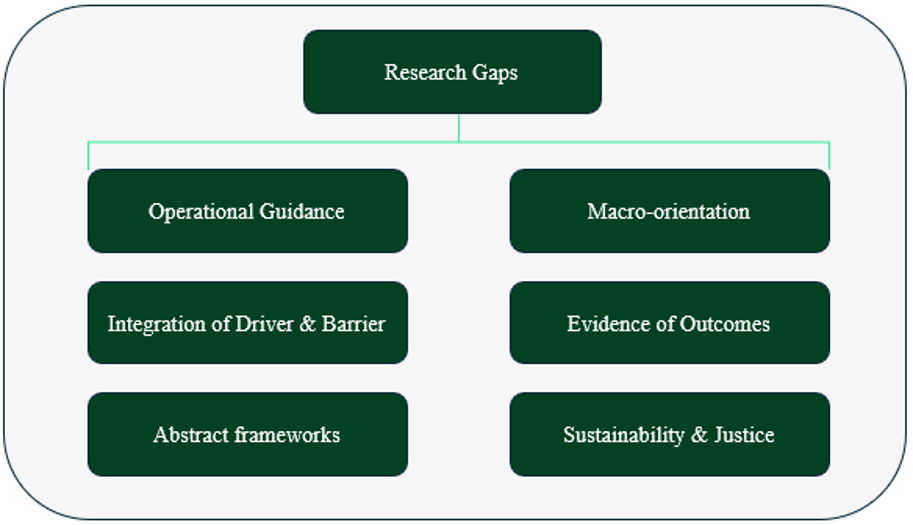
Figure 4: Research gaps in corporate climate change adaptation literature (own illustration)
Despite significant conceptual progress, there are six specific gaps in the literature on corporate climate change adaptation, as illustrated in figure 4. Firstly, there is a lack of operational step-by-step guidance tailored to companies. Although many papers introduce the concept of resilience or risk management strategies at a high level, few of them describe how adaptation is put into practice in organizations. There is a research gap concerning regarding how specific routines, decision-making processes, and tools help firms to transform awareness of climate risks into lasting practice. As a consequence, companies tend to conflate adaptation with mitigation or traditional risk management, resulting in unclear priorities and responsibilities.14Averchenkova, A., Crick, F., Kocornik‐Mina, A., Leck, H. & Surminski, S. Multinational and large national corporations and climate adaptation: are we asking the right questions? A review of current knowledge and a new research perspective. WIREs Clim. Change 7, 517–536 (2016).,50Linnenluecke, M. K., Griffiths, A. & Winn, M. I. Firm and industry adaptation to climate change: a review of climate adaptation studies in the business and management field. WIREs Clim. Change 4, 397–416 (2013). Secondly, literature reveals a poor integration of drivers and barriers into process models. Drivers and barriers are often analysed separately from adaptation processes, which limits the understanding of how motivations, constraints, and organizational dynamics shape adaptation at different stages. This makes it more difficult to transform the theory into practical guidance and leads to inconsistent implementation results.19Hennes, K., Bendig, D. & Löschel, A. Facing the storm: Developing corporate adaptation and resilience action plans amid climate uncertainty. Npj Clim. Action 3, 37 (2024).,109Lopes de Sousa Jabbour, A. B., Vazquez‐Brust, D., Chiappetta Jabbour, C. J. & Andriani Ribeiro, D. The interplay between stakeholders, resources and capabilities in climate change strategy: converting barriers into cooperation. Bus. Strategy Environ. 29, 1362–1386 (2020). Third, many current frameworks are abstract and macro-oriented. Frameworks derived from climate science or public policy may not be specific enough for the corporate world, in which adaptation strategies need to be compatible with investment cycles, governance structures, and performance metrics.11Goldstein, A., Turner, W. R., Gladstone, J. & Hole, D. G. The private sector’s climate change risk and adaptation blind spots. Nat. Clim. Change 9, 18–25 (2019).,72Palutikof, J. P., Street, R. B. & Gardiner, E. P. Decision support platforms for climate change adaptation: an overview and introduction. Clim. Change 153, 459–476 (2019). This leads to a theory-practice gap, where academic knowledge is not sufficiently incorporated into corporate decision-making tools. Fourth, there is a lack of empirical data on the outcomes of implementation. Much of the literature is of a descriptive nature concentrating on reported plans and stated intentions rather than evaluating the effectiveness, costs, and long-term impacts of corporate adaptation measures.19Hennes, K., Bendig, D. & Löschel, A. Facing the storm: Developing corporate adaptation and resilience action plans amid climate uncertainty. Npj Clim. Action 3, 37 (2024).,50Linnenluecke, M. K., Griffiths, A. & Winn, M. I. Firm and industry adaptation to climate change: a review of climate adaptation studies in the business and management field. WIREs Clim. Change 4, 397–416 (2013). Finally, sustainability considerations are not well integrated into corporate climate change adaptation frameworks, and justice aspects are often overlooked in adaptation activities. Evidence reveals that many adaptation initiatives are agnostic to sustainability goals, while others increase inequality.20Owen, G. What makes climate change adaptation effective? A systematic review of the literature. Glob. Environ. Change 62, 102071 (2020).,104Serra, V., Ledda, A., Ruiu, M. G. G., Calia, G. & Montis, A. D. Integrating Adaptation to Climate Change into Sustainable Development Policy and Planning. Sustainability 14, (2022).,110Sovacool, B. K. Bamboo Beating Bandits: Conflict, Inequality, and Vulnerability in the Political Ecology of Climate Change Adaptation in Bangladesh. World Dev. 102, 183–194 (2018).
Collectively, these gaps indicate that the current literature is not sufficient to guide companies through the process of adaptation. In response, this article proposes the need for a practice-focused, process-based corporate climate change adaptation framework. Such a framework translates fragmented theoretical knowledge into a clear, step-by-step guide that incorporates drivers and barriers at each stage of adaptation. By doing so, it can enable companies to move past incremental adaptation toward strategic, coordinated, and potentially transformational adaptation. This need is addressed in chapter 3, which intends to propose and explain a four-stage corporate climate change adaptation framework. This framework is based on the literature review presented in this chapter and enables a structured transition from theory to practice, allowing companies to incorporate climate change adaptation into their governance, operations, and strategic processes while taking into consideration the realities of corporate decision-making.
3 Practical implementation
3.1 Overview of the corporate climate change adaptation framework
Chapter 3 applies the conceptual findings and research gaps outlined in chapter 2 to develop a practice-oriented framework for corporate climate change adaptation. Although literature has achieved great progress in understanding the drivers, barriers, and determinants of effective adaptation, it also indicates a gap between theoretical knowledge of corporations and its implementation. Many respond to climate change risks in a fragmented, reactive, or compliance-driven manner.11Goldstein, A., Turner, W. R., Gladstone, J. & Hole, D. G. The private sector’s climate change risk and adaptation blind spots. Nat. Clim. Change 9, 18–25 (2019).,14Averchenkova, A., Crick, F., Kocornik‐Mina, A., Leck, H. & Surminski, S. Multinational and large national corporations and climate adaptation: are we asking the right questions? A review of current knowledge and a new research perspective. WIREs Clim. Change 7, 517–536 (2016).,18Danese, G. & De Marchi, V. Business adaptation strategies to climate change: A systematic review. J. Clean. Prod. 485, 144322 (2024).,83McKnight, B. & Linnenluecke, M. K. Patterns of Firm Responses to Different Types of Natural Disasters. Bus. Soc. 58, 813–840 (2019). A central contribution of the framework is its ability to connect academic insights with corporate decision-making. The framework integrates the drivers and barriers of corporate climate change adaptation, as well as the conditions for effective corporate climate change adaptation within each stage of the adaptation process instead of treating them separately. In doing so, it allows more practice-oriented guidance that supports companies in moving from awareness to effective climate change adaptation.11Goldstein, A., Turner, W. R., Gladstone, J. & Hole, D. G. The private sector’s climate change risk and adaptation blind spots. Nat. Clim. Change 9, 18–25 (2019).,19Hennes, K., Bendig, D. & Löschel, A. Facing the storm: Developing corporate adaptation and resilience action plans amid climate uncertainty. Npj Clim. Action 3, 37 (2024).
The synthesis of chapter 2 demonstrates that corporate climate change adaptation is understood as an iterative and dynamic process. Companies must continually assess risks, experiment with responses, and refine strategies in the presence of deep uncertainty. Such thinking is also highlighted in organizational learning perspectives, adaptation pathways, and dynamic capabilities theory.11Goldstein, A., Turner, W. R., Gladstone, J. & Hole, D. G. The private sector’s climate change risk and adaptation blind spots. Nat. Clim. Change 9, 18–25 (2019).,55Berkhout, F. Adaptation to climate change by organizations. WIREs Clim. Change 3, 91–106 (2012).,25Teece, D. J. Explicating dynamic capabilities: the nature and microfoundations of (sustainable) enterprise performance. Strateg. Manag. J. 28, 1319–1350 (2007).,28Lanlan, J., Sarker, M. N. I., Ali, I., Firdaus, R. B. R. & Hossin, M. A. Vulnerability and resilience in the context of natural hazards: a critical conceptual analysis. Environ. Dev. Sustain. 26, 19069–19092 (2023).,88Muccione, V. et al. Adaptation pathways for effective responses to climate change risks. WIREs Clim. Change 15, e883 (2024).,97Bleda, M., Krull, E., Pinkse, J. & Christodoulou, E. Organizational heuristics and firms’ sensemaking for climate change adaptation. Bus. Strategy Environ. 32, 6124–6137 (2023). However, existing frameworks are insufficiently tailored to corporate decision-making situations, as they rather provide principles instead of concrete guidance on adaptation processes in organizations.11Goldstein, A., Turner, W. R., Gladstone, J. & Hole, D. G. The private sector’s climate change risk and adaptation blind spots. Nat. Clim. Change 9, 18–25 (2019).

Figure 5: Stages of the corporate climate change adaptation framework (own illustration)
The process-oriented framework of this article addresses this gap in three ways. First, it structures adaptation as a set of connected management activities. Second, it explains how internal as well as external drivers and barriers shape progress at different stages. Third, it embeds feedback loops and learning mechanisms, reflecting the non-linear and path-dependent nature of adaptation under climate uncertainty. Based on these insights, the developed corporate climate change adaptation framework consists of assessment, strategy development, implementation, as well as monitoring and evaluation as illustrated in figure 5.
In the first stage, assessment, companies establish a decision-informed understanding of the potential impacts of climate change on their business by determining key risks and opportunities as well as evaluating their exposure and vulnerability.111Kim, D. & Lee, J. Development of a Web-Based Tool for Climate Change Risk Assessment in the Business Sector. Sustainability 8, 1013 (2016).,112Juhola, S., Laurila, A., Groundstroem, F. & Klein, J. Climate risks to the renewable energy sector: Assessment and adaptation within energy companies. Bus. Strategy Environ. 33, 1906–1919 (2024). Resulting from these findings, the second stage is strategy development, in which climate risk assessments are used to inform and prioritize adaptation strategies and decisions such as the selection of suitable measures and their alignment with corporate strategy as well as governance structures.16Li, X. Physical climate change exposure and firms’ adaptation strategy. Strateg. Manag. J. 46, 750–789 (2025).,113Maksymova, I. et al. Developing Strategies for Adapting Business Processes to Climate Change: Minimizing Risks in the Context of Global Climate Challenges. Grassroots J. Nat. Resour. 7, s290–s312 (2024). The third stage, implementation, implements selected adaptation measures in operations, supply chains, and collaborations.17Lobonț, O.-R., Varadi, A.-E., Vătavu, S. & Doran, N.-M. Bridges or Barriers? Unpacking the Institutional Drivers of Business Climate Adaptation in the EU. Sustainability 17, 4865 (2025). Finally, in the monitoring and evaluation stage, companies monitor progress toward adaptation goals and regularly reassess emerging climate risks to support learning and strategic adaptation.19Hennes, K., Bendig, D. & Löschel, A. Facing the storm: Developing corporate adaptation and resilience action plans amid climate uncertainty. Npj Clim. Action 3, 37 (2024).,114Berrang-Ford, L. et al. Tracking global climate change adaptation among governments. Nat. Clim. Change 9, 440–449 (2019).
The framework integrates theoretical approaches that have been outlined in chapter 2. Risk management and resilience perspectives provide the cyclical logic of identification, response, and review.28Lanlan, J., Sarker, M. N. I., Ali, I., Firdaus, R. B. R. & Hossin, M. A. Vulnerability and resilience in the context of natural hazards: a critical conceptual analysis. Environ. Dev. Sustain. 26, 19069–19092 (2023). Dynamic capabilities theory describes the evolution of the ability to sense climate risks, seize adaptation opportunities, and reconfigure resources over time.25Teece, D. J. Explicating dynamic capabilities: the nature and microfoundations of (sustainable) enterprise performance. Strateg. Manag. J. 28, 1319–1350 (2007). Organizational learning highlights the role of feedback, experimentation, and institutionalisation55Berkhout, F. Adaptation to climate change by organizations. WIREs Clim. Change 3, 91–106 (2012)., whereas adaptation pathways highlight the need for flexibility and preparedness for thresholds and limits.87Haasnoot, M., Kwakkel, J. H., Walker, W. E. & ter Maat, J. Dynamic adaptive policy pathways: A method for crafting robust decisions for a deeply uncertain world. Glob. Environ. Change 23, 485–498 (2013).,88Muccione, V. et al. Adaptation pathways for effective responses to climate change risks. WIREs Clim. Change 15, e883 (2024). By combining these perspectives, the framework provides a structured approach that is both analytically robust and practical, linking determinants of effective adaptation to organizational processes. The framework is also consistent with international guidance including the IPCC assessment reports and ISO standards to reflect the current state of knowledge on climate science and governance.
To illustrate how the framework operates in real-world contexts, selected corporate cases are embedded within each stage of the framework. These cases demonstrate how firms apply specific tools into operational decisions to address the persistent theory-practice gaps. Together, the framework and cases provide a structured foundation for understanding and implementing effective corporate climate change adaptation in practice.
3.1.1 Stage 1: Assessment
The first stage, assessment, is the entry point of the proposed corporate climate change adaptation framework and provides the base for all subsequent decisions. This stage is about how climate change risks affect corporate assets, operations, and value chains. Moreover, it is aligned with ISO 31000 processes and therefore aims to embed climate change risk assessment into established risk management and planning routines.111Kim, D. & Lee, J. Development of a Web-Based Tool for Climate Change Risk Assessment in the Business Sector. Sustainability 8, 1013 (2016).,115Jones, R. N. & Preston, B. L. Adaptation and risk management. WIREs Clim. Change 2, 296–308 (2011).
The objective of assessment is to identify and evaluate physical and transition risks while highlighting adaptation opportunities that can support resilience and competitiveness. Firms are expected to map relevant climate hazards and their impact across different business functions, reflecting that climate impacts are rarely limited to direct operations.14Averchenkova, A., Crick, F., Kocornik‐Mina, A., Leck, H. & Surminski, S. Multinational and large national corporations and climate adaptation: are we asking the right questions? A review of current knowledge and a new research perspective. WIREs Clim. Change 7, 517–536 (2016).,111Kim, D. & Lee, J. Development of a Web-Based Tool for Climate Change Risk Assessment in the Business Sector. Sustainability 8, 1013 (2016).,112Juhola, S., Laurila, A., Groundstroem, F. & Klein, J. Climate risks to the renewable energy sector: Assessment and adaptation within energy companies. Bus. Strategy Environ. 33, 1906–1919 (2024). External drivers increasingly push firms toward more formal assessment practices. Particularly regulatory and investor expectations for climate risk disclosure can raise internal urgency and strengthen organizational attention to climate risk materiality.85Aragòn-Correa, J. A., Marcus, A. A. & Vogel, D. The Effects of Mandatory and Voluntary Regulatory Pressures on Firms’ Environmental Strategies: A Review and Recommendations for Future Research. Acad. Manag. Ann. 14, 339–365 (2020).,116Lee, C.-C. et al. Evaluating corporate climate risk assessment results: Lessons learned from Taiwan’s top 100 enterprises. Clim. Risk Manag. 46, 100668 (2024).,117Arian, A. & Sands, J. S. Corporate climate risk disclosure: assessing materiality and stakeholder expectations for sustainable value creation. Sustain. Account. Manag. Policy J. 15, 457–481 (2023). However, these drivers often interact with barriers like limited internal expertise, resource constraints, and difficulties translating climate science into business-relevant metrics, which can lead to compliance-oriented assessments.14Averchenkova, A., Crick, F., Kocornik‐Mina, A., Leck, H. & Surminski, S. Multinational and large national corporations and climate adaptation: are we asking the right questions? A review of current knowledge and a new research perspective. WIREs Clim. Change 7, 517–536 (2016).,55Berkhout, F. Adaptation to climate change by organizations. WIREs Clim. Change 3, 91–106 (2012).
A critical requirement of stage 1 is a forward-looking assessment that is explicit about uncertainty. Rather than relying on historical baselines alone, firms evaluate exposure and vulnerability under different future conditions, applying scenario analysis across warming levels to capture shifts in risk intensities and thresholds.99Huiskamp, U., ten Brinke, B. & Kramer, G. J. The climate resilience cycle: Using scenario analysis to inform climate‐resilient business strategies. Bus. Strategy Environ. 31, 1763–1775 (2022).,118Higuera Roa, O. et al. Challenges and opportunities in climate risk assessment: future directions for assessing complex climate risks. Environ. Res. Lett. 20, 053003 (2025). This approach is consistent with the IPCC’s scenario tradition and supports stress-testing business models against plausible future pathways.89Intergovernmental Panel on Climate Change (IPCC). Emissions Scenarios: A Special Report of Working Group III of the Intergovernmental Panel on Climate Change. https://www.ipcc.ch/site/assets/uploads/2018/03/sres-en.pdf (2000). A practical example is provided by Heathrow Airport, which bases its climate risk assessment on UK Climate Projections 2018 and applies high-resolution local data together with a high-emissions scenario to evaluate risks across multiple future time horizons. Heathrow demonstrates how climate risk assessment can be integrated into business decision-making by combining climate scenarios with clear thresholds and risk scoring within its enterprise risk management system. This approach allows future climate risks to be translated into concrete actions, such as upgrading drainage systems and designing infrastructure to withstand higher temperatures, demonstrating how forward-looking assessments can directly inform anticipatory adaptation investments.119Heathrow Airport Ltd. Climate Change Adaptation Report: Third Round Progress Report. https://www.heathrow.com/content/dam/heathrow/web/common/documents/company/heathrow-2-0-sustainability/futher-reading/Heathrow%20Airport%20CCAR%202021%20FINAL.pdf (2022). In addition, the inclusion of cascading and multi-hazard effects is also important, because incomplete treatment of interacting risks can distort priorities and increase the probability of maladaptation.120Gallina, V. et al. A review of multi-risk methodologies for natural hazards: Consequences and challenges for a climate change impact assessment. J. Environ. Manage. 168, 123–132 (2016).,121Terzi, S. et al. Multi-risk assessment in mountain regions: A review of modelling approaches for climate change adaptation. J. Environ. Manage. 232, 759–771 (2019).
Literature supports a tiered assessment design that combines qualitative scoping with targeted quantitative analysis. Initial qualitative tools are useful for rapid screening and for building cross-functional awareness producing outputs such as individual risk ratings. Quantitative tools can be used to estimate potential damage, test different risk scenarios, and compare costs and risks, helping corporations to inform about investment and adaptation financing decisions.115Jones, R. N. & Preston, B. L. Adaptation and risk management. WIREs Clim. Change 2, 296–308 (2011).,122Tonmoy, F. N., Rissik, D. & Palutikof, J. P. A three-tier risk assessment process for climate change adaptation at a local scale. Clim. Change 153, 539–557 (2019).,123Yang, Z. et al. Risk and cost evaluation of port adaptation measures to climate change impacts. Transp. Res. Part Transp. Environ. 61, 444–458 (2018). At the same time, research highlights limitations of many corporate assessment tools including relying on generic hazard maps, unclear methods, weak integration of transition risks, and insufficient treatment of cascading dynamics. These issues can reduce the usefulness of assessments for decision-making and weaken the credibility of disclosures.116Lee, C.-C. et al. Evaluating corporate climate risk assessment results: Lessons learned from Taiwan’s top 100 enterprises. Clim. Risk Manag. 46, 100668 (2024).,121Terzi, S. et al. Multi-risk assessment in mountain regions: A review of modelling approaches for climate change adaptation. J. Environ. Manage. 232, 759–771 (2019).
Applying these methods depends on supportive organizational conditions. Effective assessment requires clear governance and responsibilities, access to both internal and external expertise, and stakeholder engagement.117Arian, A. & Sands, J. S. Corporate climate risk disclosure: assessing materiality and stakeholder expectations for sustainable value creation. Sustain. Account. Manag. Policy J. 15, 457–481 (2023).,122Tonmoy, F. N., Rissik, D. & Palutikof, J. P. A three-tier risk assessment process for climate change adaptation at a local scale. Clim. Change 153, 539–557 (2019). These conditions are crucial because they enable risk perception and managerial interpretation, which strongly shapes whether assessment outputs translate into action.24Berkhout, F., Hertin, J. & Gann, D. M. Learning to Adapt: Organisational Adaptation to Climate Change Impacts. Clim. Change 78, 135–156 (2006).,83McKnight, B. & Linnenluecke, M. K. Patterns of Firm Responses to Different Types of Natural Disasters. Bus. Soc. 58, 813–840 (2019). By integrating scenario-based foresight, cross-functional governance, and iterative learning the assessment stage establishes the foundation required to translate climate risk knowledge into strategic climate change adaptation choices in the following stage.
3.1.2 Stage 2: Strategy development
Building on the identification of risks and opportunities associated with climate change in stage 1, the second stage of the framework is concerned with strategy development. At this stage companies convert the knowledge of climate change risks into an integrated adaptation strategy that fits with the corporate objectives, constraints, and competencies. Instead of treating adaptation as a series of discrete projects, literature consistently stresses the importance of integrating adaptation within core business, risk management, and sustainability strategies.18Danese, G. & De Marchi, V. Business adaptation strategies to climate change: A systematic review. J. Clean. Prod. 485, 144322 (2024).,113Maksymova, I. et al. Developing Strategies for Adapting Business Processes to Climate Change: Minimizing Risks in the Context of Global Climate Challenges. Grassroots J. Nat. Resour. 7, s290–s312 (2024).
One of the key activities in stage 2 is the development of a decision-making logic that connects the results of climate risk assessments to strategic decisions. Companies increasingly rely on structured decision-support tools such as scenario analysis, cost-benefit and cost-effectiveness analysis, as well as multi-criteria decision analysis to compare adaptation options under uncertainty.19Hennes, K., Bendig, D. & Löschel, A. Facing the storm: Developing corporate adaptation and resilience action plans amid climate uncertainty. Npj Clim. Action 3, 37 (2024).,113Maksymova, I. et al. Developing Strategies for Adapting Business Processes to Climate Change: Minimizing Risks in the Context of Global Climate Challenges. Grassroots J. Nat. Resour. 7, s290–s312 (2024). Adaptation strategy priorities are determined by the level of threat posed by particular climate risks to core assets, supply chains, and markets.16Li, X. Physical climate change exposure and firms’ adaptation strategy. Strateg. Manag. J. 46, 750–789 (2025).,124Goicoechea, A. & Lang, M. Firm-Level Adaptation to Climate Change in Low- and Middle-Income Countries. World Bank Res. Obs. 41, 157–189 (2026). Firms typically consider expected risk reduction, strategic fit, feasibility, and potential additional benefits for innovation, reputation, and stakeholder relations when selecting adaptation options.19Hennes, K., Bendig, D. & Löschel, A. Facing the storm: Developing corporate adaptation and resilience action plans amid climate uncertainty. Npj Clim. Action 3, 37 (2024).,125Terent’ev, N. E. Climate Change as a Factor in the Development of Companies: Corporate Strategies and Guidelines for State Industrial Policy. Stud. Russ. Econ. Dev. 32, 485–491 (2021).,126Engert, S., Rauter, R. & Baumgartner, R. J. Exploring the integration of corporate sustainability into strategic management: a literature review. J. Clean. Prod. 112, 2833–2850 (2016). To operationalise these choices, adaptation strategies are accompanied by key performance indicators that track adaptation progress in decision-making and outcomes.19Hennes, K., Bendig, D. & Löschel, A. Facing the storm: Developing corporate adaptation and resilience action plans amid climate uncertainty. Npj Clim. Action 3, 37 (2024). However, robust determinants for adaptation effectiveness remain underdeveloped, constituting a persistent barrier at this stage.18Danese, G. & De Marchi, V. Business adaptation strategies to climate change: A systematic review. J. Clean. Prod. 485, 144322 (2024).
A defining challenge of strategy development concerns managing trade-offs between alternative adaptation pathways. Many companies are initially attracted to incremental and efficiency-focused approaches because they fit with existing business models and traditional investment horizons.127Wise, R. M. et al. Reconceptualising adaptation to climate change as part of pathways of change and response. Glob. Environ. Change 28, 325–336 (2014). Although, on the one hand, these approaches may offer short-term advantages, the literature suggests that they could become inadequate as the intensity of climate risks escalates and the boundaries of adaptation are reached. On the other hand, transformational approaches entail more fundamental changes to value chains, business models, strategies, or geographies.7Intergovernmental Panel on Climate Change (IPCC). Climate Change 2022 – Impacts, Adaptation and Vulnerability: Working Group II Contribution to the Sixth Assessment Report of the Intergovernmental Panel on Climate Change. https://www.ipcc.ch/report/ar6/wg2/downloads/report/IPCC_AR6_WGII_FullReport.pdf (2023) doi:10.1017/9781009325844.,39Kates, R. W., Travis, W. R. & Wilbanks, T. J. Transformational adaptation when incremental adaptations to climate change are insufficient. Proc. Natl. Acad. Sci. 109, 7156–7161 (2012). Instead of making a trade-off between the two, a portfolio approach can be adopted to combine short-term actions with long-term transformation.128Termeer, C. J. A. M., Dewulf, A. & Biesbroek, G. R. Transformational change: governance interventions for climate change adaptation from a continuous change perspective. J. Environ. Plan. Manag. 60, 558–576 (2017). A practical example of this approach is provided by Unilever, which has translated climate risk assessments into a strategic portfolio rather than isolated adaptation projects. Facing high exposure to climate risks in global agricultural supply chains, Unilever integrates climate risks into enterprise risk management and board-level decision-making. Its strategy combines incremental measures to strengthen supply-chain resilience with longer-term, transformational actions such as water stewardship and nature-based solutions at the landscape level.129Unilever PLC. Unilever Annual Report and Accounts 2024. https://www.unilever.com/files/unilever-annual-report-and-accounts-2024.pdf (2024). Evidence suggests that firms with longer managerial time horizons as well as stronger environmental, social, and corporate governance (ESG) capabilities are more likely to adopt forward-looking adaptation strategies.16Li, X. Physical climate change exposure and firms’ adaptation strategy. Strateg. Manag. J. 46, 750–789 (2025). Consequently, governance emerges as a critical enabler in stage 2, as effective strategy formation requires board-level oversight and clear executive responsibilities.130Aguilera, R. V., Aragón-Correa, J. A., Marano, V. & Tashman, P. A. The Corporate Governance of Environmental Sustainability: A Review and Proposal for More Integrated Research. J. Manag. 47, 1468–1497 (2021).,131Albitar, K., Al-Shaer, H. & Liu, Y. S. Corporate commitment to climate change: The effect of eco-innovation and climate governance. Res. Policy 52, 104697 (2023).
At the same time, the drivers and barriers, which were identified in chapter 2, take on a special meaning during strategy development. Increased exposure to physical risk, regulatory and disclosure challenges such as alignment with the Paris Agreement and the EU CSRD as well as stakeholder demands serve as strong drivers for committing to adaptation strategies.14Averchenkova, A., Crick, F., Kocornik‐Mina, A., Leck, H. & Surminski, S. Multinational and large national corporations and climate adaptation: are we asking the right questions? A review of current knowledge and a new research perspective. WIREs Clim. Change 7, 517–536 (2016).,19Hennes, K., Bendig, D. & Löschel, A. Facing the storm: Developing corporate adaptation and resilience action plans amid climate uncertainty. Npj Clim. Action 3, 37 (2024).,59European Parliament, & Council of the European Union. Directive (EU) 2022/2464 of the European Parliament and of the Council of 14 December 2022 Amending Regulation (EU) No 537/2014, Directive 2004/109/EC, Directive 2006/43/EC and Directive 2013/34/EU, as Regards Corporate Sustainability Reporting (Text with EEA Relevance). (2022). Despite that, short-termism in financial criteria, risk and data uncertainty, organizational silos, and limited internal expertise often cause delays in strategic commitments.108Shardul Agrawala et al. Private Sector Engagement in Adaptation to Climate Change: Approaches to Managing Climate Risks. vol. 39 https://www.oecd.org/en/publications/private-sector-engagement-in-adaptation-to-climate-change-approaches-to-managing-climate-risks_5kg221jkf1g7-en.html (2011).,54Majlingova, A. & Kádár, T. S. From Risk to Resilience: Integrating Climate Adaptation and Disaster Reduction in the Pursuit of Sustainable Development. Sustainability 17, 5447 (2025).,81Aibar‐Guzmán, B., Raimo, N., Vitolla, F. & García‐Sánchez, I. Corporate governance and financial performance: Reframing their relationship in the context of climate change. Corp. Soc. Responsib. Environ. Manag. 31, 1493–1509 (2024). Evidence suggests that companies overcome these barriers by involving suppliers, customers, and the government early in the strategy process, thus, turning coordination problems into cooperation tools that improve the ability to implement, which is part of stage 3113.
In general, stage 2 is the crucial transition phase from risk awareness to action. According to literature, companies that manage to integrate decision support tools, governance structures, and adaptation pathways are well positioned to address uncertainty as well as short-termism and thereby convert the results of climate risk assessment into adaptation strategies.16Li, X. Physical climate change exposure and firms’ adaptation strategy. Strateg. Manag. J. 46, 750–789 (2025).,19Hennes, K., Bendig, D. & Löschel, A. Facing the storm: Developing corporate adaptation and resilience action plans amid climate uncertainty. Npj Clim. Action 3, 37 (2024).,54Majlingova, A. & Kádár, T. S. From Risk to Resilience: Integrating Climate Adaptation and Disaster Reduction in the Pursuit of Sustainable Development. Sustainability 17, 5447 (2025).,81Aibar‐Guzmán, B., Raimo, N., Vitolla, F. & García‐Sánchez, I. Corporate governance and financial performance: Reframing their relationship in the context of climate change. Corp. Soc. Responsib. Environ. Manag. 31, 1493–1509 (2024).,127Wise, R. M. et al. Reconceptualising adaptation to climate change as part of pathways of change and response. Glob. Environ. Change 28, 325–336 (2014). These strategic choices have a significant conditioning effect on the following implementation and monitoring stages.
3.1.3 Stage 3: Implementation
Stage 3 represents the action phase and is therefore the critical phase in which corporate climate change adaptation becomes operational. While earlier stages focus on understanding risk and defining priorities, implementation determines whether adaptation strategies effectively reduce vulnerability and enhance resilience in practice. Literature consistently reveals that corporate adaptation at this stage is typically incremental and founds on existing risk management at first, but may evolve into more transformational forms of change as climate impacts intensify.14Averchenkova, A., Crick, F., Kocornik‐Mina, A., Leck, H. & Surminski, S. Multinational and large national corporations and climate adaptation: are we asking the right questions? A review of current knowledge and a new research perspective. WIREs Clim. Change 7, 517–536 (2016).,108Shardul Agrawala et al. Private Sector Engagement in Adaptation to Climate Change: Approaches to Managing Climate Risks. vol. 39 https://www.oecd.org/en/publications/private-sector-engagement-in-adaptation-to-climate-change-approaches-to-managing-climate-risks_5kg221jkf1g7-en.html (2011).,39Kates, R. W., Travis, W. R. & Wilbanks, T. J. Transformational adaptation when incremental adaptations to climate change are insufficient. Proc. Natl. Acad. Sci. 109, 7156–7161 (2012).
In corporate contexts, implementation spans a broad portfolio of measures including technological, organizational, ecosystem-based, and supply-chain interventions. Technological measures are often visible and include activities like installing flood protection devices in factories, developing back-up systems to deal with disruption of water or electricity supply, and investing in infrastructure to protect assets.14Averchenkova, A., Crick, F., Kocornik‐Mina, A., Leck, H. & Surminski, S. Multinational and large national corporations and climate adaptation: are we asking the right questions? A review of current knowledge and a new research perspective. WIREs Clim. Change 7, 517–536 (2016).,73Adhikari, B. & Safaee Chalkasra, L. S. Mobilizing private sector investment for climate action: enhancing ambition and scaling up implementation. J. Sustain. Finance Invest. 13, 1110–1127 (2023). A practical example is provided by BASF, which has implemented technological adaptations at its Rhine-dependent production sites by installing additional water pumps to secure water intake during low river levels. This investment enables continued operations under low-water conditions and illustrates how targeted technological measures can reduce climate-related disruption risks, while also reflecting the high upfront costs and long-term planning required for effective implementation. Advances in climate risk analytics, early warning systems, and monitoring tools further support implementation by enabling firms to anticipate disruptions and respond proactively. These measures offer predictable performance, but they are associated with high upfront costs and may risk delayed adaptation, if future climate conditions are underestimated.14Averchenkova, A., Crick, F., Kocornik‐Mina, A., Leck, H. & Surminski, S. Multinational and large national corporations and climate adaptation: are we asking the right questions? A review of current knowledge and a new research perspective. WIREs Clim. Change 7, 517–536 (2016).,108Shardul Agrawala et al. Private Sector Engagement in Adaptation to Climate Change: Approaches to Managing Climate Risks. vol. 39 https://www.oecd.org/en/publications/private-sector-engagement-in-adaptation-to-climate-change-approaches-to-managing-climate-risks_5kg221jkf1g7-en.html (2011).,132Biagini, B., Bierbaum, R., Stults, M., Dobardzic, S. & McNeeley, S. M. A typology of adaptation actions: A global look at climate adaptation actions financed through the Global Environment Facility. Glob. Environ. Change 25, 97–108 (2014).,133BASF SE. CDP Climate Change Questionnaire 2023. https://www.basf.com/dam/jcr:7a142698-38dd-3eac-970b-3a1116d0f629/BASF-SE_CDP_Climate_Change_Questionnaire_2023.pdf (2023).
Organizational interventions complement physical measures by embedding climate change adaptation into everyday decision-making. Rather than creating standalone adaptation programmes, many firms integrate climate risks into enterprise risk management and business continuity planning while defining the responsibilities to implement adaptation.31Salata, K.-D. & Yiannakou, A. A Methodological Tool to Integrate Theoretical Concepts in Climate Change Adaptation to Spatial Planning. Sustainability 15, 2693 (2023).,53Ledda, A. et al. Adaptation to Climate Change and Regional Planning: A Scrutiny of Sectoral Instruments. Sustainability 12, (2020). Such measures are comparatively low cost and scalable, yet their effectiveness depends on sustained leadership commitment, internal coordination, and the development of new capabilities in cross-functional collaboration and stakeholder engagement.17Lobonț, O.-R., Varadi, A.-E., Vătavu, S. & Doran, N.-M. Bridges or Barriers? Unpacking the Institutional Drivers of Business Climate Adaptation in the EU. Sustainability 17, 4865 (2025).,18Danese, G. & De Marchi, V. Business adaptation strategies to climate change: A systematic review. J. Clean. Prod. 485, 144322 (2024).,55Berkhout, F. Adaptation to climate change by organizations. WIREs Clim. Change 3, 91–106 (2012). A practical example is provided by Mistik Management Ltd., which integrates climate change adaptation directly into its forest management system. The organization participates in workshops and meetings, in which the results of those workshops and meetings are synthesized and the results integrated into ongoing processes. A key feature is the deliberate integration of scientific expertise with local and indigenous knowledge through the Public Advisory Group, demonstrating how collaborative governance and stakeholder engagement can translate vulnerability assessments into actionable organizational change.134Andrews-Key, S. A. & Nelson, H. Using climate vulnerability assessments to implement and mainstream adaptation by the forest industry into forest management in Canada. Front. For. Glob. Change 8, 1434585 (2025).
Ecosystem-based and nature-based solutions are increasingly adopted as part of implementation portfolios, particularly where firms depend on natural systems for production or service delivery. Examples include watershed restoration and climate-resilient agricultural or forestry practices, which are often implemented in collaboration with a governmental partner or public actors.11Goldstein, A., Turner, W. R., Gladstone, J. & Hole, D. G. The private sector’s climate change risk and adaptation blind spots. Nat. Clim. Change 9, 18–25 (2019).,54Majlingova, A. & Kádár, T. S. From Risk to Resilience: Integrating Climate Adaptation and Disaster Reduction in the Pursuit of Sustainable Development. Sustainability 17, 5447 (2025). A prominent illustration is provided by Givaudan, which secured its tonka bean supply in Venezuela by establishing conservation agreements with local farmers that reward forest preservation while supporting communites. This ecosystem-based approach is complemented by parallel strategies including alternative ingredient sourcing and increased use of synthetic substitutes, demonstrating how firms can combine nature-based solutions with technological and organizational measures.135Givaudan. Venezuela: Forest conservation to secure the future of tonka. https://www.givaudan.com/sustainability/communities/sourcing4good/venezuela-tonka. These measures can provide cost-effective risk reduction while generating environmental and social co-benefits. However, their implementation is frequently constrained by the gap between ambitious national strategies and local realities meaning that even well-designed policies may fail to deliver sustainable outcomes without effective community involvement.11Goldstein, A., Turner, W. R., Gladstone, J. & Hole, D. G. The private sector’s climate change risk and adaptation blind spots. Nat. Clim. Change 9, 18–25 (2019).,54Majlingova, A. & Kádár, T. S. From Risk to Resilience: Integrating Climate Adaptation and Disaster Reduction in the Pursuit of Sustainable Development. Sustainability 17, 5447 (2025).,136Tompkins, E. L. & Eakin, H. Managing private and public adaptation to climate change. Glob. Environ. Change 22, 3–11 (2012).
Supply chain interventions target weaknesses outside the company’s structure and are increasingly acknowledged as important drivers of adaptation responses. The process of implementation usually involves the diversification of sourcing geographies, the localisation of critical climate events, the redesign of logistics networks, and the support of suppliers through technical assistance or financing to adopt climate-resilient practices.137Uzoma Okwudili Nnaji, Lucky Bamidele Benjamin, Nsisong Louis Eyo-Udo, & Emmanuel Augustine Etukudoh. Strategies for enhancing global supply chain resilience to climate change. Int. J. Manag. Entrep. Res. 6, 1677–1686 (2024). A prominent example is IKEA, which is practising circular supply chains by promoting the reuse and recycling of materials, reducing waste, and designing products with longer life cycles. The reuse of materials, which reduces reliance on primary resource inputs, enhances supply chain resilience, even though this approach may be more expensive in the short term and requires a great deal of coordination among suppliers and partners.137Uzoma Okwudili Nnaji, Lucky Bamidele Benjamin, Nsisong Louis Eyo-Udo, & Emmanuel Augustine Etukudoh. Strategies for enhancing global supply chain resilience to climate change. Int. J. Manag. Entrep. Res. 6, 1677–1686 (2024).,138IKEA. Our circular agenda – IKEA Global. IKEA https://www.ikea.com/global/en/our-business/sustainability/our-circular-agenda/.
Overall, stage 3 underscores that effective implementation is not defined by a single type of measure, but by the ability to combine technological, organizational, ecosystem-based, and supply-chain interventions in a coherent and context-specific way. While many corporate actions remain incremental worsening climate risks and emerging limits to adaptation, corporations will increasingly need to move toward more transformational change.14Averchenkova, A., Crick, F., Kocornik‐Mina, A., Leck, H. & Surminski, S. Multinational and large national corporations and climate adaptation: are we asking the right questions? A review of current knowledge and a new research perspective. WIREs Clim. Change 7, 517–536 (2016).,108Shardul Agrawala et al. Private Sector Engagement in Adaptation to Climate Change: Approaches to Managing Climate Risks. vol. 39 https://www.oecd.org/en/publications/private-sector-engagement-in-adaptation-to-climate-change-approaches-to-managing-climate-risks_5kg221jkf1g7-en.html (2011).,39Kates, R. W., Travis, W. R. & Wilbanks, T. J. Transformational adaptation when incremental adaptations to climate change are insufficient. Proc. Natl. Acad. Sci. 109, 7156–7161 (2012).,73Adhikari, B. & Safaee Chalkasra, L. S. Mobilizing private sector investment for climate action: enhancing ambition and scaling up implementation. J. Sustain. Finance Invest. 13, 1110–1127 (2023).
3.1.4 Stage 4: Monitoring & evaluation
Stage 4, monitoring and evaluation, completes the framework for corporate climate change adaptation. The stage identifies whether the adaptation efforts of a corporation reduce vulnerability and improve resilience. Furthermore, it examines whether the climate change adaptation efforts are in line with the evolving nature of climate change, government policies, and market trends.99Huiskamp, U., ten Brinke, B. & Kramer, G. J. The climate resilience cycle: Using scenario analysis to inform climate‐resilient business strategies. Bus. Strategy Environ. 31, 1763–1775 (2022).,139Andries, A., Morse, S., Murphy, R. J. & Woolliams, E. R. Examining Adaptation and Resilience Frameworks: Data Quality’s Role in Supporting Climate Efforts. Sustainability 15, 13641 (2023). The existing literature on corporate climate change adaptation is increasingly highlighting that unless a robust monitoring and evaluation system is in place, the adaptation activities may continue to be symbolic, compliance-oriented, or decoupled from strategic decision-making.85Aragòn-Correa, J. A., Marcus, A. A. & Vogel, D. The Effects of Mandatory and Voluntary Regulatory Pressures on Firms’ Environmental Strategies: A Review and Recommendations for Future Research. Acad. Manag. Ann. 14, 339–365 (2020).,99Huiskamp, U., ten Brinke, B. & Kramer, G. J. The climate resilience cycle: Using scenario analysis to inform climate‐resilient business strategies. Bus. Strategy Environ. 31, 1763–1775 (2022).,114Berrang-Ford, L. et al. Tracking global climate change adaptation among governments. Nat. Clim. Change 9, 440–449 (2019).,139Andries, A., Morse, S., Murphy, R. J. & Woolliams, E. R. Examining Adaptation and Resilience Frameworks: Data Quality’s Role in Supporting Climate Efforts. Sustainability 15, 13641 (2023).
At the core of this stage lies the development and use of indicators. Research highlights the challenges in indicator development, data quality, and comparability particularly at organizational levels. Effective corporate monitoring and evaluation therefore requires a balance between standardisation and contextual relevance. Indicators must be sufficiently comparable while remaining sensitive to sector-specific climate risks to monitor adaptation efforts. When successfully implemented, such indicator systems allow firms to track changes in vulnerability, resilience, and adaptive capacity over time rather than merely documenting adaptation activities.139Andries, A., Morse, S., Murphy, R. J. & Woolliams, E. R. Examining Adaptation and Resilience Frameworks: Data Quality’s Role in Supporting Climate Efforts. Sustainability 15, 13641 (2023). The relevance of these dynamics is illustrated by Celsia, which monitors hydrological flows, water availability, and water quality in the watersheds supplying its hydropower assets. These indicators are integrated with operational and governance metrics and reported through established sustainability and climate disclosure frameworks, while also informing internal risk assessments and the prioritization of watershed restoration measures. This case illustrates how continuous monitoring can support both reporting and adaptive management, even if precise attribution of resilience outcomes remains difficult.140Celsia S.A. E.S.P. Integrated Report 2024. https://www.celsia.com/wp-content/uploads/2025/05/20250526-RI-2024-ENG_.pdf (2025).
Frameworks such as TCFD offer structures that can be used to connect the assessment of climate risks, strategy, metrics, and targets. TCFD highlights the importance of companies disclosing information on climate risks and opportunities as well as measuring resilience against different scenarios.99Huiskamp, U., ten Brinke, B. & Kramer, G. J. The climate resilience cycle: Using scenario analysis to inform climate‐resilient business strategies. Bus. Strategy Environ. 31, 1763–1775 (2022). In a similar vein, CDP performance scores are being used as a benchmark for corporations´ adaptation to climate change with research demonstrating that strong governance structures are linked to high adaptation performance.141Xhindole, C. & Tarquinio, L. Determinants of companies’ commitment to climate change: Evidence based on European listed companies. J. Public Aff. 24, e2938 (2024).
These reporting and monitoring practices can act as powerful drivers of corporate climate change adaptation. Mandatory and voluntary disclosure elevate climate risks and adaptation to the board and risk management agenda, foster integration with existing enterprise risk management systems, and create incentives to continue reporting.142Street, R. B. & Jude, S. Enhancing the value of adaptation reporting as a driver for action: lessons from the UK. Clim. Policy 19, 1340–1350 (2019).,143Tang, S. & Demeritt, D. Climate Change and Mandatory Carbon Reporting: Impacts on Business Process and Performance. Bus. Strategy Environ. 27, 437–455 (2018). For firms, the reporting process itself often generates learning benefits by forcing regular reassessment of progress in goals and targets.114Berrang-Ford, L. et al. Tracking global climate change adaptation among governments. Nat. Clim. Change 9, 440–449 (2019). Externally, transparent reporting addresses stakeholder expectations, supports access to capital, and improves reputation, revealing that adaptation is a strategic issue rather than just an operational one.34Perlin, A. P., Gomes, C. M., Motke, F. D., Kruglianskas, I. & Zaluski, F. C. Climate Change Mitigation, Adaptation Practices, and Business Performance in Brazilian Industrial Companies. Sustainability 14, 11506 (2022).,144Abhayawansa, S. & Adams, C. Towards a conceptual framework for non-financial reporting inclusive of pandemic and climate risk reporting. Meditari Account. Res. 30, 710–738 (2022).
At the same time, literature identifies significant barriers that can undermine effective monitoring and evaluation. Data limitations, lack of standardised indicators, as well as limited internal knowledge often constrain firm’s ability to compare and evaluate the effectiveness of adaptation.116Lee, C.-C. et al. Evaluating corporate climate risk assessment results: Lessons learned from Taiwan’s top 100 enterprises. Clim. Risk Manag. 46, 100668 (2024).,139Andries, A., Morse, S., Murphy, R. J. & Woolliams, E. R. Examining Adaptation and Resilience Frameworks: Data Quality’s Role in Supporting Climate Efforts. Sustainability 15, 13641 (2023). Complex reporting requirements can further lead firms to focus on formal compliance instead of meaningful learning, especially when guidance is unclear and feedback processes are limited.139Andries, A., Morse, S., Murphy, R. J. & Woolliams, E. R. Examining Adaptation and Resilience Frameworks: Data Quality’s Role in Supporting Climate Efforts. Sustainability 15, 13641 (2023).,142Street, R. B. & Jude, S. Enhancing the value of adaptation reporting as a driver for action: lessons from the UK. Clim. Policy 19, 1340–1350 (2019). To overcome these challenges, contemporary adaptation research increasingly frames monitoring and evaluation as a continuous learning process rather than a static control framework. This process allows corporations to update risk assessments, revisit adaptation goals and targets, as well as reallocate resources under evolving climate signals, regulatory expectations, and technologies.114Berrang-Ford, L. et al. Tracking global climate change adaptation among governments. Nat. Clim. Change 9, 440–449 (2019).,142Street, R. B. & Jude, S. Enhancing the value of adaptation reporting as a driver for action: lessons from the UK. Clim. Policy 19, 1340–1350 (2019).,145Rose, A., Shrimali, G. & Halttunen, K. A framework for assessing and managing dependencies in corporate transition plans. iScience 28, 112811 (2025). From a dynamic capabilities perspective, repeated monitoring and scenario-based evaluation strengthen organizational routines for sensing, seizing, and reconfiguring in response to climate risks.99Huiskamp, U., ten Brinke, B. & Kramer, G. J. The climate resilience cycle: Using scenario analysis to inform climate‐resilient business strategies. Bus. Strategy Environ. 31, 1763–1775 (2022).
To sum up, stage 4 operationalises climate resilience as a measurable, communicable, and continuously evolving corporate capability. By combining robust indicators, structured reporting frameworks, and iterative learning cycles firms can move beyond one-off adaptation initiatives toward an adaptation pathway that supports long-term resilience under climate uncertainty.85Aragòn-Correa, J. A., Marcus, A. A. & Vogel, D. The Effects of Mandatory and Voluntary Regulatory Pressures on Firms’ Environmental Strategies: A Review and Recommendations for Future Research. Acad. Manag. Ann. 14, 339–365 (2020).,99Huiskamp, U., ten Brinke, B. & Kramer, G. J. The climate resilience cycle: Using scenario analysis to inform climate‐resilient business strategies. Bus. Strategy Environ. 31, 1763–1775 (2022).,114Berrang-Ford, L. et al. Tracking global climate change adaptation among governments. Nat. Clim. Change 9, 440–449 (2019).,139Andries, A., Morse, S., Murphy, R. J. & Woolliams, E. R. Examining Adaptation and Resilience Frameworks: Data Quality’s Role in Supporting Climate Efforts. Sustainability 15, 13641 (2023).,142Street, R. B. & Jude, S. Enhancing the value of adaptation reporting as a driver for action: lessons from the UK. Clim. Policy 19, 1340–1350 (2019).
3.2 Lessons learned and recommendations
This chapter integrates the findings from the four-stage corporate climate change adaptation framework and distills them into lessons for implementation.
The first overarching lesson is that risk awareness alone is insufficient.19Hennes, K., Bendig, D. & Löschel, A. Facing the storm: Developing corporate adaptation and resilience action plans amid climate uncertainty. Npj Clim. Action 3, 37 (2024). Firms recognize climate-related risks, but the adaptation efforts remain fragmented or compliance-driven when not embedded in formal management processes. The literature consistently demonstrates that companies performing more effectively integrated climate risks into established routines such as enterprise risk management and strategic planning.11Goldstein, A., Turner, W. R., Gladstone, J. & Hole, D. G. The private sector’s climate change risk and adaptation blind spots. Nat. Clim. Change 9, 18–25 (2019).,19Hennes, K., Bendig, D. & Löschel, A. Facing the storm: Developing corporate adaptation and resilience action plans amid climate uncertainty. Npj Clim. Action 3, 37 (2024).,115Jones, R. N. & Preston, B. L. Adaptation and risk management. WIREs Clim. Change 2, 296–308 (2011). This underscores the value of a process-oriented approach that links climate assessment directly to strategy and implementation.
The second important finding is that corporate climate change adaptation is a learning and innovating activity. The effectiveness of adaptation increases if companies engage in iterative cycles of experimentation, review, and adjustment. There is evidence that the corporate response will have to shift from incremental adaptation toward more transformational approaches.55Berkhout, F. Adaptation to climate change by organizations. WIREs Clim. Change 3, 91–106 (2012).,39Kates, R. W., Travis, W. R. & Wilbanks, T. J. Transformational adaptation when incremental adaptations to climate change are insufficient. Proc. Natl. Acad. Sci. 109, 7156–7161 (2012).,97Bleda, M., Krull, E., Pinkse, J. & Christodoulou, E. Organizational heuristics and firms’ sensemaking for climate change adaptation. Bus. Strategy Environ. 32, 6124–6137 (2023). From a dynamic capabilities perspective, this requires firms to continuously sense climate signals, seize emerging adaptation options, and reconfigure assets over time.25Teece, D. J. Explicating dynamic capabilities: the nature and microfoundations of (sustainable) enterprise performance. Strateg. Manag. J. 28, 1319–1350 (2007).
Third, the results of corporate climate change adaptation are influenced by internal factors and external circumstances. Leadership, governance structures, as well as ESG capabilities enhance the likelihood that companies commit to long-term adaptation. Short-term financing structures, lack of data, and organizational silos are common factors that hinder action.16Li, X. Physical climate change exposure and firms’ adaptation strategy. Strateg. Manag. J. 46, 750–789 (2025).,55Berkhout, F. Adaptation to climate change by organizations. WIREs Clim. Change 3, 91–106 (2012).,54Majlingova, A. & Kádár, T. S. From Risk to Resilience: Integrating Climate Adaptation and Disaster Reduction in the Pursuit of Sustainable Development. Sustainability 17, 5447 (2025). However, external factors such as regulatory frameworks, disclosure requirements, and stakeholder expectations are strong motivators that can accelerate or delay the adaptation process of companies.14Averchenkova, A., Crick, F., Kocornik‐Mina, A., Leck, H. & Surminski, S. Multinational and large national corporations and climate adaptation: are we asking the right questions? A review of current knowledge and a new research perspective. WIREs Clim. Change 7, 517–536 (2016).,19Hennes, K., Bendig, D. & Löschel, A. Facing the storm: Developing corporate adaptation and resilience action plans amid climate uncertainty. Npj Clim. Action 3, 37 (2024).
Throughout all stages, several success factors have been found to play a critical role in effective corporate climate change adaptation. Leadership and governance have been identified as a key success factor, by which board-level engagement, executive-level responsibilities, and the incorporation of climate risks into governance processes have been found to facilitate the translation of assessment into strategic and operational decisions.130Aguilera, R. V., Aragón-Correa, J. A., Marano, V. & Tashman, P. A. The Corporate Governance of Environmental Sustainability: A Review and Proposal for More Integrated Research. J. Manag. 47, 1468–1497 (2021).,131Albitar, K., Al-Shaer, H. & Liu, Y. S. Corporate commitment to climate change: The effect of eco-innovation and climate governance. Res. Policy 52, 104697 (2023).,142Street, R. B. & Jude, S. Enhancing the value of adaptation reporting as a driver for action: lessons from the UK. Clim. Policy 19, 1340–1350 (2019).,143Tang, S. & Demeritt, D. Climate Change and Mandatory Carbon Reporting: Impacts on Business Process and Performance. Bus. Strategy Environ. 27, 437–455 (2018). Innovation and dynamic capabilities enable companies to leverage adaptation not only for risk mitigation, but also for value creation such as new technologies, ecosystem-based approaches, and resilient supply chain design.14Averchenkova, A., Crick, F., Kocornik‐Mina, A., Leck, H. & Surminski, S. Multinational and large national corporations and climate adaptation: are we asking the right questions? A review of current knowledge and a new research perspective. WIREs Clim. Change 7, 517–536 (2016).,108Shardul Agrawala et al. Private Sector Engagement in Adaptation to Climate Change: Approaches to Managing Climate Risks. vol. 39 https://www.oecd.org/en/publications/private-sector-engagement-in-adaptation-to-climate-change-approaches-to-managing-climate-risks_5kg221jkf1g7-en.html (2011).,73Adhikari, B. & Safaee Chalkasra, L. S. Mobilizing private sector investment for climate action: enhancing ambition and scaling up implementation. J. Sustain. Finance Invest. 13, 1110–1127 (2023). Collaboration is also essential, as many climate risks lie beyond organizational boundaries, necessitating collaboration with suppliers, governments, and customers.109Lopes de Sousa Jabbour, A. B., Vazquez‐Brust, D., Chiappetta Jabbour, C. J. & Andriani Ribeiro, D. The interplay between stakeholders, resources and capabilities in climate change strategy: converting barriers into cooperation. Bus. Strategy Environ. 29, 1362–1386 (2020). Last, a long-term, pathway-thinking mindset is also important for decision-making under uncertainty, by means of which companies can operationalise climate resilience as a measurable, communicable, and constantly evolving corporate capability.85Aragòn-Correa, J. A., Marcus, A. A. & Vogel, D. The Effects of Mandatory and Voluntary Regulatory Pressures on Firms’ Environmental Strategies: A Review and Recommendations for Future Research. Acad. Manag. Ann. 14, 339–365 (2020).,99Huiskamp, U., ten Brinke, B. & Kramer, G. J. The climate resilience cycle: Using scenario analysis to inform climate‐resilient business strategies. Bus. Strategy Environ. 31, 1763–1775 (2022).,114Berrang-Ford, L. et al. Tracking global climate change adaptation among governments. Nat. Clim. Change 9, 440–449 (2019).,139Andries, A., Morse, S., Murphy, R. J. & Woolliams, E. R. Examining Adaptation and Resilience Frameworks: Data Quality’s Role in Supporting Climate Efforts. Sustainability 15, 13641 (2023).,142Street, R. B. & Jude, S. Enhancing the value of adaptation reporting as a driver for action: lessons from the UK. Clim. Policy 19, 1340–1350 (2019).
The four-stage framework developed in this article helps firms to address persistent implementation gaps identified in literature. It supports a transition from fragmented risk assessments to systematic, forward-looking analysis. The framework also helps companies to come from short-term fixes to strategic adaptation portfolios and from isolated projects to embedded organizational practices. It is also useful for firms to implement continuous learning through monitoring and evaluation.31Salata, K.-D. & Yiannakou, A. A Methodological Tool to Integrate Theoretical Concepts in Climate Change Adaptation to Spatial Planning. Sustainability 15, 2693 (2023).,53Ledda, A. et al. Adaptation to Climate Change and Regional Planning: A Scrutiny of Sectoral Instruments. Sustainability 12, (2020).,99Huiskamp, U., ten Brinke, B. & Kramer, G. J. The climate resilience cycle: Using scenario analysis to inform climate‐resilient business strategies. Bus. Strategy Environ. 31, 1763–1775 (2022).,118Higuera Roa, O. et al. Challenges and opportunities in climate risk assessment: future directions for assessing complex climate risks. Environ. Res. Lett. 20, 053003 (2025).,128Termeer, C. J. A. M., Dewulf, A. & Biesbroek, G. R. Transformational change: governance interventions for climate change adaptation from a continuous change perspective. J. Environ. Plan. Manag. 60, 558–576 (2017).,142Street, R. B. & Jude, S. Enhancing the value of adaptation reporting as a driver for action: lessons from the UK. Clim. Policy 19, 1340–1350 (2019). By structuring corporate climate change adaptation as an iterative process aligned with established management routines, the framework offers practical guidance that bridges theory and corporate practice.
Based on these insights, the following part presents several practical recommendations. Firms could benefit from elevating climate risk to the board level131Albitar, K., Al-Shaer, H. & Liu, Y. S. Corporate commitment to climate change: The effect of eco-innovation and climate governance. Res. Policy 52, 104697 (2023). and adopting structured adaptation processes aligned with recognized standards such as ISO requirements, while integrating disclosure with frameworks such as TCFD to strengthen effective strategy formation.99Huiskamp, U., ten Brinke, B. & Kramer, G. J. The climate resilience cycle: Using scenario analysis to inform climate‐resilient business strategies. Bus. Strategy Environ. 31, 1763–1775 (2022). Early investment in assessment capabilities, scenario analysis, and cross-functional collaboration is essential to reduce uncertainty and build internal capacity.109Lopes de Sousa Jabbour, A. B., Vazquez‐Brust, D., Chiappetta Jabbour, C. J. & Andriani Ribeiro, D. The interplay between stakeholders, resources and capabilities in climate change strategy: converting barriers into cooperation. Bus. Strategy Environ. 29, 1362–1386 (2020).,122Tonmoy, F. N., Rissik, D. & Palutikof, J. P. A three-tier risk assessment process for climate change adaptation at a local scale. Clim. Change 153, 539–557 (2019). Treating adaptation as both risk management and value creation can unlock co-benefits through innovation, supply-chain resilience, and ecosystem-based solutions.14Averchenkova, A., Crick, F., Kocornik‐Mina, A., Leck, H. & Surminski, S. Multinational and large national corporations and climate adaptation: are we asking the right questions? A review of current knowledge and a new research perspective. WIREs Clim. Change 7, 517–536 (2016).,73Adhikari, B. & Safaee Chalkasra, L. S. Mobilizing private sector investment for climate action: enhancing ambition and scaling up implementation. J. Sustain. Finance Invest. 13, 1110–1127 (2023). Finally, meaningful adaptation metrics and regular reporting cycles are needed to support learning, avoid maladaptation, and align corporate action with evolving climate risks and societal expectations.14Averchenkova, A., Crick, F., Kocornik‐Mina, A., Leck, H. & Surminski, S. Multinational and large national corporations and climate adaptation: are we asking the right questions? A review of current knowledge and a new research perspective. WIREs Clim. Change 7, 517–536 (2016).,121Terzi, S. et al. Multi-risk assessment in mountain regions: A review of modelling approaches for climate change adaptation. J. Environ. Manage. 232, 759–771 (2019).,142Street, R. B. & Jude, S. Enhancing the value of adaptation reporting as a driver for action: lessons from the UK. Clim. Policy 19, 1340–1350 (2019).
The evidence reviewed in this article suggests that effective corporate climate change adaptation depends less on individual measures than on the ability to institutionalise learning, governance, and long-term orientation. Firms that embed climate change adaptation within core decision-making processes and maintain iterative feedback loops are well positioned to build resilience under increasing climate uncertainty.16Li, X. Physical climate change exposure and firms’ adaptation strategy. Strateg. Manag. J. 46, 750–789 (2025).,55Berkhout, F. Adaptation to climate change by organizations. WIREs Clim. Change 3, 91–106 (2012).,113Maksymova, I. et al. Developing Strategies for Adapting Business Processes to Climate Change: Minimizing Risks in the Context of Global Climate Challenges. Grassroots J. Nat. Resour. 7, s290–s312 (2024).,142Street, R. B. & Jude, S. Enhancing the value of adaptation reporting as a driver for action: lessons from the UK. Clim. Policy 19, 1340–1350 (2019).
References
- 1United Nations. Climate Change https://www.un.org/en/global-issues/climate-change (2025).
- 2Serrano, K., Pardo, F., Ibáñez, A. M. & Farinós, J. E. The Impact of Climate Change on the Performance of Agricultural Companies Worldwide. Corp. Soc. Responsib. Environ. Manag. 32, 6475–6493 (2025).
- 3Er Kara, M., Ghadge, A. & Bititci, U. S. Modelling the impact of climate change risk on supply chain performance. Int. J. Prod. Res. 59, 7317–7335 (2021).
- 4European Environment Agency. Economic losses from weather- and climate-related extremes in Europe. https://www.eea.europa.eu/en/analysis/indicators/economic-losses-from-climate-related (2025).
- 5Grover, A. & Kahn, M. E. Enhancing Firm Resilience to Climate Change: A Review of Impact, Adaptation Strategies and Policy Options. J. Econ. Surv. joes.70035 (2025) doi:10.1111/joes.70035.
- 6Intergovernmental Panel on Climate Change (IPCC). Climate Change 2023: Synarticle Report. Contribution of Working Groups I, II and III to the Sixth Assessment Report of the Intergovernmental Panel on Climate Change. https://www.ipcc.ch/report/ar6/syr/ (2023) doi:10.59327/IPCC/AR6-9789291691647.
- 7Intergovernmental Panel on Climate Change (IPCC). Climate Change 2022 – Impacts, Adaptation and Vulnerability: Working Group II Contribution to the Sixth Assessment Report of the Intergovernmental Panel on Climate Change. https://www.ipcc.ch/report/ar6/wg2/downloads/report/IPCC_AR6_WGII_FullReport.pdf (2023) doi:10.1017/9781009325844.
- 8Sherman, M. et al. Drawing the line between adaptation and development: a systematic literature review of planned adaptation in developing countries. WIREs Clim. Change 7, 707–726 (2016).
- 9Battiston, S., Dafermos, Y. & Monasterolo, I. Climate risks and financial stability. J. Financ. Stab. 54, 100867 (2021).
- 10Task Force on Climate-related Financial Disclosure (TCFD). Recommendations of the Task Force on Climate Related Financial Disclosures. https://assets.bbhub.io/company/sites/60/2021/10/FINAL-2017-TCFD-Report.pdf (2017).
- 11Goldstein, A., Turner, W. R., Gladstone, J. & Hole, D. G. The private sector’s climate change risk and adaptation blind spots. Nat. Clim. Change 9, 18–25 (2019).
- 12Teicher, H. M. Practices and pitfalls of competitive resilience: Urban adaptation as real estate firms turn climate risk to competitive advantage. Urban Clim. 25, 9–21 (2018).
- 13Kouloukoui, D., da Silva Gomes, S. M., Torres, F. A. & Torres, E. A. Business climate risk management: international perspectives and strategic determinants. Environ. Dev. Sustain. 27, 4683–4724 (2023).
- 14Averchenkova, A., Crick, F., Kocornik‐Mina, A., Leck, H. & Surminski, S. Multinational and large national corporations and climate adaptation: are we asking the right questions? A review of current knowledge and a new research perspective. WIREs Clim. Change 7, 517–536 (2016).
- 15Gasbarro, F. & Pinkse, J. Corporate Adaptation Behaviour to Deal With Climate Change: The Influence of Firm‐Specific Interpretations of Physical Climate Impacts. Corp. Soc. Responsib. Environ. Manag. 23, 179–192 (2016).
- 16Li, X. Physical climate change exposure and firms’ adaptation strategy. Strateg. Manag. J. 46, 750–789 (2025).
- 17Lobonț, O.-R., Varadi, A.-E., Vătavu, S. & Doran, N.-M. Bridges or Barriers? Unpacking the Institutional Drivers of Business Climate Adaptation in the EU. Sustainability 17, 4865 (2025).
- 18Danese, G. & De Marchi, V. Business adaptation strategies to climate change: A systematic review. J. Clean. Prod. 485, 144322 (2024).
- 19Hennes, K., Bendig, D. & Löschel, A. Facing the storm: Developing corporate adaptation and resilience action plans amid climate uncertainty. Npj Clim. Action 3, 37 (2024).
- 20Owen, G. What makes climate change adaptation effective? A systematic review of the literature. Glob. Environ. Change 62, 102071 (2020).
- 21Intergovernmental Panel on Climate Change (IPCC). Climate Change 2014: Synarticle Report. https://www.ipcc.ch/report/ar5/wg2/ (2014).
- 22Shrestha, S. et al. Climate change adaptation: policy, practice and adaptation gaps in the agriculture sector in Bangladesh, India and Nepal. Int. J. Clim. Change Strateg. Manag. 17, 786–806 (2025).
- 23Guillén Bolaños, T., Scheffran, J. & Máñez Costa, M. Climate Adaptation and Successful Adaptation Definitions: Latin American Perspectives Using the Delphi Method. Sustainability 14, 5350 (2022).
- 24Berkhout, F., Hertin, J. & Gann, D. M. Learning to Adapt: Organisational Adaptation to Climate Change Impacts. Clim. Change 78, 135–156 (2006).
- 25Teece, D. J. Explicating dynamic capabilities: the nature and microfoundations of (sustainable) enterprise performance. Strateg. Manag. J. 28, 1319–1350 (2007).
- 26Zahoor, N., Golgeci, I., Haapanen, L., Ali, I. & Arslan, A. The role of dynamic capabilities and strategic agility of B2B high-tech small and medium-sized enterprises during COVID-19 pandemic: Exploratory case studies from Finland. Ind. Mark. Manag. 105, 502–514 (2022).
- 27Sharma, J. & Ravindranath, N. H. Applying IPCC 2014 framework for hazard-specific vulnerability assessment under climate change. Environ. Res. Commun. 1, 051004 (2019).
- 28Lanlan, J., Sarker, M. N. I., Ali, I., Firdaus, R. B. R. & Hossin, M. A. Vulnerability and resilience in the context of natural hazards: a critical conceptual analysis. Environ. Dev. Sustain. 26, 19069–19092 (2023).
- 29Che, S., Tao, M. & Ren, X. Climate risk exposure of global energy companies: Green chain vulnerability and countermeasures. J. Environ. Manage. 378, 124755 (2025).
- 30Intergovernmental Panel on Climate Change (IPCC). Climate Change 2007: Synarticle Report. https://www.ipcc.ch/site/assets/uploads/2018/02/ar4_syr_full_report.pdf (2007).
- 31Salata, K.-D. & Yiannakou, A. A Methodological Tool to Integrate Theoretical Concepts in Climate Change Adaptation to Spatial Planning. Sustainability 15, 2693 (2023).
- 32Hassan, R., Scholes, R., Ash, N., Condition, M. & Group, T. Ecosystems and Human Well-Being: Current State and Trends: Findings of the Condition and Trends Working Group (Millennium Ecosystem Assessment Series). (2005).
- 33Chapagain, P. S. et al. Studies on adaptive capacity to climate change: a synarticle of changing concepts, dimensions, and indicators. Humanit. Soc. Sci. Commun. 12, 331 (2025).
- 34Perlin, A. P., Gomes, C. M., Motke, F. D., Kruglianskas, I. & Zaluski, F. C. Climate Change Mitigation, Adaptation Practices, and Business Performance in Brazilian Industrial Companies. Sustainability 14, 11506 (2022).
- 35Castro, B. & Sen, R. Everyday Adaptation: Theorizing climate change adaptation in daily life. Glob. Environ. Change 75, 102555 (2022).
- 36Beermann, M. Linking corporate climate adaptation strategies with resilience thinking. J. Clean. Prod. 19, 836–842 (2011).
- 37Linnenluecke, M. K. Resilience in Business and Management Research: A Review of Influential Publications and a Research Agenda. Int. J. Manag. Rev. 19, 4–30 (2017).
- 38Fankhauser, S., Smith, J. B. & Tol, R. S. J. Weathering climate change: some simple rules to guide adaptation decisions. Ecol. Econ. 30, 67–78 (1999).
- 39Kates, R. W., Travis, W. R. & Wilbanks, T. J. Transformational adaptation when incremental adaptations to climate change are insufficient. Proc. Natl. Acad. Sci. 109, 7156–7161 (2012).
- 40Fankhauser, S. Adaptation to Climate Change. Annu. Rev. Resour. Econ. 9, 209–230 (2017).
- 41Janssen, M. & van der Voort, H. Adaptive governance: Towards a stable, accountable and responsive government. Gov. Inf. Q. 33, 1–5 (2016).
- 42Janssen, M. & van der Voort, H. Agile and adaptive governance in crisis response: Lessons from the COVID-19 pandemic. Int. J. Inf. Manag. 55, 102180 (2020).
- 43Zhai, L. & Lee, J.-E. Investigating Vulnerability, Adaptation, and Resilience: A Comprehensive Review within the Context of Climate Change. Atmosphere 15, 474 (2024).
- 44Grafakos, S., Trigg, K., Landauer, M., Chelleri, L. & Dhakal, S. Analytical framework to evaluate the level of integration of climate adaptation and mitigation in cities. Clim. Change 154, 87–106 (2019).
- 45Sharifi, A. Trade-offs and conflicts between urban climate change mitigation and adaptation measures: A literature review. J. Clean. Prod. 276, 122813 (2020).
- 46Khan, M. R. & Roberts, J. T. Adaptation and international climate policy. WIREs Clim. Change 4, 171–189 (2013).
- 47Intergovernmental Panel on Climate Change (IPCC). Climate Change: The IPCC Scientific Assessment. https://www.ipcc.ch/site/assets/uploads/2018/03/ipcc_far_wg_I_full_report.pdf (1990).
- 48Intergovernmental Panel on Climate Change (IPCC). Climate Change 1995: The Science of Climate Change. https://www.ipcc.ch/site/assets/uploads/2018/02/ipcc_sar_wg_I_full_report.pdf (1995).
- 49Intergovernmental Panel on Climate Change (IPCC). Climate Change 2001: Synarticle Report. https://www.ipcc.ch/site/assets/uploads/2018/05/SYR_TAR_full_report.pdf (2001).
- 50Linnenluecke, M. K., Griffiths, A. & Winn, M. I. Firm and industry adaptation to climate change: a review of climate adaptation studies in the business and management field. WIREs Clim. Change 4, 397–416 (2013).
- 51Adams, R. B. Governance and the Financial Crisis. Int. Rev. Finance 12, 7–38 (2012).
- 52Busch, T. Organizational adaptation to disruptions in the natural environment: The case of climate change. Scand. J. Manag. 27, 389–404 (2011).
- 53Ledda, A. et al. Adaptation to Climate Change and Regional Planning: A Scrutiny of Sectoral Instruments. Sustainability 12, (2020).
- 54Majlingova, A. & Kádár, T. S. From Risk to Resilience: Integrating Climate Adaptation and Disaster Reduction in the Pursuit of Sustainable Development. Sustainability 17, 5447 (2025).
- 55Berkhout, F. Adaptation to climate change by organizations. WIREs Clim. Change 3, 91–106 (2012).
- 56Zhong, W. & Jin, L. The Impact of Climate Risk Disclosure on Corporate Green Technology Innovation. Sustainability 17, 2699 (2025).
- 57European Commission. Forging a Climate-Resilient Europe: The New EU Strategy on Adaptation to Climate Change (COM(2021) 82 Final). (2021).
- 58United Nations. Paris Agreement. (2015).
- 59European Parliament, & Council of the European Union. Directive (EU) 2022/2464 of the European Parliament and of the Council of 14 December 2022 Amending Regulation (EU) No 537/2014, Directive 2004/109/EC, Directive 2006/43/EC and Directive 2013/34/EU, as Regards Corporate Sustainability Reporting (Text with EEA Relevance). (2022).
- 60Daddi, T., Todaro, N. M., De Giacomo, M. R. & Frey, M. A Systematic Review of the Use of Organization and Management Theories in Climate Change Studies. Bus. Strategy Environ. 27, 456–474 (2018).
- 61Ceres. Portfolio Climate Risk Management. Case Studies on Evolving Best Practices. https://www.ceres.org/resources/reports/portfolio-climate-risk-management (2020).
- 62CDP. Climate Change. https://www.cdp.net/en/disclose/question-bank/climate-change.
- 63Gasbarro, F., Iraldo, F. & Daddi, T. The drivers of multinational enterprises’ climate change strategies: A quantitative study on climate-related risks and opportunities. J. Clean. Prod. 160, 8–26 (2017).
- 64Islam, T. A. A business approach to climate adaptation in local communities. J. Environ. Manage. 312, 114938 (2022).
- 65Intergovernmental Panel on Climate Change (IPCC). Special Report on Renewable Energy Sources and Climate Change Mitigation. (2011).
- 66Wright, C. & Nyberg, D. Corporations and climate change: An overview. WIREs Clim. Change 15, e919 (2024).
- 67Chaffin, B. C. & Gunderson, L. H. Emergence, institutionalization and renewal: Rhythms of adaptive governance in complex social-ecological systems. J. Environ. Manage. 165, 81–87 (2016).
- 68Albitar, K., Nasrallah, N., Hussainey, K. & Wang, Y. Eco-innovation and corporate waste management: The moderating role of ESG performance. Rev. Quant. Finance Account. 63, 781–805 (2024).
- 69Dietz, S. & Lanz, B. Growth and adaptation to climate change in the long run. Eur. Econ. Rev. 173, 104982 (2025).
- 70Timilsina, G. R. Financing Climate Change Adaptation: International Initiatives. Sustainability 13, 6515 (2021).
- 71Gomez-Trujillo, A. M., Gonzalez-Perez, M. A. & Baena-Rojas, J. J. Sustainable strategy as a lever for corporate legitimacy and long-term competitive advantage: an examination of an emerging market multinational. Eur. Bus. Rev. 36, 112–139 (2023).
- 72Palutikof, J. P., Street, R. B. & Gardiner, E. P. Decision support platforms for climate change adaptation: an overview and introduction. Clim. Change 153, 459–476 (2019).
- 73Adhikari, B. & Safaee Chalkasra, L. S. Mobilizing private sector investment for climate action: enhancing ambition and scaling up implementation. J. Sustain. Finance Invest. 13, 1110–1127 (2023).
- 74Malik, I. H. & Ford, J. D. Addressing the Climate Change Adaptation Gap: Key Themes and Future Directions. Climate 12, 24 (2024).
- 75Osei, J., Ahenkan, A. & Anuga, S. W. Possibilities for Climate Change Adaptation Investments in Ghana: Exploring Private Sector Concerns and Perceptions About Policy Incentives. Bus. Strategy Environ. 34, 7723–7735 (2025).
- 76Nalau, J., Preston, B. L. & Maloney, M. C. Is adaptation a local responsibility? Environ. Sci. Policy 48, 89–98 (2015).
- 77Shi, L. Promise and paradox of metropolitan regional climate adaptation. Environ. Sci. Policy 92, 262–274 (2019).
- 78Sullivan, R. & Gouldson, A. The Governance of Corporate Responses to Climate Change: An International Comparison. Bus. Strategy Environ. 26, 413–425 (2017).
- 79Street, R. B., Pringle, P., Lourenço, T. C. & Nicolletti, M. Transferability of decision-support tools. Clim. Change 153, 523–538 (2019).
- 80Leitold, R., Garschagen, M., Tran, V. & Revilla Diez, J. Flood risk reduction and climate change adaptation of manufacturing firms: Global knowledge gaps and lessons from Ho Chi Minh City. Int. J. Disaster Risk Reduct. 61, 102351 (2021).
- 81Aibar‐Guzmán, B., Raimo, N., Vitolla, F. & García‐Sánchez, I. Corporate governance and financial performance: Reframing their relationship in the context of climate change. Corp. Soc. Responsib. Environ. Manag. 31, 1493–1509 (2024).
- 82Gifford, R., Kormos, C. & McIntyre, A. Behavioral dimensions of climate change: drivers, responses, barriers, and interventions. WIREs Clim. Change 2, 801–827 (2011).
- 83McKnight, B. & Linnenluecke, M. K. Patterns of Firm Responses to Different Types of Natural Disasters. Bus. Soc. 58, 813–840 (2019).
- 84Kytomaa, H. K. et al. An integrated method for quantifying and managing extreme weather risks and liabilities for industrial infrastructure and operations. Process Saf. Prog. 38, e12087 (2019).
- 85Aragòn-Correa, J. A., Marcus, A. A. & Vogel, D. The Effects of Mandatory and Voluntary Regulatory Pressures on Firms’ Environmental Strategies: A Review and Recommendations for Future Research. Acad. Manag. Ann. 14, 339–365 (2020).
- 86Intergovernmental Panel on Climate Change (IPCC). Managing the Risks of Extreme Events and Disasters to Advance Climate Change Adaptation: Special Report of the Intergovernmental Panel on Climate Change. https://www.cambridge.org/core/product/identifier/9781139177245/type/book (2012) doi:10.1017/CBO9781139177245.
- 87Haasnoot, M., Kwakkel, J. H., Walker, W. E. & ter Maat, J. Dynamic adaptive policy pathways: A method for crafting robust decisions for a deeply uncertain world. Glob. Environ. Change 23, 485–498 (2013).
- 88Muccione, V. et al. Adaptation pathways for effective responses to climate change risks. WIREs Clim. Change 15, e883 (2024).
- 89Intergovernmental Panel on Climate Change (IPCC). Emissions Scenarios: A Special Report of Working Group III of the Intergovernmental Panel on Climate Change. https://www.ipcc.ch/site/assets/uploads/2018/03/sres-en.pdf (2000).
- 90Intergovernmental Panel on Climate Change (IPCC). Global Warming of 1.5°C: An IPCC Special Report on the Impacts of Global Warming of 1.5°C above Pre-Industrial Levels and Related Global Greenhouse Gas Emission Pathways, in the Context of Strengthening the Global Response to the Threat of Climate Change, Sustainable Development, and Efforts to Eradicate Poverty. https://www.ipcc.ch/site/assets/uploads/sites/2/2022/06/SR15_Full_Report_HR.pdf (2018) doi:10.1017/9781009157940.
- 91Pinkse, J. & Gasbarro, F. Managing Physical Impacts of Climate Change: An Attentional Perspective on Corporate Adaptation. Bus. Soc. 58, 333–368 (2019).
- 92Stafford-Smith, M. et al. Climate change adaptation guidance: Clarifying three modes of planning and implementation. Clim. Risk Manag. 35, 100392 (2022).
- 93International Organization for Standardization. ISO 14090:2019(En), Adaptation to Climate Change — Principles, Requirements and Guidelines.
- 94Fünfgeld, H., Lonsdale, K. & Bosomworth, K. Beyond the tools: supporting adaptation when organisational resources and capacities are in short supply. Clim. Change 153, 625–641 (2019).
- 95Huang, H. H., Kerstein, J., Wang, C. & Wu, F. (Harry). Firm climate risk, risk management, and bank loan financing. Strateg. Manag. J. 43, 2849–2880 (2022).
- 96Abedi Sarvestani, A. & Millar, J. Building readiness for climate change: A study of organizational learning in the management of natural resources, northeastern Iran. Environ. Dev. 50, 100994 (2024).
- 97Bleda, M., Krull, E., Pinkse, J. & Christodoulou, E. Organizational heuristics and firms’ sensemaking for climate change adaptation. Bus. Strategy Environ. 32, 6124–6137 (2023).
- 98Akgün, A. E., Lynn, G. S. & Byrne, J. C. Organizational Learning: A Socio-Cognitive Framework. Hum. Relat. 56, 839–868 (2003).
- 99Huiskamp, U., ten Brinke, B. & Kramer, G. J. The climate resilience cycle: Using scenario analysis to inform climate‐resilient business strategies. Bus. Strategy Environ. 31, 1763–1775 (2022).
- 100Dow, K. et al. Limits to adaptation. Nat. Clim. Change 3, 305–307 (2013).
- 101Intergovernmental Panel on Climate Change (IPCC). IPCC Special Report on the Ocean and Cryosphere in a Changing Climate. https://www.ipcc.ch/site/assets/uploads/sites/3/2019/12/SROCC_FullReport_FINAL.pdf (2019).
- 102Casady, C. B., Cepparulo, A. & Giuriato, L. Public-private partnerships for low-carbon, climate-resilient infrastructure: Insights from the literature. J. Clean. Prod. 470, 143338 (2024).
- 103Albizua, A., Corbera, E. & Pascual, U. Farmers’ vulnerability to global change in Navarre, Spain: large-scale irrigation as maladaptation. Reg. Environ. Change 19, 1147–1158 (2019).
- 104Serra, V., Ledda, A., Ruiu, M. G. G., Calia, G. & Montis, A. D. Integrating Adaptation to Climate Change into Sustainable Development Policy and Planning. Sustainability 14, (2022).
- 105Nwoba, A. C., Boso, N. & Robson, M. J. Corporate sustainability strategies in institutional adversity: Antecedent, outcome, and contingency effects. Bus. Strategy Environ. 30, 787–807 (2021).
- 106Schipper, E. L. F. Maladaptation: When Adaptation to Climate Change Goes Very Wrong. One Earth 3, 409–414 (2020).
- 107Denham, T., Rickards, L. & Ajulo, O. The jobs of climate adaptation. Build. Cities 5, 283–299 (2024).
- 108Shardul Agrawala et al. Private Sector Engagement in Adaptation to Climate Change: Approaches to Managing Climate Risks. vol. 39 https://www.oecd.org/en/publications/private-sector-engagement-in-adaptation-to-climate-change-approaches-to-managing-climate-risks_5kg221jkf1g7-en.html (2011).
- 109Lopes de Sousa Jabbour, A. B., Vazquez‐Brust, D., Chiappetta Jabbour, C. J. & Andriani Ribeiro, D. The interplay between stakeholders, resources and capabilities in climate change strategy: converting barriers into cooperation. Bus. Strategy Environ. 29, 1362–1386 (2020).
- 110Sovacool, B. K. Bamboo Beating Bandits: Conflict, Inequality, and Vulnerability in the Political Ecology of Climate Change Adaptation in Bangladesh. World Dev. 102, 183–194 (2018).
- 111Kim, D. & Lee, J. Development of a Web-Based Tool for Climate Change Risk Assessment in the Business Sector. Sustainability 8, 1013 (2016).
- 112Juhola, S., Laurila, A., Groundstroem, F. & Klein, J. Climate risks to the renewable energy sector: Assessment and adaptation within energy companies. Bus. Strategy Environ. 33, 1906–1919 (2024).
- 113Maksymova, I. et al. Developing Strategies for Adapting Business Processes to Climate Change: Minimizing Risks in the Context of Global Climate Challenges. Grassroots J. Nat. Resour. 7, s290–s312 (2024).
- 114Berrang-Ford, L. et al. Tracking global climate change adaptation among governments. Nat. Clim. Change 9, 440–449 (2019).
- 115Jones, R. N. & Preston, B. L. Adaptation and risk management. WIREs Clim. Change 2, 296–308 (2011).
- 116Lee, C.-C. et al. Evaluating corporate climate risk assessment results: Lessons learned from Taiwan’s top 100 enterprises. Clim. Risk Manag. 46, 100668 (2024).
- 117Arian, A. & Sands, J. S. Corporate climate risk disclosure: assessing materiality and stakeholder expectations for sustainable value creation. Sustain. Account. Manag. Policy J. 15, 457–481 (2023).
- 118Higuera Roa, O. et al. Challenges and opportunities in climate risk assessment: future directions for assessing complex climate risks. Environ. Res. Lett. 20, 053003 (2025).
- 119Heathrow Airport Ltd. Climate Change Adaptation Report: Third Round Progress Report. https://www.heathrow.com/content/dam/heathrow/web/common/documents/company/heathrow-2-0-sustainability/futher-reading/Heathrow%20Airport%20CCAR%202021%20FINAL.pdf (2022).
- 120Gallina, V. et al. A review of multi-risk methodologies for natural hazards: Consequences and challenges for a climate change impact assessment. J. Environ. Manage. 168, 123–132 (2016).
- 121Terzi, S. et al. Multi-risk assessment in mountain regions: A review of modelling approaches for climate change adaptation. J. Environ. Manage. 232, 759–771 (2019).
- 122Tonmoy, F. N., Rissik, D. & Palutikof, J. P. A three-tier risk assessment process for climate change adaptation at a local scale. Clim. Change 153, 539–557 (2019).
- 123Yang, Z. et al. Risk and cost evaluation of port adaptation measures to climate change impacts. Transp. Res. Part Transp. Environ. 61, 444–458 (2018).
- 124Goicoechea, A. & Lang, M. Firm-Level Adaptation to Climate Change in Low- and Middle-Income Countries. World Bank Res. Obs. 41, 157–189 (2026).
- 125Terent’ev, N. E. Climate Change as a Factor in the Development of Companies: Corporate Strategies and Guidelines for State Industrial Policy. Stud. Russ. Econ. Dev. 32, 485–491 (2021).
- 126Engert, S., Rauter, R. & Baumgartner, R. J. Exploring the integration of corporate sustainability into strategic management: a literature review. J. Clean. Prod. 112, 2833–2850 (2016).
- 127Wise, R. M. et al. Reconceptualising adaptation to climate change as part of pathways of change and response. Glob. Environ. Change 28, 325–336 (2014).
- 128Termeer, C. J. A. M., Dewulf, A. & Biesbroek, G. R. Transformational change: governance interventions for climate change adaptation from a continuous change perspective. J. Environ. Plan. Manag. 60, 558–576 (2017).
- 129Unilever PLC. Unilever Annual Report and Accounts 2024. https://www.unilever.com/files/unilever-annual-report-and-accounts-2024.pdf (2024).
- 130Aguilera, R. V., Aragón-Correa, J. A., Marano, V. & Tashman, P. A. The Corporate Governance of Environmental Sustainability: A Review and Proposal for More Integrated Research. J. Manag. 47, 1468–1497 (2021).
- 131Albitar, K., Al-Shaer, H. & Liu, Y. S. Corporate commitment to climate change: The effect of eco-innovation and climate governance. Res. Policy 52, 104697 (2023).
- 132Biagini, B., Bierbaum, R., Stults, M., Dobardzic, S. & McNeeley, S. M. A typology of adaptation actions: A global look at climate adaptation actions financed through the Global Environment Facility. Glob. Environ. Change 25, 97–108 (2014).
- 133BASF SE. CDP Climate Change Questionnaire 2023. https://www.basf.com/dam/jcr:7a142698-38dd-3eac-970b-3a1116d0f629/BASF-SE_CDP_Climate_Change_Questionnaire_2023.pdf (2023).
- 134Andrews-Key, S. A. & Nelson, H. Using climate vulnerability assessments to implement and mainstream adaptation by the forest industry into forest management in Canada. Front. For. Glob. Change 8, 1434585 (2025).
- 135Givaudan. Venezuela: Forest conservation to secure the future of tonka. https://www.givaudan.com/sustainability/communities/sourcing4good/venezuela-tonka.
- 136Tompkins, E. L. & Eakin, H. Managing private and public adaptation to climate change. Glob. Environ. Change 22, 3–11 (2012).
- 137Uzoma Okwudili Nnaji, Lucky Bamidele Benjamin, Nsisong Louis Eyo-Udo, & Emmanuel Augustine Etukudoh. Strategies for enhancing global supply chain resilience to climate change. Int. J. Manag. Entrep. Res. 6, 1677–1686 (2024).
- 138IKEA. Our circular agenda – IKEA Global. IKEA https://www.ikea.com/global/en/our-business/sustainability/our-circular-agenda/.
- 139Andries, A., Morse, S., Murphy, R. J. & Woolliams, E. R. Examining Adaptation and Resilience Frameworks: Data Quality’s Role in Supporting Climate Efforts. Sustainability 15, 13641 (2023).
- 140Celsia S.A. E.S.P. Integrated Report 2024. https://www.celsia.com/wp-content/uploads/2025/05/20250526-RI-2024-ENG_.pdf (2025).
- 141Xhindole, C. & Tarquinio, L. Determinants of companies’ commitment to climate change: Evidence based on European listed companies. J. Public Aff. 24, e2938 (2024).
- 142Street, R. B. & Jude, S. Enhancing the value of adaptation reporting as a driver for action: lessons from the UK. Clim. Policy 19, 1340–1350 (2019).
- 143Tang, S. & Demeritt, D. Climate Change and Mandatory Carbon Reporting: Impacts on Business Process and Performance. Bus. Strategy Environ. 27, 437–455 (2018).
- 144Abhayawansa, S. & Adams, C. Towards a conceptual framework for non-financial reporting inclusive of pandemic and climate risk reporting. Meditari Account. Res. 30, 710–738 (2022).
- 145Rose, A., Shrimali, G. & Halttunen, K. A framework for assessing and managing dependencies in corporate transition plans. iScience 28, 112811 (2025).
- 1United Nations. Climate Change https://www.un.org/en/global-issues/climate-change (2025).
- 2Serrano, K., Pardo, F., Ibáñez, A. M. & Farinós, J. E. The Impact of Climate Change on the Performance of Agricultural Companies Worldwide. Corp. Soc. Responsib. Environ. Manag. 32, 6475–6493 (2025).
- 3Er Kara, M., Ghadge, A. & Bititci, U. S. Modelling the impact of climate change risk on supply chain performance. Int. J. Prod. Res. 59, 7317–7335 (2021).
- 4European Environment Agency. Economic losses from weather- and climate-related extremes in Europe. https://www.eea.europa.eu/en/analysis/indicators/economic-losses-from-climate-related (2025).
- 5Grover, A. & Kahn, M. E. Enhancing Firm Resilience to Climate Change: A Review of Impact, Adaptation Strategies and Policy Options. J. Econ. Surv. joes.70035 (2025) doi:10.1111/joes.70035.
- 6Intergovernmental Panel on Climate Change (IPCC). Climate Change 2023: Synarticle Report. Contribution of Working Groups I, II and III to the Sixth Assessment Report of the Intergovernmental Panel on Climate Change. https://www.ipcc.ch/report/ar6/syr/ (2023) doi:10.59327/IPCC/AR6-9789291691647.
- 7Intergovernmental Panel on Climate Change (IPCC). Climate Change 2022 – Impacts, Adaptation and Vulnerability: Working Group II Contribution to the Sixth Assessment Report of the Intergovernmental Panel on Climate Change. https://www.ipcc.ch/report/ar6/wg2/downloads/report/IPCC_AR6_WGII_FullReport.pdf (2023) doi:10.1017/9781009325844.
- 8Sherman, M. et al. Drawing the line between adaptation and development: a systematic literature review of planned adaptation in developing countries. WIREs Clim. Change 7, 707–726 (2016).
- 9Battiston, S., Dafermos, Y. & Monasterolo, I. Climate risks and financial stability. J. Financ. Stab. 54, 100867 (2021).
- 10Task Force on Climate-related Financial Disclosure (TCFD). Recommendations of the Task Force on Climate Related Financial Disclosures. https://assets.bbhub.io/company/sites/60/2021/10/FINAL-2017-TCFD-Report.pdf (2017).
- 11Goldstein, A., Turner, W. R., Gladstone, J. & Hole, D. G. The private sector’s climate change risk and adaptation blind spots. Nat. Clim. Change 9, 18–25 (2019).
- 12Teicher, H. M. Practices and pitfalls of competitive resilience: Urban adaptation as real estate firms turn climate risk to competitive advantage. Urban Clim. 25, 9–21 (2018).
- 13Kouloukoui, D., da Silva Gomes, S. M., Torres, F. A. & Torres, E. A. Business climate risk management: international perspectives and strategic determinants. Environ. Dev. Sustain. 27, 4683–4724 (2023).
- 14Averchenkova, A., Crick, F., Kocornik‐Mina, A., Leck, H. & Surminski, S. Multinational and large national corporations and climate adaptation: are we asking the right questions? A review of current knowledge and a new research perspective. WIREs Clim. Change 7, 517–536 (2016).
- 15Gasbarro, F. & Pinkse, J. Corporate Adaptation Behaviour to Deal With Climate Change: The Influence of Firm‐Specific Interpretations of Physical Climate Impacts. Corp. Soc. Responsib. Environ. Manag. 23, 179–192 (2016).
- 16Li, X. Physical climate change exposure and firms’ adaptation strategy. Strateg. Manag. J. 46, 750–789 (2025).
- 17Lobonț, O.-R., Varadi, A.-E., Vătavu, S. & Doran, N.-M. Bridges or Barriers? Unpacking the Institutional Drivers of Business Climate Adaptation in the EU. Sustainability 17, 4865 (2025).
- 18Danese, G. & De Marchi, V. Business adaptation strategies to climate change: A systematic review. J. Clean. Prod. 485, 144322 (2024).
- 19Hennes, K., Bendig, D. & Löschel, A. Facing the storm: Developing corporate adaptation and resilience action plans amid climate uncertainty. Npj Clim. Action 3, 37 (2024).
- 20Owen, G. What makes climate change adaptation effective? A systematic review of the literature. Glob. Environ. Change 62, 102071 (2020).
- 21Intergovernmental Panel on Climate Change (IPCC). Climate Change 2014: Synarticle Report. https://www.ipcc.ch/report/ar5/wg2/ (2014).
- 22Shrestha, S. et al. Climate change adaptation: policy, practice and adaptation gaps in the agriculture sector in Bangladesh, India and Nepal. Int. J. Clim. Change Strateg. Manag. 17, 786–806 (2025).
- 23Guillén Bolaños, T., Scheffran, J. & Máñez Costa, M. Climate Adaptation and Successful Adaptation Definitions: Latin American Perspectives Using the Delphi Method. Sustainability 14, 5350 (2022).
- 24Berkhout, F., Hertin, J. & Gann, D. M. Learning to Adapt: Organisational Adaptation to Climate Change Impacts. Clim. Change 78, 135–156 (2006).
- 25Teece, D. J. Explicating dynamic capabilities: the nature and microfoundations of (sustainable) enterprise performance. Strateg. Manag. J. 28, 1319–1350 (2007).
- 26Zahoor, N., Golgeci, I., Haapanen, L., Ali, I. & Arslan, A. The role of dynamic capabilities and strategic agility of B2B high-tech small and medium-sized enterprises during COVID-19 pandemic: Exploratory case studies from Finland. Ind. Mark. Manag. 105, 502–514 (2022).
- 27Sharma, J. & Ravindranath, N. H. Applying IPCC 2014 framework for hazard-specific vulnerability assessment under climate change. Environ. Res. Commun. 1, 051004 (2019).
- 28Lanlan, J., Sarker, M. N. I., Ali, I., Firdaus, R. B. R. & Hossin, M. A. Vulnerability and resilience in the context of natural hazards: a critical conceptual analysis. Environ. Dev. Sustain. 26, 19069–19092 (2023).
- 29Che, S., Tao, M. & Ren, X. Climate risk exposure of global energy companies: Green chain vulnerability and countermeasures. J. Environ. Manage. 378, 124755 (2025).
- 30Intergovernmental Panel on Climate Change (IPCC). Climate Change 2007: Synarticle Report. https://www.ipcc.ch/site/assets/uploads/2018/02/ar4_syr_full_report.pdf (2007).
- 31Salata, K.-D. & Yiannakou, A. A Methodological Tool to Integrate Theoretical Concepts in Climate Change Adaptation to Spatial Planning. Sustainability 15, 2693 (2023).
- 32Hassan, R., Scholes, R., Ash, N., Condition, M. & Group, T. Ecosystems and Human Well-Being: Current State and Trends: Findings of the Condition and Trends Working Group (Millennium Ecosystem Assessment Series). (2005).
- 33Chapagain, P. S. et al. Studies on adaptive capacity to climate change: a synarticle of changing concepts, dimensions, and indicators. Humanit. Soc. Sci. Commun. 12, 331 (2025).
- 34Perlin, A. P., Gomes, C. M., Motke, F. D., Kruglianskas, I. & Zaluski, F. C. Climate Change Mitigation, Adaptation Practices, and Business Performance in Brazilian Industrial Companies. Sustainability 14, 11506 (2022).
- 35Castro, B. & Sen, R. Everyday Adaptation: Theorizing climate change adaptation in daily life. Glob. Environ. Change 75, 102555 (2022).
- 36Beermann, M. Linking corporate climate adaptation strategies with resilience thinking. J. Clean. Prod. 19, 836–842 (2011).
- 37Linnenluecke, M. K. Resilience in Business and Management Research: A Review of Influential Publications and a Research Agenda. Int. J. Manag. Rev. 19, 4–30 (2017).
- 38Fankhauser, S., Smith, J. B. & Tol, R. S. J. Weathering climate change: some simple rules to guide adaptation decisions. Ecol. Econ. 30, 67–78 (1999).
- 39Kates, R. W., Travis, W. R. & Wilbanks, T. J. Transformational adaptation when incremental adaptations to climate change are insufficient. Proc. Natl. Acad. Sci. 109, 7156–7161 (2012).
- 40Fankhauser, S. Adaptation to Climate Change. Annu. Rev. Resour. Econ. 9, 209–230 (2017).
- 41Janssen, M. & van der Voort, H. Adaptive governance: Towards a stable, accountable and responsive government. Gov. Inf. Q. 33, 1–5 (2016).
- 42Janssen, M. & van der Voort, H. Agile and adaptive governance in crisis response: Lessons from the COVID-19 pandemic. Int. J. Inf. Manag. 55, 102180 (2020).
- 43Zhai, L. & Lee, J.-E. Investigating Vulnerability, Adaptation, and Resilience: A Comprehensive Review within the Context of Climate Change. Atmosphere 15, 474 (2024).
- 44Grafakos, S., Trigg, K., Landauer, M., Chelleri, L. & Dhakal, S. Analytical framework to evaluate the level of integration of climate adaptation and mitigation in cities. Clim. Change 154, 87–106 (2019).
- 45Sharifi, A. Trade-offs and conflicts between urban climate change mitigation and adaptation measures: A literature review. J. Clean. Prod. 276, 122813 (2020).
- 46Khan, M. R. & Roberts, J. T. Adaptation and international climate policy. WIREs Clim. Change 4, 171–189 (2013).
- 47Intergovernmental Panel on Climate Change (IPCC). Climate Change: The IPCC Scientific Assessment. https://www.ipcc.ch/site/assets/uploads/2018/03/ipcc_far_wg_I_full_report.pdf (1990).
- 48Intergovernmental Panel on Climate Change (IPCC). Climate Change 1995: The Science of Climate Change. https://www.ipcc.ch/site/assets/uploads/2018/02/ipcc_sar_wg_I_full_report.pdf (1995).
- 49Intergovernmental Panel on Climate Change (IPCC). Climate Change 2001: Synarticle Report. https://www.ipcc.ch/site/assets/uploads/2018/05/SYR_TAR_full_report.pdf (2001).
- 50Linnenluecke, M. K., Griffiths, A. & Winn, M. I. Firm and industry adaptation to climate change: a review of climate adaptation studies in the business and management field. WIREs Clim. Change 4, 397–416 (2013).
- 51Adams, R. B. Governance and the Financial Crisis. Int. Rev. Finance 12, 7–38 (2012).
- 52Busch, T. Organizational adaptation to disruptions in the natural environment: The case of climate change. Scand. J. Manag. 27, 389–404 (2011).
- 53Ledda, A. et al. Adaptation to Climate Change and Regional Planning: A Scrutiny of Sectoral Instruments. Sustainability 12, (2020).
- 54Majlingova, A. & Kádár, T. S. From Risk to Resilience: Integrating Climate Adaptation and Disaster Reduction in the Pursuit of Sustainable Development. Sustainability 17, 5447 (2025).
- 55Berkhout, F. Adaptation to climate change by organizations. WIREs Clim. Change 3, 91–106 (2012).
- 56Zhong, W. & Jin, L. The Impact of Climate Risk Disclosure on Corporate Green Technology Innovation. Sustainability 17, 2699 (2025).
- 57European Commission. Forging a Climate-Resilient Europe: The New EU Strategy on Adaptation to Climate Change (COM(2021) 82 Final). (2021).
- 58United Nations. Paris Agreement. (2015).
- 59European Parliament, & Council of the European Union. Directive (EU) 2022/2464 of the European Parliament and of the Council of 14 December 2022 Amending Regulation (EU) No 537/2014, Directive 2004/109/EC, Directive 2006/43/EC and Directive 2013/34/EU, as Regards Corporate Sustainability Reporting (Text with EEA Relevance). (2022).
- 60Daddi, T., Todaro, N. M., De Giacomo, M. R. & Frey, M. A Systematic Review of the Use of Organization and Management Theories in Climate Change Studies. Bus. Strategy Environ. 27, 456–474 (2018).
- 61Ceres. Portfolio Climate Risk Management. Case Studies on Evolving Best Practices. https://www.ceres.org/resources/reports/portfolio-climate-risk-management (2020).
- 62CDP. Climate Change. https://www.cdp.net/en/disclose/question-bank/climate-change.
- 63Gasbarro, F., Iraldo, F. & Daddi, T. The drivers of multinational enterprises’ climate change strategies: A quantitative study on climate-related risks and opportunities. J. Clean. Prod. 160, 8–26 (2017).
- 64Islam, T. A. A business approach to climate adaptation in local communities. J. Environ. Manage. 312, 114938 (2022).
- 65Intergovernmental Panel on Climate Change (IPCC). Special Report on Renewable Energy Sources and Climate Change Mitigation. (2011).
- 66Wright, C. & Nyberg, D. Corporations and climate change: An overview. WIREs Clim. Change 15, e919 (2024).
- 67Chaffin, B. C. & Gunderson, L. H. Emergence, institutionalization and renewal: Rhythms of adaptive governance in complex social-ecological systems. J. Environ. Manage. 165, 81–87 (2016).
- 68Albitar, K., Nasrallah, N., Hussainey, K. & Wang, Y. Eco-innovation and corporate waste management: The moderating role of ESG performance. Rev. Quant. Finance Account. 63, 781–805 (2024).
- 69Dietz, S. & Lanz, B. Growth and adaptation to climate change in the long run. Eur. Econ. Rev. 173, 104982 (2025).
- 70Timilsina, G. R. Financing Climate Change Adaptation: International Initiatives. Sustainability 13, 6515 (2021).
- 71Gomez-Trujillo, A. M., Gonzalez-Perez, M. A. & Baena-Rojas, J. J. Sustainable strategy as a lever for corporate legitimacy and long-term competitive advantage: an examination of an emerging market multinational. Eur. Bus. Rev. 36, 112–139 (2023).
- 72Palutikof, J. P., Street, R. B. & Gardiner, E. P. Decision support platforms for climate change adaptation: an overview and introduction. Clim. Change 153, 459–476 (2019).
- 73Adhikari, B. & Safaee Chalkasra, L. S. Mobilizing private sector investment for climate action: enhancing ambition and scaling up implementation. J. Sustain. Finance Invest. 13, 1110–1127 (2023).
- 74Malik, I. H. & Ford, J. D. Addressing the Climate Change Adaptation Gap: Key Themes and Future Directions. Climate 12, 24 (2024).
- 75Osei, J., Ahenkan, A. & Anuga, S. W. Possibilities for Climate Change Adaptation Investments in Ghana: Exploring Private Sector Concerns and Perceptions About Policy Incentives. Bus. Strategy Environ. 34, 7723–7735 (2025).
- 76Nalau, J., Preston, B. L. & Maloney, M. C. Is adaptation a local responsibility? Environ. Sci. Policy 48, 89–98 (2015).
- 77Shi, L. Promise and paradox of metropolitan regional climate adaptation. Environ. Sci. Policy 92, 262–274 (2019).
- 78Sullivan, R. & Gouldson, A. The Governance of Corporate Responses to Climate Change: An International Comparison. Bus. Strategy Environ. 26, 413–425 (2017).
- 79Street, R. B., Pringle, P., Lourenço, T. C. & Nicolletti, M. Transferability of decision-support tools. Clim. Change 153, 523–538 (2019).
- 80Leitold, R., Garschagen, M., Tran, V. & Revilla Diez, J. Flood risk reduction and climate change adaptation of manufacturing firms: Global knowledge gaps and lessons from Ho Chi Minh City. Int. J. Disaster Risk Reduct. 61, 102351 (2021).
- 81Aibar‐Guzmán, B., Raimo, N., Vitolla, F. & García‐Sánchez, I. Corporate governance and financial performance: Reframing their relationship in the context of climate change. Corp. Soc. Responsib. Environ. Manag. 31, 1493–1509 (2024).
- 82Gifford, R., Kormos, C. & McIntyre, A. Behavioral dimensions of climate change: drivers, responses, barriers, and interventions. WIREs Clim. Change 2, 801–827 (2011).
- 83McKnight, B. & Linnenluecke, M. K. Patterns of Firm Responses to Different Types of Natural Disasters. Bus. Soc. 58, 813–840 (2019).
- 84Kytomaa, H. K. et al. An integrated method for quantifying and managing extreme weather risks and liabilities for industrial infrastructure and operations. Process Saf. Prog. 38, e12087 (2019).
- 85Aragòn-Correa, J. A., Marcus, A. A. & Vogel, D. The Effects of Mandatory and Voluntary Regulatory Pressures on Firms’ Environmental Strategies: A Review and Recommendations for Future Research. Acad. Manag. Ann. 14, 339–365 (2020).
- 86Intergovernmental Panel on Climate Change (IPCC). Managing the Risks of Extreme Events and Disasters to Advance Climate Change Adaptation: Special Report of the Intergovernmental Panel on Climate Change. https://www.cambridge.org/core/product/identifier/9781139177245/type/book (2012) doi:10.1017/CBO9781139177245.
- 87Haasnoot, M., Kwakkel, J. H., Walker, W. E. & ter Maat, J. Dynamic adaptive policy pathways: A method for crafting robust decisions for a deeply uncertain world. Glob. Environ. Change 23, 485–498 (2013).
- 88Muccione, V. et al. Adaptation pathways for effective responses to climate change risks. WIREs Clim. Change 15, e883 (2024).
- 89Intergovernmental Panel on Climate Change (IPCC). Emissions Scenarios: A Special Report of Working Group III of the Intergovernmental Panel on Climate Change. https://www.ipcc.ch/site/assets/uploads/2018/03/sres-en.pdf (2000).
- 90Intergovernmental Panel on Climate Change (IPCC). Global Warming of 1.5°C: An IPCC Special Report on the Impacts of Global Warming of 1.5°C above Pre-Industrial Levels and Related Global Greenhouse Gas Emission Pathways, in the Context of Strengthening the Global Response to the Threat of Climate Change, Sustainable Development, and Efforts to Eradicate Poverty. https://www.ipcc.ch/site/assets/uploads/sites/2/2022/06/SR15_Full_Report_HR.pdf (2018) doi:10.1017/9781009157940.
- 91Pinkse, J. & Gasbarro, F. Managing Physical Impacts of Climate Change: An Attentional Perspective on Corporate Adaptation. Bus. Soc. 58, 333–368 (2019).
- 92Stafford-Smith, M. et al. Climate change adaptation guidance: Clarifying three modes of planning and implementation. Clim. Risk Manag. 35, 100392 (2022).
- 93International Organization for Standardization. ISO 14090:2019(En), Adaptation to Climate Change — Principles, Requirements and Guidelines.
- 94Fünfgeld, H., Lonsdale, K. & Bosomworth, K. Beyond the tools: supporting adaptation when organisational resources and capacities are in short supply. Clim. Change 153, 625–641 (2019).
- 95Huang, H. H., Kerstein, J., Wang, C. & Wu, F. (Harry). Firm climate risk, risk management, and bank loan financing. Strateg. Manag. J. 43, 2849–2880 (2022).
- 96Abedi Sarvestani, A. & Millar, J. Building readiness for climate change: A study of organizational learning in the management of natural resources, northeastern Iran. Environ. Dev. 50, 100994 (2024).
- 97Bleda, M., Krull, E., Pinkse, J. & Christodoulou, E. Organizational heuristics and firms’ sensemaking for climate change adaptation. Bus. Strategy Environ. 32, 6124–6137 (2023).
- 98Akgün, A. E., Lynn, G. S. & Byrne, J. C. Organizational Learning: A Socio-Cognitive Framework. Hum. Relat. 56, 839–868 (2003).
- 99Huiskamp, U., ten Brinke, B. & Kramer, G. J. The climate resilience cycle: Using scenario analysis to inform climate‐resilient business strategies. Bus. Strategy Environ. 31, 1763–1775 (2022).
- 100Dow, K. et al. Limits to adaptation. Nat. Clim. Change 3, 305–307 (2013).
- 101Intergovernmental Panel on Climate Change (IPCC). IPCC Special Report on the Ocean and Cryosphere in a Changing Climate. https://www.ipcc.ch/site/assets/uploads/sites/3/2019/12/SROCC_FullReport_FINAL.pdf (2019).
- 102Casady, C. B., Cepparulo, A. & Giuriato, L. Public-private partnerships for low-carbon, climate-resilient infrastructure: Insights from the literature. J. Clean. Prod. 470, 143338 (2024).
- 103Albizua, A., Corbera, E. & Pascual, U. Farmers’ vulnerability to global change in Navarre, Spain: large-scale irrigation as maladaptation. Reg. Environ. Change 19, 1147–1158 (2019).
- 104Serra, V., Ledda, A., Ruiu, M. G. G., Calia, G. & Montis, A. D. Integrating Adaptation to Climate Change into Sustainable Development Policy and Planning. Sustainability 14, (2022).
- 105Nwoba, A. C., Boso, N. & Robson, M. J. Corporate sustainability strategies in institutional adversity: Antecedent, outcome, and contingency effects. Bus. Strategy Environ. 30, 787–807 (2021).
- 106Schipper, E. L. F. Maladaptation: When Adaptation to Climate Change Goes Very Wrong. One Earth 3, 409–414 (2020).
- 107Denham, T., Rickards, L. & Ajulo, O. The jobs of climate adaptation. Build. Cities 5, 283–299 (2024).
- 108Shardul Agrawala et al. Private Sector Engagement in Adaptation to Climate Change: Approaches to Managing Climate Risks. vol. 39 https://www.oecd.org/en/publications/private-sector-engagement-in-adaptation-to-climate-change-approaches-to-managing-climate-risks_5kg221jkf1g7-en.html (2011).
- 109Lopes de Sousa Jabbour, A. B., Vazquez‐Brust, D., Chiappetta Jabbour, C. J. & Andriani Ribeiro, D. The interplay between stakeholders, resources and capabilities in climate change strategy: converting barriers into cooperation. Bus. Strategy Environ. 29, 1362–1386 (2020).
- 110Sovacool, B. K. Bamboo Beating Bandits: Conflict, Inequality, and Vulnerability in the Political Ecology of Climate Change Adaptation in Bangladesh. World Dev. 102, 183–194 (2018).
- 111Kim, D. & Lee, J. Development of a Web-Based Tool for Climate Change Risk Assessment in the Business Sector. Sustainability 8, 1013 (2016).
- 112Juhola, S., Laurila, A., Groundstroem, F. & Klein, J. Climate risks to the renewable energy sector: Assessment and adaptation within energy companies. Bus. Strategy Environ. 33, 1906–1919 (2024).
- 113Maksymova, I. et al. Developing Strategies for Adapting Business Processes to Climate Change: Minimizing Risks in the Context of Global Climate Challenges. Grassroots J. Nat. Resour. 7, s290–s312 (2024).
- 114Berrang-Ford, L. et al. Tracking global climate change adaptation among governments. Nat. Clim. Change 9, 440–449 (2019).
- 115Jones, R. N. & Preston, B. L. Adaptation and risk management. WIREs Clim. Change 2, 296–308 (2011).
- 116Lee, C.-C. et al. Evaluating corporate climate risk assessment results: Lessons learned from Taiwan’s top 100 enterprises. Clim. Risk Manag. 46, 100668 (2024).
- 117Arian, A. & Sands, J. S. Corporate climate risk disclosure: assessing materiality and stakeholder expectations for sustainable value creation. Sustain. Account. Manag. Policy J. 15, 457–481 (2023).
- 118Higuera Roa, O. et al. Challenges and opportunities in climate risk assessment: future directions for assessing complex climate risks. Environ. Res. Lett. 20, 053003 (2025).
- 119Heathrow Airport Ltd. Climate Change Adaptation Report: Third Round Progress Report. https://www.heathrow.com/content/dam/heathrow/web/common/documents/company/heathrow-2-0-sustainability/futher-reading/Heathrow%20Airport%20CCAR%202021%20FINAL.pdf (2022).
- 120Gallina, V. et al. A review of multi-risk methodologies for natural hazards: Consequences and challenges for a climate change impact assessment. J. Environ. Manage. 168, 123–132 (2016).
- 121Terzi, S. et al. Multi-risk assessment in mountain regions: A review of modelling approaches for climate change adaptation. J. Environ. Manage. 232, 759–771 (2019).
- 122Tonmoy, F. N., Rissik, D. & Palutikof, J. P. A three-tier risk assessment process for climate change adaptation at a local scale. Clim. Change 153, 539–557 (2019).
- 123Yang, Z. et al. Risk and cost evaluation of port adaptation measures to climate change impacts. Transp. Res. Part Transp. Environ. 61, 444–458 (2018).
- 124Goicoechea, A. & Lang, M. Firm-Level Adaptation to Climate Change in Low- and Middle-Income Countries. World Bank Res. Obs. 41, 157–189 (2026).
- 125Terent’ev, N. E. Climate Change as a Factor in the Development of Companies: Corporate Strategies and Guidelines for State Industrial Policy. Stud. Russ. Econ. Dev. 32, 485–491 (2021).
- 126Engert, S., Rauter, R. & Baumgartner, R. J. Exploring the integration of corporate sustainability into strategic management: a literature review. J. Clean. Prod. 112, 2833–2850 (2016).
- 127Wise, R. M. et al. Reconceptualising adaptation to climate change as part of pathways of change and response. Glob. Environ. Change 28, 325–336 (2014).
- 128Termeer, C. J. A. M., Dewulf, A. & Biesbroek, G. R. Transformational change: governance interventions for climate change adaptation from a continuous change perspective. J. Environ. Plan. Manag. 60, 558–576 (2017).
- 129Unilever PLC. Unilever Annual Report and Accounts 2024. https://www.unilever.com/files/unilever-annual-report-and-accounts-2024.pdf (2024).
- 130Aguilera, R. V., Aragón-Correa, J. A., Marano, V. & Tashman, P. A. The Corporate Governance of Environmental Sustainability: A Review and Proposal for More Integrated Research. J. Manag. 47, 1468–1497 (2021).
- 131Albitar, K., Al-Shaer, H. & Liu, Y. S. Corporate commitment to climate change: The effect of eco-innovation and climate governance. Res. Policy 52, 104697 (2023).
- 132Biagini, B., Bierbaum, R., Stults, M., Dobardzic, S. & McNeeley, S. M. A typology of adaptation actions: A global look at climate adaptation actions financed through the Global Environment Facility. Glob. Environ. Change 25, 97–108 (2014).
- 133BASF SE. CDP Climate Change Questionnaire 2023. https://www.basf.com/dam/jcr:7a142698-38dd-3eac-970b-3a1116d0f629/BASF-SE_CDP_Climate_Change_Questionnaire_2023.pdf (2023).
- 134Andrews-Key, S. A. & Nelson, H. Using climate vulnerability assessments to implement and mainstream adaptation by the forest industry into forest management in Canada. Front. For. Glob. Change 8, 1434585 (2025).
- 135Givaudan. Venezuela: Forest conservation to secure the future of tonka. https://www.givaudan.com/sustainability/communities/sourcing4good/venezuela-tonka.
- 136Tompkins, E. L. & Eakin, H. Managing private and public adaptation to climate change. Glob. Environ. Change 22, 3–11 (2012).
- 137Uzoma Okwudili Nnaji, Lucky Bamidele Benjamin, Nsisong Louis Eyo-Udo, & Emmanuel Augustine Etukudoh. Strategies for enhancing global supply chain resilience to climate change. Int. J. Manag. Entrep. Res. 6, 1677–1686 (2024).
- 138IKEA. Our circular agenda – IKEA Global. IKEA https://www.ikea.com/global/en/our-business/sustainability/our-circular-agenda/.
- 139Andries, A., Morse, S., Murphy, R. J. & Woolliams, E. R. Examining Adaptation and Resilience Frameworks: Data Quality’s Role in Supporting Climate Efforts. Sustainability 15, 13641 (2023).
- 140Celsia S.A. E.S.P. Integrated Report 2024. https://www.celsia.com/wp-content/uploads/2025/05/20250526-RI-2024-ENG_.pdf (2025).
- 141Xhindole, C. & Tarquinio, L. Determinants of companies’ commitment to climate change: Evidence based on European listed companies. J. Public Aff. 24, e2938 (2024).
- 142Street, R. B. & Jude, S. Enhancing the value of adaptation reporting as a driver for action: lessons from the UK. Clim. Policy 19, 1340–1350 (2019).
- 143Tang, S. & Demeritt, D. Climate Change and Mandatory Carbon Reporting: Impacts on Business Process and Performance. Bus. Strategy Environ. 27, 437–455 (2018).
- 144Abhayawansa, S. & Adams, C. Towards a conceptual framework for non-financial reporting inclusive of pandemic and climate risk reporting. Meditari Account. Res. 30, 710–738 (2022).
- 145Rose, A., Shrimali, G. & Halttunen, K. A framework for assessing and managing dependencies in corporate transition plans. iScience 28, 112811 (2025).