
Authors: Sandrolah Nansubuga, Daniela Borja Polanco, Battulga Altanbagana
Edited by:
Last updated: June 18, 2026
Executive summary & download
The Business Case Analysis Tool (BCA Tool) helps organizations evaluate sustainability initiatives through a financial and strategic lens. It responds to a common barrier in sustainability management: worthwhile environmental and social projects often struggle to secure resources because their financial value, risk-reduction potential, and strategic benefits are difficult to quantify. By translating sustainability outcomes into familiar business metrics, the tool supports stronger investment decisions and clearer communication with executives, finance teams, project leaders, and investors.
The article explains that organizations may hesitate to invest in sustainability because benefits can be long term, uncertain, hard to measure, or spread across departments. Sustainability projects may require upfront capital, changes to operations, and better data systems, while market demand and regulation can also be uncertain. A structured business case helps overcome these barriers by showing potential cost savings, revenue growth, risk mitigation, innovation opportunities, reputation benefits, employee engagement, and competitive advantage.
Existing tools and research provide valuable foundations but often remain too technical, too qualitative, too generalized, or difficult to adapt to everyday organizational decision-making. The BCA Tool addresses these gaps by offering a simplified Excel-based model with guided inputs, scenario options, automated calculations, and dashboard visualizations. It is designed to make sustainability ROI analysis more accessible without abandoning key financial logic.
The tool includes sheets for project and company data, cost-benefit analysis, profit, expenses, capital expenditures, environmental impact, social impact, risk analysis, and a dashboard. It calculates metrics such as Net Present Value, Internal Rate of Return, payback period, Return on Investment, net cash flow, and cumulative cash flow. It also summarizes environmental gains and social impact scores, enabling users to compare financial viability with ecological and stakeholder-related outcomes.
The BCA Tool’s main strengths are flexibility, usability, and its ability to connect sustainability with finance in a visually understandable format. Its limitations include dependence on reliable baseline data, the need for some financial literacy, manual data entry, and limited integration with enterprise systems. Future development could include a cloud-based version, real-time scenario testing, updated emissions factors, sensitivity analysis, Monte Carlo simulation, and expanded social-impact modules.
To download the tool, click here:
1 Introduction
Nowadays, businesses face increasing pressure and unprecedented opportunities to integrate sustainability into their core operations. Environmental and social challenges demand corporate responsibility, while shifting consumer preferences, regulatory landscapes, and investor expectations reward sustainable practices. However, without a clear financial justification, sustainability initiatives often struggle to secure vital resources and executive buy-in. Companies must move beyond viewing sustainability solely as a cost center or a moral obligation; they need to understand its tangible financial benefits and strategic value. Evaluating the business case for sustainability is therefore no longer optional; it is critical for fostering long-term resilience, driving innovation, enhancing brand reputation, and achieving competitive advantage in a rapidly evolving global market.
To address this crucial need for robust financial evaluation, we developed the Business Analysis Tool. This comprehensive Excel-based tool empowers organizations to systematically assess the financial and strategic returns of their sustainability projects. Our workbook provides a structured framework, guiding users from initial project appraisal and detailed cost analysis to identifying diverse revenue streams and evaluating potential risks. We specifically designed it to clarify the often-complex relationship between environmental and social investments and their financial outcomes, allowing companies to calculate key metrics such as Net Present Value (NPV), Return on Investment (ROI), and Payback Period. The Business Analysis Tool transforms intangible sustainability aspirations into actionable, data-driven business cases, ensuring that investments in a sustainable future deliver demonstrable value.
2 Motivation and background
Companies often hesitate when it comes to putting money into sustainability efforts. This cautious approach comes from a mix of financial worries, practical challenges, and how they generally view their business. Even though “going green” sounds good, companies often face real reasons that make them think twice before jumping in.1Montiel, I. Corporate Social Responsibility and Corporate Sustainability: Separate Pasts, Common Futures. Organization & Environment 2008, 21, 245–269. https://doi.org/10.1177/1086026608321329.
A common question is why companies do not always invest in sustainability. Several key factors explain why companies hold back on sustainability investments. First, they focus heavily on short-term financial gains. Companies, especially those whose shares trade on the stock market, face constant pressure from their owners and financial experts to show good profits every quarter or year. Sustainability projects, however, often take a long time to pay off, or their economic returns are not clear right away. This makes them less appealing when the goal is quick money. Many green projects, like installing solar panels or building eco-friendly facilities, demand a lot of money upfront. It is also hard to put a clear dollar amount on many of the good things that come from sustainability, like a better brand name, happier employees, or avoiding future legal troubles. Because companies cannot easily show these as clear numbers on a financial report, it’s tough to get approval for the spending.2Chandler, D. Organizational Susceptibility to Institutional Complexity: Critical Events Driving the Adoption and Implementation of the Ethics and Compliance Officer Position. Organization Science 2014, 25 (6), 1722–1743. https://doi.org/10.1287/orsc.2014.0927.
Second, clear business reasons often seem to be missing. While being sustainable can save money (like using less energy or creating less waste) or even bring in new sales (from eco-friendly products), companies often struggle to know exactly how much money they will gain or when. This uncertainty makes them doubt the investment. Many of the benefits, such as a stronger reputation or reducing risks, are things you cannot easily measure in dollars. Also, companies might not have good ways to track numbers for these kinds of projects, making it even harder to show their financial impact.3Eccles, R. G.; Ioannou, I.; Serafeim, G. The Impact of Corporate Sustainability on Organizational Processes and Performance. Management Science 2014, 60 (11), 2835–2857. https://doi.org/10.1287/mnsc.2014.1984.
Third, making changes is often difficult and messy. Bringing sustainability into the daily workings of a business is complicated. It usually means changing how things are done, how supplies are bought, how products are designed, and even the company’s entire way of thinking. This can disrupt normal operations and demand a lot of people and money. Sometimes, companies also do not have enough experts inside their own walls to plan and manage these green projects properly. Plus, just dealing with environmental rules, getting certified, and filling out paperwork can feel overwhelming and add to the workload.3Eccles, R. G.; Ioannou, I.; Serafeim, G. The Impact of Corporate Sustainability on Organizational Processes and Performance. Management Science 2014, 60 (11), 2835–2857. https://doi.org/10.1287/mnsc.2014.1984.
Fourth, outside market conditions and competition play a role. In some industries, customers might not be willing to pay extra for sustainable products yet. This limits how much more money a company can make from going green. Some businesses also worry that spending money on sustainability will make their costs higher than those of their competitors who do not invest, potentially causing them to lose customers. Also, rules from the government about sustainability can often change or be unclear. This uncertainty makes companies unsure if their investments will truly be needed or pay off in the long run.4Luchs, M.; Brower, J.; Chitturi, R. Product Choice and the Importance of Aesthetic Design Given the Emotion-Laden Trade-off between Sustainability and Functional Performance. Journal of Product Innovation Management 2012, 29. https://doi.org/10.1111/j.1540-5885.2012.00970.x.
Finally, old habits and internal ways of thinking can block progress. Companies often stick to their usual ways of doing things, making it hard to try new approaches. Sometimes, people inside a company see sustainability as something only the “green department” handles, instead of something everyone in the business should care about. Without strong sponsorship from top leaders, sustainability initiatives often struggle to get the attention and money they need.5Stubbs, W.; Cocklin, C. Conceptualizing a “Sustainability Business Model.” Organization & Environment – ORGAN ENVIRON 2008, 21, 103–127. https://doi.org/10.1177/1086026608318042.
In this dynamic landscape, demonstrating the business case logic becomes essential to secure investment in sustainability from key decision-makers. For most companies, particularly those accountable to shareholders, sustainability initiatives will not gain traction unless we frame them using conventional financial arguments and clear business objectives.
Business case logic effectively translates the broad concepts of sustainability into tangible benefits that decision-makers readily grasp. Leaders, especially those in finance and top management, inherently evaluate proposals through a financial lens. They consistently ask: “How much value will we create?” This means we must present the financial gain relative to the investment, showcasing the Return on Investment (ROI). We also need to answer: “How quickly will we get our money back?” This refers to the payback period – the time it takes for savings or increased sales to offset the initial outlay.
Furthermore, we must quantify the potential savings. This includes reducing costs associated with energy, water consumption, waste disposal, or even insurance premiums. Finally, we need to explore opportunities for revenue growth. Can we tap into new markets, command a premium for eco-friendly products, or boost sales because of an enhanced corporate reputation?
A strong business case also shows how sustainability investments can lower various risks. Companies can avoid expensive fines or legal trouble by following environmental rules. They protect their brand name from bad publicity and keep customers and investors trusting them. They also make sure they have a steady supply of materials and avoid disruptions in their operations.
Furthermore, the business case highlights how sustainability gives a company a real edge over its rivals. It shows how going green can spark new ideas, leading to innovative products or services. It explains how a company can stand out and attract customers who care about the environment. It also helps companies hire and keep good employees who want to work for a company that does good. Ultimately, it can help the company attract investors who specifically seek businesses that are environmentally and socially responsible.3Eccles, R. G.; Ioannou, I.; Serafeim, G. The Impact of Corporate Sustainability on Organizational Processes and Performance. Management Science 2014, 60 (11), 2835–2857. https://doi.org/10.1287/mnsc.2014.1984.
In short, business case logic takes the good intentions of sustainability and translates them into solid numbers and clear benefits that directly speak to a company’s financial and strategic goals. This approach helps overcome initial hesitation and makes it possible to approve these important investments.
Despite the crucial role of business case logic in securing sustainability investments, companies still face some real headaches trying to figure out the actual money they get back from these efforts.
One significant problem involves measuring benefits that cannot be easily quantified. How do we truly measure the financial value of a better company image, more loyal customers, or a happier public view? It is difficult. Similarly, while a green workplace might make employees feel better, it’s hard to turn that directly into measurable gains in productivity or reduced sick days. We also struggle to put a definite dollar value on a bad thing that didn’t happen – like avoiding a big fine or a supply chain breakdown. And while sustainability often sparks new ideas, predicting future sales from those new green products is pure guesswork.
Another issue involves the long time it takes for some benefits to show up. Many sustainability gains, such as addressing climate change or securing long-term resources, only become clear over many years, often 5 to 10 years or even more. This does not match how companies usually report their finances every few months or once a year, making it hard to show an immediate return.6Short on Time: Intertemporal Tensions in Business Sustainability | Request PDF. ResearchGate 2025. https://doi.org/10.1287/orsc.2014.0960.
It’s difficult to pinpoint exactly how much a specific sustainability project financially impacted the company, separate from other market changes, operational tweaks, or broader economic trends. For instance, if sales increase, how much of that can be attributed to a new green product line, and how much is due to a successful marketing campaign or an improving economy?7(PDF) Tensions in Corporate Sustainability: Towards an Integrative Framework. ResearchGate 2025. https://doi.org/10.1007/s10551-014-2047-5.
Companies also suffer from a lack of a common measure for environmental impacts. Unlike regular financial accounting, not many widely agreed-upon methods exist to measure environmental and social impacts and turn them into financial figures. This makes it hard to compare results between different companies or even between different projects within the same company. Also, costs like pollution or using up natural resources are often “externalities,” meaning society pays for them, not directly the company. This makes it hard to include them in normal financial calculations unless specific rules or taxes force companies to do so.
Collecting and managing good numbers also proves difficult. Companies might not have the right systems or processes to gather detailed information about energy use, waste, water, or social impacts across all their operations. The quality of available sustainability data can also be poor or inconsistent. Measuring the environmental and social effects throughout complex global supply chains is an enormous task.8Ahi, P.; Searcy, C. A Comparative Literature Analysis of Definitions for Green and Sustainable Supply Chain Management. Journal of Cleaner Production 2013, 52, 329–341. https://doi.org/10.1016/j.jclepro.2013.02.018.
Traditional financial tools also make future money seem less valuable now. These tools heavily “discount” or reduce the value of money you expect to get far in the future. This means that the big long-term sustainability benefits, when viewed through these tools, appear much smaller in today’s terms, making them harder to justify compared to immediate costs.
Finally, departments often work separately and do not share information. Finance teams might not have the detailed information or understanding from sustainability teams, and vice versa. This leads to inconsistencies in how different parts of the company view the value of sustainability. Often, companies view sustainability efforts only as a cost to be managed, rather than a way to create real value.9Theron, M.; Cant, M.; Wiid, J. CSR Communication and Internal Stakeholders: The Overlooked Market. International Journal of Research in Business and Social Science (2147- 4478) 2024, 13, 292–301. https://doi.org/10.20525/ijrbs.v13i4.3160.
To get past these problems, companies usually need to develop smarter ways to account for sustainability internally, like combining financial and non-financial reports. They also must invest in better data systems, teach their financial teams about the many ways sustainability creates value, and encourage a long-term, strategic view across the entire business.5Stubbs, W.; Cocklin, C. Conceptualizing a “Sustainability Business Model.” Organization & Environment – ORGAN ENVIRON 2008, 21, 103–127. https://doi.org/10.1177/1086026608318042.
3 Existing tools and literature review
In recent years, developers have created various tools and frameworks to support decision-making in sustainability-related investment. These tools aim to help companies quantify or communicate the financial benefits of environmental and social initiatives. At the same time, academic literature has sought to conceptualize and empirically investigate the business case for sustainability (BCS). This section presents an overview of both practical tools and the scholarly foundations underpinning them, while identifying key limitations that motivate our development of a more accessible and customizable ROI-based analysis tool.
Tools designed to assess or promote the business case for sustainability into three categories: evidence collections, coaching or roadmap tools, and valuation models. These vary in their complexity, target audience, and degree of quantification.
Sustainability Advantage, an initiative led by Canadian author and sustainability expert Bob Willard is a particularly influential contributor in this field. The organization specializes in developing practical business tools that demonstrate how sustainability strategies enhance organizational performance. Sustainability Advantage offers a wide array of downloadable Excel-based templates, educational presentations, business case calculators, and implementation guides tailored for companies of varying sizes and sectors. Its developers explicitly design these tools to bridge the gap between sustainability aspirations and quantifiable business value, making them especially appealing to managers, sustainability officers, consultants, and educators.10Project Level Business Case | Sustainability Advantage. https://sustainabilityadvantage.com/businesscases/project-level-business-case/ (accessed 2025-08-27).
Among their most comprehensive offerings, the Sustainability ROI Workbook v3 provides a robust Excel-based model that evaluates the return on investment of sustainability projects at the organizational or project level. Unlike more theoretical tools, the ROI Workbook offers a highly structured and interactive framework that allows users to input variables across environmental, social, and financial domains. These include cost savings (e.g., energy efficiency, waste reduction), revenue enhancements (e.g., brand loyalty, innovation), and risk mitigation (e.g., compliance, employee retention), among others. The tool translates these benefits into monetized values, enabling a clear and compelling ROI calculation. It also includes customizable dashboards, explanatory guides, assumption fields, and visual outputs, all grounded in mainstream business and financial logic. The workbook supports transparency, repeatability, and credibility as companies make the business case for sustainability, a key challenge noted in both academic and practitioner literature.
Given its breadth and practical orientation, the “Sustainability ROI Workbook v3” served as a foundational reference as we developed the Excel-based tool for this project. However, its depth and complexity may pose a barrier for some users, particularly those without experience in financial modeling or access to detailed data. As a result, we aim to create a simplified, user-friendly version of that logic in this project, adapting it for broader accessibility while maintaining analytical rigor.
In addition to Sustainability Advantage’s model, several other tools provide different lenses on the business case for sustainability,, referenced in the article “The Business Case for Corporate Sustainability: Literature Review and Research Options”.11Salzmann, O.; Ionescu-somers, A.; Steger, U. The Business Case for Corporate Sustainability:: Literature Review and Research Options. European Management Journal 2005, 23 (1), 27–36. https://doi.org/10.1016/j.emj.2004.12.007.:
- The Earth Enterprise Tool Kit (IISD, 1994) offers strategic advice and practical suggestions for small and medium enterprises (SMEs) attempting to build sustainable business models. While informative, its largely qualitative structure and regional focus limit its applicability.12Earthenterprise Tool Kit.
- WWF’s “To Whose Profit?” Route Map serves as a coaching tool, guiding managers through a structured process of assessing sustainability impacts and defining responsive strategies. However, it lacks quantitative modeling capabilities.13To Whose Profit?: Building a Business Case for Sustainability; WWF-UK: Surrey, 2001.
- Repetto and Austin’s “Pure Profit” model uses scenario-based valuation to assess the financial impact of environmental risk on firm value, with empirical application in the pulp and paper industry. Though rigorous, it remains tailored to specific sectors and requires technical expertise.14Repetto, R.; Austin, D. Pure Profit: The Financial Implications of Environmental Performance; World Resources Institute: Washington, D.C, 2000.
- Sustainability’s Business Value Matrix is a diagnostic framework that visually links sustainability drivers (e.g., stakeholder expectations, resource efficiency) with categories of financial performance. Users best employ it for high-level communication rather than detailed analysis.15Thorpe, J.; Prakash-Mani, K. Developing Value: The Business Case for Sustainability in Emerging Markets. In Managing the Business Case for Sustainability: The Integration of Social, Envir; Greenleaf Publishing Limited, 2006; pp 444–464. https://doi.org/10.9774/GLEAF.978-1-907643-25-5_25.
Together, these tools advance the field by offering frameworks to structure decision-making, justify sustainability efforts, and align them with financial priorities. However, many of them remain either too generalized, too technical, or not easily adaptable for everyday use in diverse organizational settings.
Academic research on the business case for sustainability spans both theoretical and empirical domains.11Salzmann, O.; Ionescu-somers, A.; Steger, U. The Business Case for Corporate Sustainability:: Literature Review and Research Options. European Management Journal 2005, 23 (1), 27–36. https://doi.org/10.1016/j.emj.2004.12.007. In their seminal review, they categorize this literature into three broad areas:
First, theoretical frameworks analyzing the links between environmental/social performance and financial performance. Second, instrumental studies testing those links empirically; and third, descriptive research exploring how managers perceive and implement the business case in practice.
Instrumental studies have yielded mixed results. Some find a positive relationship between sustainability and firm performance (e.g., through improved reputation, risk reduction, or efficiency), while others highlight methodological flaws or context-specific outcomes. For example, Lankoski (2000)16Lankoski, L. Determinants of Environmental Profit. An Analysis of the Firm-Level Relationship Between Environmental Performance and Economic Performance. 951-22-5127-2 2000. identifies a non-linear “inverted U” relationship, where sustainability efforts yield positive returns up to a certain point before becoming cost-prohibitive. This diversity of results underscores the need for more nuanced, context-specific tools that allow companies to explore the ROI of sustainability initiatives under different assumptions.
In a complementary approach, Schaltegger et al. (2011)17Schaltegger, S.; Lüdeke-Freund, F.; Hansen, E. G. Business Cases for Sustainability and the Role of Business Model Innovation: Developing a Conceptual Framework. SSRN Journal 2011. https://doi.org/10.2139/ssrn.2010506. shifts the discussion from whether a business case exists to how companies can systematically create such cases. Their framework integrates business case drivers (e.g., cost savings, brand value, innovation) with sustainability strategies and business model innovation, arguing that companies must deliberately design value creation mechanisms that embed sustainability. They emphasize that while most firms possess the potential for multiple sustainability-driven business cases, they often leave these opportunities unrealized due to rigid accounting systems, a lack of integration into strategic planning, or inadequate tools that translate impacts into measurable financial value.
Despite the substantial progress made by both practical tools and academic research in strengthening the business case for sustainability, several persistent gaps limit the widespread adoption, usability, and effectiveness of existing solutions. These limitations are particularly problematic for organizations that lack dedicated sustainability teams or financial analysts capable of navigating complex modeling frameworks. The following gaps are especially relevant:
Accessibility and usability
Many existing tools and models are designed to target experts, financial analysts, sustainability consultants, or corporate strategists. For instance, valuation tools like Repetto and Austin’s “Pure Profit” model involve technical financial forecasting techniques and detailed environmental risk mapping; this makes them inaccessible to general users or small organizations with limited resources. On the other end of the spectrum, coaching or roadmap-based tools such as WWF’s “To Whose Profit?” offer rich conceptual guidance but fall short of providing practical, data-driven outputs.
As a result, many potential users, such as project managers, operations staff, or students, face a barrier to entry: they either lack the technical expertise required to use the tool effectively, or the tool does not offer enough concrete data to support internal decision-making. This limits the democratization of sustainability thinking within organizations.
This issue aligns with Salzmann et al.’s (2005)11Salzmann, O.; Ionescu-somers, A.; Steger, U. The Business Case for Corporate Sustainability:: Literature Review and Research Options. European Management Journal 2005, 23 (1), 27–36. https://doi.org/10.1016/j.emj.2004.12.007. observation that many models remain theoretical in nature and disconnected from the real-world decision-making environment, limiting their practical application.
Customization and flexibility
While advanced tools such as the Sustainability ROI Workbook v3 by Sustainability Advantage provide a highly comprehensive framework that accounts for a wide variety of environmental, social, and economic impacts, this comprehensiveness can also create friction. The sheer volume of input fields, built-in assumptions, and interconnected variables may overwhelm users without prior experience in financial modeling or sustainability reporting.
Moreover, organizations vary greatly in the type, size, and scope of their sustainability initiatives. A manufacturing firm may focus on energy savings and waste reduction, while a service-based company may prioritize employee well-being or community engagement. Many existing tools either adapt too rigidly to these differences, or they lack intuitive mechanisms for tailoring inputs to reflect the unique structure and goals of each project.
Integration of strategy and finance
One of the most cited issues in the academic literature is the disconnect between sustainability strategy and financial modeling. While sustainability goals are often developed to meet stakeholder expectations, reduce risk, or comply with regulations, business decision-makers still rely on financial indicators such as ROI, payback period, or profit margin.
Schaltegger et al. (2011)17Schaltegger, S.; Lüdeke-Freund, F.; Hansen, E. G. Business Cases for Sustainability and the Role of Business Model Innovation: Developing a Conceptual Framework. SSRN Journal 2011. https://doi.org/10.2139/ssrn.2010506. stresses that the true challenge is not whether a business case exists, but how one can be intentionally created by embedding sustainability into value creation logic. They argue that firms frequently fail to realize business cases because of rigid accounting systems, a lack of internal alignment between departments, and insufficient tools to translate qualitative actions into measurable financial benefits.
Salzmann et al. (2005)11Salzmann, O.; Ionescu-somers, A.; Steger, U. The Business Case for Corporate Sustainability:: Literature Review and Research Options. European Management Journal 2005, 23 (1), 27–36. https://doi.org/10.1016/j.emj.2004.12.007. also emphasizes that while the theoretical relationship between environmental/social and financial performance is well discussed, the ability to implement this logic in daily operations is still lacking.
Lack of interactive scenario modeling
Sustainability decisions often involve uncertainty regarding regulatory developments, consumer behavior, technology costs, and market reactions. However, few existing tools allow users to easily model alternative scenarios. This represents a critical shortfall because business leaders need to understand the sensitivity of their sustainability investments under different conditions.
Scenario modeling is essential for stress-testing assumptions, identifying risk exposures, and comparing multiple investment paths. Without built-in features that simulate changes in input variables (e.g., energy prices, employee turnover rates, carbon tax levels), users may overlook both risks and opportunities hidden in their sustainability portfolios.
We explicitly designed the Excel-based ROI tool developed in this project to bridge these gaps. While it draws direct inspiration from the Sustainability ROI Workbook v3, it simplifies the user interface and narrows the scope, making the tool more approachable and relevant for a broader audience, including students, project leaders, and sustainability advocates within organizations of all sizes.
The tool features:
- Guided inputs: Clear input fields with data validation rules and dropdown menus reduce input errors and simplify the user experience.
- Scenario toggling: Users can simulate multiple versions of the same project using different assumptions (e.g., optimistic, realistic, and conservative), allowing for dynamic decision-making.
- Automated visualizations: The tool generates charts and graphs in real time, visually presenting financial and non-financial outcomes.
- Strategic alignment: We structure inputs around common sustainability drivers such as cost reduction, risk mitigation, innovation, and employee engagement, ensuring alignment with the organization’s strategy.
By balancing technical soundness with usability and customization, this tool makes it easier to build a compelling, data-driven business case for sustainability initiatives, particularly in contexts where time, expertise, or resources are limited. In this way, the tool contributes not only to the operationalization of the sustainability ROI concept but also to its broader adoption in decision-making environments.
4 The Business Case Analysis Tool (BCA)
The Business Case Analysis Tool is an Excel-based tool designed to help any company analyze the business case for a proposed sustainability project by examining and calculating expenses from total savings and comparing costs, payback periods, and profits for different scenarios to provide a clear view of whether the project is financially viable. The tool exhibits an integrated dashboard that serves as a clear and simple visual representation of the financial viability of the project, enabling quick decision-making for non-technical teams that may not fully understand the calculations on the back end of the tool, such as the cost-benefit analysis summary sheet, profit sheet, etc.
Inputs, calculations & outputs
The BCA tool comprises ten sheets in total, including Readme & instructions, Project & Company Data Input, Cost-Benefit Analysis Summary, Profit, Expenses, Capex, Environmental Impact, Social Impact, Risk Analysis, and the Dashboard, respectively. The Readme & Instructions sheet describes the purpose of the tool, with clear instructions to be followed for proper implementation, while simply defining the key variables used in the tool.
The green-colored cells in any sheet represent input cells where the company must enter specific project data, while the blue cells contain formulas that automatically calculate figures from the values of the project entered by the users.
Figure 1 shows an example illustration of the color grading for input (green) and formula (blue) cells, where the user enters data in the green-colored cells for the “current annual savings” and “%savings”. The tool then automatically calculates the potential annual savings.

Figure 1: The BCA input & formula interface example
The dashboard in Figure 2 is the final output interface of the entire project that displays all key financial metrics, key environmental wins, and the social value benefit scores achieved by the project. This structured outline of the key project metrics makes it relatively easy to identify and weigh vital project figures that are crucial in assessing whether the project is realistic.
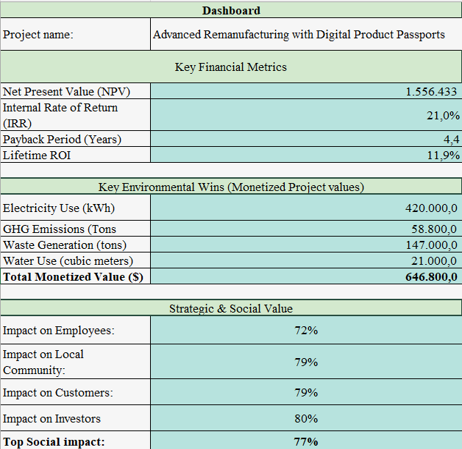
Figure 2: The BCA tool output interface example
The dashboard is shown in Figure 3, where the net cash flow graph provides a representation of the annual cash flows. The bar that falls below the horizontal axis reflects an initial investment of €514,000, while the subsequent bars above the axis indicate constant positive cash inflows. The cumulative cash flow graph illustrates how these cash flows sum up over time from the negative initial investment to the point where the project meets break-even, referred to as the payback period, where the company recovers its invested amount and thereafter receives net gains.
While this dummy project illustrates a classic pattern where the project begins with the initial outflow and then produces steady gains, this may not be the case with all projects. For example, some later years could also have negative outflows due to various reasons, such as unforeseen costs. Therefore, the shape of the net cash flow graph could alter, and the break-even point of the project on the cumulative cash flow will also be subject to automatic changes.
The summary statement is also a key feature of the dashboard, stating clearly whether the project is viable or not based on the NPV and the IRR. When the NPV is positive, and the IRR is higher than the cost of capital or discount rate, we conclude that the project is financially viable. For example, from our dummy project, the project recommendation states, “Given the positive NPV of €1,556,433.01 and an IRR of 21%, the project is financially viable.”
However, in other projects, if the IRR = cost of capital (discount rate), and the NPV is 0, then the company is indifferent about whether to proceed with the project. If the IRR < cost of capital, and the NPV is negative, the company should reject the project. (Dai et al., 2022)

Figure 3: Example of visualizations in the dashboard
The donut chart Figure 4 helps to show which environmental factor yields the strongest sustainability gains. In this project, most of the benefits come from reductions in electricity use (65%), waste generation (23%), GHG Emissions (9%), and Water Use (3%), respectively. This may differ for other projects assessed by the tool, but still, the chart provides immediate visibility of the environmental factor with the highest impact.
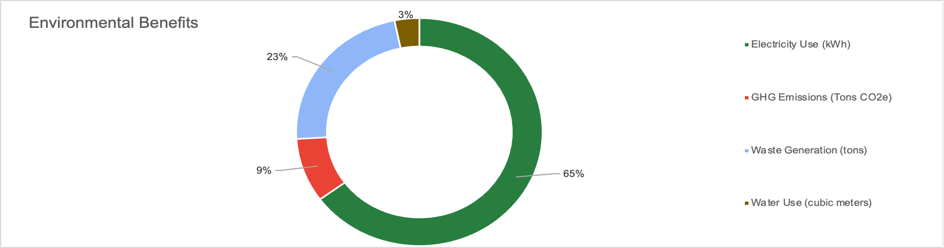
Figure 4: The environmental benefits chart explained
As illustrated below, Figure 5 shows the distribution of social impacts to stakeholders, i.e., employees, investors, customers, and the local community, instead of a single aggregated value. The blue polygon radar usually moves from the center with 0% impact and moves outwards to the outer ring with a maximum of 100%; therefore, points that are closer to the edge have a stronger social impact. From our example, the dummy project has the greatest impact on investors (80%), followed by customers and the local community (79%), and then employees (72%).
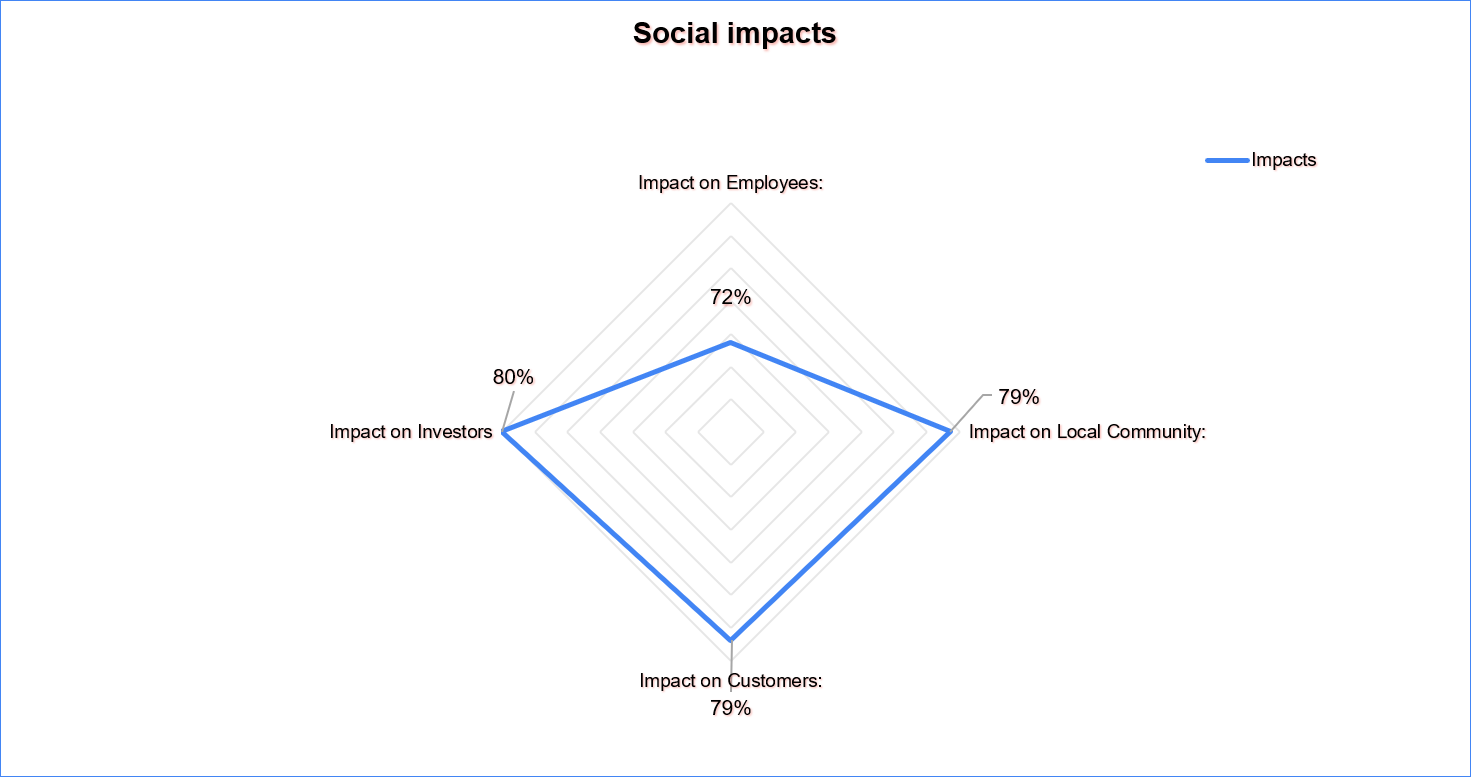
Figure 5: The social impacts radar chart explained
Understanding the Business Case Analysis Tool’s key variables.
While developing the BCA tool, we used a set of key variables that we found crucial for assessing financial projects, of which some have already been briefly mentioned. This section defines these variables with some examples where necessary.
Capital Expenditures (CapEx): refers to expenses incurred by the company in acquiring or enhancing fixed assets such as machinery, equipment, vehicles, etc. These assets are meant for long-term use, typically for more than one year.18Understanding CapEx vs. OpEx in Corporate Finance. Corporate Finance Institute. https://corporatefinanceinstitute.com/resources/accounting/capex-vs-opex/ (accessed 2025-08-28).
Operating Expenditures (OpEx): These are expenditures incurred by the company on a daily or monthly basis and support the day-to-day operations of the company or during the implementation of a project. They include salaries, material consumption, and utility bills, among others.18Understanding CapEx vs. OpEx in Corporate Finance. Corporate Finance Institute. https://corporatefinanceinstitute.com/resources/accounting/capex-vs-opex/ (accessed 2025-08-28).
Net Present Value (NPV): refers to the value of the future cash inflows for a project, which are discounted back to the present. It reflects that future value into an amount today.19Dai, H.; Li, N.; Wang, Y.; Zhao, X. The Analysis of Three Main Investment Criteria: NPV IRR and Payback Period; Atlantis Press, 2022; pp 185–189. https://doi.org/10.2991/aebmr.k.220307.028.
Internal Rate of Return (IRR): “the discount rate that can make the NPV for the project equal to 0”.19Dai, H.; Li, N.; Wang, Y.; Zhao, X. The Analysis of Three Main Investment Criteria: NPV IRR and Payback Period; Atlantis Press, 2022; pp 185–189. https://doi.org/10.2991/aebmr.k.220307.028.
Payback period: the time taken for a company or an investor to recoup the amount of money they invested in a project.19Dai, H.; Li, N.; Wang, Y.; Zhao, X. The Analysis of Three Main Investment Criteria: NPV IRR and Payback Period; Atlantis Press, 2022; pp 185–189. https://doi.org/10.2991/aebmr.k.220307.028.
Return on Investment (ROI): a percentage ratio that calculates the gains accumulated by investors according to the costs of investments incurred.20Return on Investment: Formula, Meaning, and How to Calculate It. Corporate Finance Institute. https://corporatefinanceinstitute.com/resources/accounting/return-on-investment-roi-formula/ (accessed 2025-08-28).
Net Cash Flow: a metric that shows the amount of money received by a company for a project and the amount of money used by the company for that very project for a given period. The Net Cash Flow can be negative or positive.21Net Cash. Corporate Finance Institute. https://corporatefinanceinstitute.com/resources/accounting/net-cash/ (accessed 2025-08-28).
Cumulative Cash Flow refers to the summation of the net cash flow of a project, which helps to show the break-even point when the project starts to generate gains.
Assumptions of the Business Case Analysis (BCA) tool:
The BCA tool assumes that every project should have a maximum lifespan of 10 years; beyond this period, the financial, environmental, and social impacts are not considered. This lifespan ensures that projects remain realistic and achievable within a relatively short period.
Additionally, the model assumes that the company can determine its discount rate independently, depending on the sector of the company, the project’s cost of capital, the standards of the industry, and the risk profile. The discount rate helps to determine the time and present value of future cash flows from the investment.
The BCA tool assumes that the company records and keeps track of annual energy and emissions like Electricity Use, GHG Emissions, etc., and resource consumption like Waste Generation, Water Use, etc., so that an annual baseline exists and can be used in the tool for calculating reductions and total annual environmental benefits.
The tool assumes that if there is uncertainty about the revenue growth to be measured or whether expenses apply to specific locations affected by the project or to the entire company, the CFO or any other responsible body should have the final jurisdiction for purposes of consistency.
Comparison of the Business Case Analysis tool with other existing tools:
| Tool | Structure | Scope | Example Scenario |
| The Business Case Analysis Tool (BCA Tool) | Input (CAPEX, OPEX, New revenue Streams, etc.) →Calculations (Total Costs, Total annual Benefits, NPV, etc.) → Output (Tables, charts, and plots in the dashboard) | Financial + Option to include Environmental and Social impacts | A hospital invests €150,000 in LED lighting. The tool calculates 4-year payback period, NPV, and IRR. |
| Sustainability ROI Workbook v3 (Willard).10Project Level Business Case | Sustainability Advantage. https://sustainabilityadvantage.com/businesscases/project-level-business-case/ (accessed 2025-08-27). | A fill-in Excel template with ROI calculations | Financial + Environmental + Social | A recycling program that reduces waste costs, cuts CO2 emissions, and boosts employee engagement. |
| WWF’s “To Whose Profit?” Route Map13To Whose Profit?: Building a Business Case for Sustainability; WWF-UK: Surrey, 2001. | Encompasses step-by-step questions for managers like a coaching framework | Qualitative assessment | Helps managers identify opportunities for adapting renewable energy in daily operations. |
| Repetto and Austin’s “Pure Profit” model14Repetto, R.; Austin, D. Pure Profit: The Financial Implications of Environmental Performance; World Resources Institute: Washington, D.C, 2000. | Scenario-based valuation. Links environmental risks to firm value. | Financial modeling for a specific sector (e.g., Paper & Pulp) | Assessing how the adoption of emissions reduction policies impacts the profitability of pulp and paper mills |
The BCA Tool, in comparison to the Sustainability ROI Workbook v3 (Willard), is simplified and easy to understand by various stakeholders, like the CFOs, the financial teams, final company decision-makers, and investors. The CFOs, financial and technical teams can implement the back end of the tool, while the dashboard makes it easy for final decision-makers, such as investors and non-technical managers, to understand, unlike the Sustainability ROI Workbook v3, which is data-intensive, more complex, and less visually oriented.
Furthermore, the WWF’s Route Map provides only a qualitative assessment with step-by-step questions, while our BCA tool provides quantitative outputs like IRR, NPV, and payback period, which are vital for making financial decisions. Not to mention, the Pure Profit model evaluates only specific sectors such as pulp and paper, while the BCA tool is versatile for decision-makers because it is not limited to specific sectors and can be used to implement any project with financial implications.
5 Strengths, limitations & avenues for future work
The BCA tool, like any other decision tool or application, has strengths that make it valuable for managers, but it also has limitations and constraints that leave a gap for future research and developments to make it more tailored and dynamic to meet the ever-changing demands of various companies.
The most vital strength of the tool is its flexibility. The tool applies to any type of financial project in various sectors, such as a new waste management system, an energy efficiency project, and a new product design, etc.
Additionally, it combines two relevant topics, financial viability and sustainability. It is common for projects to perform well and pass the financial tests in terms of returns but often do not meet sustainability standards like waste production and CO2 emissions. The BCA tool incorporates both key topics and assesses how the project performs on environmental factors as well as social impacts, i.e., for employees, clients, local communities, and investors. Using the BCA tool, a user can make a coherent decision that meets both the financial needs of the company as well as environmental measures without looking for other sources.
Moreover, the tool is user-friendly. The tool’s structure does not overwhelm users with complicated technical features and too many confusing tabs, but is rather straightforward with key assumptions and requires users to enter only essential project data. Users do not need to be advanced Excel users to operate the tool and trust the results, not to mention the summary tables of the key financial metrics, the environmental wins, the social impact values, and the graph visualizations on the dashboard enhance quick decision-making. Often, visual summaries are not considered important, but when presenting projects to investors, this could be of great advantage. Investors usually have limited time and have limited attention for investment decisions. These visualizations would be preferable compared to a 15-page report.
Weaknesses, however, do exist. The overall credibility of the data is important; if a company is not even aware of its baseline emissions or is not accurately reporting energy costs, the numbers that come out look great but have no credibility behind them. Startups or smaller companies tend to have inadequate or no data regarding environmental impacts, which may exclude such companies from exploring the full functionality of the tool and prevent them from venturing into the possible savings of adopting advanced sustainability practices.
Another limitation is that while the tool calculates metrics such as NPV and IRR, users may require some financial literacy to interpret the outputs; for example, they might not understand discount rates and may therefore second-guess the results. The tool may also not connect to other systems easily, like sustainability databases and ERP systems, since it is purely based on Excel formulas, which makes it hard to integrate with other systems, and data must be constantly entered manually.
The tool still has potential to be developed in the future. A web or cloud-based version would improve how results and live scenarios can be shared, and it could allow for updates with the latest emission factors and financial benchmarks. Having interactive dashboards would also reduce the intimidation factor for the nonfinancial users because they would only be manipulating one variable (e.g., project lifespan) and could see how this affects the whole output in real time.
There is a possibility of expanding the financial aspect of the tool. Currently, it is a simple and basic financial tool that uses concepts such as NPV, IRR, payback period, etc. However, features like Monte Carlo or sensitivity analysis could be adapted and incorporated into the tool to account for variations and uncertainties that usually exist in projects. A more complex financial model would help users navigate both the expected case and best- and worst-case scenarios, since financial projects are not always straightforward.
Similarly, there is value in extending the social dimension of the outcomes. We address emissions and resource use, but other outcomes, such as employee retention, community benefits, and goodwill from regulators, while more difficult to quantify, are equally relevant, if not more so. Optional modules could even be a way for the tool to enhance the user journey.
In conclusion, the BCA tool is an impressive link between sustainability and finance with its simple, holistic approach and its ability to communicate results visually, which distinguishes it from other similar tools.
References
- 1Montiel, I. Corporate Social Responsibility and Corporate Sustainability: Separate Pasts, Common Futures. Organization & Environment 2008, 21, 245–269. https://doi.org/10.1177/1086026608321329. ↩︎
- 2Chandler, D. Organizational Susceptibility to Institutional Complexity: Critical Events Driving the Adoption and Implementation of the Ethics and Compliance Officer Position. Organization Science 2014, 25 (6), 1722–1743. https://doi.org/10.1287/orsc.2014.0927. ↩︎
- 3Eccles, R. G.; Ioannou, I.; Serafeim, G. The Impact of Corporate Sustainability on Organizational Processes and Performance. Management Science 2014, 60 (11), 2835–2857. https://doi.org/10.1287/mnsc.2014.1984. ↩︎
- 3Eccles, R. G.; Ioannou, I.; Serafeim, G. The Impact of Corporate Sustainability on Organizational Processes and Performance. Management Science 2014, 60 (11), 2835–2857. https://doi.org/10.1287/mnsc.2014.1984. ↩︎
- 4Luchs, M.; Brower, J.; Chitturi, R. Product Choice and the Importance of Aesthetic Design Given the Emotion-Laden Trade-off between Sustainability and Functional Performance. Journal of Product Innovation Management 2012, 29. https://doi.org/10.1111/j.1540-5885.2012.00970.x. ↩︎
- 5Stubbs, W.; Cocklin, C. Conceptualizing a “Sustainability Business Model.” Organization & Environment – ORGAN ENVIRON 2008, 21, 103–127. https://doi.org/10.1177/1086026608318042. ↩︎
- 3Eccles, R. G.; Ioannou, I.; Serafeim, G. The Impact of Corporate Sustainability on Organizational Processes and Performance. Management Science 2014, 60 (11), 2835–2857. https://doi.org/10.1287/mnsc.2014.1984. ↩︎
- 6Short on Time: Intertemporal Tensions in Business Sustainability | Request PDF. ResearchGate 2025. https://doi.org/10.1287/orsc.2014.0960. ↩︎
- 7(PDF) Tensions in Corporate Sustainability: Towards an Integrative Framework. ResearchGate 2025. https://doi.org/10.1007/s10551-014-2047-5. ↩︎
- 8Ahi, P.; Searcy, C. A Comparative Literature Analysis of Definitions for Green and Sustainable Supply Chain Management. Journal of Cleaner Production 2013, 52, 329–341. https://doi.org/10.1016/j.jclepro.2013.02.018. ↩︎
- 9Theron, M.; Cant, M.; Wiid, J. CSR Communication and Internal Stakeholders: The Overlooked Market. International Journal of Research in Business and Social Science (2147- 4478) 2024, 13, 292–301. https://doi.org/10.20525/ijrbs.v13i4.3160. ↩︎
- 5Stubbs, W.; Cocklin, C. Conceptualizing a “Sustainability Business Model.” Organization & Environment – ORGAN ENVIRON 2008, 21, 103–127. https://doi.org/10.1177/1086026608318042. ↩︎
- 10Project Level Business Case | Sustainability Advantage. https://sustainabilityadvantage.com/businesscases/project-level-business-case/ (accessed 2025-08-27). ↩︎
- 11Salzmann, O.; Ionescu-somers, A.; Steger, U. The Business Case for Corporate Sustainability:: Literature Review and Research Options. European Management Journal 2005, 23 (1), 27–36. https://doi.org/10.1016/j.emj.2004.12.007. ↩︎
- 12Earthenterprise Tool Kit. ↩︎
- 13To Whose Profit?: Building a Business Case for Sustainability; WWF-UK: Surrey, 2001. ↩︎
- 14Repetto, R.; Austin, D. Pure Profit: The Financial Implications of Environmental Performance; World Resources Institute: Washington, D.C, 2000. ↩︎
- 15Thorpe, J.; Prakash-Mani, K. Developing Value: The Business Case for Sustainability in Emerging Markets. In Managing the Business Case for Sustainability: The Integration of Social, Envir; Greenleaf Publishing Limited, 2006; pp 444–464. https://doi.org/10.9774/GLEAF.978-1-907643-25-5_25. ↩︎
- 11Salzmann, O.; Ionescu-somers, A.; Steger, U. The Business Case for Corporate Sustainability:: Literature Review and Research Options. European Management Journal 2005, 23 (1), 27–36. https://doi.org/10.1016/j.emj.2004.12.007. ↩︎
- 16Lankoski, L. Determinants of Environmental Profit. An Analysis of the Firm-Level Relationship Between Environmental Performance and Economic Performance. 951-22-5127-2 2000. ↩︎
- 17Schaltegger, S.; Lüdeke-Freund, F.; Hansen, E. G. Business Cases for Sustainability and the Role of Business Model Innovation: Developing a Conceptual Framework. SSRN Journal 2011. https://doi.org/10.2139/ssrn.2010506. ↩︎
- 11Salzmann, O.; Ionescu-somers, A.; Steger, U. The Business Case for Corporate Sustainability:: Literature Review and Research Options. European Management Journal 2005, 23 (1), 27–36. https://doi.org/10.1016/j.emj.2004.12.007. ↩︎
- 17Schaltegger, S.; Lüdeke-Freund, F.; Hansen, E. G. Business Cases for Sustainability and the Role of Business Model Innovation: Developing a Conceptual Framework. SSRN Journal 2011. https://doi.org/10.2139/ssrn.2010506. ↩︎
- 11Salzmann, O.; Ionescu-somers, A.; Steger, U. The Business Case for Corporate Sustainability:: Literature Review and Research Options. European Management Journal 2005, 23 (1), 27–36. https://doi.org/10.1016/j.emj.2004.12.007. ↩︎
- 18Understanding CapEx vs. OpEx in Corporate Finance. Corporate Finance Institute. https://corporatefinanceinstitute.com/resources/accounting/capex-vs-opex/ (accessed 2025-08-28). ↩︎
- 18Understanding CapEx vs. OpEx in Corporate Finance. Corporate Finance Institute. https://corporatefinanceinstitute.com/resources/accounting/capex-vs-opex/ (accessed 2025-08-28). ↩︎
- 19Dai, H.; Li, N.; Wang, Y.; Zhao, X. The Analysis of Three Main Investment Criteria: NPV IRR and Payback Period; Atlantis Press, 2022; pp 185–189. https://doi.org/10.2991/aebmr.k.220307.028. ↩︎
- 19Dai, H.; Li, N.; Wang, Y.; Zhao, X. The Analysis of Three Main Investment Criteria: NPV IRR and Payback Period; Atlantis Press, 2022; pp 185–189. https://doi.org/10.2991/aebmr.k.220307.028. ↩︎
- 19Dai, H.; Li, N.; Wang, Y.; Zhao, X. The Analysis of Three Main Investment Criteria: NPV IRR and Payback Period; Atlantis Press, 2022; pp 185–189. https://doi.org/10.2991/aebmr.k.220307.028. ↩︎
- 20Return on Investment: Formula, Meaning, and How to Calculate It. Corporate Finance Institute. https://corporatefinanceinstitute.com/resources/accounting/return-on-investment-roi-formula/ (accessed 2025-08-28). ↩︎
- 21Net Cash. Corporate Finance Institute. https://corporatefinanceinstitute.com/resources/accounting/net-cash/ (accessed 2025-08-28). ↩︎
- 10Project Level Business Case | Sustainability Advantage. https://sustainabilityadvantage.com/businesscases/project-level-business-case/ (accessed 2025-08-27). ↩︎
- 13To Whose Profit?: Building a Business Case for Sustainability; WWF-UK: Surrey, 2001. ↩︎
- 14Repetto, R.; Austin, D. Pure Profit: The Financial Implications of Environmental Performance; World Resources Institute: Washington, D.C, 2000. ↩︎
- 1Montiel, I. Corporate Social Responsibility and Corporate Sustainability: Separate Pasts, Common Futures. Organization & Environment 2008, 21, 245–269. https://doi.org/10.1177/1086026608321329. ↩︎
- 2Chandler, D. Organizational Susceptibility to Institutional Complexity: Critical Events Driving the Adoption and Implementation of the Ethics and Compliance Officer Position. Organization Science 2014, 25 (6), 1722–1743. https://doi.org/10.1287/orsc.2014.0927. ↩︎
- 3Eccles, R. G.; Ioannou, I.; Serafeim, G. The Impact of Corporate Sustainability on Organizational Processes and Performance. Management Science 2014, 60 (11), 2835–2857. https://doi.org/10.1287/mnsc.2014.1984. ↩︎
- 3Eccles, R. G.; Ioannou, I.; Serafeim, G. The Impact of Corporate Sustainability on Organizational Processes and Performance. Management Science 2014, 60 (11), 2835–2857. https://doi.org/10.1287/mnsc.2014.1984. ↩︎
- 4Luchs, M.; Brower, J.; Chitturi, R. Product Choice and the Importance of Aesthetic Design Given the Emotion-Laden Trade-off between Sustainability and Functional Performance. Journal of Product Innovation Management 2012, 29. https://doi.org/10.1111/j.1540-5885.2012.00970.x. ↩︎
- 5Stubbs, W.; Cocklin, C. Conceptualizing a “Sustainability Business Model.” Organization & Environment – ORGAN ENVIRON 2008, 21, 103–127. https://doi.org/10.1177/1086026608318042. ↩︎
- 3Eccles, R. G.; Ioannou, I.; Serafeim, G. The Impact of Corporate Sustainability on Organizational Processes and Performance. Management Science 2014, 60 (11), 2835–2857. https://doi.org/10.1287/mnsc.2014.1984. ↩︎
- 6Short on Time: Intertemporal Tensions in Business Sustainability | Request PDF. ResearchGate 2025. https://doi.org/10.1287/orsc.2014.0960. ↩︎
- 7(PDF) Tensions in Corporate Sustainability: Towards an Integrative Framework. ResearchGate 2025. https://doi.org/10.1007/s10551-014-2047-5. ↩︎
- 8Ahi, P.; Searcy, C. A Comparative Literature Analysis of Definitions for Green and Sustainable Supply Chain Management. Journal of Cleaner Production 2013, 52, 329–341. https://doi.org/10.1016/j.jclepro.2013.02.018. ↩︎
- 9Theron, M.; Cant, M.; Wiid, J. CSR Communication and Internal Stakeholders: The Overlooked Market. International Journal of Research in Business and Social Science (2147- 4478) 2024, 13, 292–301. https://doi.org/10.20525/ijrbs.v13i4.3160. ↩︎
- 5Stubbs, W.; Cocklin, C. Conceptualizing a “Sustainability Business Model.” Organization & Environment – ORGAN ENVIRON 2008, 21, 103–127. https://doi.org/10.1177/1086026608318042. ↩︎
- 10Project Level Business Case | Sustainability Advantage. https://sustainabilityadvantage.com/businesscases/project-level-business-case/ (accessed 2025-08-27). ↩︎
- 11Salzmann, O.; Ionescu-somers, A.; Steger, U. The Business Case for Corporate Sustainability:: Literature Review and Research Options. European Management Journal 2005, 23 (1), 27–36. https://doi.org/10.1016/j.emj.2004.12.007. ↩︎
- 12Earthenterprise Tool Kit. ↩︎
- 13To Whose Profit?: Building a Business Case for Sustainability; WWF-UK: Surrey, 2001. ↩︎
- 14Repetto, R.; Austin, D. Pure Profit: The Financial Implications of Environmental Performance; World Resources Institute: Washington, D.C, 2000. ↩︎
- 15Thorpe, J.; Prakash-Mani, K. Developing Value: The Business Case for Sustainability in Emerging Markets. In Managing the Business Case for Sustainability: The Integration of Social, Envir; Greenleaf Publishing Limited, 2006; pp 444–464. https://doi.org/10.9774/GLEAF.978-1-907643-25-5_25. ↩︎
- 11Salzmann, O.; Ionescu-somers, A.; Steger, U. The Business Case for Corporate Sustainability:: Literature Review and Research Options. European Management Journal 2005, 23 (1), 27–36. https://doi.org/10.1016/j.emj.2004.12.007. ↩︎
- 16Lankoski, L. Determinants of Environmental Profit. An Analysis of the Firm-Level Relationship Between Environmental Performance and Economic Performance. 951-22-5127-2 2000. ↩︎
- 17Schaltegger, S.; Lüdeke-Freund, F.; Hansen, E. G. Business Cases for Sustainability and the Role of Business Model Innovation: Developing a Conceptual Framework. SSRN Journal 2011. https://doi.org/10.2139/ssrn.2010506. ↩︎
- 11Salzmann, O.; Ionescu-somers, A.; Steger, U. The Business Case for Corporate Sustainability:: Literature Review and Research Options. European Management Journal 2005, 23 (1), 27–36. https://doi.org/10.1016/j.emj.2004.12.007. ↩︎
- 17Schaltegger, S.; Lüdeke-Freund, F.; Hansen, E. G. Business Cases for Sustainability and the Role of Business Model Innovation: Developing a Conceptual Framework. SSRN Journal 2011. https://doi.org/10.2139/ssrn.2010506. ↩︎
- 11Salzmann, O.; Ionescu-somers, A.; Steger, U. The Business Case for Corporate Sustainability:: Literature Review and Research Options. European Management Journal 2005, 23 (1), 27–36. https://doi.org/10.1016/j.emj.2004.12.007. ↩︎
- 18Understanding CapEx vs. OpEx in Corporate Finance. Corporate Finance Institute. https://corporatefinanceinstitute.com/resources/accounting/capex-vs-opex/ (accessed 2025-08-28). ↩︎
- 18Understanding CapEx vs. OpEx in Corporate Finance. Corporate Finance Institute. https://corporatefinanceinstitute.com/resources/accounting/capex-vs-opex/ (accessed 2025-08-28). ↩︎
- 19Dai, H.; Li, N.; Wang, Y.; Zhao, X. The Analysis of Three Main Investment Criteria: NPV IRR and Payback Period; Atlantis Press, 2022; pp 185–189. https://doi.org/10.2991/aebmr.k.220307.028. ↩︎
- 19Dai, H.; Li, N.; Wang, Y.; Zhao, X. The Analysis of Three Main Investment Criteria: NPV IRR and Payback Period; Atlantis Press, 2022; pp 185–189. https://doi.org/10.2991/aebmr.k.220307.028. ↩︎
- 19Dai, H.; Li, N.; Wang, Y.; Zhao, X. The Analysis of Three Main Investment Criteria: NPV IRR and Payback Period; Atlantis Press, 2022; pp 185–189. https://doi.org/10.2991/aebmr.k.220307.028. ↩︎
- 20Return on Investment: Formula, Meaning, and How to Calculate It. Corporate Finance Institute. https://corporatefinanceinstitute.com/resources/accounting/return-on-investment-roi-formula/ (accessed 2025-08-28). ↩︎
- 21Net Cash. Corporate Finance Institute. https://corporatefinanceinstitute.com/resources/accounting/net-cash/ (accessed 2025-08-28). ↩︎
- 10Project Level Business Case | Sustainability Advantage. https://sustainabilityadvantage.com/businesscases/project-level-business-case/ (accessed 2025-08-27). ↩︎
- 13To Whose Profit?: Building a Business Case for Sustainability; WWF-UK: Surrey, 2001. ↩︎
- 14Repetto, R.; Austin, D. Pure Profit: The Financial Implications of Environmental Performance; World Resources Institute: Washington, D.C, 2000. ↩︎